Photo credit: Dmitri T/Shutterstock.com
Compact carry pistols have never been more popular, and that surge in demand is colliding with a wave of user reports about stovepipe malfunctions in some of the most sought‑after models. When a gun that is marketed as a dependable everyday companion starts leaving spent brass stuck in the ejection port, owners understandably want to know whether they are looking at a training issue, a bad batch of parts, or a deeper design compromise. I set out to unpack what shooters are actually seeing, why it is showing up on specific platforms, and how much of the problem can be fixed at the bench versus in the factory.
The pattern that emerges is not a single catastrophic flaw but a convergence of tight tolerances, lightweight slides, aftermarket tinkering, and shooter technique, all magnified by the sheer number of people now carrying micro‑compacts. Stovepipes are a classic semi‑auto problem, yet the way they show up on modern slim pistols like the Glock 43X and SIG Sauer P365 family tells a more nuanced story about how far manufacturers can push size and capacity before reliability margins start to shrink.
Why this particular carry gun is under the microscope
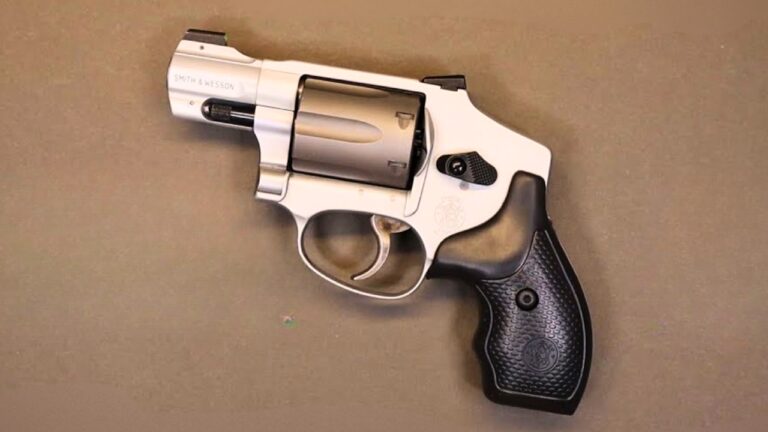
Two pistols dominate the current concealed‑carry conversation, and both sit at the center of these stovepipe complaints. On one side is the Glock 43X, part of GLOCK’s Slimline 9 mm series that has been singled out as one of the most popular concealed carry pistols on the market, with reporting that, since its release, the GLOCK Slimline 9 mm has remained a best‑seller because of its size and perceived reliability. On the other side is the SIG Sauer P365 line, which has been credited with reshaping the micro‑compact market, with data showing that SIG Sauer P365 pistols dominate the new handgun market in 2025 thanks to their high magazine capacity and ease of carry. When that many people buy into two platforms, even a small percentage of problem guns will generate a loud echo online.
Owners are not just venting about abstract reliability concerns, they are describing very specific failure patterns that cluster around extraction and ejection. Glock 43X shooters talk about brass hanging in the ejection port or failing to clear the slide, while P365 users describe similar stoppages alongside failures to feed and guns that feel unusually tight or sluggish out of the box. Because these pistols are marketed as tools for daily defense, any hint that they might choke under real‑world conditions carries more weight than a range toy hiccup, which is why stovepipes on a popular carry gun have become such a charged topic.
What a stovepipe actually is, and why it matters more on micro‑compacts
Before sorting out blame, I need to be precise about the malfunction itself. In semi‑automatic pistols, a stovepipe is the classic failure where the fired case is not properly ejected and ends up trapped upright in the ejection port, often sticking out like a little brass chimney. Technical guidance notes that in semi‑automatic pistols the term “stovepipe” describes a malfunction where the fired case has not been properly ejected, with the culprit often tied to ammunition issues such as handloads, as detailed in an Oct explanation of the problem. The key point is that the slide has moved far enough to extract the case but not far or fast enough to throw it clear, so it gets caught as the slide comes forward.
On a full‑size duty pistol with a heavier slide and more forgiving recoil system, there is usually a wider margin for error in how the gun is held, how dirty it is, or how weak the ammunition might be. Micro‑compacts like the Glock 43X and P365 families run much closer to the edge, with lighter slides, shorter recoil strokes, and springs tuned to keep everything locked up in a very small footprint. That makes them more sensitive to anything that robs slide momentum or disrupts the timing of extraction and ejection, which is why stovepipes on these guns are not just an annoyance but a sign that the platform is operating on a narrower reliability window than many owners expect.
Inside the Glock 43X complaints: ejectors, springs, and early teething
Glock’s 43X has a reputation for reliability, yet a noticeable subset of owners are chasing extraction and ejection gremlins. One detailed 1,000‑round review describes how the shooter bought a Hollowan EPS optic at the same time as the pistol, mounted it, and then started seeing ejection problems that were eventually traced to the ejector, prompting a closer look at how the part interacted with the slide and cases in that specific setup, as laid out in a Glock 43X ejector breakdown by Jun. That kind of long‑form testing suggests that at least some 43X stovepipes are not random but tied to small variances in parts geometry that only show up after several hundred rounds or when an optic changes slide mass.
Other owners describe brand‑new 43X MOS pistols that are “finicky out of the box,” with Lots of failures to feed and failures to extract that gradually smooth out after a few hundred rounds. One shooter reports that their 43X MOS worked itself out after about 200 rounds, suggesting that tight new parts and certain ammunition combinations can produce early stovepipes that disappear as the gun wears in. That pattern, combined with the ejector‑tuning stories, points to a platform that is fundamentally sound but sensitive to small variations in parts, optics weight, and ammo during its first trips to the range.
Recoil spring questions and other 43X quirks
Alongside ejector chatter, some Glock 43X owners are zeroing in on the recoil spring assembly as a possible culprit. One discussion highlights a post about people having issues with a specific recoil spring labeled 101, with users contacting Glock and being advised to swap springs if problems persisted, a sequence summed up in a thread that opens with “There’s a post on here regarding some ppl having issues with recoil spring 101 I think, ppl where contacting Glock and…” That kind of part‑number‑specific chatter usually means at least one production run of springs was on the weak or strong side of spec, which can easily tip a light slide into stovepipe territory if it changes how fast the slide cycles.
Owners are also reporting smaller fit and control issues that, while not stovepipes on their own, can compound reliability problems. One shooter describes fixing a trigger interference issue by heating up a screwdriver and melting the side of the trigger shoe slightly, noting that this simple but extremely specific tweak helped the gun run more reliably with a metal‑body magazine, as recounted in a list of common Glock 43X issues. When a pistol’s tolerances are tight enough that a fraction of a millimeter of plastic can affect trigger movement or magazine fit, it is not hard to see how a slightly out‑of‑spec spring or ejector could also manifest as intermittent stovepipes.
How the SIG Sauer P365 family ended up in the same conversation
The SIG Sauer P365 line is facing its own wave of reliability scrutiny, in part because it has become so dominant in the micro‑compact space. Market data points out that P365 pistols now dominate the new handgun market, with buyers drawn to their high capacity and easy concealment, which means any pattern of malfunctions will be magnified by sheer volume of users, as reflected in the same P365 popularity numbers that made the gun a sales success. Owners are now parsing whether stovepipes and related stoppages are growing pains of new variants or a sign that the platform is being stretched too far.
One variant drawing attention is the P365‑380, which uses lighter‑recoiling .380 ACP in the same compact frame. A detailed user account describes buying the P365‑380 with the expectation that it would feel like the original 9 mm but instead encountering headaches that included reliability concerns and questions about how the gun handled different loads, as laid out in a discussion of the P365‑380 headaches. When a platform is adapted to a softer cartridge, the recoil system and slide mass have to be retuned, and if that balance is off even slightly, stovepipes can appear with certain ammunition or grip styles that would not bother the original 9 mm version.
New P365 variants, aftermarket parts, and the stovepipe trade‑offs
Beyond caliber changes, owners are also bolting on parts that alter how the P365 cycles, sometimes with unintended consequences. One P365X shooter reports installing a Radian Ramjet compensator on a brand‑new gun and then seeing failures to feed and stovepipes, with the slide occasionally stuck out of battery, issues the owner linked to the tighter contact points and altered recoil dynamics introduced by the compensator, as described in a post about a Radian Ramjet causing FTFs and stovepipes on a stock P365X. Adding weight and gas redirection to the muzzle can slow slide velocity or change how the barrel unlocks, which, on a small pistol already tuned to the edge, can easily tip it into stovepipe territory.
Even without compensators, some of the newest P365 variants are drawing criticism. One owner who took a P365 Fuse to the range reports that they had lots of issues and did not even want to make a video about it, describing a level of frustration that suggests repeated malfunctions rather than a single bad magazine, as captured in a thread on P365 Fuse issues. Another shooter who Recently got a P365 and a TP9 SF Elite, then Took both to the range and fired 100 rounds through each, says the P365 was constantly malfunctioning while the TP9 SF Elite ran without drama, a side‑by‑side comparison that underscores how platform‑specific these problems can be, as detailed in a post titled “P365 Brand new with issues” that notes the 100 rounds fired. When a new gun struggles in the same session where a peer pistol runs clean, owners understandably look beyond ammo or shooter error and start questioning springs, extractors, and chamber dimensions.
When it is not the gun: limp‑wristing, ammo, and shooter input
Not every stovepipe can be pinned on the hardware, and some of the most candid discussions come from shooters willing to consider their own role. One troubleshooting checklist for a pistol that was failing to extract and stovepiping after every shot walks through a series of basic fixes: Stuff to try included “Hold gun more firm,” “Lube rails,” “Take off optic,” “Change Guide rod spring,” and “Change ammo,” a progression that acknowledges how grip, lubrication, slide mass, and cartridge choice all interact, as laid out in a Jun thread on repeated stovepipes. That kind of methodical approach often reveals that a marginal setup will run fine with a locked‑in grip and full‑power ammo but starts choking when the shooter relaxes or switches to softer loads.
The classic example is limp‑wristing, where the shooter’s hand and wrist do not provide enough resistance for the slide to cycle properly. Technical references note that this condition often results in stovepiping, with the functional cause tied to reduced slide momentum during cycling when the frame is allowed to move too much under recoil, as explained in an overview of limp wristing. Micro‑compacts with light slides are particularly vulnerable to this, because they rely on the shooter’s grip to provide a solid anchor; if that anchor is soft, the slide may not travel far enough or fast enough to eject the case cleanly, turning a borderline setup into a stovepipe generator.
Clearing a stovepipe under pressure, and why practice matters
Once a stovepipe happens, the priority shifts from diagnosis to getting the gun back in the fight, and here the fundamentals have not changed. Training videos on semi‑auto malfunctions walk viewers through the standard tap‑rack sequence, showing how a firm strike on the magazine base followed by a brisk rack of the slide will usually knock the spent case free and chamber a fresh round, a process demonstrated in a segment on how to fix the semi‑auto malfunction known as a stovepipe. The key is to perform the motion decisively and keep the muzzle oriented safely downrange, because half‑hearted slide movement is exactly what caused the problem in the first place.
Another instructional clip on Malfunctions and Stovepipe stoppages reinforces that this is one of the most common semi‑auto issues and that it usually stems from the spent case not making it out in time before the slide closes, again underscoring the role of slide speed and timing in these failures, as explained in a video titled Malfunctions Stovepipe. Written guidance on defensive shooting adds that stovepipe malfunctions, also known as type 2 malfunctions, are among the most common issues in semi‑automatic pistols and can quickly become dangerous if not cleared promptly, a point emphasized in a primer on Stovepipe malfunctions. For anyone carrying a Glock 43X or P365, that means practicing immediate‑action drills until they are automatic, because even a well‑sorted pistol can cough once in a while.
What owners can realistically do next
For shooters wrestling with stovepipes on a popular carry gun, the path forward usually runs through a mix of self‑help and manufacturer support. On the DIY side, the most effective steps are often the least glamorous: verify a firm grip, test with full‑power factory ammunition, keep the rails properly lubricated, and strip off heavy optics or compensators to see whether the gun stabilizes in its stock configuration, just as the “Hold gun more firm,” “Lube rails,” “Take off optic,” and “Change Guide rod spring” checklist suggests in the Stuff to try post. If a pistol runs clean in that baseline state, owners can then reintroduce accessories one at a time to identify which change pushes it over the edge.
When a gun continues to stovepipe despite careful troubleshooting, the next step is to lean on the warranty and the manufacturer’s willingness to replace suspect parts like recoil springs labeled 101 or out‑of‑spec ejectors. The pattern of Glock owners contacting Glock and being told to order another spring, and P365 shooters documenting issues with specific variants like the Fuse or P365‑380, shows that companies are at least aware of these edge cases, even if they have not issued broad recalls. In my view, the real takeaway is not that the Glock 43X or SIG Sauer P365 are fatally flawed, but that micro‑compact carry guns operate on thinner reliability margins, so small variances in parts, ammo, or technique can surface as stovepipes more quickly than on larger pistols. For anyone betting their safety on these platforms, that reality makes careful testing, honest self‑assessment, and a willingness to push the manufacturer for fixes non‑negotiable parts of responsible carry.
Like The Avid Outdoorsman’s content? Subscribe to our newsletter so you never miss an article.
Here’s more from us: