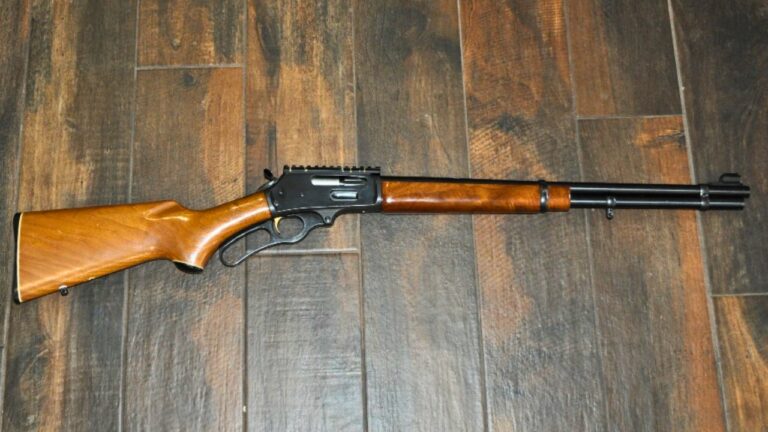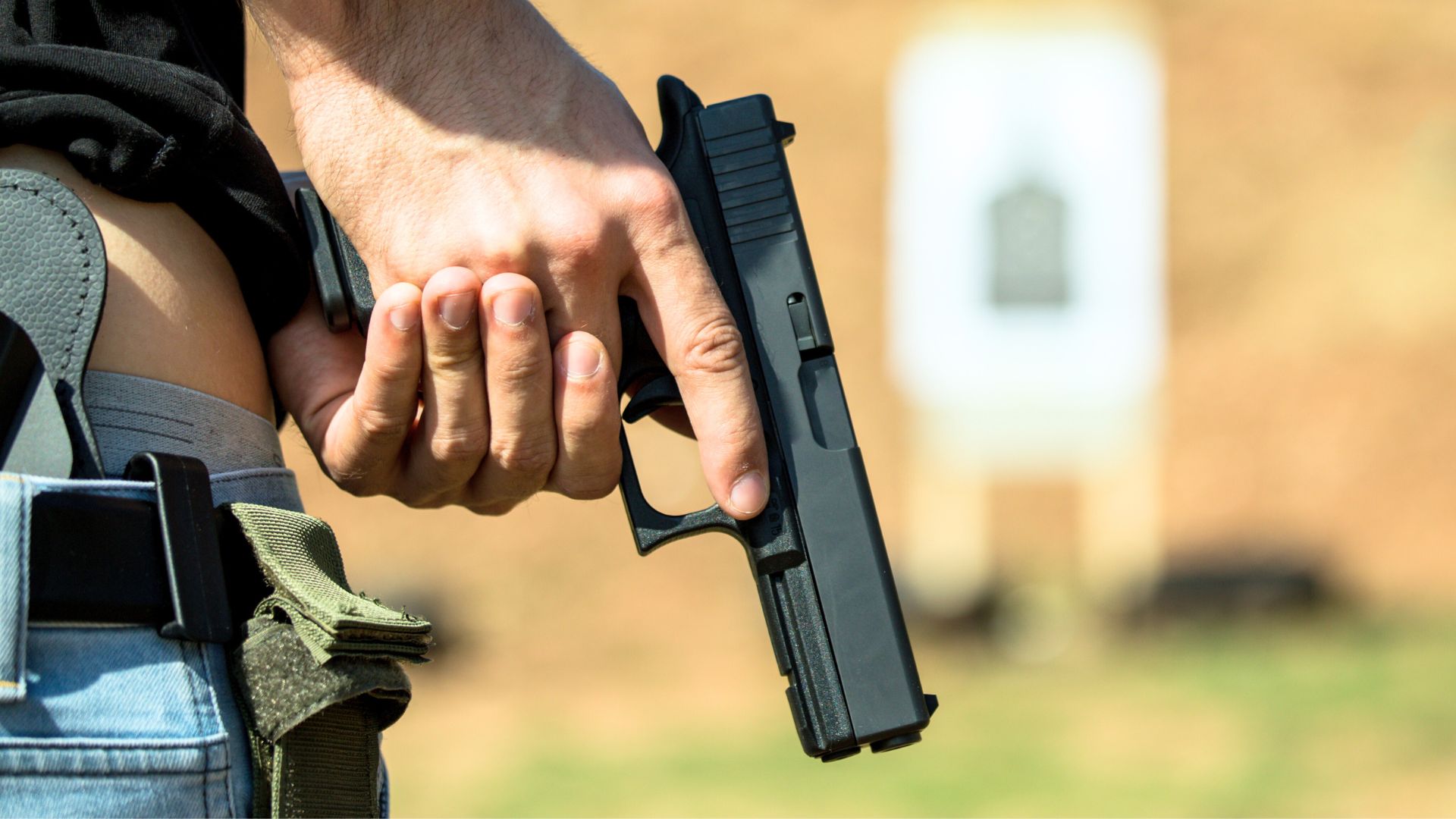
Photo credit: Happy Lenses/Shutterstock.com
For decades, striker-fired pistols have been treated as the default choice for duty holsters, concealed carry and entry-level buyers, while hammer guns were framed as a niche for traditionalists. That consensus is starting to fray at the edges as more shooters revisit older designs, question trigger feel and safety tradeoffs, and explore a growing high-end market that favors metal frames and exposed hammers. The long-running argument over which system is “better” is heating up again, not because one side is winning decisively, but because the market is fragmenting in ways that give both designs fresh relevance.
From niche to “new normal” and back again?
Striker-fired pistols did not just appear out of nowhere in the 1980s; they have roots stretching back more than a century, and their modern dominance is the product of a long technical evolution. Reporting on their development notes that from late 19th century origins to their widespread adoption in the 21st Century and Beyond From, striker systems steadily moved from curiosities to the standard sidearm for law enforcement, military and civilian users worldwide, a rise that took roughly 100 years to fully play out. By the time polymer-framed service pistols took over police contracts, the debate seemed settled: the industry had chosen strikers as the baseline.
That momentum carried into the concealed-carry boom, where compact polymer pistols became the default recommendation for new permit holders. One major CCW guide flatly states that, Finally, striker-fire pistols are the new normal in CCW handguns and that they are not going away anytime soon, a reflection of how deeply this design is embedded in training curricula and holster catalogs rather than a prediction that the technology will never be challenged. Even as that “new normal” solidified, however, a parallel conversation about trigger quality, manual safeties and shootability kept hammer-fired designs in the discussion, setting the stage for the renewed argument I am seeing now.
How the two systems actually work
At the mechanical level, the divide is simple: hammer-fired pistols use a pivoting hammer to strike a firing pin, while striker-fired designs rely on a spring-loaded firing pin assembly that moves directly forward when the trigger is pressed. Technical explainers on firing methods describe how hammer guns can be single action, double action or a hybrid, with the trigger either just releasing a cocked hammer or both cocking and releasing it, while striker systems typically use a partially pre-tensioned striker that the trigger finishes cocking before release. That difference in architecture shapes everything from slide profile to how easily a shooter can visually confirm the state of the gun, as laid out in detailed comparisons of firing methods.
Those same comparisons emphasize that most of the Pros and Cons of Hammer, Fired Pistols, Most of the, Theoret distinctions come down to context and user preference rather than hard mechanical superiority. When an external hammer is visible, it gives immediate feedback about whether the gun is cocked, but it also adds bulk and more snag potential than a smooth slide. Striker-fired pistols, by contrast, hide their working parts inside the slide, which can make their status less obvious than a hammer yet allows a lower bore axis and simpler manual of arms. As a very broad generalization, analysts note that hammer guns tend to have more complex controls and potentially better single-action triggers, while their striker-fired counterparts trade some of that refinement for consistency and simplicity, a tradeoff that is at the heart of the current debate.
Why strikers took over police and service holsters
To understand whether striker-fired pistols are losing favor, I have to start with why they won so much ground in the first place. Service handgun analysts point out that, Overall, striker-fired pistols tend to be slightly better combat and personal-defense weapons because of their superior speed and ease of use, which helps explain why so many agencies around the world have adopted them as standard issue. A consistent trigger pull from the first shot to the last, combined with fewer levers and decockers to manage under stress, made it easier to train large numbers of officers to a common standard, and that institutional preference spilled over into the civilian market.
Market research on the broader Service Handgun Market Size and Share backs up that story with numbers, projecting that the category as a whole will grow at a 6.98% CAGR through 2030 over a Study Period that runs from 2019 to 2030, with striker-fired duty pistols still occupying a large share of that pie. The Study notes that contracts for law enforcement and military customers remain a key driver of volume, and those contracts overwhelmingly favor polymer, striker-fired designs. Even if individual enthusiasts are rediscovering hammer guns, the institutional backbone of the handgun business is still built around strikers, which makes any talk of a wholesale retreat premature.
The quiet resilience of hammer-fired designs
Yet hammer-fired handguns have withstood the test of time and are still manufactured to this day for those that wish to have a pistol with an exposed hammer, a fact that complicates any narrative of striker inevitability. Training resources that walk new shooters through the Hammer versus striker choice stress that hammer guns offer tangible advantages for some users, including the ability to thumb the hammer while holstering, a clear visual indicator of cocked status and the option of a heavier first-shot pull in double-action mode. These guides also remind readers that a striker-fired pistol does not have an exposed hammer, which can make it sleeker for carry but removes that tactile control point, a tradeoff that some experienced carriers are no longer willing to make as they refine their preferences through classes and range time at places like Hammer.
In practical terms, that resilience shows up in the product lines of major manufacturers, which continue to refresh metal-framed, hammer-fired pistols even as they launch new striker models. Enthusiast-oriented training academies report steady interest in double-action/single-action platforms for students who want a longer, heavier first pull as a kind of built-in safety margin, especially for appendix carry. The fact that these guns are still being taught, bought and carried suggests that the market is not simply moving in one direction, but rather splitting into subcultures that value different balances of speed, safety and shootability.
Trigger feel, safety myths and CCW frustrations
For concealed carriers, the argument often narrows to what happens at the trigger. One widely circulated CCW guide lists Disadvantages of striker-fire handguns for CCW, noting that There is often a lot of mushy and or gritty takeup, a vague wall before the break and usually lots of overtravel compared with a tuned single-action or well-executed double-action system. That same guide acknowledges that training can overcome these quirks, but the criticism resonates with shooters who have spent time behind both systems and find that a crisp hammer-fired break gives them more confidence when making precise shots under pressure, especially at distance or on partial targets, which is why the CCW conversation keeps circling back to feel.
Online communities add another layer by interrogating specific safety myths, such as the idea that a striker pistol will always fail to fire when pressed into a target at contact distance because the slide is pushed out of battery. In one detailed Comments Section on a CCW forum, users debate whether it is true that some or most striker fired handguns will not fire if you place the muzzle directly against an assailant, with some posters confirming that certain designs do indeed deactivate when the slide is pushed back even slightly. Others counter that many hammer-fired pistols are just as vulnerable to being pushed out of battery and that proper retention shooting techniques matter more than the firing system, a reminder that some of the loudest talking points in this debate are grounded in partial truths rather than universal rules, as seen in threads like Dec.
What the high-end and enthusiast markets are signaling
While mass-market duty pistols still lean heavily toward strikers, the upper end of the handgun market is telling a more nuanced story. Industry data on dealer trends notes growing interest in the high-end side of the firearms market from consumers this year, According to figures from the National Shoo trade group that track sales of premium pistols, optics and accessories. That report highlights that buyers who already own a basic striker gun are now looking to upgrade to metal-framed, optics-ready models, often with refined triggers and traditional controls, a shift that has helped the high-end segment hold steady even as more budget-focused categories soften, as described in analyses of how the Nov market holds.
That appetite for premium hardware intersects directly with the hammer versus striker question, because many of the most coveted pistols in this tier are hammer-fired designs with metal frames and elaborate machining. At the same time, some of the most expensive new offerings are striker-fired guns that try to close the gap in trigger feel and aesthetics, suggesting that enthusiasts are not abandoning strikers so much as demanding more from them. The result is a kind of arms race in which both systems are being pushed to higher levels of refinement, blurring the old line between “practical plastic striker” and “refined metal hammer gun” and making it harder to declare a single winner.
Industry headwinds, but steady demand for service pistols
Any conversation about shifting tastes has to be grounded in the broader health of the shooting sports business. A Q1 2025 Shooting Sports Industry Overview notes that, However, it is important to keep perspective, because Q1 2025 performance still outpaces 2019 levels, which many in the industry consider a baseline for a healthy market. That same overview cautions that some categories are cooling after the pandemic-era surge, but it also points to continued strength in core products like service pistols and ammunition, suggesting that the foundation for both striker and hammer designs remains solid even as growth rates normalize, a point underscored in the Apr analysis.
Within that context, the Service Handgun Market Analysis by segment shows that institutional and defensive buyers continue to drive a significant share of demand, which tends to favor proven striker platforms with long track records. At the same time, the projected 6.98% CAGR through 2030 leaves room for niche segments like competition-focused hammer guns and hybrid designs to grow faster than the average, especially if they can capture enthusiasts who are on their second or third purchase. In other words, the macro numbers do not show striker-fired pistols collapsing, but they do leave space for alternative designs to claw back share at the margins, particularly in the enthusiast and premium tiers where personal preference carries more weight than procurement checklists, as outlined in the Service Handgun Market Size and Share study.
Voices from the range, forums and YouTube
Beyond spreadsheets and spec sheets, the renewed argument over striker-fired pistols is playing out in classrooms, comment sections and long-form video reviews. In one popular myth-busting segment, hosts Stephen Caleb of Brown Nails use their Smithbusters series to tackle the question of whether a striker is better than a hammer, ultimately arguing that each system has strengths and that reliability and training matter more than the firing mechanism itself. Their on-camera demonstrations show how both designs can be run quickly and safely in skilled hands, a message that resonates with viewers who are tired of absolutist claims and appreciate seeing real-world performance instead of just theory, as seen in the Jul episode.
On enthusiast forums, the tone is less diplomatic. In one widely shared thread, a user asks why striker fired pistols have mostly supplanted hammer designs, prompting replies that point to decockers and safety or decocker levers making a PITA especially with competitive pistol shooters who want a simple, consistent trigger. Another commenter, posting under the handle jdubb26, notes that the learning curve for double-action first shots can be steep for new shooters, which nudges them toward strikers even if they later develop a taste for hammer guns, a dynamic captured in discussions like Mar. Meanwhile, YouTube reviewers compiling lists of the Best Striker Fired Pistols 2025 emphasize that Striker-fired handguns are the most numerous and popular options on the market, while also admitting that they WISH they had understood the nuances of trigger feel, ergonomics and aftermarket support earlier in their buying journey, a theme that runs through videos like Best Striker Fired Pistols.
So, are strikers really losing ground?
When I pull these threads together, the picture that emerges is less about striker-fired pistols falling out of favor and more about a maturing market where their dominance is no longer unquestioned. Technical comparisons of Pros and Cons of Hammer, Fired Pistols, Most of the, Theoret design choices stress that, Again, we are generalizing and that each pro or con is also personal preference, while also noting that these kinds of guns are context dependent and that what looks like a drawback in one role can be an advantage in another. At the same time, those same analyses concede that striker-fired pistols remain slightly better suited for combat and personal defense in many scenarios, which is why so many agencies and private citizens still choose them, as outlined in detailed breakdowns of Pros and Cons of Hammer.
At the same time, other technical reviews reiterate that, Overall, striker-fired pistols tend to be slightly better combat and personal-defense weapons because of their superior speed and ease of use, which helps explain why they still anchor the catalogs of major manufacturers and the holsters of most patrol officers. Yet the fact that so many instructors, reviewers and everyday carriers are revisiting hammer-fired options, debating CCW-specific disadvantages of striker triggers and investing in high-end metal guns suggests that the era of automatic striker supremacy is over. Striker-fire pistols are still the new normal in CCW handguns and they are not going away anytime soon, but the renewed debate shows that more shooters are willing to question that default and choose the system that best fits their skills, risk tolerance and taste, a shift captured in guides that conclude, Finally, that both designs have a place in the modern market, as summed up in the Finally assessment.
Supporting sources: Hammer-Fired vs. Striker-Fired Pistols | TacticalGear.com, Hammer-Fired vs. Striker-Fired Pistols | TacticalGear.com, Service Handgun Market – Size, Share & Manufacturers 2025, Hammer-Fired VS Striker-Fired – Triangle Shooting Academy, The High-End Market Holds In 2025 – Shooting Industry Magazine, Striker-Fired vs Hammer-Fired Firearms | Ammunition Depot, Single Action, Double Action, or Striker Fire for Concealed Carry, Striker-Fired Handguns: Older Than You Think – Athlon Outdoors, Q1 2025 Shooting Sports Industry Overview & Strategic Business …, Smyth Busters: Is a Striker Better Than a Hammer?, Why have striker fired pistols mostly supplanted hammer … – Reddit, Is the “point blank striker-fired” lore true? : r/CCW – Reddit, Best Striker Fired Pistols 2025: what I WISH I knew earlier…, Single Action, Double Action, or Striker Fire for Concealed Carry.
Like The Avid Outdoorsman’s content? Be sure to follow us.
Here’s more from us: