Photo credit: The Avid Outdoorsman
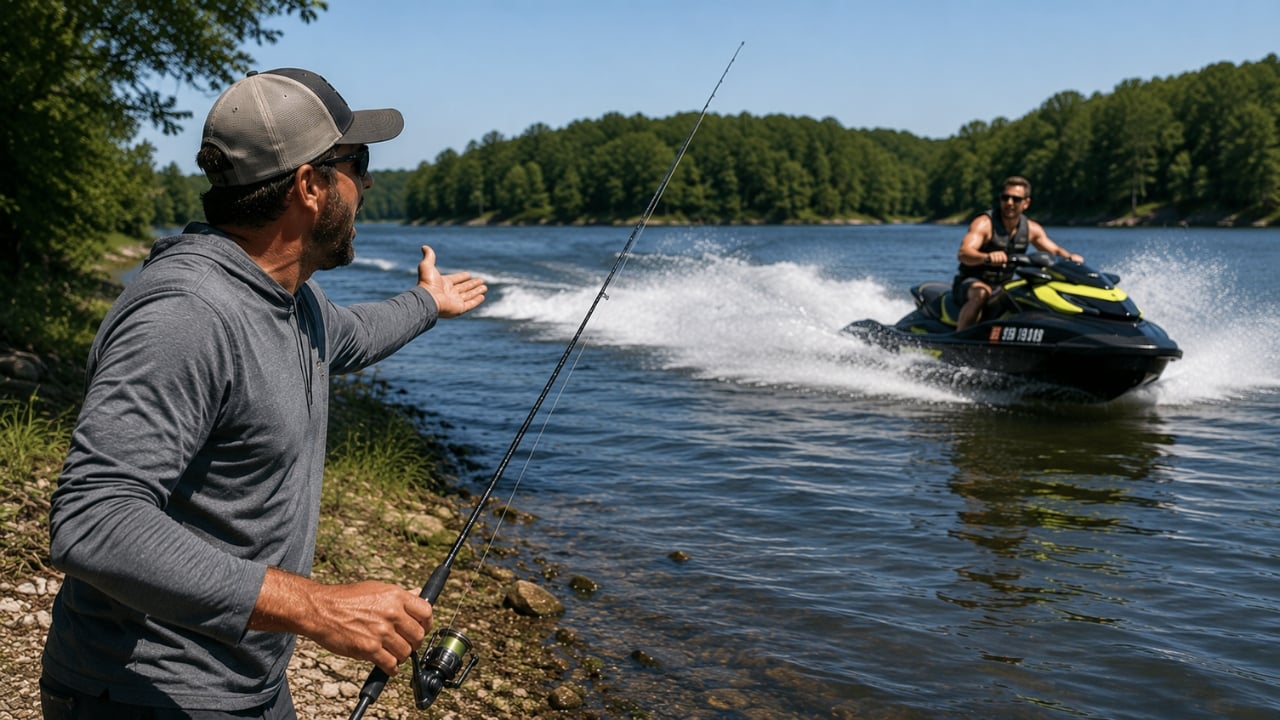
A shore angler said he was trying to enjoy a normal day of fishing when a jet ski came too close, threw a wake into the area, and turned his fishing spot into the kind of mess bank fishermen know all too well.
The angler brought the situation to r/Fishing in a post titled “Just want opinions on this. Was fishing yesterday and…”. He was looking for opinions after a close pass on the water left him frustrated and wondering whether he was right to be annoyed.
The issue was not complicated. He was fishing from shore, working the water in front of him, when a jet ski came through close enough to disturb the spot. For someone on a boat, a pass like that may feel quick and harmless. For someone standing on the bank with a line in the water, it can ruin the whole setup in seconds.
A wake can muddy the edge, move bait, push fish out, tangle a line, slap the bank, or make the casted area useless for a while. Even if the jet ski driver did not mean to cause trouble, the angler still had to deal with the result.
That is where these fishing conflicts get tricky. Public water is shared. Jet skis, boats, kayaks, and anglers all have a right to be there when they are following the law. But using public water still comes with basic courtesy, especially around people who are clearly fishing.
Bank Fishermen Cannot Move Like Boats Can
The biggest difference between a shore angler and someone on a jet ski is mobility.
A jet ski can be gone in seconds. The driver can cross the cove, turn around, and move to another stretch of water almost instantly. A shore angler is usually stuck with whatever access point he has. He may have walked down a trail, found one break in the brush, or chosen one section of bank where the water is reachable.
That makes close passes more frustrating. The person on the jet ski may only be there for a moment, but the bank fisherman may have spent time finding that spot, setting up, reading the water, and making careful casts. When a wake blows through, he cannot simply drift 50 yards away and keep fishing the same way.
This is why shore anglers tend to be sensitive about people buzzing the bank. They do not need the entire lake. They just need a reasonable amount of space in the water they can actually reach.
A jet ski running close to shore near an angler can feel careless because the driver has so many other places to go. The fisherman may not.
The Wake Was the Real Problem
The close pass itself was annoying, but the wake was what made it matter.
Wakes can hit the bank hard, especially in shallow areas. They can stir up mud, slap against rocks, wash over gear, move floats, and make a carefully worked piece of water feel blown out. If the angler is using lighter tackle, bait, bobbers, or working a specific piece of cover, the disturbance can wreck the presentation.
Fish do not always disappear forever after a wake. On busy lakes, some fish are used to traffic. But that does not make it fun to have someone cut through your casting lane and churn up the bank.
The poster seemed to be asking whether his frustration was reasonable. For most anglers, the answer would be yes. A person fishing from shore is not asking everyone to stop using the water. He is asking people not to run right through the spot he is actively fishing when there is room to go around.
That is the basic courtesy piece. You can legally pass someone and still be rude about how you do it.
Jet Skis Have a Reputation for a Reason
Fair or not, jet skis often get blamed for bad behavior on the water.
Part of that is because they are small, fast, maneuverable, and often used for recreation rather than travel. A driver may be circling, cutting, jumping wakes, or playing around without thinking much about fishermen, docks, kayaks, swimmers, or shoreline erosion.
Plenty of jet ski riders are respectful. They keep their distance, slow down near shore, and avoid people who are fishing. But the ones who do not stand out fast because their wake and engine noise are hard to ignore.
That is why the angler’s complaint likely felt familiar to commenters. Most people who fish busy public water have had some version of it happen. A boat runs too close. A jet ski cuts across the cast. A wakeboard boat throws rollers into the bank. Someone treats the shoreline like a playground without noticing the person standing there with a rod.
The frustration is not only about one pass. It is about feeling invisible while someone else uses the water like nobody else is there.
Commenters Usually Split Between Rights and Courtesy
In situations like this, anglers tend to land in two camps.
One group says public water is public water. If the jet ski was not breaking a law, violating a no-wake zone, or intentionally harassing the fisherman, then the angler may not have much he can do besides move, wait, or come back when traffic is lighter.
That is frustrating, but it is often true. Not every annoying wake is illegal. Not every close pass is enforceable. A fisherman may be completely justified in being irritated and still have no real remedy.
The other group focuses on courtesy. They argue that just because someone can pass close does not mean they should. If you see a person fishing from shore, give them room. Do not cut across the line. Do not throw a wake into their spot if you can avoid it. Do not act like your fun matters more than everyone else’s day.
The best answer is usually somewhere between those two. The water is shared, but shared water works better when people act like other users exist.
The Smart Move Is Not Escalating From the Bank
A shore angler has limited options when someone on a jet ski buzzes past.
Yelling usually does not help. The rider may not hear it, may not care, or may decide to come back and make things worse. Casting toward the jet ski is a terrible idea and can create a dangerous situation. Throwing things, waving aggressively, or trying to start a fight from shore only adds risk.
If the rider is truly violating a posted no-wake zone, harassing anglers, operating dangerously, or getting too close to people, then the better move is to document what happened. A registration number, description, time, location, and photo or video can matter if there is a real safety issue.
If it is only rude behavior, the options are less satisfying. Fish earlier. Fish later. Pick less trafficked banks. Look for no-wake areas. Move to places jet skis cannot easily run close. That does not make the rude pass okay, but it keeps the angler from letting one rider ruin the whole day.
Sometimes the best fishing decision is choosing water where recreational traffic has less power over the spot.
Commenters generally understood why the shore angler was frustrated, even if they did not all agree on what could be done about it.
Some likely pointed out that public water has to be shared. Jet skis and boats are allowed to use the lake too, and unless someone is violating a rule, the angler may not have much recourse beyond moving or waiting for the disturbance to settle.
Others focused on basic manners. They agreed that buzzing close to someone who is actively fishing from shore is rude, especially when there is plenty of room to go around. A little distance would cost the jet ski rider almost nothing and would keep from wrecking another person’s spot.
Several anglers probably suggested adjusting the timing. Early mornings, evenings, weekdays, and cooler weather can mean fewer jet skis and less recreational boat traffic. If a bank spot sits in a popular riding area, it may fish better before the lake gets busy.
A few would have warned against escalating. Yelling, casting near the rider, or trying to confront someone from shore is unlikely to fix the problem and could make it worse.
For the angler, the frustration came down to one simple thing: he was already there, working the bank, and someone on a jet ski treated the water in front of him like open play space. The lake may belong to everyone, but courtesy still matters. Giving a shore fisherman room is not hard. It is the difference between sharing the water and ruining somebody else’s cast.