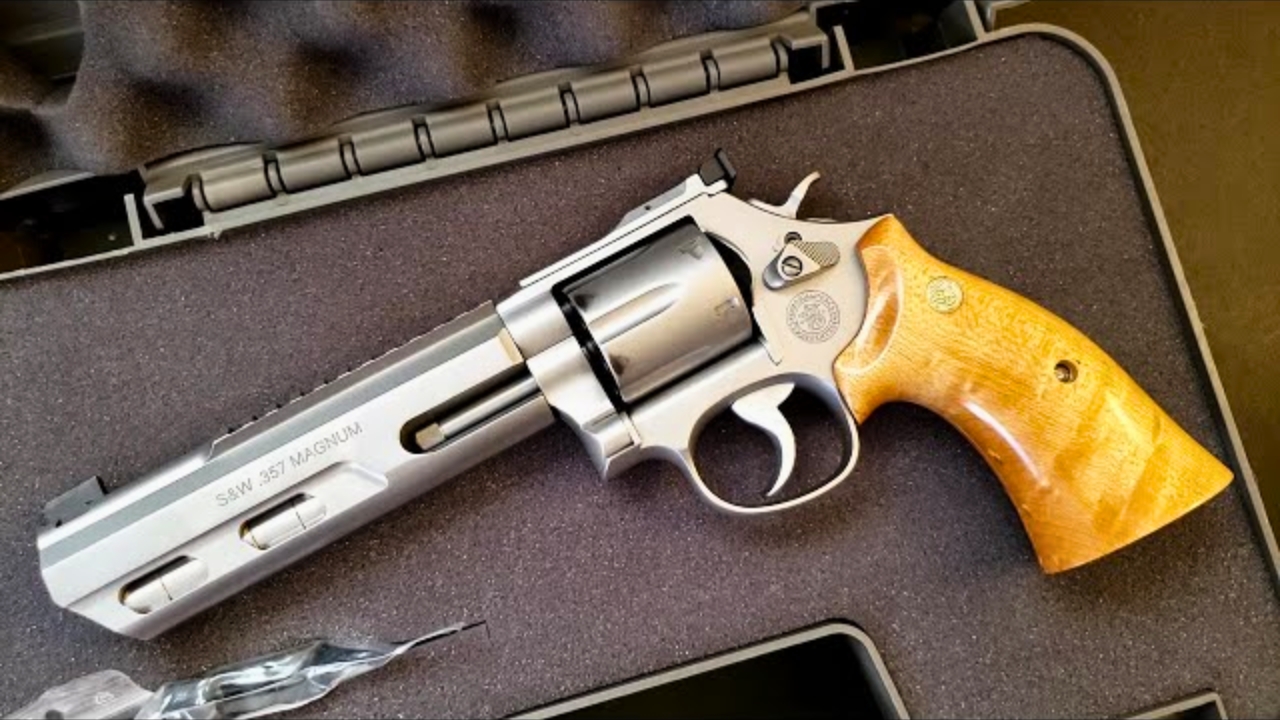
Photo credit: Mystery Wheelgunner/YouTube
Micro 9s are everywhere now. They’re light, easy to conceal, and you can stuff a lot of rounds into a small package. On paper, it’s hard to argue against that. In real life, a lot of shooters still trust a revolver more, especially when the gun is meant to be carried daily and used under ugly conditions. That isn’t because they’re stuck in the past. It’s because they’ve seen how small semi-autos behave when the shooter is stressed, the grip gets sloppy, or maintenance gets skipped. Micro 9s can be excellent, but they’re also less forgiving than people want to admit. The wheelgun crowd is usually responding to that reality, not trying to win a nostalgia contest.
Trust is a weird thing in defensive shooting. It’s not just about what’s “best.” It’s about what you believe will work when you’re tired, distracted, cold, sweaty, or half awake at 3 a.m. Some shooters trust a wheelgun because it matches the way they think and the way they live. Others trust it because they’ve personally watched micro 9s choke for reasons that didn’t show up on a clean range day. Here are six reasons the revolver trust factor is still real.
They don’t want to bet their life on magazines
A micro 9 lives and dies by its magazines. Worn springs, bent feed lips, debris, or even a bad seating can turn a “reliable” pistol into a problem. Most shooters don’t track magazines the way they should, and most carry mags get abused over time. Revolver shooters like that a wheelgun eliminates that entire category of failure. It’s not that revolvers can’t fail. It’s that they remove one of the most common semi-auto failure points from the equation.
This matters even more in tiny pistols because the margins are tighter. Small guns often have faster slide speed, less mass, and less tolerance for inconsistent feeding. A full-size duty pistol might eat through minor mag issues longer before it starts showing problems. A micro 9 is quicker to punish you. People who’ve had a carry mag cause a stoppage tend to remember that lesson for a long time.
They like that a revolver doesn’t care about grip technique as much
Micro 9s are snappy and light, and they demand a firmer, more consistent grip than people expect. Under stress, grip changes. Hands get sweaty. You’re shooting from awkward angles. You’re moving. Sometimes you’re injured. In those conditions, small semi-autos can be more sensitive. You can induce failures by not letting the frame stay stable enough to cycle properly. It’s not always “limp wristing” in the insulting sense. It’s just physics. Small guns are less forgiving.
A revolver doesn’t have the same cycling requirement. If you can press the trigger, it can fire. That’s a big deal for some shooters, especially folks who don’t shoot often, folks with weaker hands, or folks who know their grip consistency isn’t perfect under pressure. Again, revolvers still demand skill, but they don’t demand the same “run the slide system correctly” skill that micro 9s do. That’s a different kind of trust.
They trust the close-contact behavior more
At true contact distance, a semi-auto can be pushed out of battery if the muzzle gets driven into a body or an object. That’s a real issue in clinch-range fights. Revolvers don’t have that specific failure mode. If you can keep the cylinder turning and you can press the trigger, the gun can keep firing even when the muzzle is jammed into something. That gives some shooters peace of mind because they’re thinking about worst-case entanglement, not range drills.
This is one of those topics people argue about online like it’s theoretical. It’s not. Contact-distance shootings happen. Grappling happens. Bad positions happen. A revolver doesn’t solve every problem, but it does remove one that can shut a semi-auto down at the worst time. If you’re someone who worries about entangled fights, that alone can push you toward a wheelgun.
They’ve seen micro 9s turn into maintenance divas over time
Micro 9s can be reliable, but they often require more attention than people think. Recoil springs wear faster. Small guns can be more ammo-sensitive. The tolerance stack is tighter. A gun that runs flawlessly when clean can start getting picky when dirty. If someone carries daily—sweat, lint, dust, debris—a micro 9 can accumulate grime in ways that show up as malfunctions if you don’t stay on top of it. Revolver shooters tend to like that a wheelgun can be carried a lot without depending on the same cycling timing.
That doesn’t mean revolvers are maintenance-free. They aren’t. But the perceived maintenance burden feels different. Micro 9s also tend to be shot less by the average owner because they’re less fun to shoot, which creates a cycle where the gun gets carried a ton and tested less. Revolver people are often responding to that real behavior pattern, not just the design differences.
They trust the trigger in a very specific way
This one surprises people, but a long, heavy double-action trigger can feel “safer” and more deliberate to some shooters. Not safe in the legal sense, but safe in the “I’m less likely to do something dumb under stress” sense. A revolver trigger requires commitment. You don’t brush it and get a bang. You pull through a long stroke. For some people, especially those who carry without a manual safety and worry about negligent discharges, that trigger feel builds trust.
It also builds trust because it’s consistent. Every shot is the same long pull in double action, and there’s no transition or reset behavior that varies with striker-fired triggers under poor technique. That doesn’t make it easier to shoot well, but it makes it predictable. Predictability is a form of trust, especially for people who don’t shoot thousands of rounds a year.
They value “ready to fire” without steps they can mess up
Some shooters like that a revolver is conceptually simple under stress. No slide manipulation. No “did I seat the mag?” No “is there one in the chamber?” No chance of riding the slide or inducing a malfunction during administrative handling. You load it, close it, and it’s ready. That simplicity is comforting, especially for people who have watched friends struggle with basic semi-auto handling or people who know they may need to use the gun under fatigue or adrenaline.
This is also why revolvers remain popular in certain home-defense and bedside roles. People want something that can sit loaded, be grabbed, and be run without a checklist. Again, that doesn’t make it better. It makes it appealing to a certain mindset. The micro 9 crowd thinks in capacity and speed. The revolver crowd often thinks in reduced variables and “press the trigger until the problem changes.”
The honest conclusion: it’s trust built from experience and priorities
A micro 9 is usually the better “spec sheet” answer. More rounds, faster reloads, flatter shooting, easier trigger for many. The reason some shooters still trust a wheelgun more is because they’re weighing different risks. They’re trading capacity for fewer variables. They’re trading reload speed for close-contact confidence. They’re trading modern convenience for a platform they understand deeply and can run under stress. That can be rational if the shooter is honest about the tradeoffs and trains accordingly.
Like The Avid Outdoorsman’s content? Subscribe to our newsletter so you never miss an article.
Here’s more from us: