Photo credit: Lucky Gunner Ammo/YouTube
We may earn revenue from products featured on this page through affiliate links.
Revolvers never really went away, but the way people talk about them has gotten weird. You’ll hear some folks act like a wheelgun is the “simple” choice and everything modern is overcomplicated. Then you’ll hear the opposite—people act like revolvers are outdated antiques that only exist for nostalgia. Reality sits in the middle. Revolvers can be solid self-defense tools, and they still solve specific problems better than many semi-autos. But they also come with tradeoffs that matter a lot more in real life than they do in internet debates. If you’re thinking about carrying one for defense, you need to be honest about both sides, because the revolver won’t forgive you for believing marketing or mythology.
The biggest advantage of a revolver isn’t that it’s “better.” It’s that it’s different. It behaves differently under stress, it fails differently, and it demands different habits. Some people shoot them better. Some people carry them easier. Some people trust them because they’ve lived through semi-auto issues and don’t want to deal with magazine drama. That’s all fair. But you also have to accept that capacity, reload speed, and recoil management aren’t theoretical. They’re the exact things that decide whether you can keep solving the problem if the first few shots don’t end it. Revolvers can work. The question is whether the strengths match your real-world use, not whether you like the idea of a wheelgun.
The real pros: what revolvers still do better than most people admit
A revolver can be brutally straightforward in one way that matters: if you have a good one, and you press the trigger, it usually fires. There’s no magazine to seat, no slide to rack, no worry about limp-wristing, and no out-of-battery situation from a bad grip. For some shooters, especially newer shooters or shooters with weaker hands, that simplicity is a real advantage. You load it, close it, and it’s ready. For home defense or for a gun that might sit for long periods, that has value. It’s not magic reliability, but it’s fewer variables.
Revolvers also play well with contact-distance problems. If you’re in a true clinch, a semi-auto can get pushed out of battery if the muzzle is driven into something. A revolver doesn’t have that specific failure mode. That’s a legitimate advantage in a worst-case fight where space is tight. There’s also ammo flexibility. In certain revolvers, you can run loads that might not cycle reliably in a semi-auto. You can tailor recoil and performance more easily. That doesn’t make it “better,” but it gives you options that some people genuinely use, especially in small-frame guns where recoil becomes a major factor.
The real tradeoffs: capacity and reloads aren’t internet arguments
The hard truth is that most defensive revolvers carry fewer rounds than modern carry pistols, and the reloads are slower for most people. That matters. Nobody gets to choose how many rounds they’ll need. Most self-defense incidents are resolved quickly, but “most” isn’t “all,” and you don’t build a defensive plan around best-case outcomes. A five-shot revolver gives you less margin for misses, less margin for multiple threats, and less margin for a shot that doesn’t stop the problem. That doesn’t automatically disqualify it, but it’s the main tradeoff you have to accept.
Reloading a revolver under stress is also not as easy as people pretend. Yes, speedloaders and speed strips exist, and a trained shooter can reload quickly. Most carriers don’t train enough to do it cleanly when their hands are shaking. Speedloaders can also be bulky and awkward to carry discreetly. Speed strips carry flatter, but they’re slower. A magazine in a pocket is generally simpler and faster for most people, and it’s easier to carry multiples. If you’re picking a revolver for concealed carry, you should assume you’re probably not doing fast revolver reloads under stress unless you’re the rare person who actually practices them.
Recoil and trigger demands are real, especially in snub-nose guns
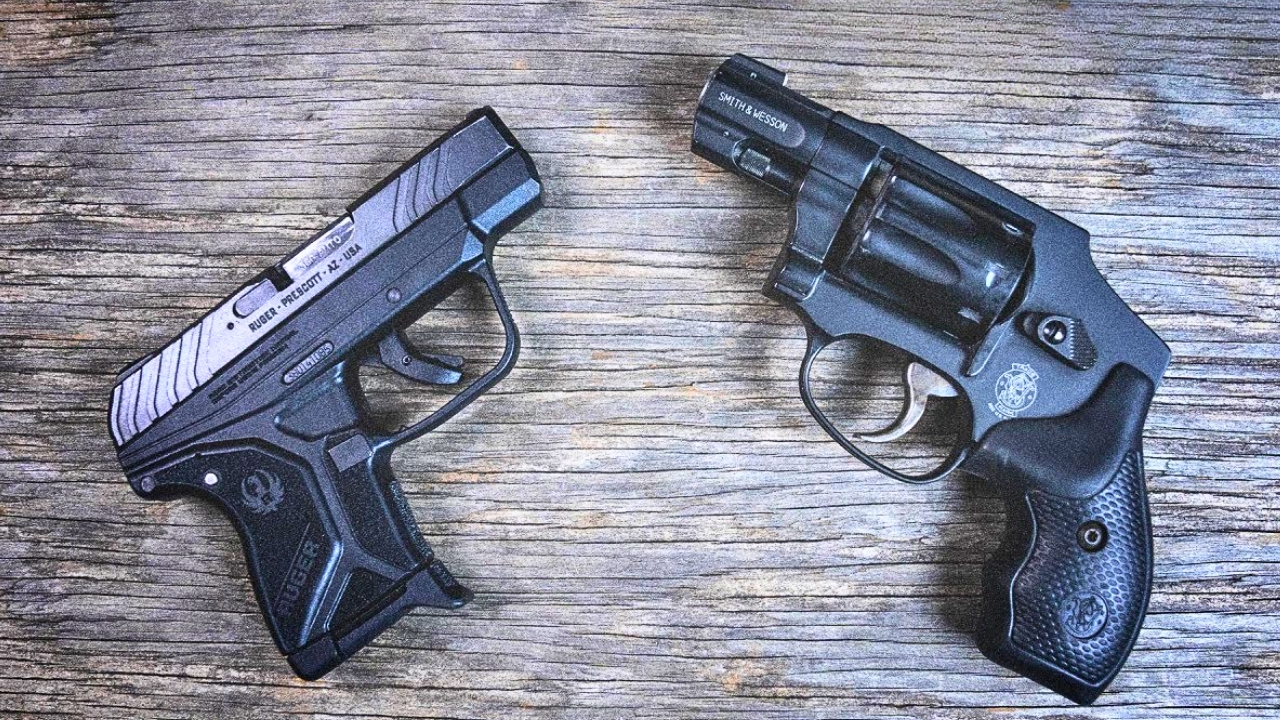
A lot of people buy a small revolver because it looks simple and conceals easily, then they’re shocked by how hard it is to shoot well. Snub-nose revolvers can be unforgiving. They’re light, they recoil sharply, and the double-action trigger is long and heavy compared to most striker-fired pistols. That trigger is not “bad,” but it demands more discipline. If your grip is weak or your trigger control is sloppy, your hits will wander fast. A small revolver can make an average shooter look worse than they are, which is why so many people own snubs but rarely practice with them.
This is where revolver myth-making hurts people. They hear “revolvers are reliable and simple,” so they assume they don’t need much training. Then they carry a gun that requires more skill to shoot accurately under stress. If you’re going to carry a revolver for defense, you should treat trigger control as a serious requirement, not an afterthought. Dry fire matters. A lot. You need to build a smooth, straight pull without staging the trigger in a way that falls apart when you’re rushed.
Revolvers fail differently, and the “failures” can be worse
Semi-autos malfunction more often in minor ways, but they’re often quicker to clear. Revolver problems can be rarer, but when they happen, they can be more catastrophic. A high primer, debris under the extractor star, a bent ejector rod, a timing issue, or a cylinder bind can turn a revolver into a dead gun. You don’t tap-rack your way out of that. You either fix it with tools and time or you stop using the gun. That’s not a reason to fear revolvers. It’s a reason to stop pretending they’re immune to reality. A revolver needs maintenance and inspection too.
This is also why revolver quality matters. A cheap or poorly made revolver can become a headache. Timing and lockup are not theoretical. They matter for safety and function. If you’re buying a revolver for defense, you don’t buy it because it’s the cheapest thing in the case. You buy a proven model, you test it with your chosen ammo, and you confirm it stays reliable over time. “Revolver” is not a guarantee. The specific revolver is what matters.
Where revolvers still make a ton of sense
Revolvers can still make strong sense for deep concealment, for people who value simplicity of operation, and for people who are willing to train the trigger. They can also make sense for people who prioritize a gun that can sit loaded for long periods without worrying about magazine springs or cycling quirks. For outdoors carry, some folks prefer revolvers for certain animal-defense loads, depending on the caliber and platform. In the self-defense context, revolvers can be a good choice when the user’s real requirement is “I will actually carry this every day and I can shoot it well,” because carry compliance is a real factor. A gun that’s always on you beats a better gun that stays at home.
If you want to make revolver carry more realistic, it’s worth carrying at least a reload option. Speed strips are easy to pocket carry and aren’t bulky, and they can turn a five-shot gun into a gun you can keep running if you need to. Something like Bianchi Speed Strips from Bass Pro Shops fits that role without turning your pocket into a hardware store. It’s not glamorous, but it’s practical, and practical is the whole point.
The bottom line: a revolver can be a smart choice if you choose it for the right reasons
If you’re choosing a revolver because you think it’s “more reliable” in some magical way, you’re starting from the wrong place. If you’re choosing it because it fits your lifestyle, you can shoot it well, and you understand the limits, it can absolutely be a smart defensive tool. The pros are real: straightforward operation, good close-contact behavior, and a platform that some shooters simply trust. The tradeoffs are just as real: fewer rounds, slower reloads, and a trigger that demands work.
The right question isn’t “revolver or semi-auto?” The right question is “what can I carry consistently, shoot accurately under stress, and keep running when things don’t go perfectly?” If a revolver is the honest answer for you, carry it with confidence—earned confidence. And if it isn’t, don’t force it because you like the idea of it. Self-defense doesn’t care what you like. It cares what works when you’re having the worst day of your life.
Like The Avid Outdoorsman’s content? Subscribe to our newsletter so you never miss an article.
Here’s more from us: