Photo credit: The Avid Outdoorsman
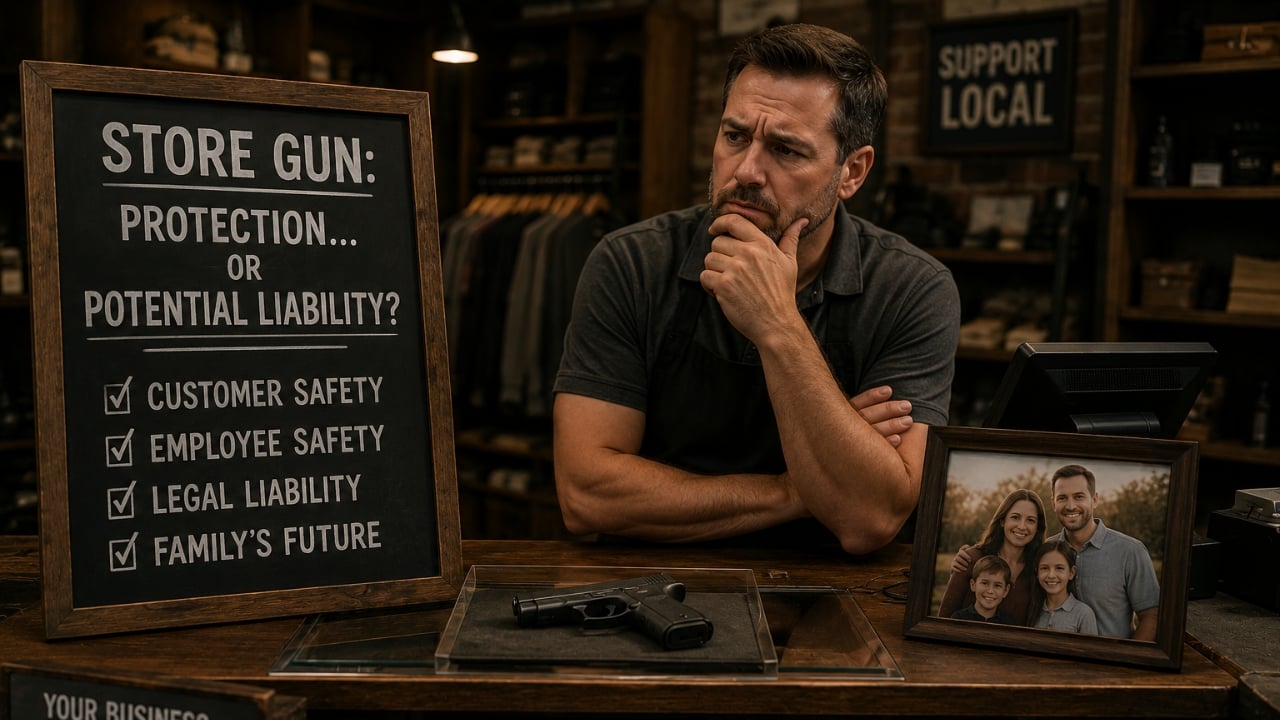
The small business owner said the store was in a bad area, and the family was trying to think through safety before something happened. According to the Reddit post, the parents ran a small business and were considering keeping a firearm behind the counter.
The original Reddit post can be found here: https://www.reddit.com/r/legaladvice/comments/13ifskh/my_parents_run_a_small_business_in_a_bad/
That kind of question comes up a lot with family-owned stores. A business may deal with late hours, cash transactions, rough customers, shoplifting, threats, or past robberies. When people feel like they are on their own, a gun behind the counter can start to look like a reasonable backup plan.
But the legal and practical side is much bigger than simply buying a handgun and sticking it under the register.
The first question is who owns the gun and who has access to it. If several family members work at the store, can all of them legally possess it? Are any employees underage? Is anyone prohibited from having access to firearms? Is the gun secured so a customer, worker, delivery driver, or thief cannot grab it? Those questions matter before the business ever has to deal with a robbery.
There is also the issue of training. A firearm kept for protection inside a store is only useful if the people who may use it know what they are doing. In a small retail space, there may be customers nearby, thin walls, glass doors, employees moving around, and no safe backstop. A missed shot inside a business can create more danger than the original threat.
The liability concern was real too. If someone uses the gun, the family may face police investigation, civil claims, insurance issues, employment questions, and business consequences. Even a justified defensive use can be expensive and stressful. An unjustified or careless use could be life-changing.
The owner also had to think about storage rules. A gun left loose behind a counter can become a problem if someone unauthorized finds it. If a worker grabs it during an argument, if a child gets access, if it is stolen overnight, or if it disappears during a break-in, the family could be dealing with a whole new legal issue.
That does not mean business owners have no right to protect themselves. It means the decision needs to be handled like a serious safety plan, not a casual comfort item. Depending on the state and local rules, the family may need to consider permits, carry laws, workplace policies, insurance, safe storage, and whether a better security setup would reduce risk.
Commenters told the owner that the family needed to look at state and local firearm laws before keeping a gun at the business. Several said the rules could depend on whether the gun was being carried by a person, stored on the premises, or accessible to multiple employees.
Others focused on liability. If more than one person could access the firearm, the family needed to think about who was legally allowed to possess it and whether the business could be responsible if it was used improperly.
Some commenters suggested talking to the business’s insurance provider. A firearm kept on site could affect coverage, especially if the business had employees or customers coming in and out.
A few people also said the family should consider non-gun security first: cameras, lighting, alarms, locked doors, panic buttons, better cash handling, and clear robbery procedures. A gun might be one part of a plan, but it should not be the whole plan.
The post ended with the business owner asking the right question before the gun was ever needed. Keeping a firearm behind the counter may feel like protection, but for a family business, it also creates responsibility. If they choose to do it, the setup needs to be legal, secured, trained for, and understood by everyone who might be anywhere near it.
Like The Avid Outdoorsman’s content? Subscribe to our newsletter so you never miss an article.
Here’s more from us: