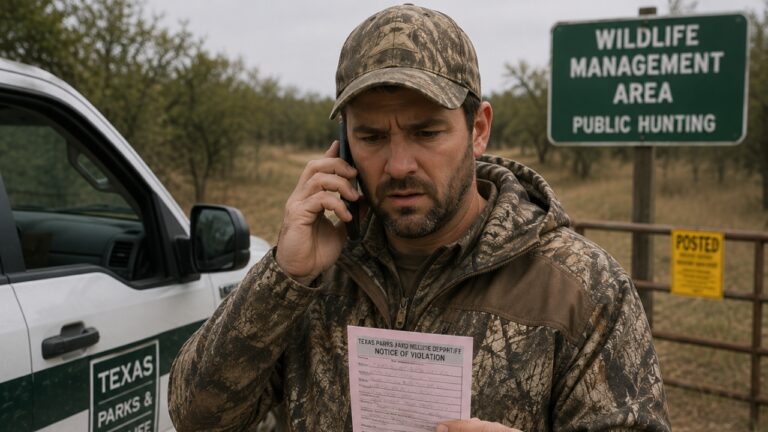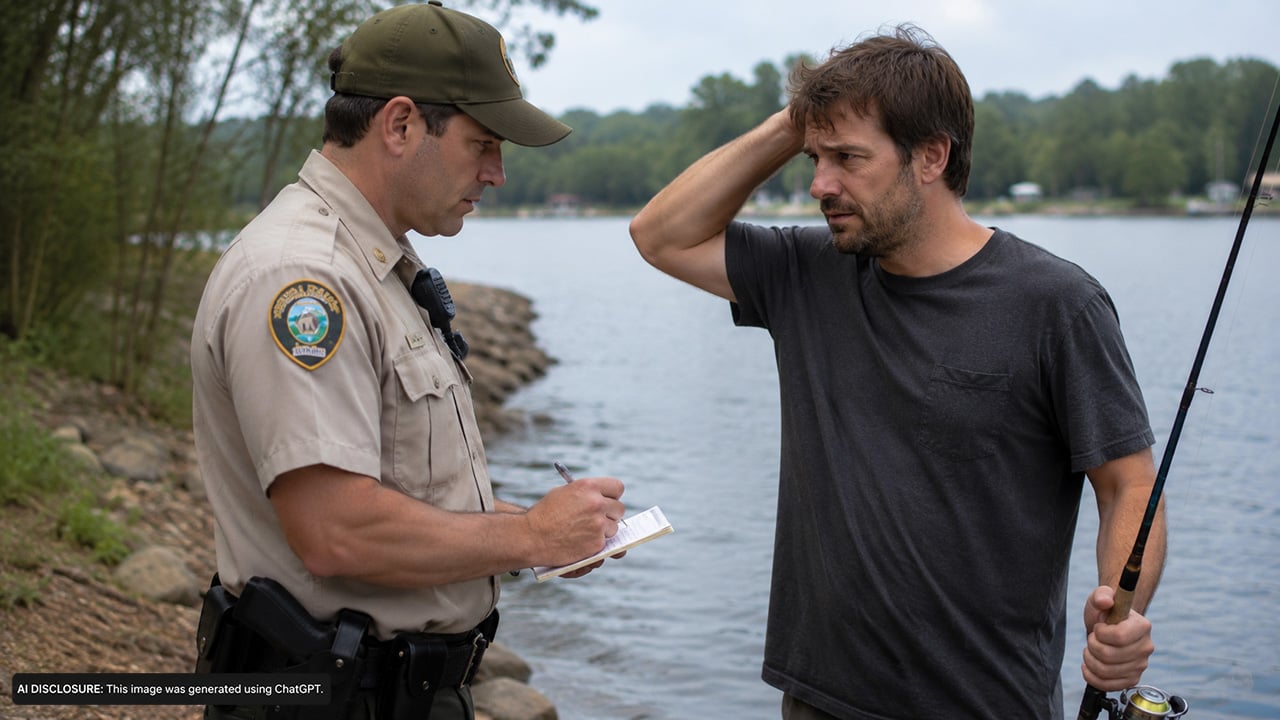
Photo credit: AI-generated image created using ChatGPT. Illustrative only
Most folks think of a fishing license as a little piece of paper you buy and forget about until next season. But if a game warden pulls up while you’re on the bank, that “little” detail can turn into a ticket you didn’t see coming—along with a court date and paperwork that can follow you.
That’s exactly what happened to a 17-year-old in Georgia who said she’d only been fishing for about a week when she was checked and cited. In the original post, she explained she didn’t think she needed a license because she was under 18, and now she’s trying to figure out how to get the fine reduced or tossed because she doesn’t have much money and has no prior history.
A quick fishing trip turned into a ticket
If you’ve spent any time around public water, you’ve seen it. You’re casting, minding your business, and a truck rolls up. The person stepping out isn’t there to chat about what’s biting—he’s there to check compliance.
According to the angler’s description, the game warden “pulled up and ticketed” her for fishing without a license. No drama, no mention of an argument, just the kind of routine check that catches new anglers off guard—especially younger ones who assume age automatically equals exemption.
The “I didn’t know” problem doesn’t usually erase a citation
This is the part that trips people up. A lot of states do have youth exemptions, special days, or different requirements depending on age, residency, and where you’re fishing. But “I wasn’t aware” isn’t the same thing as “I was exempt,” and wardens usually write the ticket based on what the law requires, not what someone thought the law was.
Even when someone is genuinely new and genuinely confused, a citation can still stick. From a practical standpoint, the game warden’s job is to enforce the regulations as written. Sorting out excuses, misunderstandings, or reductions is typically a court or prosecutor decision, not something handled on the shoreline.
Why a fishing ticket can matter later than you think
A lot of outdoorsmen treat license issues like a parking ticket—pay it and move on. But depending on how a case is handled, it can create a record that doesn’t just vanish the minute the fine is paid.
The young angler said a parole officer told her to plead “nolo.” That word—short for nolo contendere—comes up in minor cases because it can be a way to resolve a charge without admitting guilt. But here’s the catch: a “no contest” plea can still result in a conviction or at least a court record, and that’s where the background-check concern comes from. Employers, schools, landlords, and licensing boards don’t all look at records the same way, and some checks scoop up more than people expect.
In other words, the fine is one thing. The paper trail can be another.
The money part is real, and it’s not just about the fine
She said she can’t pay the fine because she doesn’t have a lot of money. That’s common with teenagers and young adults—especially for someone who just picked up fishing and likely doesn’t have a steady income.
But the cost can go beyond the ticket amount. Depending on how Georgia processes wildlife citations, there can be court costs, administrative fees, or added penalties if someone misses court, ignores deadlines, or fails to follow through on whatever the citation requires. The biggest mistake isn’t getting checked—it’s letting the ticket sit until it snowballs.
What people in her position usually do to keep it from getting worse
When someone asks how to get a fine “reduced or thrown out,” the honest answer is that there’s no magic phrase at the counter. The practical moves tend to be pretty simple, and they’re the same ones seasoned hunters and anglers tell newcomers to do fast.
First, show up and take it seriously. If there’s a court date, don’t miss it. If there are instructions on the citation, follow them exactly. Missing a court date over a fishing license issue is the kind of self-inflicted wound that turns a minor mistake into a real headache.
Second, bring proof of whatever helps your story. If the state actually exempts under-18 anglers in that situation, proof of age could matter. If buying a license after the fact is allowed and helps mitigate the outcome, having that receipt can sometimes show good faith. It doesn’t erase what happened, but it can help a judge see you’re trying to do it right from here on out.
Third, ask about options that fit a teenager’s budget. Courts sometimes allow payment plans or reduced fines based on ability to pay. Some jurisdictions offer diversion-type outcomes for first-time offenders. None of that is guaranteed, but it’s the kind of question that’s worth asking politely and directly.
The big lesson for every new angler: don’t assume youth equals exempt
This whole situation is a reminder for parents, grandparents, and anyone taking a kid to the pond: don’t guess on license rules. “Under 18” doesn’t mean the same thing everywhere, and even when a youth exemption exists, it can come with conditions—like needing a free permit, fishing only certain waters, or being accompanied by a licensed adult.
If you’re introducing someone to fishing, take five minutes before you go. Look up your state regs, confirm whether a license is required for that age, and double-check if the water you’re fishing has special rules. Keep a screenshot of the regulation page or carry the booklet in the glovebox. That’s not being paranoid—that’s just being smart.
For the Georgia teen who got cited, the best path usually looks like this: handle the ticket promptly, show the court you’re taking responsibility, and don’t make choices based solely on casual advice about what plea to enter. In the outdoors, little details—tags, seasons, limits, licenses—are what keep a good day from turning into a long one. And once the paperwork starts, it pays to slow down and do it right.
Like The Avid Outdoorsman’s content? Subscribe to our newsletter so you never miss an article.
Here’s more from us: