
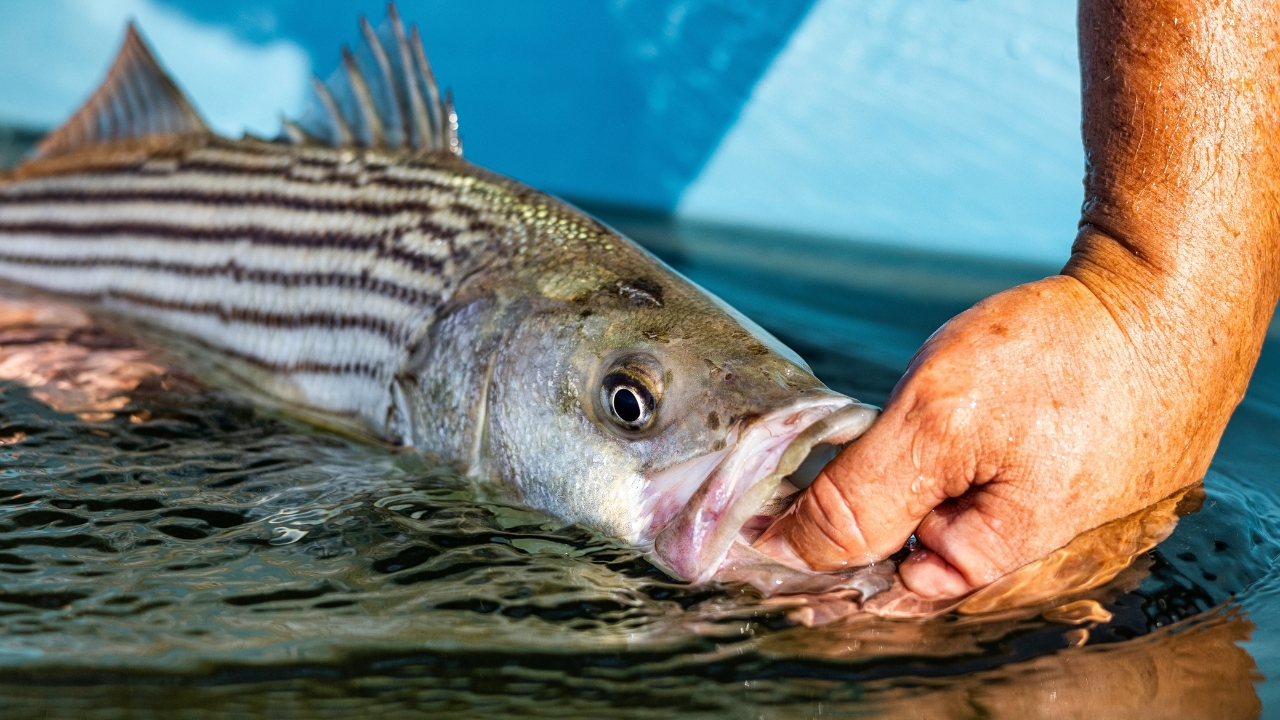
Photo credit: Kim Miller Media/ Shutterstock.com
Striped bass managers are heading into 2026 with a stock that still needs rebuilding and a coast full of anglers and commercial operators watching every move. You are being asked to fish under rules that may not change much on paper next year, even as pressure mounts for deeper cuts and new kinds of closures. The result is a management landscape where “status quo” on striped bass does not mean business as usual for you on the water.
How you got to the 2026 crossroads
If you fish for Atlantic striped bass, you are operating inside a long running experiment in rebuilding a migratory stock under intense public scrutiny. Currently, Atlantic striped bass is managed under Amendment 7 to the Interstate Fishery Management Plan, a framework that consolidates earlier measures and sets biological reference points, rebuilding timelines, and tools such as size limits, bag limits, and seasonal closures for the coastwide fishery. The plan covers both ocean and Chesapeake Bay components and spells out how managers can adjust regulations when fishing mortality or spawning stock biomass drift outside targets, which is why you have seen frequent tweaks to slot sizes and seasons in recent years, all grounded in the same Amendment.
Within that umbrella, the Atlantic States Marine Fisheries Commission, often shortened to The Atlantic States Marine Fisheries Commission, has been steadily layering on addenda that respond to new stock assessments and projections. Those addenda are where you see specific tools like slot limits, commercial tagging rules, and state by state implementation schedules, and they are the reason your local regulations can look different from the next state’s even though everyone is fishing the same migratory Atlantic stock. As 2026 approaches, the tension is that the overarching Interstate Fishery Management Plan still demands rebuilding by 2029, while the most recent decisions have leaned toward holding the line on removals rather than cutting deeper.
The “status quo” vote that set the tone
The clearest signal of that tension came when striped bass managers opted for what was described as a Breaking Striped Bass Managers Vote on a Status Quo package with No Reductions for 2026. Instead of tightening harvest, the Atlantic Striped Bass Management Board chose to keep existing measures in place, a move that immediately raised questions about how you can still hit rebuilding targets without new cuts. That same decision also included a Vote Passes step to form a working group, an acknowledgment that the current approach needs more analysis even as the board declined to impose fresh pain on anglers and commercial operators in the short term, a choice detailed in the account of the Breaking vote.
For you, that “status quo” outcome means the bag limits, slot ranges, and seasons you learned in 2025 are likely to feel familiar when you launch in 2026, at least at the coastwide level. But it also means the underlying problems that drove earlier emergency actions, including poor spawning in Chesapeake Bay and a stock still short of its rebuilding benchmarks, have not gone away. The working group created by that vote is expected to dig into those projections and advise The Board on whether more aggressive steps are needed later in the decade, so the apparent calm for 2026 could be a pause before sharper adjustments rather than a permanent reprieve.
What Addendum II already changed on the water
Before you even get to the new debates, you are still living with the ripple effects of Atlantic Striped Bass Addendum II to Amendment 7, which locked in some of the most visible constraints on your day to day fishing. Under that document, ocean recreational fisheries are constrained by a 1 fish bag limit and a slot limit of 28 inches to 31 inches, a narrow window that was designed to protect both smaller schoolies and the largest breeders. The same Addendum II also tightened rules in Chesapeake Bay and clarified how states must implement conservation equivalency, so when you measure a fish against your tape in the Ocean region, you are directly feeling the choices laid out in the Dec document.
Those measures were sold to you as necessary short term sacrifices to keep the rebuilding plan on track, and they are the baseline that the 2026 “status quo” decision effectively locked in for another season. If you run a charter business, that 1 fish bag limit has already forced you to rethink how you market trips, shifting from meat runs to catch and release experiences. If you fish commercially, the recreational slot has changed the mix of sizes that show up in the market, which in turn shapes demand and pricing. The fact that managers chose not to layer new reductions on top of Addendum II for 2026 does not erase the reality that you are still operating under some of the tightest striped bass rules in decades.
Addendum III: big ideas, smaller final bite
Heading into 2026, many of the most aggressive ideas were bundled into Draft Addendum III, which was introduced under the banner Draft Addendum Considers Further Fishery Reductions. The Commission’s Atlantic Striped Bass Management process used that draft to float options like additional recreational cuts and a commercial quota reduction, signaling to you that nothing was off the table if projections showed the stock falling behind its rebuilding schedule. When The Board sent that draft out for public comment from Arlington, it was a clear attempt to test how far you and other stakeholders were willing to go in the name of rebuilding, as described in the Draft Addendum Considers Further Fishery Reductions notice.
By the time the Atlantic Striped Bass Board approved Addendum III itself, the final product looked more modest than many of the early scenarios that had you bracing for sweeping closures. For commercial tagging, the Addendum requires states to tag commercially harvested fish by the first point of landing, a change that tightens accountability without directly cutting your quota. The same document explicitly moved forward without reductions in fishery removals, which means that if you fish under a commercial license, your total allowable catch is not being ratcheted down by this particular addendum, even as you adjust to new paperwork and tagging logistics spelled out in the Addendum.
Public hearings and the rebuilding clock
Even with Addendum III trimmed back, the pressure on you did not disappear, because the rebuilding clock embedded in Amendment 7 is still ticking toward 2029. The Board initiated the Draft Addendum in response to stock projections indicating a low probability of meeting the 2029 rebuilding deadline under existing measures, a warning that the current mix of slot limits, seasons, and commercial quotas might not be enough. States responded by scheduling public hearings on Atlantic Striped Bass Draft Addendum III, giving you a chance to weigh in on options that included changes to harvest or point of sale rules, as described in the announcement that The Board released.
Behind those hearings sits a more technical process that will shape what you see on the water in the second half of the decade. In December 2024, The Board meets to consider the updated projections in the Technical Committee report, public comments, and the Advisory Panel input on Draft Addendum III, all with an eye toward measures that can support rebuilding by 2029. That same action document lays out potential 2026 measures such as harvest reductions and no targeting closures, which would directly affect when and where you can fish even if your bag limit stays the same, as outlined in the The Board planning text.
Closures, no targeting rules, and what 2026 could still bring
While the high profile “status quo” vote grabbed your attention, a quieter but potentially more disruptive set of tools is still sitting on the table for 2026 and beyond. Earlier in the process, managers signaled that striped bass closures were pending for 2026, particularly as the strong 2018 year class of striped bass enters the recreational slot limit and drives up catch rates. To keep fishing mortality in check, they discussed options that could reduce catch by 12 percent, including seasonal shutdowns in specific areas, a prospect that would directly affect your ability to plan trips during traditionally productive windows, as previewed in the Striped Bass Closures Pending for coverage.
Ultimately, the commission retained no targeting closures as an option, which if adopted by a state could slightly reduce fishing mortality by preventing you from even catch and release fishing in certain times and places. That tool is controversial because it reaches beyond harvest into how you interact with the stock at all, and it has been framed as a necessary backstop in the face of what some describe as a looming disaster for the species. If your state chooses to use that option, you could see stretches of coastline where striped bass are effectively off limits, even if you are willing to release every fish, a possibility laid out in the report that noted how Ultimately those closures stayed in the toolbox.
Why some anglers are relieved, and others are alarmed
From your perspective on the dock or at the cleaning table, the immediate headline for 2026 is simple: No Closure Stripped Bass 2026. The status quo approved by a 13 3 vote means there will be no coastwide shutdown of the fishery next year, a decision that many charter captains and tackle shops greeted with relief after months of rumors about sweeping closures. That same account emphasized that the ASMFC and its Striped Bass Management Board had heard from a broad cross section of stakeholders before settling on that Status choice, a reminder that your emails, hearing testimony, and dockside conversations do filter into decisions like the No Closure Stripped Bass outcome.
At the same time, conservation minded anglers and some scientists look at the same decision and see a missed opportunity to get ahead of trouble. They point to signs that a hoped for recovery of Atlantic striped bass may be faltering, including weak recent year classes and concerns about fishing pressure on the strong 2018 cohort. In that view, more catch restrictions due in 2026 to help struggling striped bass would have been a prudent insurance policy, especially in key spawning areas like Chesapeake Bay and the Hudson, a concern echoed in reporting that described how Amid signs of faltering recovery, East Coast managers were weighing tougher steps.
Striped bass in the wider 2026 regulatory storm
Part of what makes 2026 feel so unsettled for you is that striped bass are not the only species caught in a shifting regulatory tide. The Atlantic States Marine Fisheries Commission is about to set in motion major changes to striped bass management to align with broader ecosystem and multi species strategies, and you can already see similar patterns in how other Atlantic fisheries are being handled. That includes moves to adjust quotas, refine bycatch rules, and coordinate state and federal actions so that your experience chasing bass, bluefish, or fluke feels more like part of a single management vision than a patchwork, a direction highlighted in commentary on how The Atlantic States Marine Fisheries Commission is steering big changes.
Beyond striped bass, you can see the same balancing act in federal decisions such as NOAA Fisheries increasing the large coastal shark retention limit in the Atlantic region. That adjustment is intended to promote equitable fishing opportunities while allowing quota to be harvested efficiently, even as other aspects of shark fisheries remain unchanged in the Atlantic region, a reminder that managers are constantly tweaking knobs to match biological and economic realities, as described in the bulletin on Atlantic shark limits. When you place striped bass alongside those shark decisions and the one day South Atlantic red snapper seasons that have left anglers fuming, it becomes clear that 2026 is shaping up as a year when many fisheries, not just your favorite inshore gamefish, are under the microscope.
Lessons from other sectors and what you should watch next
If you zoom out even further, the regulatory uncertainty you feel around striped bass mirrors what truckers, energy companies, and other industries are experiencing as 2026 approaches. While the dates on the agenda schedule have always seemed to be a guesstimate at best, there are a few actions the Trump Administration has already signaled will be revisited, including proposals on emergency braking, broker transparency, ELDs, side underride, and hair testing, with several ongoing rulemakings pushed into 2026, as noted in the summary that begins with the phrase While the. That same pattern of delayed but looming decisions is exactly what you see in striped bass management, where the hardest choices may have been nudged a year or two down the road rather than resolved.
For a cautionary tale of what happens when that pressure finally boils over, you only need to look south at South Atlantic red snapper anglers who were hit with an emergency one day season. Unfortunately, management of the species has been up in the air in recent years, with fisherman and federal fisheries officials clashing over the current population status of the stock and the fairness of such a short window, as described in the account that opens with Unfortunately. If striped bass projections continue to show a low probability of rebuilding by 2029, you could face similarly abrupt measures, from no targeting closures to sharp quota cuts, which is why staying engaged in hearings, tracking The Board’s Technical Committee updates, and understanding each new Addendum is no longer optional if you care about how and when you will be allowed to chase stripers in the years ahead.
Like The Avid Outdoorsman’s content? Be sure to follow us.
Here’s more from us:


