
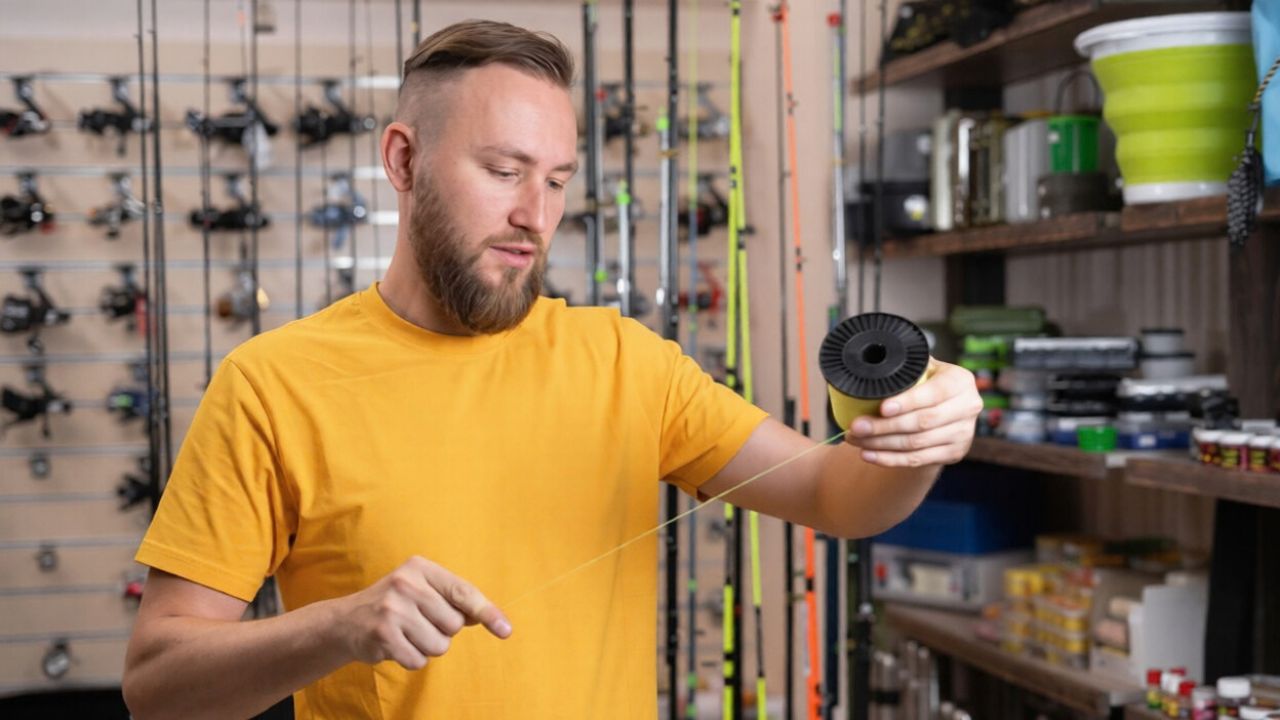
Photo credit: Andrii Lysenko/istock.com
A lot of people pick fishing line based on what they’ve always used, or what their buddy swears by, and never think about it again. But line choice changes how your bait moves, how your hook sets, and how many fish actually make it to your hand. Hookup ratio isn’t just “how sharp the hook is” or “how good your timing is.” It’s also how much stretch is in your system, how visible the line is, and how well you can feel what’s happening at the end of the cast.
Mono stretches the most. That can be a good thing with treble-hook baits because it acts like a shock absorber. It helps keep fish pinned when they surge. But that stretch can also cost you on long casts with single hooks. If you’re Texas rigging a worm and you’re 40 yards out, a bunch of stretch can turn a solid bite into a half-set. You think you drove it home, but you didn’t. You just pulled line like a rubber band. That’s why guys feel like they’re “missing fish” on mono with bottom baits. They’re not always missing. They’re just not getting a clean penetration.
Fluoro stretches less, sinks, and transmits better. It’s great for jigs, worms, and anything you want to feel. It also helps crankbaits get deeper. But fluoro has its own issues. It can be stiff, it can have memory, and if you tie sloppy knots, it’ll punish you. If your hookup ratio is bad on fluoro, it’s often because you’re getting micro-abrasions near the knot or you’re setting the hook like you’re trying to break a board. Fluoro doesn’t need a haymaker. It needs a firm, controlled set and steady pressure.
Braid has almost no stretch. That’s why it’s so good for frogs, heavy cover, and any situation where you need to move fish now. But braid can also cost you fish if your setup is too stiff and you’re using treble hooks. You’ll rip hooks out or straighten them if the drag is too tight and the rod is too fast. Braid exposes mistakes. It also makes you feel everything, which is great, but it can make you react too fast. Some bites you should let load up. With braid, you feel a tick and swing immediately, and you pull it away.
Line visibility matters more than people want to admit, especially in clear water. If you’re getting short strikes or fish that won’t fully commit, line can be part of it. Fluoro helps there. A leader helps. Sometimes just going down a size helps. But don’t go so light you’re breaking off every other fish. There’s a balance. Fish can see line, but they also feel pressure changes and unnatural movement. If your line is too thick, your bait may not fall right. If your line floats when it should sink, your bait may ride higher than you think. Those small details affect commitment.
The best way to think about line is this: it’s part of your “bait system.” It changes the action and the hook set. If you’re throwing a moving bait with trebles, a little stretch can save fish. If you’re dragging bottom with a single hook, less stretch helps you stick them. If you’re in weeds and wood and you need to win a tug-of-war, braid makes life easier. And if you’re in clear water and fish are acting educated, fluoro or a leader might be the difference between follows and bites.
If you’ve been “missing fish,” don’t automatically blame your timing or your hooks. Look at your line and ask if it matches what you’re doing. A simple change—mono to fluoro, braid to leader, heavier to lighter—can clean up your hookup ratio fast.
Like The Avid Outdoorsman’s content? Subscribe to our newsletter so you never miss an article.
Here’s more from us:


