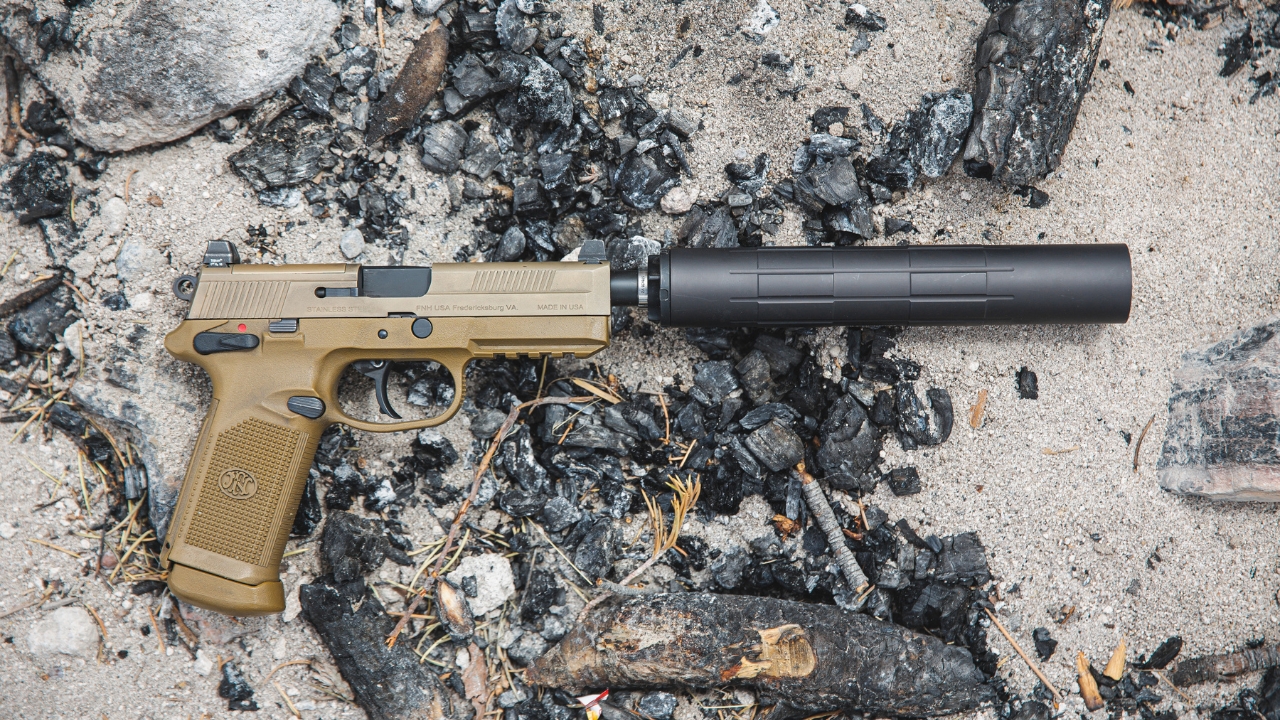
Photo credit: SilencerCo
By the time you decide to buy a suppressor, you are already thinking about decibels, barrel lengths, and thread pitches. What you are usually not thinking about is the invisible queue your application is about to join, or how policy shifts and system outages can quietly turn a simple purchase into a months long wait. The suppressor backlog is not an abstract policy debate, it is a practical problem that only becomes real when your money is spent and your rifle is still loud.
Right now that problem is colliding with a historic rule change, a temporary shutdown of the federal processing system, and a surge of new buyers who have been waiting on the sidelines for years. If you are planning to add a can to your hunting rifle or AR in the next year, understanding how that bottleneck forms, and what you can do to navigate it, is as important as picking the right model.
How the modern suppressor backlog really forms
When you buy a suppressor, you are not just purchasing a tube of baffles, you are entering the world of the National Firearms Act and its Form 4 approval pipeline. Every civilian transfer of a can requires a Form 4, and the volume of those filings is what turns a simple background check into a backlog that can stretch across seasons. The federal system that handles these, the eForms portal, tracks ATF eForm 4 Wait Times and lists recent Dec Approvals so dealers can see how long customers are actually waiting.
Those Dec Approvals reflect only the last 30 days of decisions, but they tell you something crucial about the queue you are joining. When the table shows that electronic submissions are moving while paper is listed as “N/A,” it signals that the agency has effectively abandoned the old route and is channeling everyone into the same digital funnel. A separate eForms Approvals table underscores that shift by explicitly listing paper as “N/A,” which means your realistic choices are not paper versus electronic, but how early you get in line before that electronic line swells.
The $0 tax stamp that changed everyone’s timing
For decades, the psychological and financial barrier to buying a suppressor was the $200 tax stamp that sat on top of the purchase price. That fee is now disappearing for cans and other NFA items, which is why so many people who used to shrug off the idea are suddenly interested. On January 1, 2026, the $200 NFA tax stamp for suppressors and similar gear drops to $0, a shift that one major retailer describes simply as FREE, and The ATF approval system is being updated to make it simple to get them.
That change does more than save you money, it reshapes the calendar for everyone who has been waiting. A detailed breakdown of the 2026 NFA changes notes that, for many gun owners, the new rules mean saving hundreds of dollars per item and removing one of the most frustrating hurdles to ownership, while also warning that suppressors have long been one of the most popular NFA items and that the system will need to adapt to higher application volumes as the tax burden disappears. Those points are laid out in a Dec overview that explicitly ties the tax shift to a likely spike in demand.
The eForms blackout that froze the line
Just as buyers were timing their purchases around the tax change, the digital system that handles your Form 4 went dark. The ATF announced that its eForms portal would be offline from late December through the start of the new year, a scheduled blackout meant to prepare the system for the new rules and the wave of people seeking the $0 tax stamp. One regional shop summarized it bluntly, explaining that The ATF had announced an eForms system blackout from December 26, 2025 through January 1, 2026, specifically in preparation for customers seeking the $0 tax stamp.
That shutdown did not just inconvenience people trying to file on those days, it effectively stacked a week’s worth of applications on the front end of 2026. A separate advisory from a trust-focused firm noted that, by National Gun Trusts December 26, 2025, The ATF eForm Site was still working in a limited way but that submissions were halted until January 1, 2026, when new forms would become available. In their words, the Site was “still working” but not accepting new filings, which means that every buyer who waited for the tax break is now hitting the same digital doorway at the same time.
Why dealers see a bottleneck, not just a busy season
From the counter side of the transaction, this is not a vague sense that “things might get busy,” it is a specific collision of policy and logistics. Retailers are looking at the tax stamp dropping to zero, the eForms blackout, and the long standing popularity of suppressors and concluding that the first months of 2026 will be defined by a crush of new Form 4s. One widely shared analysis put it plainly, noting that Dealers are not talking about a vague rush on suppressors, They are looking at a specific collision of policy changes and consumer behavior.
That same reporting ties the warning to concrete behavior you can already see in shops. Customers who had written off suppressors as too expensive are now placing deposits, while long time enthusiasts are accelerating purchases they had planned to spread over several years. When Dealers say They expect a bottleneck, they are reacting to the same data you can see in the eForms wait time tables and the NFA change summaries, but they are also watching their own order books fill with buyers who all want their cans in hand before hunting seasons, matches, or training classes later in the year.
How fast approvals can still hide a growing queue
One of the most confusing parts of the current moment is that you can see stories of lightning fast approvals sitting next to warnings about long delays. Earlier in 2025, some trust applicants were seeing eFile Form 4 approvals in a matter of days, which created the impression that the backlog problem had been solved. A detailed wait time guide notes that, Per the ATF and what dealers were seeing, eFile Form 4 WAIT TIMES averaged just 3 days for trust filing, with the agency emphasizing that its focus is on electronic submissions and that the ATF FORM 4 WAIT TIMES were dramatically better than the paper era, as laid out in a Jun breakdown.
Those numbers are real, but they are also a snapshot of a system before the full impact of the tax change and the blackout. The same logic that made approvals so fast, a streamlined digital process and a focus on eForms, is what makes the system vulnerable when millions of people decide to use it at once. An Official Megathread on the $0 tax stamp transition captured that tension by noting that the ATF expects 3 to 7 Million forms on eForms in 2026, jokingly tagged as “Million (Hollywood),” and that They have streamlined the process so timing is entirely dependent on how the system copes with that volume.
Seasonal reality: deer season does not wait for your Form 4
For many buyers, the real deadline is not a policy date, it is the first morning of deer season or the start of a match calendar. If you want a suppressor on your rifle for a specific hunt, you have to work backward from that opening day and then factor in the possibility that your Form 4 will not be one of the lucky fast approvals. One outfitter spelled this out for customers who wanted a can in the stand, warning that a Massive Backlog of Form 4 Applications could easily push delivery past the point when deer season opens in November if you wait too long to start.
That seasonal pressure is part of why the backlog problem feels invisible until you are caught in it. You might hear that approvals are averaging a few weeks or even a few days, then discover that your own application is stuck behind a wave of hunters who all filed at the same time. When that outfitter talks about a Massive Backlog of Form 4 Applications, they are not speculating about some distant future, they are describing what happens when everyone in a region tries to beat the same November opener and the same holiday sales, and the federal queue simply cannot compress that demand into a tidy timeline.
Dealer choice and the hidden weeks you can lose
Even inside the same federal system, your choice of dealer can quietly add or subtract weeks from your wait. The ATF clock does not start until your Form 4 is correctly submitted, which means any internal delay, paperwork error, or batching practice at the shop level becomes part of your personal backlog. In one widely circulated discussion, a buyer warned that it already takes long enough to get your hands on a suppressor and urged others not to waste two extra months due to incompetence, arguing that ANY other dealer would have been faster than the one they used, a complaint captured in a blunt Oct thread.
You cannot control how quickly a federal examiner picks up your file, but you can control how quickly your dealer gets that file into the system and how carefully they avoid mistakes that trigger corrections. Ask direct questions about how often they submit eForms, whether they file daily or batch them weekly, and how they handle trust documents or fingerprints. In a world where the official queue is already swelling, losing a week because your shop only uploads on Fridays or mis-typed your address is the kind of preventable delay that turns a manageable wait into a season missed.
Should you buy now or wait for the “free” era
With the tax stamp dropping to zero, you are forced into a simple but uncomfortable decision: accept the old cost to get in line earlier, or wait for the savings and join a much larger crowd. One detailed guide frames the choice explicitly under the heading Should You Buy Now or Wait Until 2026, arguing that if you need a suppressor for the 2025 season, buying now ensures you get into the system before the biggest rush, while if you are not in a hurry, waiting can save you money but may require patience as the system absorbs the surge. That tradeoff is laid out in a Should You Buy Now and Wait Until style breakdown that also urges buyers to secure inventory before the rush.
Your own answer depends on how you value time versus cash. If you are planning for a specific hunt, match, or training cycle in 2025, paying the $200 and filing before the heaviest wave of 2026 applications may be the only realistic way to have the can in hand when you need it. If your timeline is flexible and your priority is maximizing value, waiting for the $0 era and accepting that you might be part of the 3 to 7 Million form surge could make sense, especially if you are buying multiple suppressors or pairing them with short barreled rifles that would each have carried their own tax stamp.
Practical steps to keep the backlog from owning your build
You cannot single handedly fix the suppressor backlog, but you can make choices that keep it from quietly dictating your shooting calendar. Start by mapping your real deadlines, whether that is a November deer opener, a spring precision rifle series, or a carbine course you have already paid for, then work backward with a generous buffer that assumes your Form 4 will not be one of the fastest Dec Approvals. Use the current wait time tables as a baseline, not a promise, and remember that those numbers only reflect the last 30 days, not the surge that is still building.
Next, treat dealer selection and paperwork prep as seriously as you treat barrel contour or glass choice. Choose a shop that lives in the eForms ecosystem every day, ask how they handled the recent eForms blackout, and confirm that they are ready for the new forms that became available on January 1, 2026. Make sure your trust documents, fingerprints, and identification are squared away before you start, so you are not the one holding up your own submission. In a year when The ATF is bracing for millions of new filings and Dealers are already warning that They see a bottleneck coming, the most practical thing you can do is respect the backlog as a real constraint and plan your suppressor purchase with the same discipline you bring to the rest of your build.
Like The Avid Outdoorsman’s content? Be sure to follow us.
Here’s more from us: