
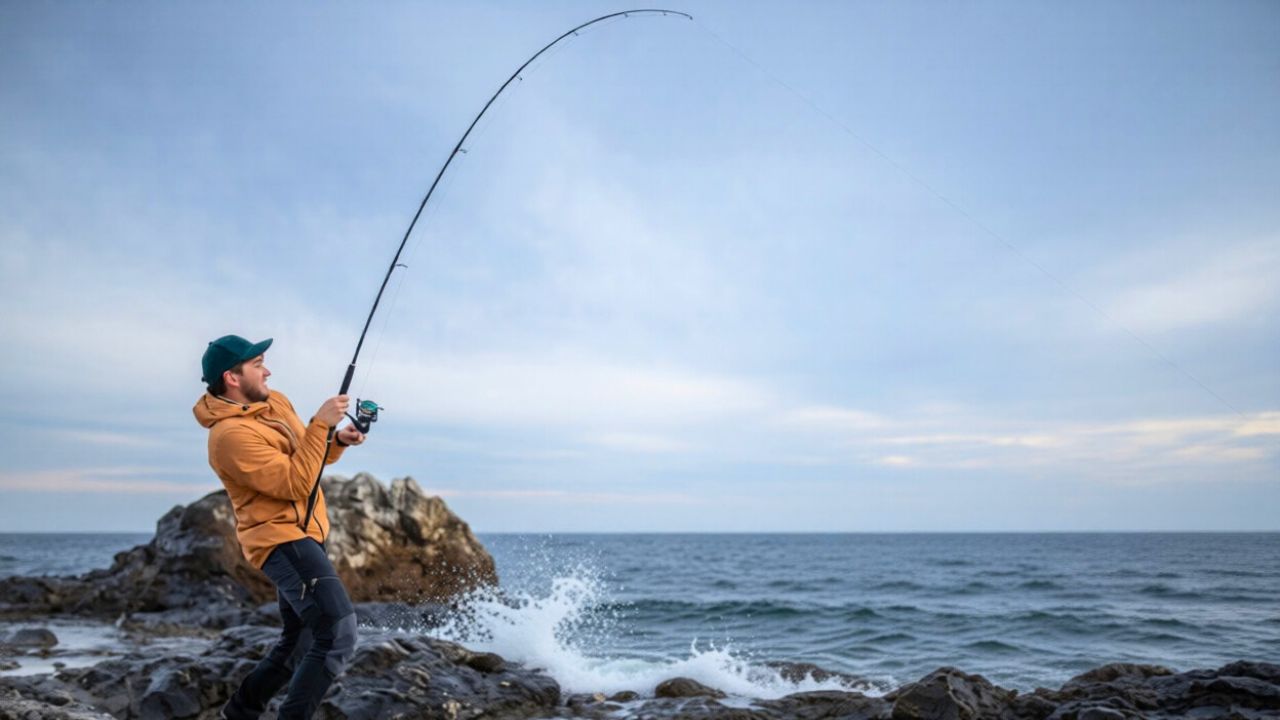
Photo credit: ArtistGNDphotography/istock.com
Rod “action” gets overcomplicated online. You don’t need a physics degree. Action is basically where the rod bends and how quickly it transitions from bend to backbone. That bend point affects casting, hooksets, and how well the rod keeps fish pinned. Here’s the plain-English version.
Extra-fast action
An extra-fast rod bends mostly in the tip, then it shuts off quickly into backbone. Think “quick snap.” This is great when you need to move line fast and drive a hook home, like with jigs, Texas rigs, and single-hook presentations. You feel bites clearly because the tip isn’t swallowing everything, so the rod transmits a lot of feedback.
The downside is forgiveness. With treble hooks or light-wire hooks, an extra-fast rod can pull hooks or tear a small hole bigger if you’re heavy-handed. If you’re the kind of angler who sets the hook like you’re trying to break the rod, extra-fast can work against you. It’s a control tool more than a “let the fish do what it wants” rod.
Fast action
Fast action still bends mostly in the top third, but it’s a little more forgiving than extra-fast. This is the “most people can use it well” action for a lot of bass techniques. It loads well for casting, it has enough tip to work lures, and it still has backbone for solid hooksets. If you don’t want to think too hard, fast action is usually the safest bet.
Fast rods are great for spinnerbaits, worms, jigs, and a lot of general fishing. If you only owned one action, fast is the most versatile. It gives you a good mix of feel and control without being so stiff that it punishes small mistakes.
Moderate-fast action
Moderate-fast bends deeper into the blank, but still has some quickness in the tip. This is the zone where people start liking rods for moving baits because it helps keep fish pinned. It loads better on the cast for certain lures and it cushions headshakes so trebles stay buried instead of popping free.
It can still work for some single-hook techniques, especially lighter ones, but it won’t feel as “snappy” on a hookset as a fast rod. If you’re missing fish because you’re yanking too hard, moderate-fast can actually fix you by forcing you to stay smoother and let the rod keep pressure without overreacting.
Moderate action
Moderate action bends well into the midsection. That deeper bend is great for crankbaits, treble-hook lures, and situations where you want the rod to absorb surges. It helps keep fish hooked when they jump or make short runs near the boat. It also loads nicely for casting lighter baits because more of the rod participates in the cast.
The tradeoff is sensitivity and immediate power. If you try to fish heavy jigs with a moderate rod, it can feel mushy and slow. It’s not that it can’t set a hook — it’s that it’s not designed to drive a single hook like a nail gun. It’s built to keep steady pressure and keep fish stuck.
Slow action
Slow action means the rod bends deep, sometimes almost down toward the handle. It’s a very forgiving action and can be useful for very specific situations, like certain live bait setups, some ultralight fishing, or techniques where you want maximum cushion. It can also help protect very light line when fish surge close.
Most bass anglers don’t want slow action for typical lure fishing because it can feel like you’re casting and setting hooks with a noodle. It’s a niche tool. If you’re using it accidentally for the wrong technique, you’ll feel like you can’t control anything and hooksets start feeling delayed.
Tip action
You’ll hear people say “tip action” when they mean a rod that mostly works in the top section and doesn’t load deep. In normal talk, that means it feels crisp and quick, and it responds fast when you twitch a lure or pick up slack. Tip action is helpful when you need quick feedback or you’re fishing bottom contact and want to feel everything.
The downside is that tip-heavy “all tip” rods can be unforgiving with trebles, and they can also feel weird on long casts because the rod doesn’t load as smoothly. If the rod feels like it only bends in the very top and nowhere else, you’ll often have to adjust your casting rhythm to keep from yanking baits too hard.
Parabolic action
Parabolic action is basically “the rod bends in a smooth arc,” not just at one bend point. It’s the classic feel for crankbait rods and a lot of moving bait rods because it keeps pressure constant. When a fish surges or jumps, the rod keeps absorbing those movements without unloading and throwing the hook.
Parabolic rods also tend to cast certain lures really well because the blank loads evenly. The tradeoff is they can feel less sensitive, especially for bottom-contact baits. If you’re trying to drag a jig and feel tiny taps, parabolic action can feel muted compared to a faster rod.
Progressive action
Progressive action means the rod bends more as load increases. Light pressure bends the tip, heavier pressure brings the midsection in, and full load uses more of the blank. In plain terms, it feels “easy” on casts and “strong” when you actually lean into a fish. That’s why progressive rods are popular for technique-specific setups that need both castability and control.
A good progressive rod can feel like the best of both worlds, but not all rods labeled this way truly behave that way. The main benefit is that it helps keep hooks pinned without feeling mushy all the time. It’s a nice feel for anglers who want a rod that doesn’t punish them when they’re not perfect.
Moderate-slow action
Moderate-slow is basically the “deep bend” crowd, even more so than moderate. It’s a cushiony action that shines when you need to protect light line, small hooks, or fish that jump and thrash a lot. It can also make smaller treble-hook baits feel more controlled because the rod keeps tension steady instead of snapping and unloading.
The downside is hooksets can feel delayed if you’re using single hooks or fishing deep water. If you’re dragging a worm and you need to crack them fast, moderate-slow can feel like you’re always a half-second behind. It’s a great tool for certain jobs, but it’s not a do-everything action.
Stiff action (what people mean when they say “broomstick”)
A “stiff” action rod is what people call a broomstick: it doesn’t give much, even under load. This usually shows up in heavy cover rods or specialty rods where you need pure power to move fish right now. The benefit is you can drive hooks hard and control fish immediately in thick grass, pads, or timber.
The problem is that stiffness magnifies mistakes. If you run treble hooks, you’ll pull fish off. If you use light line, you’ll pop it. And if you’re fighting fish close to the boat, a stiff rod can make it harder to keep steady pressure because it doesn’t absorb sudden surges.
Soft action (what people mean when they say “whippy”)
A “soft” action rod bends easily and feels whippy in hand. This can be great for small baits, finesse presentations, and situations where you need the rod to load on light weights to cast well. It can also help keep tiny hooks pinned because the rod doesn’t yank against the fish as much.
But too soft can turn into missed hooksets and sloppy control. If you’re fishing deeper water, using heavier hooks, or trying to pull fish away from cover, a soft rod can feel like it never catches up. It’s not bad — it just has a narrow lane where it really shines.
“Forgiving” action (what most people want for trebles)
When someone says a rod is forgiving, they usually mean it bends enough to keep fish pinned and doesn’t punish small timing mistakes. That’s why moderate and moderate-fast actions are so popular for crankbaits, jerkbaits, and topwater with trebles. You get a better chance of landing fish that swipe, jump, and fight weird at the boat.
Forgiving rods also help when you’re fishing in cold weather, when bites are subtle and fish don’t always commit. The rod loads and keeps pressure without needing you to swing like a maniac. It’s a smoother, steadier fight that keeps hooks where they need to be.
“Crisp” action (what most people want for bottom contact)
Crisp is the word anglers use when they want a rod that responds instantly. You lift, the rod lifts. You twitch, the bait twitches. This is why fast and extra-fast actions dominate for jigs, worms, shaky heads, and most bottom-contact baits. Crisp action helps you feel ticks and changes in bottom because the rod isn’t soaking up all the feedback.
The downside is crisp rods can be too much with trebles or light-wire hooks. If you fish everything on one crisp rod, you’ll eventually notice you’re pulling some fish off or tearing bigger holes than you want. Crisp is awesome — it just needs the right hook style and drag discipline.
“Loading” action (how easy it is to cast without fighting the rod)
Some rods feel like they “load” easily on the cast, meaning the rod bends enough during the cast to sling the lure smoothly. That matters a lot for lighter baits, windy conditions, or when you want to cast all day without feeling like you’re forcing it. Moderate and moderate-fast rods usually load more easily than extra-fast rods.
If a rod doesn’t load well for the lure weight you’re throwing, you’ll feel it immediately: short casts, poor accuracy, and more effort per cast. That effort turns into fatigue, and fatigue turns into bad casts. Matching action to lure weight is a sneaky way to fish longer and better without even thinking about it.
“Shutdown” action (how fast it stops bending and gives you backbone)
This is the simplest way to think about action: how quickly does the rod stop bending and give you power? Extra-fast shuts down quickly. Moderate shuts down later. That shutdown point affects hooksets and fish control. If you need to drive a single hook through plastic, you want earlier shutdown. If you need to keep trebles pinned, you want later shutdown.
Most confusion around action comes from ignoring this. People buy a rod that feels good in the store, then fish the wrong hook style on it and blame the brand. Once you think in terms of “where does it bend” and “when does it shut off,” rod action stops being mysterious and starts being a practical choice.
Like The Avid Outdoorsman’s content? Subscribe to our newsletter so you never miss an article.
Here’s more from us:


