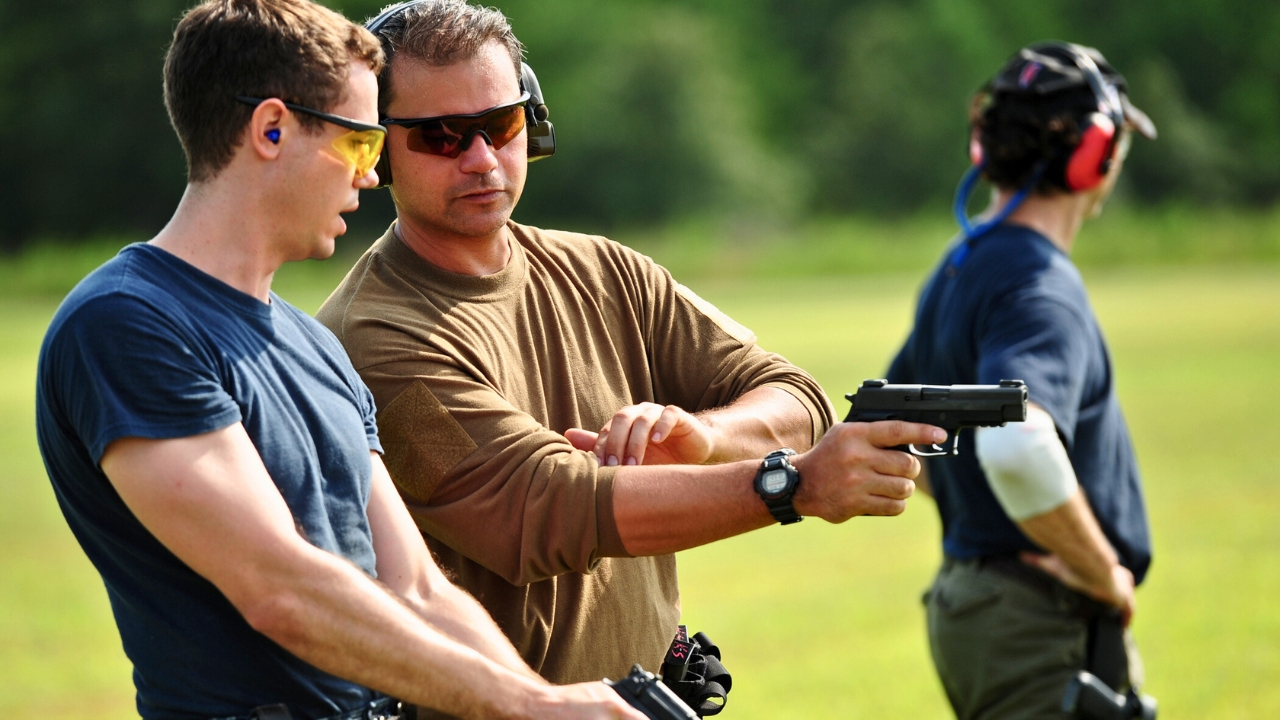
Photo credit: MC1 Clifford L.H. Davis – Public Domain/Wiki Commons
New shooters don’t fail because they picked the “wrong gun.” They struggle because they picked a gun that makes learning harder than it needs to be. A lot of instructors see the same pattern: people buy what’s trendy, tiny, or cheap, then they spend the class fighting recoil, fighting sights, fighting triggers, or fighting reliability. That doesn’t mean those guns are useless. It means they’re not always the best “first serious gun.”
Lightweight snub-nose revolvers (S&W 642/442 class)

These get recommended constantly because they’re simple to carry and simple to operate, but they’re not simple to shoot well. The long, heavy trigger pull demands great fundamentals, and the light weight makes recoil feel sharper than many new shooters expect. Add a short sight radius and tiny sights, and most beginners struggle to keep hits consistent even at close distances.
Instructors steer people away because it slows learning. A beginner needs feedback and success to build skill. With a snub, the gun punishes small mistakes and hides what’s happening. If someone is committed to carrying one, fine—just don’t make it your main learning platform. Most beginners improve faster starting on a compact or full-size 9mm.
Ruger LCR (lightweight models)

The LCR is a smart carry revolver, but it has the same beginner problem: long trigger, short sights, and a gun that moves a lot in recoil. New shooters tend to “snatch” the trigger trying to make the gun fire, and the shots end up low and wide. Then confidence drops, and practice becomes frustrating instead of productive.
A lot of instructors like the LCR as a backup or a deep-carry tool for experienced shooters. They steer beginners away because it takes more reps to get competent. If a new shooter wants the revolver route, a heavier revolver with better sights is often a better teacher. Lightweight snubs are for people who already have fundamentals, not for people trying to build them.
Tiny pocket .380s (Ruger LCP, S&W Bodyguard class)

Pocket .380s are popular because they’re easy to carry, but they’re tough learning guns. The grips are small, the sights are small, and the recoil feels sharp because the gun is so light. Beginners often can’t maintain a consistent grip, and that makes everything else harder—trigger control, sight tracking, follow-ups, and reloads.
Instructors steer people away because the gun encourages shortcuts. People stop confirming sights, they slap the trigger, and they accept bad hits because “it’s a pocket gun.” That’s a bad foundation. Pocket .380s can be useful, but for a first handgun, most students build skill faster with something larger that’s still carryable.
Micro-9s as a first gun (P365, Hellcat, Shield Plus size)

Micro-9s are everywhere right now, and they’re good guns, but they’re still small guns. Small guns are less forgiving. They recoil more sharply, they’re harder to grip consistently, and they’re easier to shoot poorly when you start adding speed. Beginners often buy them because they’re easy to conceal, then realize they don’t enjoy practicing with them.
Many instructors steer new shooters toward a compact first, then a micro later. It’s not about gatekeeping. It’s about learning efficiency. If a student learns on something a little bigger, they build fundamentals faster and gain confidence. After that, stepping down in size is easier. Starting small often slows progress and creates bad habits.
Subcompact .40 S&W pistols (Glock 27, Shield .40 type guns)

These are still popular in some circles because people like the idea of “more power,” but the recoil impulse in a small gun is a lot for new shooters. Under stress or time pressure, it often turns into flinching, low hits, and slow follow-ups. Beginners can absolutely learn it, but they usually learn slower and with more frustration than necessary.
Instructors steer beginners away because 9mm gives you a wider comfort zone. You can practice more, control the gun easier, and build speed without getting beat up. If someone already owns a subcompact .40, an instructor will work with it. But if someone is buying their first handgun today, most instructors would rather see them start with a manageable 9mm.
Ultra-small 1911-style 9mms (micro 1911s)

These are popular because they look familiar and feel “quality,” but small 1911-style pistols can be finicky and harder to run for beginners. You’ve got manual safety use, a short grip, and a platform that often demands good magazines and proper maintenance to stay happy. Beginners already have enough to learn without adding extra control steps and potential reliability variables.
Instructors steer beginners away because new shooters need simple reps: draw, sights, press, follow-up, reload, repeat. Tiny 1911-style guns often turn that process into “manage the safety, manage the recoil, manage the grip, manage the gun’s preferences.” Full-size 1911s are a different conversation. The micro versions can be a rough first step.
Budget 1911s in .45 ACP

The 1911 is popular, and .45 has a loyal base, but budget 1911s can create real beginner problems. Tolerances, magazines, extractors, and small parts can vary a lot across lower-end builds. If a brand-new shooter is dealing with malfunctions they didn’t cause, they don’t learn good shooting habits—they learn anxiety and hesitation.
Instructors steer beginners away because they want reliable reps. Also, .45 recoil in a full-size gun is manageable, but it still slows some new shooters down compared to 9mm. If someone loves 1911s, a good-quality 9mm 1911 (or a solid .45 with proven mags and support) can work. The “cheap .45 1911 as your first gun” is where the headaches show up.
Taurus Judge (and similar “hand cannon” revolvers)

The Judge is hugely popular because it feels like a problem-solver, but it’s not a great learning gun. The triggers are long, the guns are large, and recoil can be unpleasant depending on what’s being fired. Beginners often buy it expecting it to be simple and effective, then struggle to shoot it accurately and consistently.
Instructors steer people away because it’s a confidence trap. It feels powerful, but power doesn’t replace placement. The size and handling also make it harder for new shooters to build clean draw and grip habits. A beginner will usually learn more, faster, with a normal-size 9mm pistol and a clear training plan than with a novelty-style revolver that complicates the basics.
Full-size duty pistols with DA/SA triggers (Beretta 92, SIG P226 as a first gun)

These pistols are excellent, but DA/SA is harder to learn well than striker-fired for many beginners. That first long press and then lighter presses after can create inconsistency early. Beginners often throw the first shot, then rush the next shots trying to “catch up.” The gun isn’t the issue—the learning curve is.
Many instructors steer beginners toward striker-fired pistols because the trigger feel is consistent shot to shot. That helps students focus on grip, sights, and follow-through first. DA/SA can absolutely be mastered, and some people prefer it. But if someone is brand new and wants the quickest path to competent hits, DA/SA can slow that down unless the student is committed to training it.
Small-frame .357 Mag revolvers as a first handgun

These are popular because people think .357 gives them a big advantage, but small-frame .357s can be brutal for new shooters. The recoil and blast make people flinch fast. They start anticipating, their grip loosens, and accuracy goes downhill. Then they avoid practice, which makes the whole situation worse.
Instructors steer new shooters away because there’s a better path: learn on .38 Special, build fundamentals, then decide if you actually want magnum performance. If someone buys a .357 and only ever shoots mild .38, that’s fine. The problem is when a beginner buys it expecting to shoot magnums regularly and then learns they hate it after one box.
Super-thin single-stack 9mms as a first gun (Glock 43 class)

Slim single-stacks are popular for carry, but as a first gun they’re tougher than people expect. The grip gives you less leverage, recoil feels sharper, and new shooters often can’t keep the gun stable through follow-ups. Slow fire can look okay. Anything faster shows grip and trigger issues quickly.
A lot of instructors would rather see a beginner start with a compact double-stack or a slightly larger slim gun with more grip length. It’s easier to build consistency when the gun doesn’t move as much. Single-stacks can be great carry tools. They’re just not always the easiest teacher for someone learning fundamentals from scratch.
Ultra-cheap pistols (Hi-Point, some bottom-tier compacts) as “first and only”
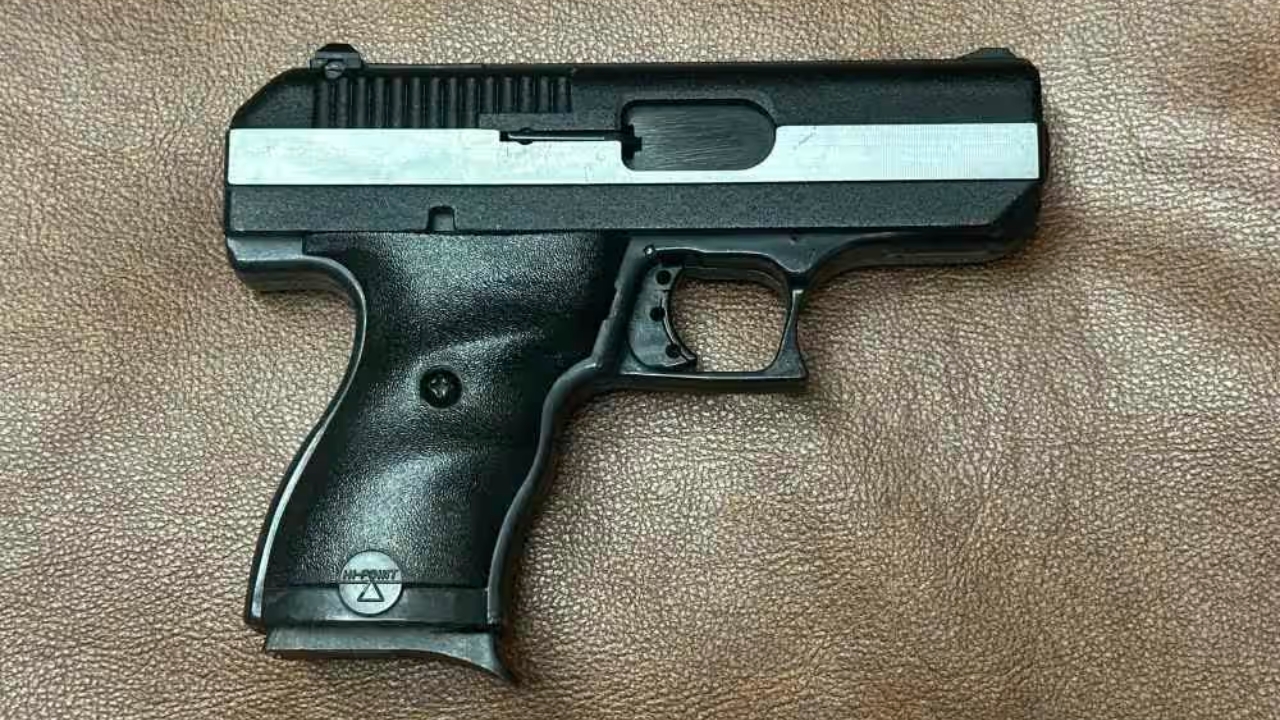
Cheap guns are popular because budgets are real. The issue is that some ultra-cheap pistols come with compromises that hurt training: rough triggers, inconsistent controls, low-quality sights, and sometimes reliability that varies from sample to sample. Beginners don’t know what’s “normal,” so they can’t diagnose whether the problem is them or the gun.
Instructors steer beginners away because they want predictable reps. A reliable pistol lets a student focus on learning, not troubleshooting. If money is tight, many instructors would rather see someone buy a used, proven compact from a mainstream line than a brand-new bargain pistol that may create frustration. The goal is a gun that supports learning, not one that fights it.
Kel-Tec PF-9 / very small 9mm “carry first” pistols

These are popular because they’re light and thin, but they’re often unpleasant to shoot and harder to run well. The recoil is snappy, the grip is minimal, and the trigger feel can slow down learning. Beginners tend to grip too softly, then the gun moves, then their hits spread, then their confidence drops.
Instructors steer beginners away because they’ve watched the cycle too many times. A student buys the smallest 9mm they can find, then hates practice, then stops practicing. A compact that’s slightly bigger is usually a better answer. If someone already owns one, you can train with it. As a first purchase, most instructors prefer something more forgiving.
“Racey” competition setups as a first carry gun (super light triggers, specialized gear)

Some new shooters buy what they see online: light triggers, big comps, extreme setups. That can be fun, but it can also hide fundamentals and create safety and handling issues if the shooter doesn’t have a baseline. A beginner needs a predictable, moderate setup that teaches control and accountability, not a setup that masks mistakes.
Instructors steer beginners away because they want skills that transfer. A standard trigger, standard sights, and a reliable holster teach good habits. Once you can run the basics cleanly, upgrading equipment makes sense because you’ll know what you’re gaining and what you’re trading away. Starting with a specialized setup often makes training less focused and more confusing.
Shotgun-as-first-home-defense “solution” (12ga pump for brand-new shooters)

This one is common: someone is told “just get a pump shotgun” and they assume it’s the easiest answer. For a brand-new shooter, a 12ga pump can be tough to run—recoil, loading under stress, short-stroking under pressure, and awkward fit all show up fast. Slow fire makes it seem manageable. Real handling reveals the learning curve.
Many instructors steer beginners away from relying on a pump shotgun as their only plan unless the person is committed to training it. Shotguns can be excellent defensive tools, but they demand practice. If someone is new, a reliable handgun or a properly set up rifle with a clear training plan often leads to faster competence than “buy a pump and hope.”
Like The Avid Outdoorsman’s content? Subscribe to our newsletter so you never miss an article.
Here’s more from us: