Photo credit: Taran Tactical/YouTube
A lot of “brand trust” in the gun world is really reputation inertia. Somebody you respect says a name, the internet repeats it, and pretty soon the brand becomes a shortcut for “good to go.” The problem is that brands don’t ship one gun—they ship product lines, across different price tiers, different factories, different years, and different design choices. So the gun counter story becomes: “Buy this, it’s reliable.” Then the owner gets 600 rounds in, swaps parts, changes mags, runs bargain ammo, or carries it in sweat for six months—and the cracks show up.
When I say “overrated,” I’m not saying these brands can’t make excellent guns. I’m saying their reputations get treated like guarantees, and that’s where people get burned. If you stop treating the logo as the deciding factor and start judging the specific model, setup, and intended use, you’ll make smarter buys—and you’ll stop getting surprised when a “trusted” name doesn’t perform the way you expected.
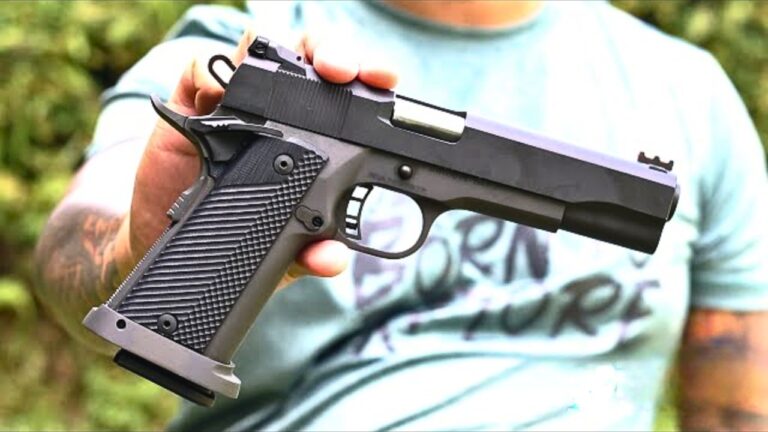
Kimber: the 1911 halo makes people ignore the maintenance reality
Kimber sells a dream a lot of folks want to believe in: a slick-looking 1911 that feels like a step into the “serious shooter” world. The issue is that the 1911 platform is magazine-driven and spring-driven, and it’s more sensitive to tolerance stacking than many modern duty pistols. If you buy a 1911 because of the name and then run whatever mags came in the box, ignore recoil spring life, and assume hollow points will all feed the same, you can end up with stoppages that feel “mysterious” but aren’t. Nose-dives, three-point jams, inconsistent lockback—those are usually presentation angle and timing problems, not bad luck.
Where people sour is when they realize the fix isn’t a pep talk—it’s discipline. Quality magazines with consistent feed lips, fresh springs on a schedule, extractor tension that’s actually correct, and lubrication that matches your round count and weather. If you’re willing to treat it like a machine with wear items, you can have a great time. If you want a pistol that tolerates neglect and randomness, buying a 1911 because the brand feels premium is where the overrated label shows up.
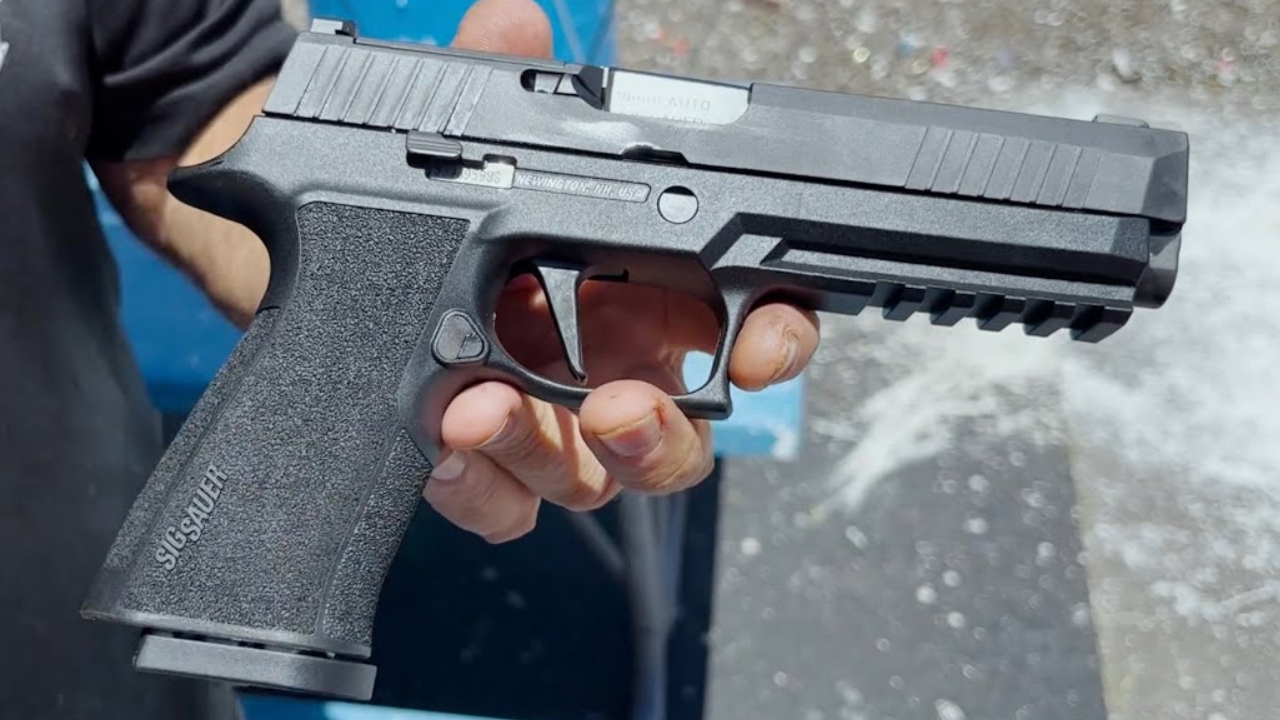
SIG Sauer: great guns, but owners over-trust the “it’s SIG” shortcut
SIG makes some excellent pistols, and that’s exactly why people get careless with them. The over-trust problem shows up when buyers assume every model, every configuration, and every generation will feel and behave the same. Then they add an optic plate stack, swap springs, change grip modules, or run a pile of mixed magazines and ammo and act shocked when the system gets picky. Semi-autos are timing machines. Slide velocity, recoil spring rate, extractor tension, and magazine spring strength all interact, and stacking changes can push a gun from “boringly reliable” into “runs great until it’s dirty and hot.”
Another place the honeymoon ends is expectations around shootability. Some shooters love SIG triggers and ergonomics, others never quite mesh with the reset feel or how a particular frame shape indexes in the hand under speed. That’s not the brand failing—it’s the buyer treating reputation like fit. SIG can absolutely be the right answer, but “it’s a SIG” shouldn’t be the end of your evaluation. Your hands, your carry method, your ammo, and your maintenance habits decide the real outcome.
Springfield Armory: marketing momentum makes people skip the boring checks
Springfield lives in a space where a lot of their guns feel “ready” right out of the case: good features, good looks, good shelf presence. The overrating happens when buyers equate features with performance and skip the unsexy stuff—magazines, springs, and consistency under speed. Plenty of pistols will run fine for slow range work and then show their true personality when you start drawing from concealment, shooting one-handed, or running 200–300 rounds in a session. That’s where feed geometry, extractor control, and slide timing stop being theory and start being a stoppage you have to clear.
The other trap is assuming upgrades equal improvement. People chase triggers, connectors, and “carry comps” to solve what’s usually a fundamentals problem or a magazine problem. If your grip is inconsistent, the gun can short-cycle more easily than you expect, especially with lower-powered practice ammo. If your mags are tired, you’ll see nose-dives and weird presentation angles that get blamed on the gun. Springfield may or may not be the right pick for you—but it’s overrated any time you let the feature list replace a hard test with your ammo, your mags, and your carry setup.
Taurus: the “value” story tempts people into skipping reliability proof
Taurus has improved over time, and plenty of owners have perfectly good experiences, but the brand gets overrated the moment the buyer treats “good deal” as “good to go.” Budget-friendly pistols can be a smart move if you verify reliability the way you would with any carry gun: a couple hundred rounds minimum, some of it dirty, some of it from concealment, some of it with your defensive load, and with multiple magazines. The mechanisms that bite people are usually predictable: inconsistent magazine spring strength, tolerance variation that shows up as extraction/ejection weirdness, or small parts that don’t feel great once the gun is hot and fouled.
Where the returns happen is when buyers assume the savings includes a free pass on testing. If you don’t confirm that it runs with your ammo and your grip, you’re gambling. If you do confirm it—and you keep an eye on wear items like recoil springs and mags—you can end up with a perfectly serviceable pistol. The overrated part is thinking the low price means you don’t have to do the work up front.
Glock: the reputation is real, but the “automatic buy” mindset is not
Glock is the easiest example of “overrated” that makes people mad, because the guns are legitimately proven. The problem is that Glock’s reputation gets interpreted as “it will work perfectly for me, in my hands, with my setup, forever.” That’s not how machines work. The most common Glock souring points aren’t catastrophic failures—they’re interface issues: grip angle and presentation, trigger feel under stress, and how the gun behaves once you add variables like optics plates, comps, non-factory mags, and mixed ammo. Timing still matters. Magazines still matter. Springs still wear. Dry carry still builds grit and friction.
If you buy a Glock and keep it simple—factory mags, sane ammo, replace recoil springs and mag springs before they’re dead, light lube in the right places—it’s usually boring in the best way. If you buy it expecting it to cover for inconsistent grip, minimal practice, and a pile of aftermarket parts, you’ll eventually run into something that feels like “the Glock didn’t live up to it.” In reality, the logo didn’t fail—you just discovered the limits of reputation-as-a-substitute-for-proof.
If you want to stop getting burned by “trusted” names, here’s the rule I use: trust the specific gun after it earns it. Run your carry ammo. Run multiple mags. Shoot it hot and a little dirty. Pay attention to ejection pattern changes, sluggish return to battery, and any feeding that depends on one particular magazine. Brands can guide your shortlist—but the proof is always in the setup, the wear items, and the way you run it.
Like The Avid Outdoorsman’s content? Subscribe to our newsletter so you never miss an article.
Here’s more from us: