Photo credit: Fred Mastison/Shutterstock.com
The AR-15 gets talked about like it is the easy answer to every rifle question. Home defense, range use, predators, hogs, training, competition, truck-gun duty, even some kinds of hunting. That reputation did not appear out of nowhere. The platform really is one of the most modular and widely owned rifle patterns in the country, and the modern sporting rifle market remains huge. The NSSF said in January 2026 that more than 32 million modern sporting rifles have been produced since 1990, which helps explain why the AR-15 keeps getting treated like the default rifle for almost everything.
But the part that gets oversold is the word everything. In the real world, the AR-15 can do a lot, but it does not do every job equally well, and it definitely does not do them all with one lazy, one-size-fits-all setup. That is where new buyers get fooled. They hear that the rifle can be anything, and they start acting like the same gun, same optic, same barrel length, and same ammo choice will cover every serious use without tradeoffs. That is not how it works. The platform is flexible. The setup still matters.
The platform really is that adaptable
To be fair, the AR-15 earned its “does everything” reputation better than most rifles ever do. Its whole appeal is modularity. NSSF’s overview of the platform points to the wide range of chamberings and configurations available, from .22 LR and 5.56 to larger hunting options like .450 Bushmaster, along with the platform’s broad use in target shooting, competition, hunting, and home defense. Even recent industry coverage keeps pointing to modularity as the defining trait of the platform rather than something the market is moving away from.
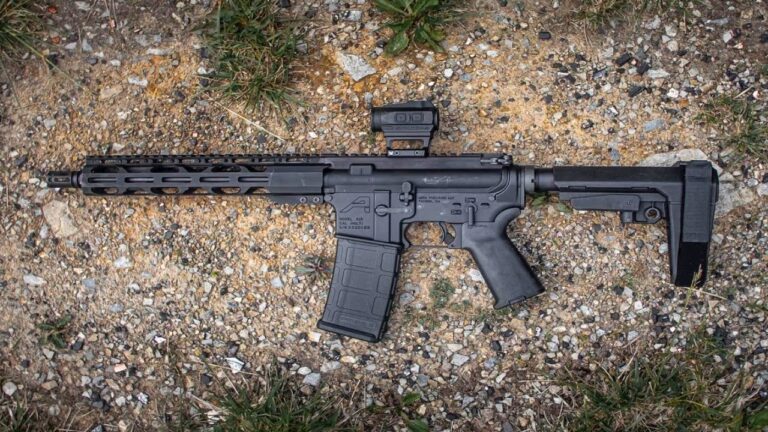
That part is real. You can build an AR around lightweight defensive use, varmint work, practical competition, suppressed shooting, or specific hunting roles. You can also tune furniture, triggers, optics, lights, muzzle devices, and even the upper itself around the job. That flexibility is exactly why the AR keeps winning shelf space and buyer attention. It is not that the rifle magically does every job equally well. It is that the platform can be configured to cover a lot of them better than most rifles can.
One rifle can do a lot, but one setup cannot do it all well
This is where the simple sales pitch falls apart. A short, handy AR with a red dot and a white light makes sense for close-range defensive use, but that same setup is not ideal if you also expect it to be your coyote rifle on open ground or your best option for stretching distance. On the other side, a heavier rifle with more magnification and a longer barrel may shine on the range or in certain hunting roles, but it gets less attractive when you start moving through tight spaces or carrying it for long stretches. That is not a flaw in the AR. That is the reality of rifles. The closer a setup gets to doing one job really well, the more compromises show up somewhere else.
The mistake is thinking the platform removes those compromises. It does not. It only gives you more ways to manage them. That still leaves you choosing between handiness and velocity, simplicity and reach, light weight and shootability, or general-purpose flexibility and role-specific performance. The AR-15 is easier to tailor than a lot of rifles, but it is still governed by the same physics and practical tradeoffs as anything else you shoulder.
The caliber question is where people start learning the hard way
A lot of the “does everything” talk quietly assumes 5.56 NATO or .223 Remington, because that is the chambering most people mean when they say AR-15. And for a lot of shooters, that is the right place to start. It is common, widely supported, relatively soft-shooting, and practical for training, range use, predator work, and some defensive roles. But once people start pushing beyond that, the platform stops being a simple universal answer and starts becoming a string of application-specific choices. NSSF’s own platform summary makes that clear by listing a wide spread of chamberings for different uses, including hunting-focused options that exist because one caliber does not actually cover everything equally well.
That is the real-world truth buyers have to accept. If you want an AR to pull duty beyond standard range use and general-purpose work, you usually end up narrowing the rifle around a purpose instead of broadening it into a miracle tool. Maybe that means staying with 5.56 because ammo support and recoil control matter most. Maybe it means moving to a different upper or chambering for hogs, deer, or a state-specific hunting rule set. The platform gives you room to do that. It does not spare you from making the choice.
The legal side makes “simple” even less true
Another thing the easy AR-15 pitch leaves out is that real-world ownership is not the same everywhere. Federal and state laws can affect what configurations are legal, what features are restricted, and whether certain versions are even available where you live. That is not theoretical. Rhode Island’s governor announced in June 2025 that the state had enacted a ban on the sale of certain military-style weapons, and the Justice Department filed a lawsuit in March 2026 challenging Washington, D.C.’s ban on AR-15s and similar rifles. Those examples alone show how different the practical reality can look depending on your location.
So when somebody says the AR-15 is the simple answer, the honest response is: simple for whom, and where? A setup that works fine in one state may turn into a compliance headache somewhere else. Even barrel length and rifle configuration questions can cross into federal law issues under the National Firearms Act, which is why buyers have to pay attention before they start treating the platform like a box of interchangeable parts with no consequences.
The AR-15 is most useful when you stop pretending it is magic
The best way to think about the AR-15 is not as the rifle that does everything. It is the rifle that can be built around what you actually need better than most competing platforms. That is a more honest compliment anyway. It keeps the rifle grounded in the real strengths that made it successful: modularity, broad parts support, familiar ergonomics, and enough flexibility to cover a wide range of lawful uses when configured intelligently.
That is why the AR-15 still matters. Not because it makes every rifle decision easy, and not because it removes tradeoffs, but because it gives you a platform that can be tuned more precisely than most rifles people grew up with. In the real world, that is the smarter way to look at it. The AR-15 is not simple because it does everything. It is valuable because it lets you decide what your rifle needs to do, then build around that answer instead of forcing one fixed gun into every job.
Like The Avid Outdoorsman’s content? Subscribe to our newsletter so you never miss an article.
Here’s more from us: