Photo credit: Palmetto State Armory/YouTube
A duty pistol is judged differently from an ordinary range or concealed-carry handgun. It must survive daily holster wear, repeated qualification sessions, exposure to weather, and the neglect that sometimes comes with shift work. It also needs dependable magazines, readily available replacement parts, compatible duty holsters, and controls that officers can operate under pressure.
Professional adoption does not automatically make a pistol perfect. Agencies consider purchase price, training expenses, existing equipment, armorer support, and contract terms in addition to pure shooting performance. Some officers are issued their handgun with no choice, while specialized units may select a completely different platform.
These 20 pistols have either established substantial professional service records or were developed specifically around modern military and law-enforcement requirements. They represent the strongest duty-handgun choices for shooters who value durability, capacity, support, and serious working-gun features.
Glock 17 Gen 5 MOS

The Glock 17 remains one of the defining modern duty pistols. Its full-size frame provides a complete grip, its standard magazine holds 17 rounds, and its simple striker-fired operating system is easy to teach across a large department. The Gen 5 MOS version adds an optics-ready slide, ambidextrous slide stop, improved barrel, and revised grip without finger grooves.
Glock’s greatest professional advantage is not any single feature. It is the complete support network surrounding the gun. Magazines, internal parts, sights, duty holsters, training pistols, and certified armorers are available almost everywhere. Glock continues to market the full-size G17 specifically through its law-enforcement line, and the platform remains widely associated with military and police service.
The trigger and factory sights are not class-leading, but both are predictable. A department can issue the same basic pistol to hundreds of officers and keep it running without complicated maintenance. That matters more in professional use than having the lightest trigger at the range.
Glock 19 Gen 5 MOS

The Glock 19 gives officers much of the Glock 17’s performance in a shorter and easier-to-carry package. Its reduced grip and slide dimensions work better for plainclothes assignments, investigators, specialized units, and officers who find a full-size pistol unnecessarily large.
The compact frame still accepts larger Glock magazines, and the pistol provides enough grip area for most shooters to maintain control during fast strings. Glock describes the G19 as suited to versatile roles without giving up useful magazine capacity, which explains why it has become common among both uniformed and non-uniformed professionals.
The shorter grip can be less comfortable for officers with very large hands, especially when shooting with gloves. Even so, the G19 remains one of the safest general-purpose duty choices available. It can move from a uniform holster to concealed assignment work without forcing the officer to learn a different trigger or magazine system.
Glock 45 MOS
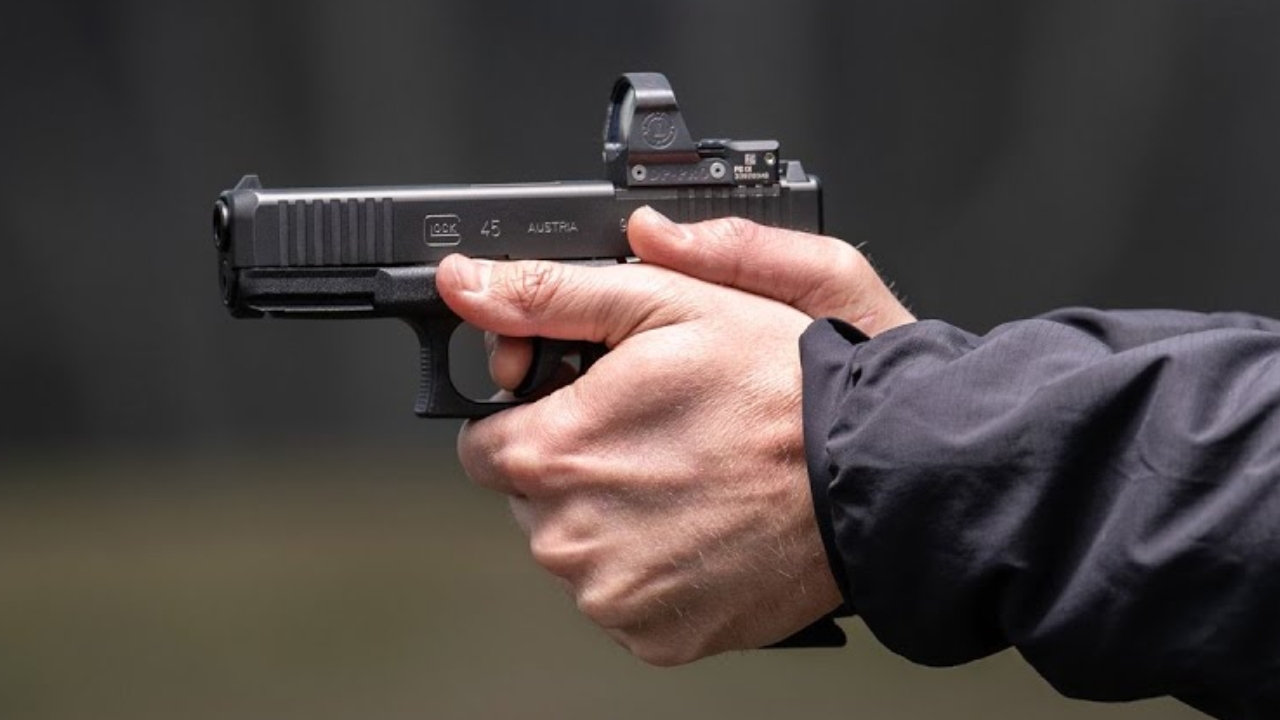
The Glock 45 combines a compact-length slide with a full-size grip. That gives the shooter the handling speed of a shorter pistol while preserving the complete grip and 17-round magazine associated with the Glock 17.
The configuration is particularly useful for uniformed duty because the officer does not need the shorter grip required for deep concealment. The full frame improves the draw, provides more support-hand contact, and gives gloved shooters additional room. Glock also produces force-on-force training versions with the same general dimensions and controls, allowing agencies to train with equipment that closely resembles the live-duty gun.
The Glock 45 does not provide much concealment benefit over a full-size pistol because the grip is the portion most likely to print. That is largely irrelevant in a duty holster. For officers who prefer the balance of a shorter slide but want full-size control, it is one of Glock’s strongest professional configurations.
Glock 47 MOS
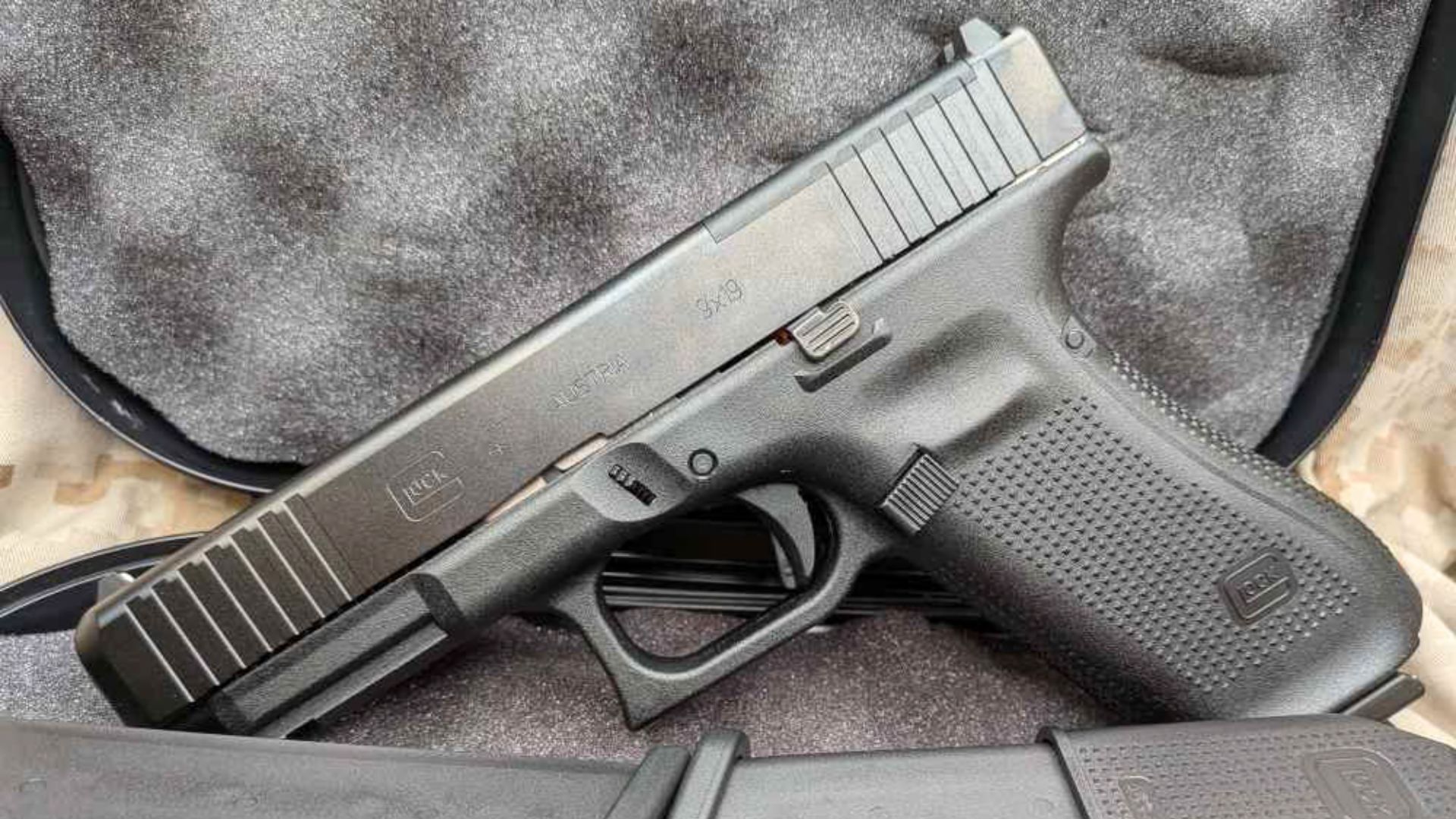
The Glock 47 uses a full-length slide and barrel on the full-size frame shared with the Glock 45. It was developed around federal law-enforcement needs and gives agencies a standard-size optics-ready pistol with broad parts compatibility across several Gen 5 configurations.
Its major strength is logistical flexibility. When paired with compatible Glock models, departments can interchange certain slides, frames, magazines, and internal components. The full-size layout provides a long sight radius for officers who still use iron sights and enough rail space for commonly issued weapon lights.
The Glock 47 is not dramatically different to shoot from a Glock 17. Its appeal is based more on fleet management and component compatibility than a revolutionary shooting advantage. For a large organization maintaining hundreds or thousands of pistols, those logistical details can be more valuable than a slightly better trigger.
SIG Sauer M17

The M17 is the full-size military version of the SIG Sauer P320. It was selected through the U.S. Modular Handgun System program and is now used across the American armed forces alongside the shorter M18. The pistol includes an external manual safety, accessory rail, removable fire-control unit, and a full-size grip designed around military use.
Its modular chassis allows the serialized internal assembly to be placed into replacement grip modules. That simplifies certain repairs and lets organizations adjust grip dimensions without replacing the complete pistol. The M17 also offers strong capacity and an optics-ready military configuration when paired with the appropriate slide and sight system.
The P320 family has been surrounded by continuing safety controversy, litigation, and debate. SIG maintains that current pistols meet demanding military and industry testing standards, while some agencies and officers remain cautious. A professional buyer should understand both the platform’s extensive adoption and the concerns that continue to follow it.
SIG Sauer M18

The M18 shortens the M17’s slide and barrel while retaining the full-size grip and modular fire-control system. It has been fielded by branches of the U.S. military and has also entered state and local law-enforcement service.
Michigan State Police announced a full transition to the P320/M18 as its primary issued handgun in 2025, paired with a Romeo-M17 optic and Foxtrot2R weapon light. The agency selected the system after its own testing process, demonstrating how the M18 has expanded beyond its military role.
The shorter slide makes the pistol easier to carry in vehicles and duty holsters without sacrificing grip length or standard magazine capacity. As with the M17, the broader P320 controversy cannot be ignored. For organizations comfortable with the platform, the M18 provides a compact duty configuration with excellent modular and optics support.
SIG Sauer P226
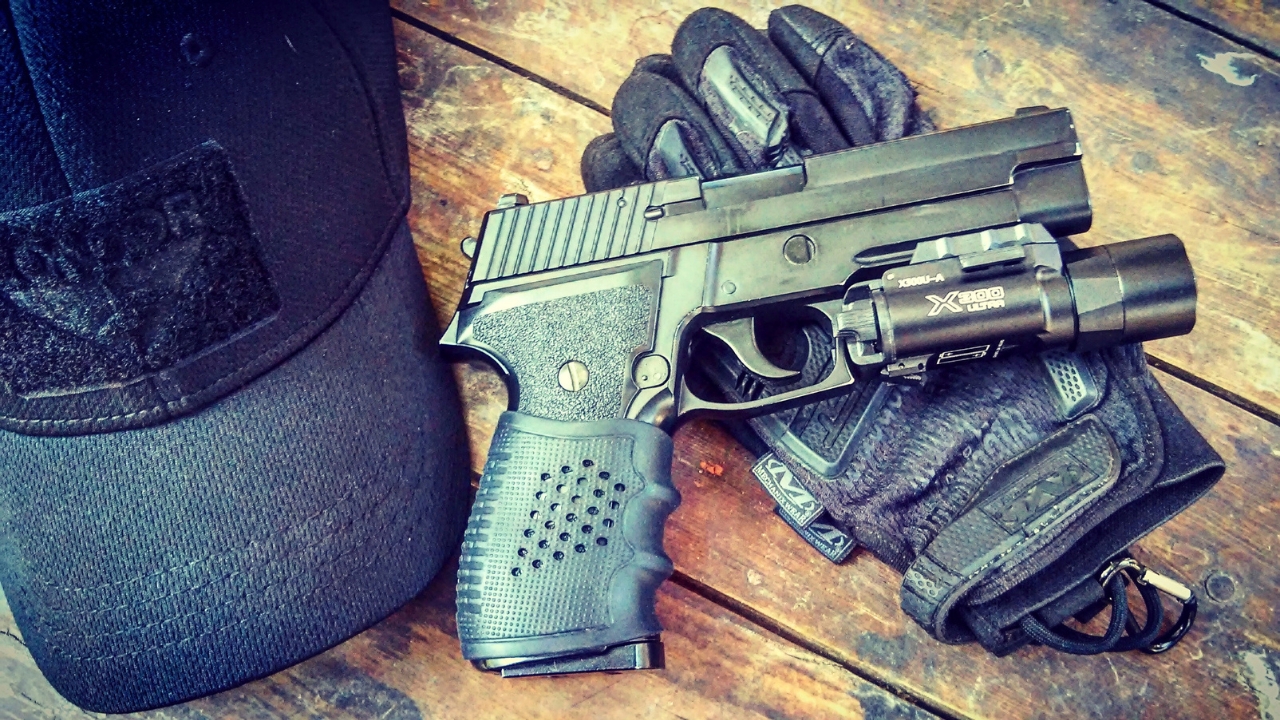
The SIG Sauer P226 built its professional reputation long before modular striker-fired pistols became common. Its alloy frame, traditional double-action and single-action trigger, exposed hammer, and decocking lever made it a trusted military and law-enforcement sidearm.
The metal frame provides excellent balance, while the full grip and substantial slide make the pistol comfortable during extended qualification sessions. The longer first trigger pull requires more training than a striker-fired action, but it also gives officers a deliberate initial press and a visible hammer position. Modern optic-ready and Legion variants keep the platform relevant for users who prefer traditional operation.
The P226 is heavier and more expensive to maintain than basic polymer pistols. Its magazines and small components also cost more. It remains worth considering for specialized teams or individual officers who value its durability, smooth recoil, and refined follow-up trigger.
SIG Sauer P229

The P229 provides the same traditional SIG operating system in a shorter and more compact frame. It became especially popular with investigators, federal personnel, and officers who needed a handgun that could move between concealed and uniformed roles.
Its alloy frame gives it enough weight to remain stable, yet it is shorter and easier to carry than the P226. Modern 9mm versions provide useful capacity, accessory rails, and optics-ready configurations while retaining the exposed hammer and decocker.
The P229 is thick compared with newer compact pistols and can become heavy during an entire day of concealed duty. It remains one of the most shootable compact service pistols available. Officers who are properly trained on the double-action transition often find it more controllable and refined than much lighter carry guns.
Smith & Wesson M&P9 M2.0 Full Size
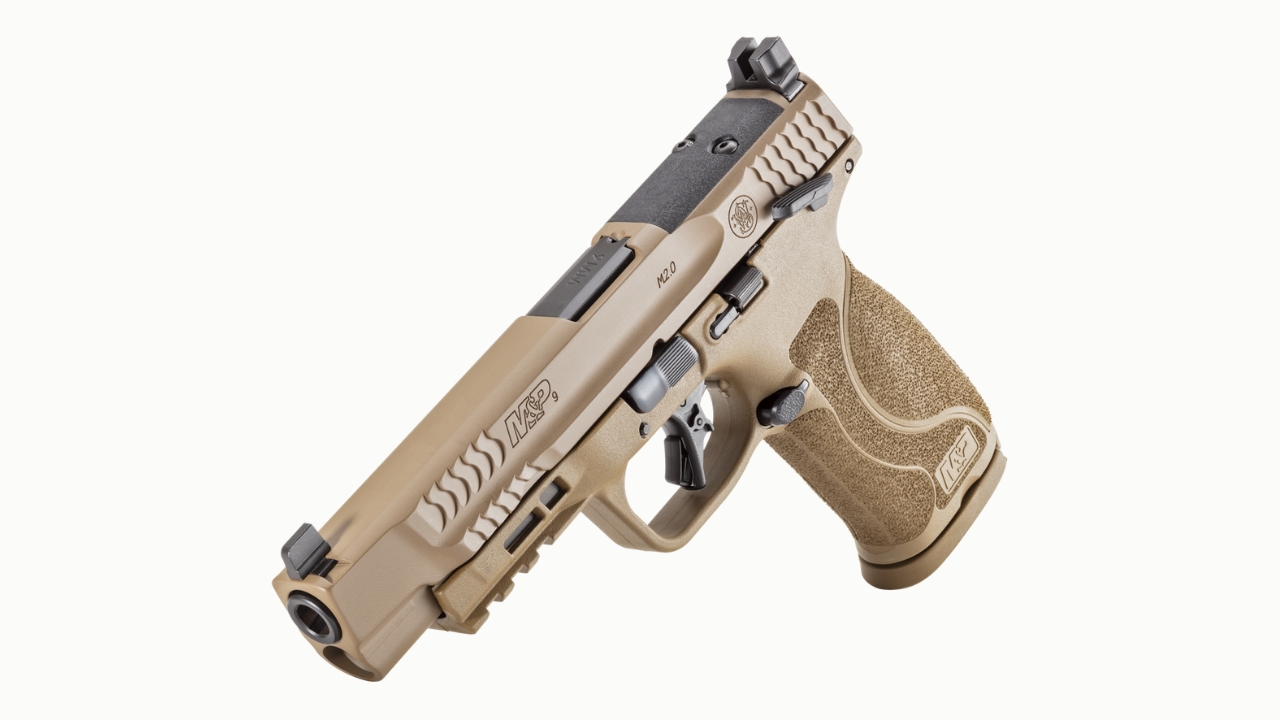
The M&P9 M2.0 was designed directly for military and law-enforcement competition. Its grip angle, interchangeable palm swells, aggressive texture, and ambidextrous controls make it adaptable across a department containing officers with very different hand sizes.
Newer examples use a flatter and cleaner trigger than early M&P pistols. Optics-ready configurations also support the increasing move toward slide-mounted duty sights. The full-size frame provides strong capacity and plenty of accessory-rail space without making the pistol unusually heavy.
The M&P’s greatest strength is how naturally it fits shooters who dislike Glock ergonomics. Its grip has more contour, and the interchangeable inserts alter more than just the back edge of the frame. The platform has established broad professional use over multiple generations, even though specific agency contracts and chamberings have varied. It remains one of the most practical American-made duty pistols.
Smith & Wesson M&P9 M2.0 Compact
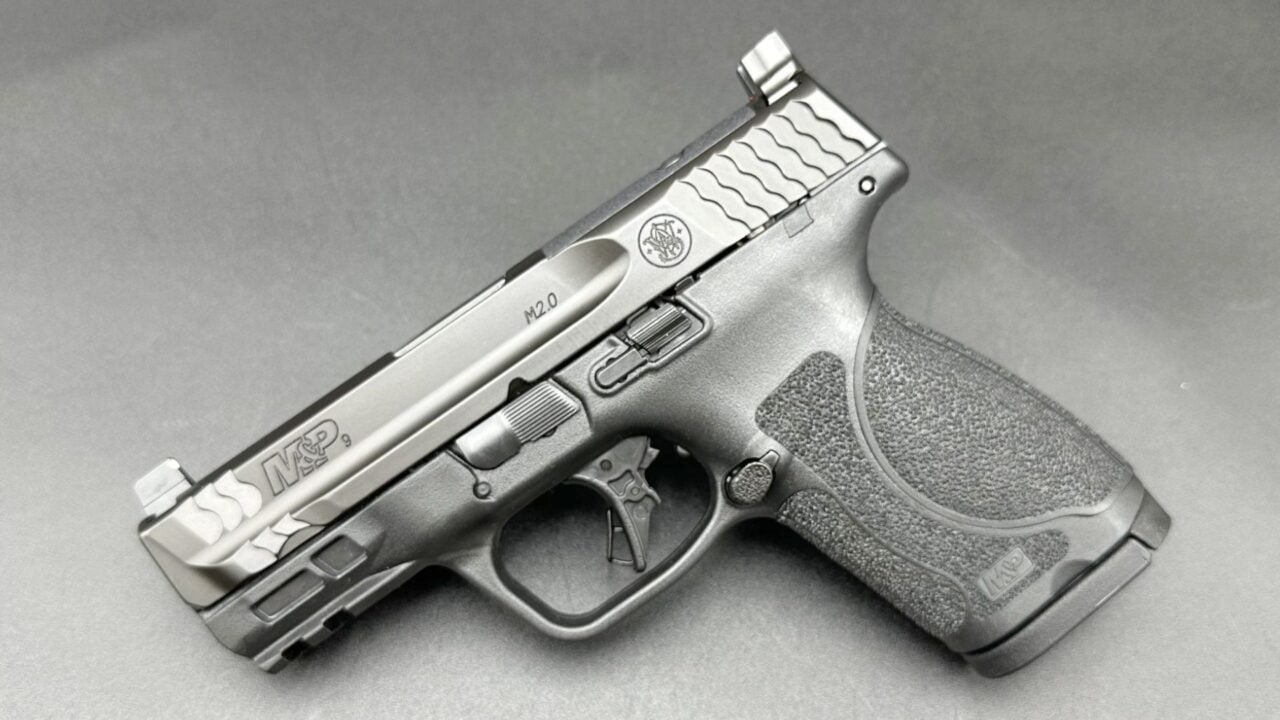
The M&P9 M2.0 Compact provides a Glock 19-size alternative for professionals who need a pistol suitable for concealed assignments as well as uniformed work. It retains the larger platform’s grip inserts, aggressive texture, accessory rail, and consistent striker-fired trigger.
The compact frame is large enough to control through demanding qualification courses but easier to conceal beneath plain clothes. It can also use larger M&P magazines, giving agencies flexibility between compact and full-size configurations.
The rough grip texture can become uncomfortable when carried directly against the body, and the compact rail provides slightly less room for certain full-size lights. Those are minor concerns beside its overall versatility. An agency already using full-size M&P pistols can issue the Compact to detectives or specialized personnel without introducing a completely different operating system.
FN 509 MRD-LE
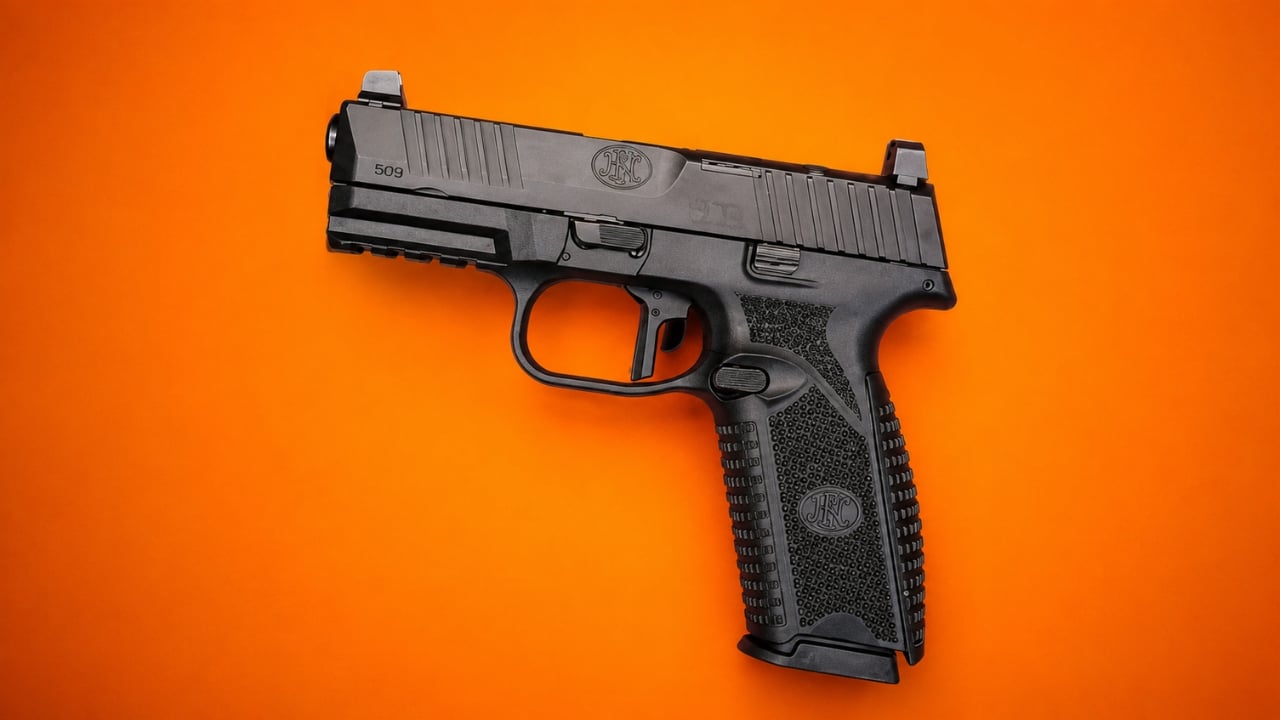
The FN 509 MRD-LE is one of the clearest examples of a pistol built around current professional needs. It uses an optics-ready slide, extended controls, suppressor-height sights, and a full-size grip developed from FN’s Modular Handgun System submission.
The Los Angeles Police Department selected the FN 509 MRD-LE after a demanding evaluation, including a reported 20,000-round endurance test. Other departments have since adopted the same professional configuration.
Its grip texture is aggressive, and the factory trigger can feel heavier than those on some competitors. The pistol’s strength is durability and its well-developed optics system rather than a competition-style trigger. For agencies moving directly to red-dot-equipped sidearms, the 509 MRD-LE provides a complete duty package instead of requiring extensive aftermarket modification.
FN 509
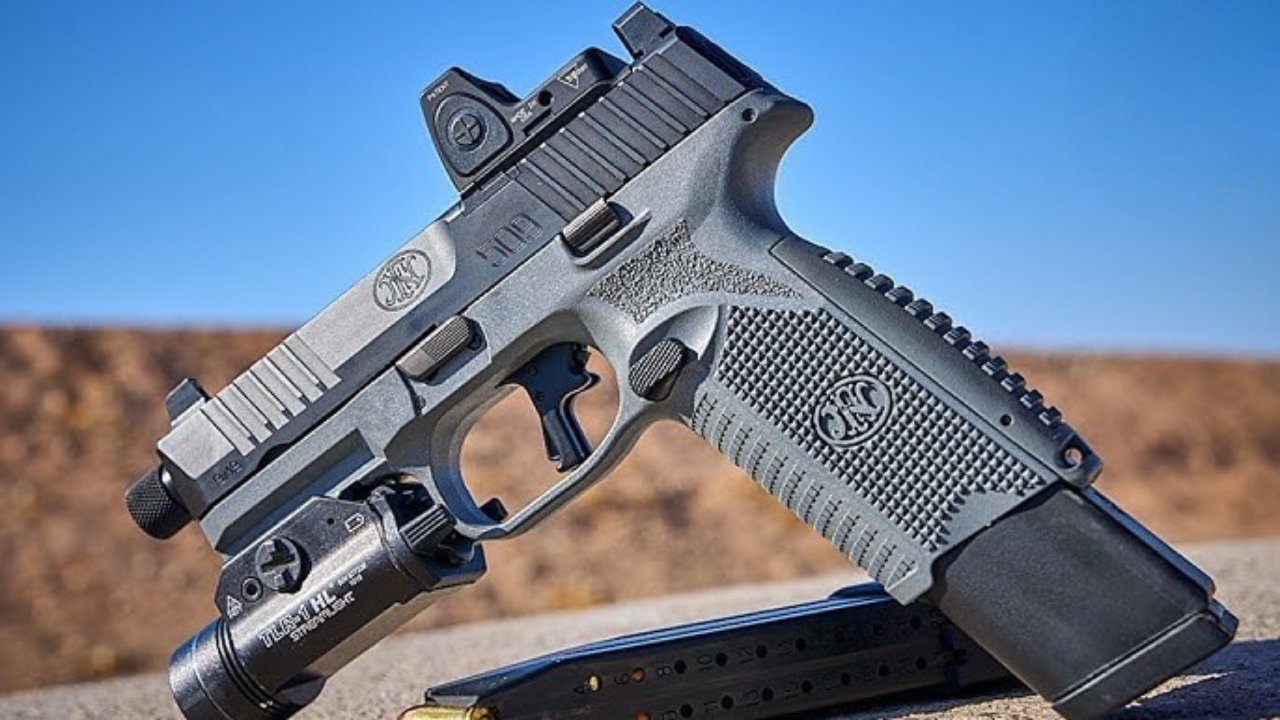
The standard FN 509 was created from FN’s work on the U.S. military handgun competition and further refined using feedback from American law-enforcement agencies. FN reported extensive durability testing during the pistol’s development, positioning it as a hard-use service handgun rather than merely another commercial striker-fired pistol.
Brink’s selected the FN 509 for issue to its armed security personnel after testing pistols from major manufacturers. That gives the standard model a legitimate professional-service connection outside conventional police agencies.
The pistol offers strong texture, ambidextrous controls, and a conventional accessory rail. Its trigger rarely feels as refined as the Walther PDP or newer M&P models, and FN magazines can be expensive. The 509 remains a dependable choice for users who prioritize durability and professional testing over a light range trigger.
Beretta 92X
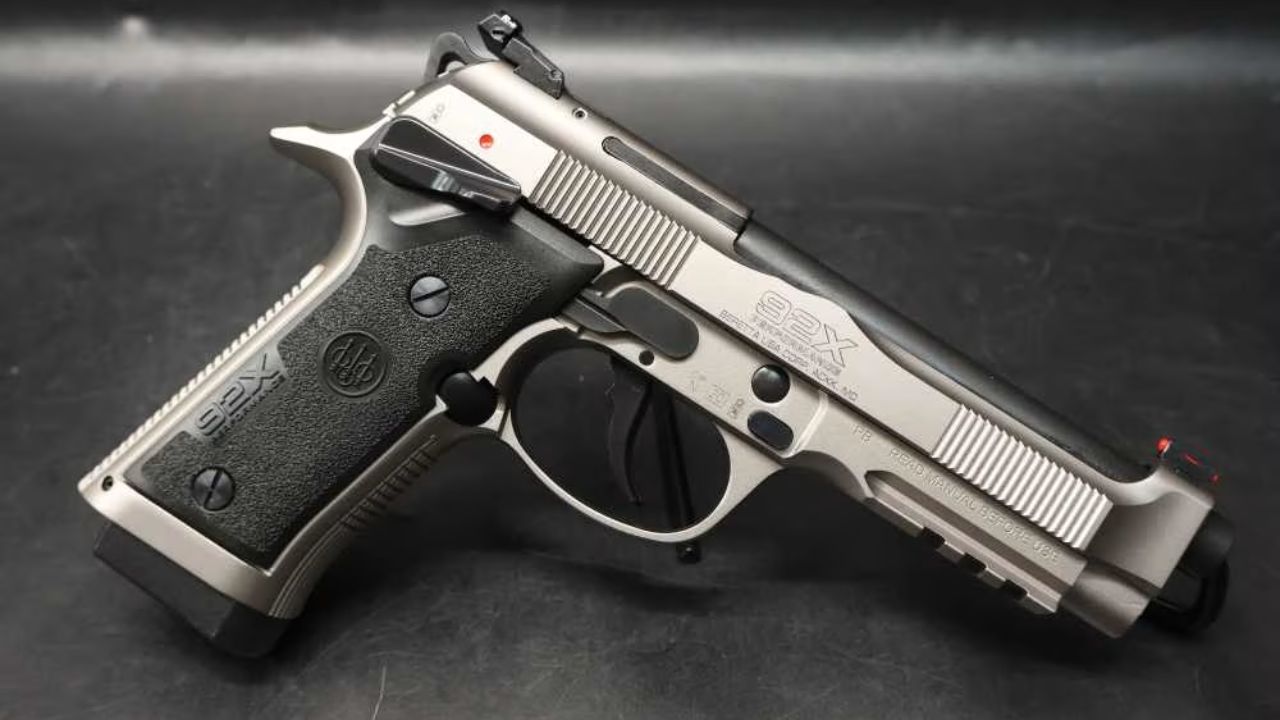
The Beretta 92X modernizes the service-pistol family descended from the U.S. military’s longtime M9. It retains the open slide and locking-block action while adding a straighter grip profile, accessory rail, improved sights, and more contemporary configurations.
Beretta continues to market the 92X and APX families directly for military, law-enforcement, and public-safety use. The 92X’s metal frame produces a smooth recoil impulse, while the large controls are easy to operate with gloves.
The slide-mounted decocker or safety remains controversial, and the double-action trigger reach can be long for smaller hands. Agencies choosing the 92X are selecting a refined and proven mechanical system rather than the lightest or simplest pistol available. It remains especially appealing to professionals who value an exposed hammer and metal construction.
Beretta APX A1 Full Size

The APX A1 is Beretta’s modern striker-fired duty pistol. It uses a removable serialized chassis, interchangeable backstraps, an optics-ready slide, and an accessory rail designed around contemporary professional equipment.
Its deeply cut slide serrations provide excellent traction, while the grip supports a high firing position. Beretta includes the APX A1 in its current public-safety and tactical product offerings, reflecting the pistol’s intended military and law-enforcement role.
The APX does not have the same American aftermarket or institutional presence as Glock and Smith & Wesson. Its factory trigger is also competent rather than exceptional. It often sells for less than its direct competitors, making it a strong duty-value option for organizations that can secure proper holsters, magazines, and armorer support.
Heckler & Koch VP9

The HK VP9 combines striker-fired simplicity with one of the most adjustable grips available on a production duty pistol. Interchangeable backstraps and side panels allow users to change both the depth and width of the frame, making it easier to fit officers with very different hands.
Its trigger is clean, the rear charging supports make slide manipulation easier, and the ambidextrous controls work naturally for left-handed users. Optics-ready versions and full-size accessory rails support common professional setups.
HK magazines and replacement parts tend to be more expensive than comparable Glock components. Some American officers also require extra familiarization with HK’s paddle-style magazine release, depending on the version. The VP9 remains an excellent professional pistol for users who place grip fit and ambidextrous handling near the top of the list.
Heckler & Koch P30
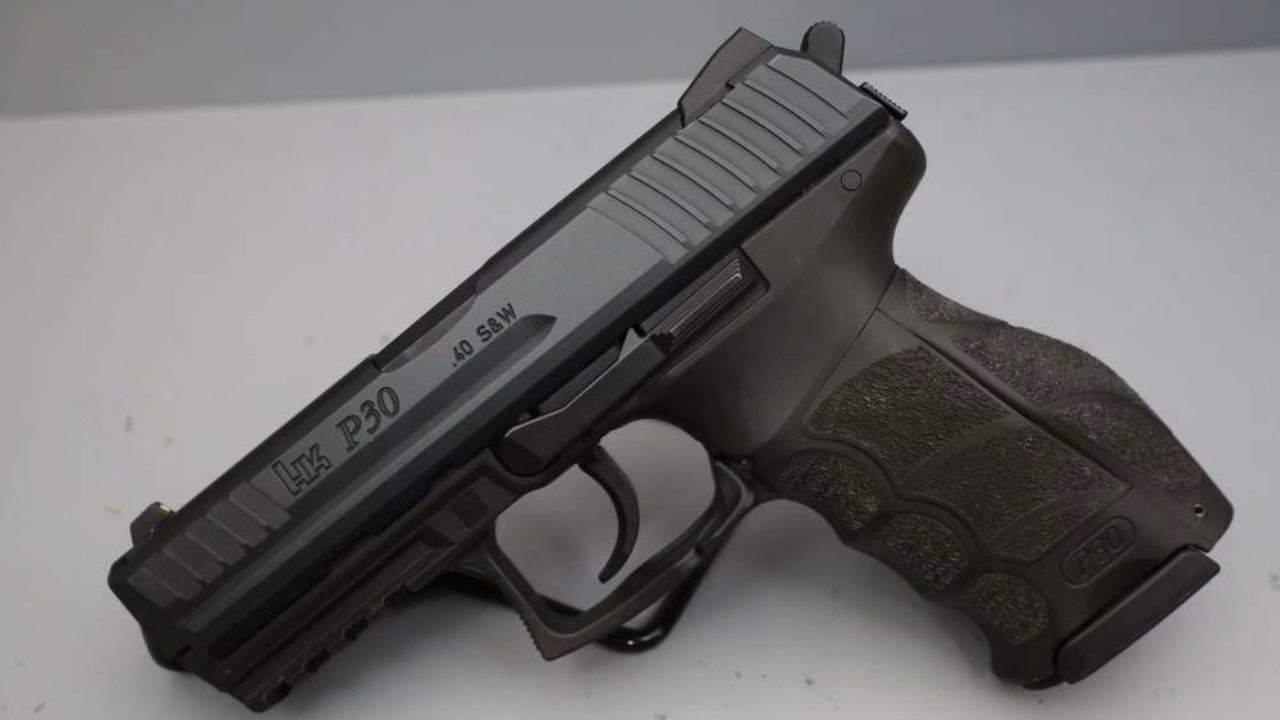
The HK P30 is a traditional hammer-fired duty pistol built around long service life and adaptable ergonomics. Like the VP9, it offers interchangeable grip panels and backstraps. It is available with conventional double-action and single-action operation or HK’s LEM trigger system.
The exposed hammer provides physical feedback during holstering, while the decocker or LEM system gives organizations several ways to configure the trigger. The pistol’s controls are fully ambidextrous, and its polymer frame keeps weight manageable despite its robust construction.
The standard trigger can feel long and less refined than newer striker-fired systems. That does not prevent the P30 from being an exceptionally durable working pistol. It is best suited to professionals willing to train around its trigger rather than expecting competition performance from a service handgun.
Walther PDP Full Size

The Walther PDP was developed explicitly as a modern performance-duty pistol. It combines a full-size grip, optics-ready slide, aggressive serrations, strong texture, and one of the cleanest factory triggers in the striker-fired duty category. Walther offers dedicated law-enforcement versions and professional configurations through its current LE product program.
The trigger and grip make the pistol easy to shoot accurately during timed qualifications. Its large slide serrations remain accessible around a mounted optic, while the accessory rail supports full-size duty lights.
The slide is tall and produces a more active recoil impulse than some shooters expect. Magazine and holster support, while improving, does not match Glock’s. The PDP is one of the strongest options for individual officers allowed to choose their own pistol and for agencies willing to build equipment support around a less established platform.
CZ P-10 F
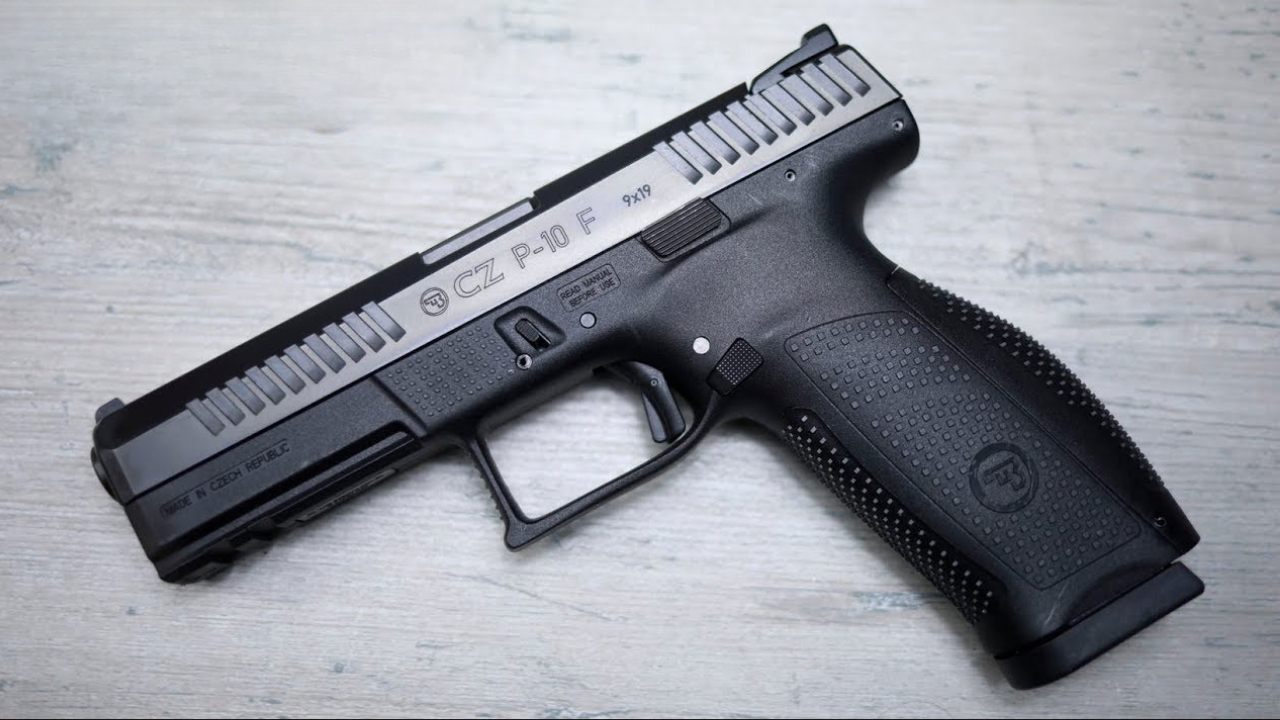
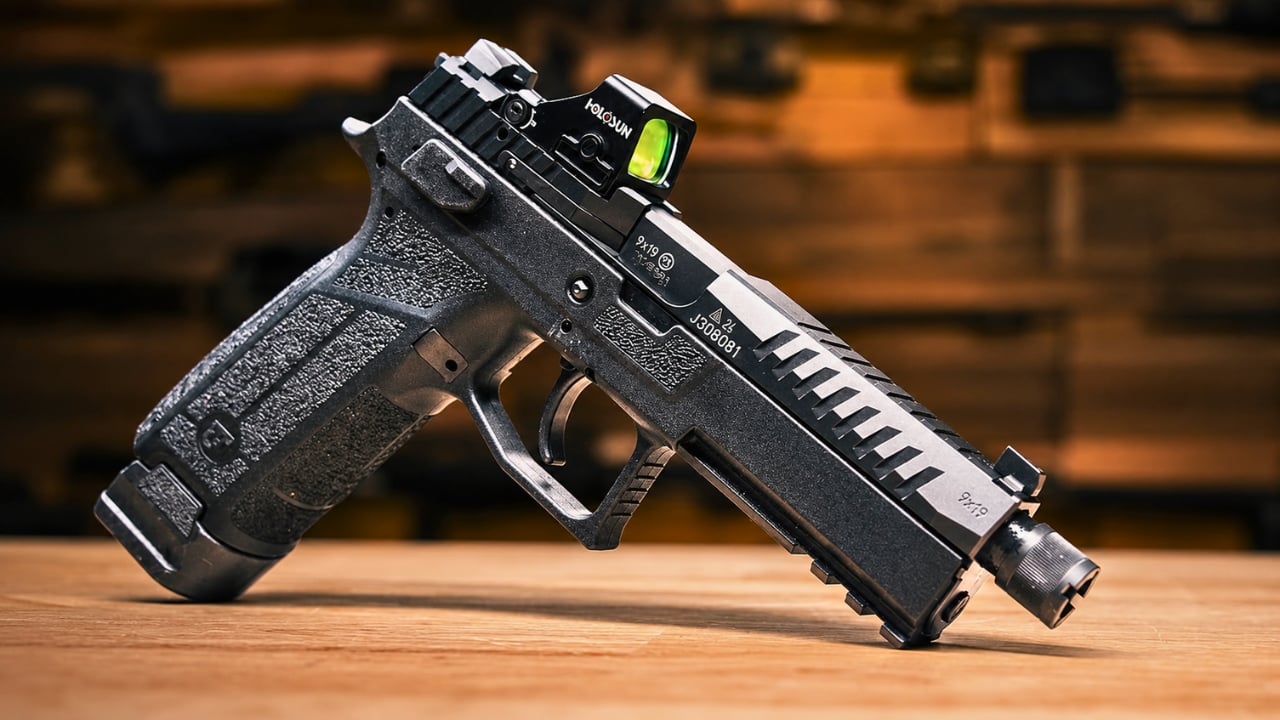
The CZ P-10 F provides a full-size striker-fired platform with aggressive texture, a low-feeling bore line, ambidextrous controls, and a trigger that is generally cleaner than the basic triggers included with many traditional duty pistols.
Its large grip and substantial magazine capacity make it easy to control, while optics-ready configurations allow departments to mount modern duty sights. The frame has enough rail space for full-size lights, and the pistol requires little modification before professional use.
CZ has not built the same American law-enforcement ecosystem around the P-10 that Glock or Smith & Wesson enjoys. Magazines, replacement components, and approved duty holsters may require more planning. The actual shooting performance is excellent, and agencies with solid distributor and armorer support may find it delivers impressive value.
Springfield Armory Echelon
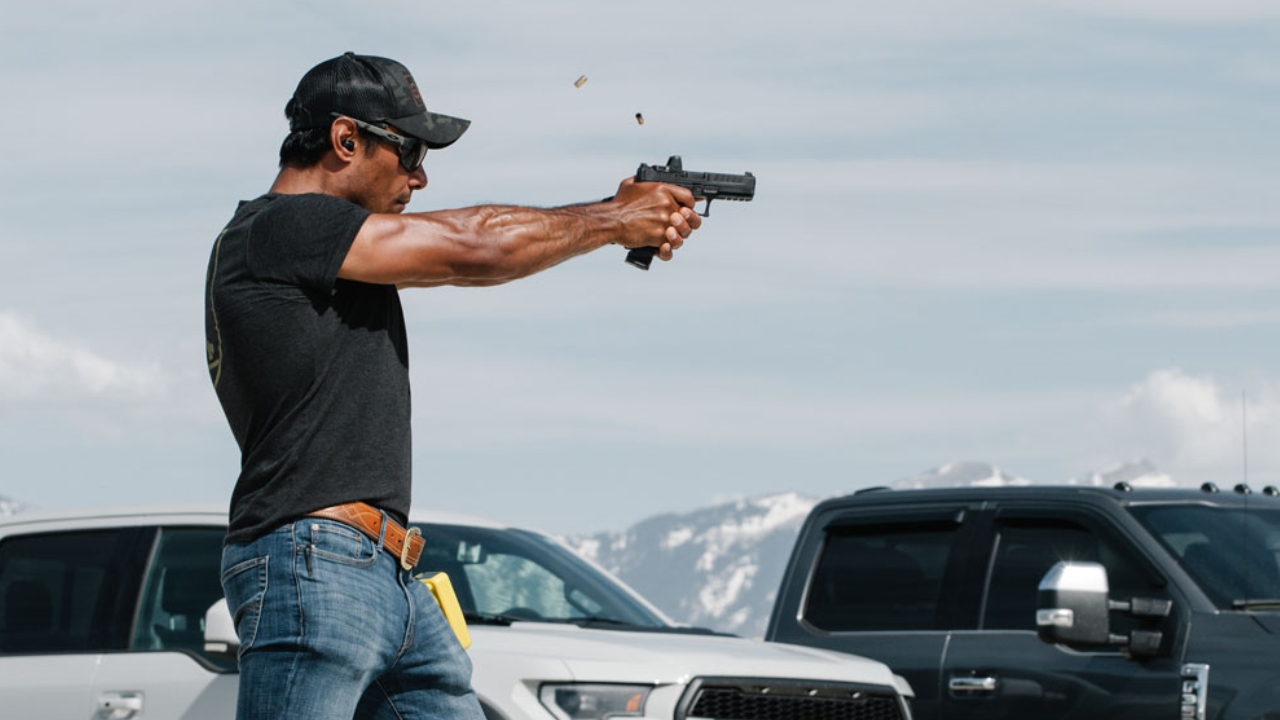
The Echelon was designed around modern duty requirements instead of being adapted from an older concealed-carry pistol. It uses a removable central operating group, fully ambidextrous controls, aggressive slide serrations, interchangeable grip components, and a versatile optic-mounting system.
Its optic arrangement allows several popular red-dot footprints to mount without conventional thick adapter plates. That keeps the sight low and reduces the number of screws and components in the mounting stack. The grip provides useful contact for both hands, and the trigger is predictable enough for agency training.
The Echelon does not yet have the decades of professional service behind Glock, SIG Sauer, or Beretta. Its feature set is nevertheless extremely well suited to agencies buying a complete light-and-optic-equipped system today. Long-term parts support and adoption will determine whether it becomes a professional standard or remains a capable commercial alternative.
Staccato P
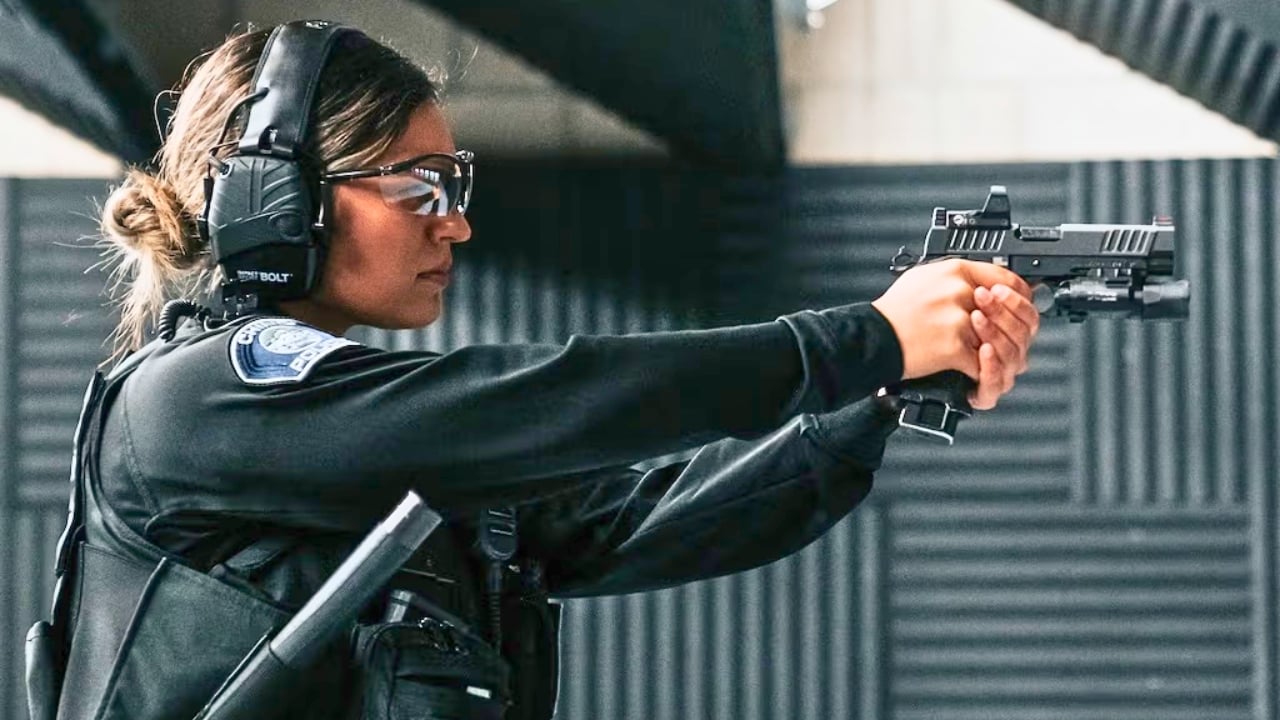
The Staccato P is different from the polymer striker-fired pistols dominating duty holsters. It uses a double-stack 1911-style system with a single-action trigger, thumb safety, grip safety, and metal-frame construction. The result is a pistol designed around unusually fast and accurate shooting.
Staccato says its pistols are approved by more than 1,800 law-enforcement agencies and carried by specialized units and individual officers. The company specifically identifies the P as a professional duty model, and SWAT teams were among the platform’s early law-enforcement adopters.
The P is expensive, requires more lubrication and maintenance than a basic Glock, and uses an operating system that demands regular safety-manipulation training. It is not the logical choice for every patrol officer. For specialized teams and skilled officers who can maintain it properly, the trigger and recoil control provide a performance advantage few ordinary duty pistols can match.
CZ P-09 F Nocturne
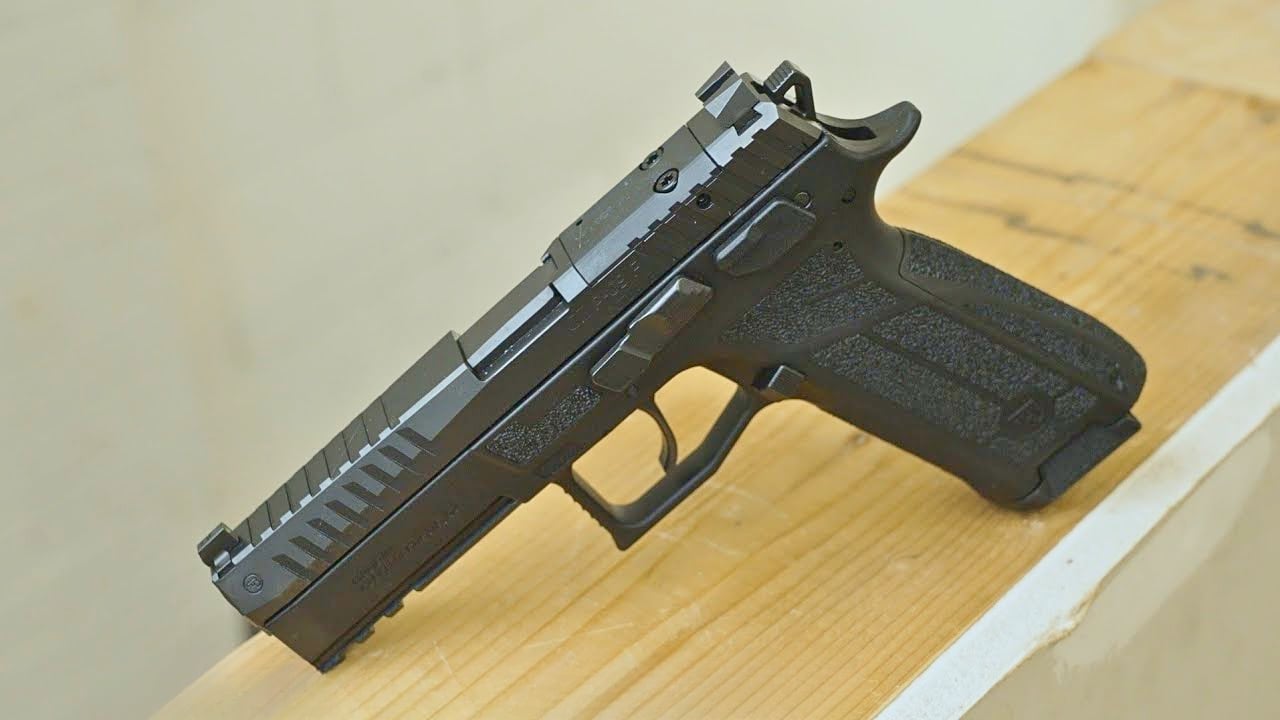
The CZ P-09 F Nocturne offers a modern full-size hammer-fired option for professionals who do not want a metal-framed pistol. It combines a polymer frame, high-capacity magazines, accessory rail, updated grip texture, and an optics-ready slide.
Its trigger system can be configured with a decocker or manual safety, allowing an agency or individual user to choose between hammer-down double-action carry and cocked-and-locked operation. The exposed hammer also lets the shooter maintain physical control over it during holstering.
The double-action pull requires more training than a striker-fired trigger, and CZ’s professional support network is smaller than Glock’s. The P-09 F is nevertheless durable, easy to control, and priced far below many metal hammer-fired service pistols. It is one of the best current choices for professionals who prefer traditional operation without accepting traditional weight.
Like The Avid Outdoorsman’s content? Subscribe to our newsletter so you never miss an article.
Here’s more from us: