
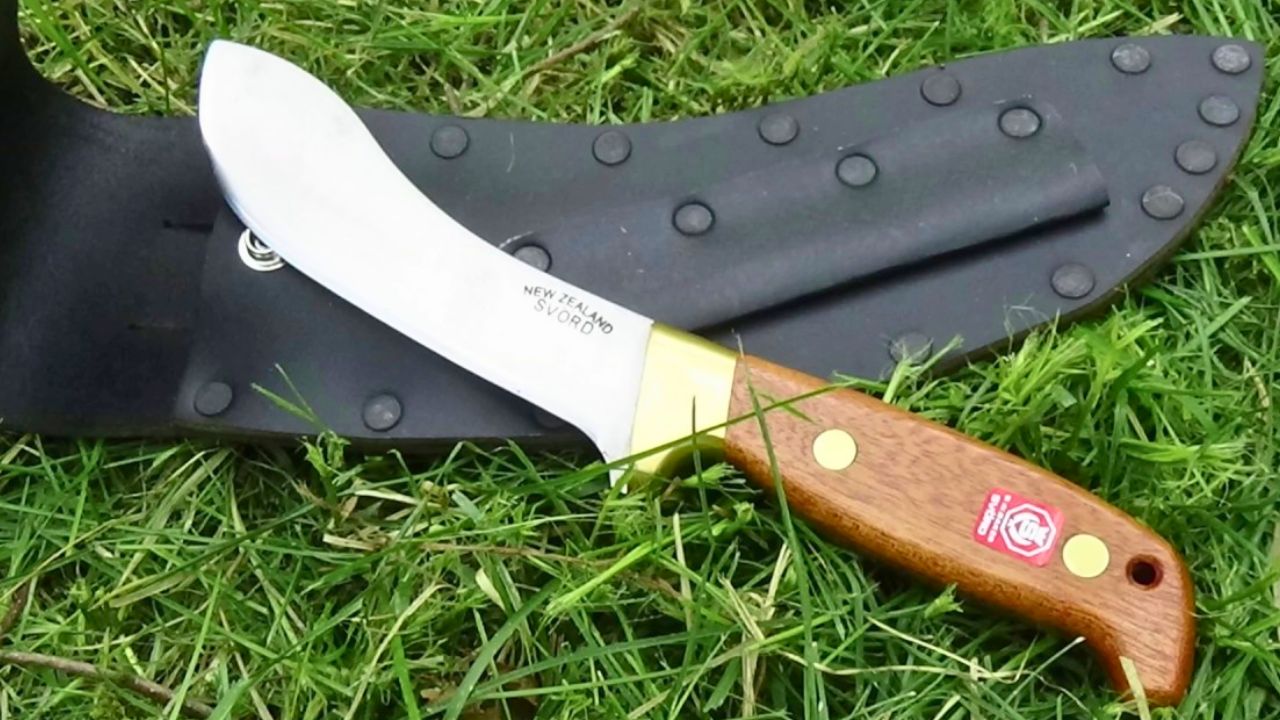
Photo credit: Svord Knifes Germany by Waldlaufershop/YouTube
A good skinning knife isn’t about style—it’s about speed, control, and clean results. You don’t want to be halfway through a deer and realize your blade’s too thick, too long, or hard to maneuver. The right knife design makes all the difference in how fast and clean you can work, especially when it’s cold, dark, or you’re racing daylight. These are the blade types and design features that actually help you move quicker and cleaner through game.
Drop Point Blades

Drop points are one of the most trusted designs for skinning because of the control they give you. The blade’s curve makes it easy to slice along muscle and hide without digging in too deep or nicking organs. That wider belly gives you more surface area to work with, which helps when pulling long strokes down the body.
If you’re after an all-around skinning tool that can also handle field dressing, a drop point is usually the first recommendation—and for good reason. It’s versatile, reliable, and easy to manage, even in tight quarters.
Caping Blades

Caping blades are smaller and more precise, made for fine detail work around the head, face, and joints. But they’re not only for capes. If you need control—like working around tendons or freeing hide from awkward angles—these blades shine.
You probably won’t use one for the entire job, but it’s a great secondary blade to have in your pack. When it’s time to get precise and avoid mistakes, this design gives you a lot more forgiveness than a standard-sized field knife.
Trailing Point Blades

Trailing points have that swept-up tip and exaggerated curve that makes them excellent for skinning big game fast. The shape naturally follows the hide, letting you peel back large sections without stopping to reset your grip or angle.
They aren’t the strongest tips if you’re prying or twisting, so they’re better saved for skinning duties than anything rough. But when it’s time to separate hide from muscle fast, this style glides through the job with less effort and more fluid motion.
Gut Hooks

A gut hook isn’t a blade design in itself, but it’s a feature worth mentioning. Built into the spine of many drop-point or clip-point knives, a gut hook helps you open the abdomen cleanly without cutting into internal organs.
When used right, it speeds up field dressing and reduces mess. That said, cheap gut hooks can snag or dull fast, so you want one that’s actually sharpened well and positioned right. If it works, it’s a real time-saver—if not, it’s dead weight.
Clip Point Blades

Clip points have a finer, sharper tip and a bit less belly than drop points, which gives you more precision but slightly less skinning surface. That said, plenty of hunters use them effectively and swear by their versatility.
If you’re already used to clip point knives for other tasks, you won’t have much of a learning curve. They handle well for small to medium game and give you a little more finesse when needed. It’s not the fastest blade, but it’s capable.
Replaceable Blade Knives

Replaceable blade knives like those from Havalon or Outdoor Edge have carved out a big niche in hunting circles. Their biggest advantage is always having a razor-sharp edge without stopping to sharpen. That’s a game changer when speed matters.
These knives usually use surgical-style blades that zip through hide like butter. They’re lightweight and efficient, but not the best for heavy tasks like joint work or splitting. Still, if you want to skin fast and clean, this design makes it easy.
Semi-Skinner Blades

The semi-skinner is a lesser-known but effective design. It gives you the control of a drop point with a slightly more pronounced belly for faster hide removal. The edge geometry tends to be flatter, which helps maintain contact through long strokes.
You won’t find as many knives marketed with this name, but the ones that use the profile—like some older Buck models—still hold their own. If you want a middle ground between precision and speed, this shape works well without overcomplicating the job.
Curved Skinner Blades

Traditional skinner knives with exaggerated belly curves are purpose-built for one thing—removing hide. These blades make big sweeping motions easy and smooth, which speeds up the process when working on large animals.
They’re not the most versatile, and they take some practice to control if you’re used to straighter blades. But once you get the hang of it, they’re fast, clean, and comfortable to use. These are especially handy for elk, moose, or full deer hides.
Nessmuk Blades

The Nessmuk blade has a unique shape—broad, thin, and curved. Originally designed as a general-use woods knife, it works surprisingly well for skinning thanks to that wide cutting surface and comfortable handling.
It’s not the fastest design on this list, but it gives you good leverage and edge control if you’re doing the entire job start to finish with one tool. A Nessmuk won’t be in everyone’s pack, but if you like traditional gear that holds up, it earns a spot.
Scandi Grinds with Drop Points

If you’re into bushcraft-style knives, a drop point with a Scandi grind can work surprisingly well for skinning. The Scandi edge bites deep and gives you solid feedback, which helps when pulling hide away in controlled sections.
It’s not the most common combo for hunters, but if you already run a knife like this for camp tasks, it’ll hold up in the field too. Just make sure it’s sharp and not too thick behind the edge. Done right, it’s effective and keeps your loadout simple.
*This article was developed with AI-powered tools and has been carefully reviewed by our editors.


