
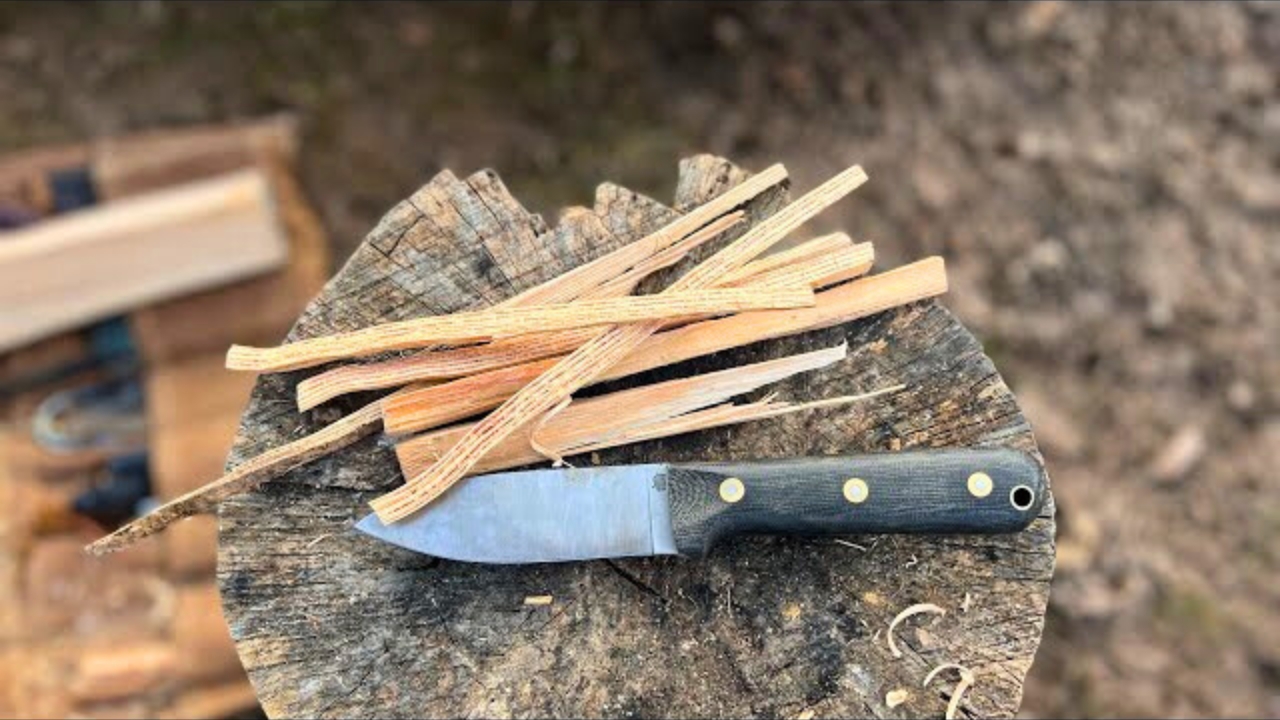
Photo credit: Outpour Outdoors/YouTube
Not every knife is cut out for batoning. If you’re splitting kindling, you need a fixed blade that can take a beating—something with the right thickness, a full tang, and steel that doesn’t flinch under pressure. You don’t want a thin slicer or anything with a rat-tail tang.
The wrong knife might get you a few sticks before snapping or chipping. The right one will handle hardwood, knots, and campfire prep without needing babying. Here are the blades that actually hold up when you’re driving them through logs.
ESEE 5

The ESEE 5 is overbuilt on purpose. With a 1/4-inch thick 1095 blade and a full tang, it’s made for abuse. You can hammer on it all day and it’ll shrug it off. It’s not a featherweight, but that heft works in your favor when you’re batoning.
The blade’s short enough to control but long enough to split wrist-thick logs without issue. As long as you keep it oiled, that carbon steel will keep cutting clean and strong. It’s made for hard use, and it proves it every time.
KA-BAR Becker BK2

The BK2 is a staple in the world of survival knives for good reason. It’s a thick slab of 1095 Cro-Van with a blade just under 6 inches long. That makes it perfect for kindling duty—plenty of meat behind the edge, and a tang that runs straight through the handle.
It’ll baton, pry, and chop without tapping out. Some folks find it chunky, but that’s kind of the point. When you’re out in the woods and need a knife you can trust, the BK2 holds its own.
Condor Bushlore

The Bushlore isn’t flashy, but it’s a dependable bushcraft knife that handles wood well. It’s got a 1/8-inch thick 1075 blade with a scandi grind that bites deep and splits clean. The edge is easy to maintain in the field, which matters when you’re using it daily.
The full tang build and hardwood handle give you solid control, and it doesn’t feel bulky. If you’re looking for a simple knife that won’t flinch when you baton it through a stubborn knot, this one’s a safe pick.
TOPS B.O.B. Fieldcraft

This one was made with survival in mind. The Fieldcraft’s 1095 steel blade is just over 4.5 inches long, with a solid thickness and a convex-style grind that helps it power through wood. It’s full tang, with micarta handles that don’t slip when wet.
You can strike a ferro rod off the spine, and it’ll take plenty of abuse when batoning. It’s not light, but it’s balanced well enough to be versatile—great for both splitting and finer bushcraft work.
Cold Steel SRK in SK-5

The SRK’s been around a while, and for good reason. It’s got a 6-inch SK-5 blade that’s tough and takes a solid edge. The full tang and thick spine let it handle hard hits without bending or snapping.
It’s not the thickest blade on this list, but the steel quality and design let it baton effectively without much fuss. The Kray-Ex handle also gives good grip, even in the cold or wet, which helps when you’re splitting wood in rough conditions.
Fallkniven A1

The A1 comes with a laminated VG-10 blade that handles stress extremely well. It’s 1/4-inch thick with a convex grind that pushes wood apart instead of binding up. It’s not cheap, but it’s one of the few stainless options that can take real punishment.
The tang is nearly full-length, and the balance makes it a capable chopper too. If you want a knife that can split kindling in the snow and still slice clean after, this one’s worth the investment.
Ontario RAT-7

The RAT-7 has a 7-inch 1095 blade that’s got enough length and heft to split firewood without any drama. The full tang and grippy micarta handle make it easy to hold onto while hammering through logs.
It’s longer than most in the ESEE-style lineup, which makes it better for splitting bigger rounds. The coating helps resist rust, and the grind is thin enough to cut well but strong enough to take a hit. It’s a solid option for camp or survival use.
Schrade SCHF36

The SCHF36 is a budget-friendly beast. It’s got a 5-inch 1095 blade, full tang, and a thick spine that handles batoning surprisingly well for the price. The rubberized grip isn’t fancy, but it stays put when your hands are wet or cold.
It won’t outlast premium knives, but if you’re looking for something that can split kindling without costing a fortune, it’ll get the job done. It’s proven itself as a reliable tool in the woods without breaking the bank.
Helle Temagami

The Temagami’s triple-laminated steel offers a strong core with a bit of forgiveness on the outer layers. The scandi grind bites clean, and the full tang (technically partial-exposed but very strong) makes it capable of handling some batoning work.
It’s more of a bushcraft-style knife, but it’ll handle kindling without issue—especially if you’re dealing with dry or medium-hard woods. It’s a solid option if you want a knife that looks traditional but holds up when you really need it to.
LT Wright Genesis

This knife is built with 3/16-inch thick 01 tool steel and a scandi grind, making it ideal for processing wood. The edge geometry lets it split with control, and the steel takes a sharp edge without being too brittle.
The Genesis is full tang, and the handles are contoured for a secure grip. I’ve run one through camp chores, fire prep, and even some rough batoning without any problems. It’s handmade in the USA and built like a tool—not a trophy.
*This article was developed with AI-powered tools and has been carefully reviewed by our editors.


