
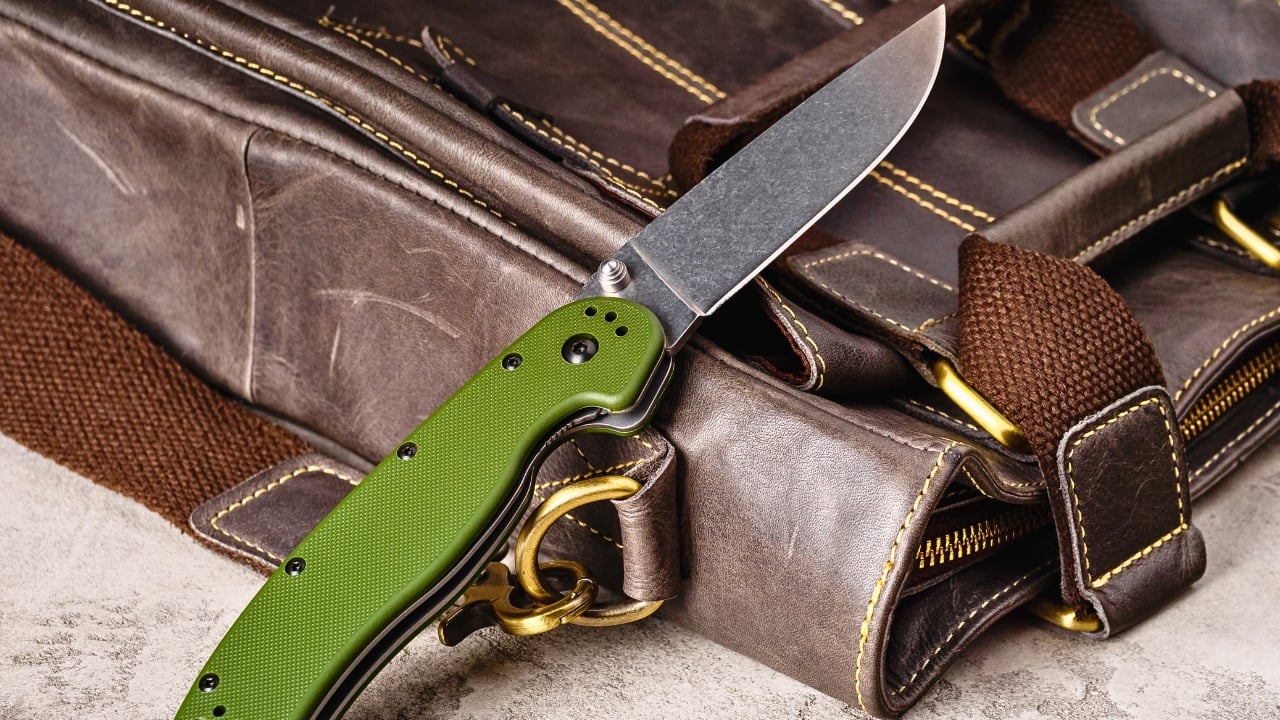
Photo credit: photonarrative/Shutterstock.com
Airport security checkpoints are catching more weapons and sharp objects at the same time you are packing more everyday gear into a single carry-on. That collision of habits and rules is why so many travelers are watching pocket knives, tools, and even kitchen gadgets disappear into the gray bin. If you want to stop losing belongings at the checkpoint, you need to understand how the knife problem fits into a broader pattern of what security officers are actually seeing in bags.
Why knives keep showing up in carry-ons
You probably do not think of yourself as someone who travels with a weapon, yet the modern carry-on is full of items that qualify as blades or tools in the eyes of security. Multi-tools clipped to laptop bags, souvenir pocket knives on keychains, and camping gear tossed in at the last minute all become prohibited once you step into the screening lane. Officers are trained to treat any cutting edge as a potential threat, so even a small folding blade that feels harmless to you can trigger a bag search and a difficult choice between surrendering it or missing your flight.
Rules for knives are stricter than many travelers realize, especially for international trips. Guidance on whether you can bring a pocket knife on a plane makes clear that security agencies treat blades in hand luggage as a category of risk on both domestic and international routes, and that a knife that might be acceptable in checked baggage is not allowed in your cabin bag. When you add in the fact that people are also packing power banks, cameras, and other electronics that already complicate screening, as highlighted in updated lists of what not to pack in your carry-on, it becomes easy to see how a forgotten blade buried in a side pocket can be missed at home but quickly spotted on the X-ray belt once you reach the airport.
The hard line on pocket knives and sharp objects
If you are looking for a simple rule on knives in the cabin, you have one: assume the answer is no. Security guidance explains that agencies such as the TSA prohibit pocket knives in carry-on bags on both domestic and international flights, even when the blade is small or folds into the handle. That blanket approach is designed to remove judgment calls at the checkpoint, so officers do not have to debate whether a particular knife is more tool than weapon while a line of passengers builds behind you. The safest way to travel with a blade is to pack it in checked luggage or leave it at home.
The same logic applies to other sharp objects that might not look like traditional knives. Official lists of banned items spell out that categories labeled as Sharp Objects, including Razor Blades used in utility knives and box cutters, belong only in checked Bags, while items such as Ice Axes and other Ice tools are treated as outright weapons in the cabin. Separate guidance on Sharp Objects and Weapons notes that knives and similar items are not allowed in carry-ons at all, and that even in checked bags some blades are restricted unless the blade is less than 4 inches and properly sheathed. When you combine those rules with the clear statement that you cannot bring a Pocket Knife on a Plane in your hand luggage, the pattern is unmistakable: if it cuts, assume it cannot ride under the seat in front of you.
What security officers actually seize most often
While knives and tools grab headlines, the items that most often get pulled from bags are surprisingly mundane. Security officers report that The Most Frequently Detected Prohibited Items in Airport Baggage Checks are Liquids, Aerosols, and Gels that break the familiar 3.4 ounce rule, along with creams and pastes that passengers forget to treat as liquids. Bottles of duty-free alcohol without proper documentation, oversized shampoo, and full-size cans of hairspray all show up in the bins, and each one slows the line as officers pull the bag, explain the rule, and dispose of the item. Those delays create the rushed, stressful environment in which a forgotten knife or tool is more likely to be overlooked by you when you pack and then discovered under pressure at the scanner.
Lists of commonly confiscated items also show how many sharp edges are hiding in everyday grooming and work gear. Travel advisories on what not to pack in your carry-on highlight that Self defense items, such as tactical pens with pointed tips, and Defe devices like disguised blades, are treated as prohibited weapons even if you bought them as safety gadgets. Broader prohibited item lists group Razor Blades, box cutters, and certain types of scissors under Sharp Objects that must go in checked Bags, reinforcing that security officers are trained to look for any cutting edge, not just obvious knives. When you see how often liquids, tools, and grooming items are seized together, it becomes clear that the knife problem is part of a larger pattern of travelers underestimating how strict the cabin rules really are.
How new rules and REAL ID add to checkpoint confusion
Knife seizures are rising at the same time that the overall security experience is changing, which makes it easier for you to focus on the wrong details. Over the past year, The TSA has rolled out new screening technology and has even signaled that a Big airport security rule on liquid container size could change in the future, prompting travelers to wonder whether the familiar 3.4 ounce limit is about to disappear. At the same time, some airports are adjusting procedures like shoe removal and laptop screening, so you may be concentrating on whether to unlace your sneakers or pull out your tablet instead of double checking that your backpack does not contain a forgotten blade.
Identification rules are tightening as well, which adds another layer of stress before you even reach the X-ray belt. DHS and TSA have made it clear that they are committed to enforcing the REAL ID Act, and that beginning Effective May 7, 2025, anyone 18 or older who plans to fly domestically will need a compliant REAL ID or another acceptable form of identification. Regional airports are reminding passengers of this REAL ID Requirement and warning that the design may vary by state, which means you may be digging through your wallet to confirm you have the right license while you shuffle through the queue. That distraction is exactly how a keychain knife or small tool can slip your mind until an officer pulls it from your bag and tells you it is not going any farther.
Record weapons at checkpoints show the stakes
Behind every confiscated knife is a security system that is already dealing with a record number of more serious weapons. Official figures show that security officers intercepted 6,678 firearms at airport security checkpoints in 2024, a number that underscores how often people arrive at the airport with a gun still in a bag or holster. The agency has stressed that if individuals who carry a firearm intend to travel, the firearm must be unloaded, locked in a hard-sided case, and placed in checked baggage, and that the rate of firearm detections per million people has remained stubbornly high compared with 2023. When officers are confronting that volume of guns, they have little patience for arguments over whether your pocket knife is really just a tool.
Those firearm numbers sit alongside a steady stream of other dangerous or bizarre finds. A roundup of the 2024 top 10 list of what security officers seized from airports includes cases such as Marijuana hidden in peanut butter at Asheville Regional Airport in North Carolina and Meth hidden inside crutches at Newport News and Williamsburg Interna, illustrating how creative some passengers are in trying to evade the rules. Another compilation of the wildest confiscated items of 2025 notes that officers at Newark Liberty International Airport discovered a weapon disguised with a golf club headcover, a reminder that anything with a concealed blade or striking surface will be treated as a serious threat. In that context, your small folding knife is not just a sentimental keepsake, it is one more sharp object in a system already stretched by real weapons.
Everyday items that keep getting travelers stopped
Even if you never travel with a firearm, you are still at risk of losing everyday items that security now treats with more scrutiny. Advisories on Everyday Items TSA Is Seizing In 2025 warn that certain common products, from large aerosol deodorants to certain types of lighters and novelty gadgets, are showing up in bins so often that officers can practically spot them by silhouette. The message is blunt: Don’t Pack These On Your Next Flight if you want to avoid a secondary search or a last minute dash back to the check-in counter to move something into your checked suitcase. Many of these items are not knives, but they compete for attention on the X-ray screen, which makes it more likely that a small blade tucked into a side pocket will be discovered late in the process.
Food is another surprisingly common trigger for extra screening. Travel experts note that Food of almost any kind, from Sandwiches to dips and steaks, will almost always get pulled for a closer look, and that Schieler, a seasoned observer of checkpoint patterns, has warned that obviously dense or messy items are especially likely to be flagged. When your bag is already being opened to inspect a container of sauce or a stack of snacks, officers are more likely to spot a knife, corkscrew, or other tool that might have slipped through if your luggage had stayed closed. The combination of stricter rules on liquids, more attention to Everyday Items TSA Is Seizing In 2025, and the near certainty that Food will draw an extra glance means your carry-on is under more scrutiny than ever, and any blade inside it is living on borrowed time.
What really happens to your confiscated knife
Once a knife or sharp object is spotted in your bag, you lose control of what happens next. Security officers are trained to give you limited options: if there is time and the airport layout allows, you may be able to leave the line and check the item in a suitcase or mail it to yourself, but in many cases you will be told that the only way to make your flight is to surrender it on the spot. Explanations of What the TSA does with confiscated items make clear that once you hand over a prohibited object, it is no longer treated as your property in the usual sense, and you should not expect to see it again at the gate or on your return trip.
After collection, surrendered items follow a path that depends on local policy and the nature of the object. Some knives and tools are destroyed, especially if they are considered weapons or if there is any doubt about their safety, while others may be transferred to state surplus programs or law enforcement. Guidance on The Most Frequently Detected Prohibited Items in Airport Baggage Checks notes that liquids and perishable goods are typically discarded outright, while durable items like tools and knives can be stored or processed differently. The key point for you is simple: once your knife drops into the bin, you should assume it is gone, which makes a few minutes of careful packing at home a far better investment than a last minute argument at the checkpoint.
The civil penalties you do not see coming
Losing a favorite knife is frustrating, but in some cases the consequences go far beyond a surrendered item. Legal guidance on what happens during the TSA civil penalty process explains that The TSA restricts the types of materials people can bring to the airport, including guns, knives, or other items the TSA classifies as dangerous, and that violations can lead to hefty civil penalties in addition to confiscation. If officers believe that a knife, tool, or disguised weapon indicates willful disregard of the rules rather than an honest mistake, you may find yourself facing a formal notice of violation and a potential fine that arrives weeks after your trip.
The severity of those penalties depends on the item and the circumstances, but the process itself can be stressful and time consuming. Travelers who are flagged may be questioned at the checkpoint, miss flights while officers complete paperwork, or be referred to law enforcement if the object appears to violate criminal statutes. Official reminders that firearms must be unloaded and locked in checked baggage, and that sharp weapons are not allowed in the cabin, are not just suggestions, they are the standards against which your behavior will be measured. When you weigh the risk of a civil penalty against the minor inconvenience of leaving a knife at home, the smarter choice is obvious.
How to pack smarter so you stop losing gear
The most effective way to avoid losing knives and other sharp items is to treat packing as a security exercise, not just a game of suitcase Tetris. Start by designating one bag as your permanent carry-on and clearing it of anything that might be considered a weapon or Sharp Object, including small Razor Blades, hobby knives, and multi-tools, so you are not surprised by something you forgot months ago. Then, when you pack for a trip, run through a short checklist that covers liquids, Aerosols, and Gels, power banks and other electronics, and any tools or gadgets that might raise questions at the scanner. If you are unsure, put the item in checked luggage or leave it behind.
It also helps to stay current on evolving rules and local practices. Airport advisories on new TSA rules and guidelines for 2025 emphasize that The TSA is adjusting procedures at some checkpoints, and that changes to liquid rules or screening technology may roll out unevenly across airports. Holiday travel coverage notes that Policy changes travelers should know, including new screening lanes and identification checks, are being tested during peak seasons, and that the availability of those lanes varies by airport. When you combine that with updates on TSA banned items for 2025, which explain that certain products have been newly restricted According to information drawn from the Code of Federal Regulations and summarized by The Street, it becomes clear that yesterday’s assumptions about what is allowed in your bag may not hold tomorrow. A quick review of official lists before you pack, including the TSA Permitted & Prohibited Items List that spells out which Sharp Objects belong in checked Bags, is a small step that can save you from losing a knife, paying a fine, or missing a flight.
Why the knife problem is not going away
Even with better packing habits, the clash between what you carry every day and what security will tolerate in the cabin is only going to intensify. Social media clips have shown how The TSA is investigating incidents where a meat cleaver was left in carry-on luggage and still made it onto an airplane on a Thursday in Nov, prompting renewed scrutiny of how such obvious weapons can slip through. At the same time, compilations of the wildest confiscated items at major hubs like Newark Liberty International Airport reveal a steady stream of disguised blades and improvised weapons that keep officers on edge. Each time a high profile miss or seizure goes viral, the institutional response is to tighten enforcement, not relax it.
Looking ahead, you should expect more, not fewer, restrictions on what you can bring into the cabin, especially when it comes to anything that cuts. Official banned item updates for 2025 explain that What TSA has added to the prohibited list for checked and cabin bags reflects ongoing reviews of emerging threats, and that certain items have been newly restricted According to the Code of Federal Regulations as interpreted by The Street and other analysts. As DHS and TSA move toward full enforcement of the REAL ID Act and continue to intercept thousands of firearms and countless knives each year, the safest assumption is that any blade in your carry-on is a liability. If you treat your bag the way a security officer will, scanning it for sharp edges and suspicious shapes before you ever leave home, you will lose fewer belongings at the checkpoint and spend less time watching the gray bin roll away with something you never meant to surrender.
Like The Avid Outdoorsman’s content? Be sure to follow us.
Here’s more from us:


