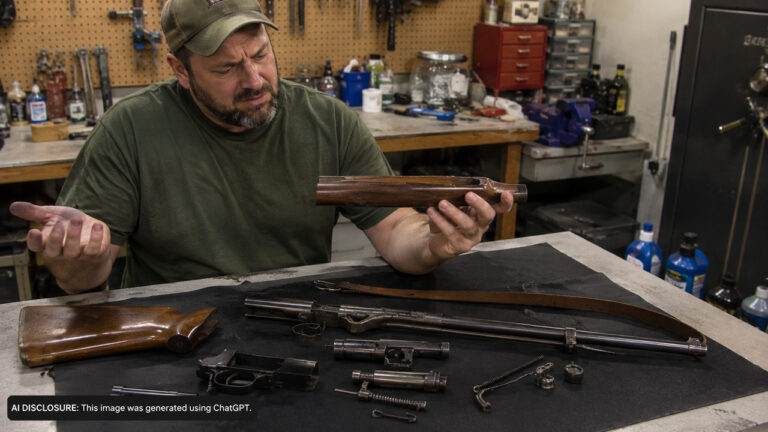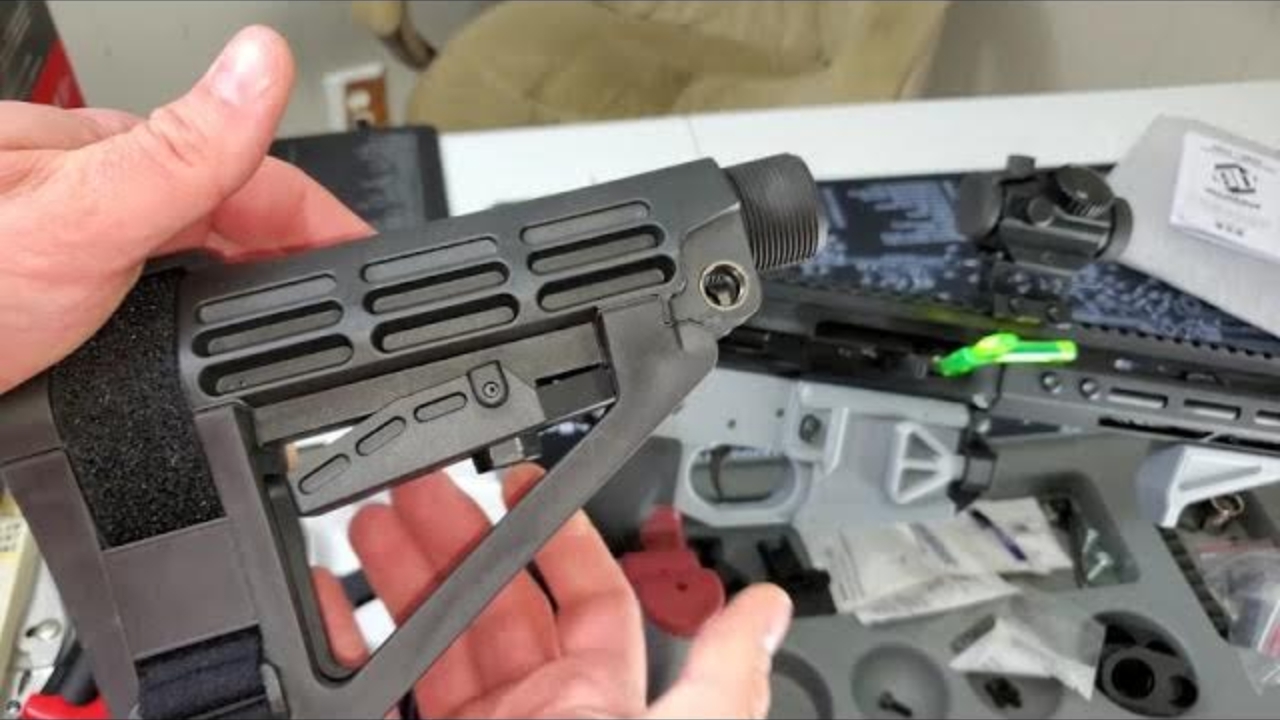
Photo credit: Kenne Bears Arms/YouTube
The fight over the pistol brace rule did not end when federal courts wiped it off the books. For buyers and builders, the real story now is how much of your old workflow comes back, how much risk still lingers, and what habits you need to keep from the compliance scramble of the last two years. The landscape is friendlier than it was at the height of the rule, but it is not a free‑for‑all, and the smartest move is to treat this moment as a reset rather than a victory lap.
From sweeping rule to courtroom reset
You watched the pistol brace debate move from internet arguments to the Federal Register, then into your gun room. In January, the ATF used its rulemaking power to reclassify many braced pistols as short‑barreled rifles, folding them into the National Firearms Act and forcing owners to choose between registration, modification, or potential felony exposure, a shift that was detailed when the rule appeared in the Federal Register. That move turned what had been a niche accessory into a regulatory flashpoint, especially for AR‑pattern pistols and similar platforms that had been marketed around the stabilizing brace concept.
Litigation followed almost immediately, and over time federal courts sided with challengers who argued that the agency had overstepped. By the time you reached the current cycle of decisions, the core of the 2023 rule had been vacated, leaving the ATF without an enforceable brace regulation and restoring the pre‑rule status quo at the federal level. One detailed legal explainer framed it bluntly in a section labeled “The Short Answer,” noting that, as of 2025, the ATF pistol brace rule from 2023 is vacated in federal courts and that the rule is currently not in effect for Federal Firearms Licensees, or FFLs, a point laid out in The Short Answer. That courtroom reset is the starting point for every decision you make now, whether you are buying a single braced pistol or planning a new product line.
What “vacated” really means for you
With the rule vacated, you are no longer navigating the specific factoring criteria that tried to turn a brace into a de facto stock based on weight, length, optics, and how the firearm might be used. At the federal level, pistol braces have returned to their earlier status, which means you can once again treat a braced pistol as a pistol rather than an automatic NFA item, so long as it fits the traditional definition and you are not adding other features that change that classification. Legal guides aimed at both consumers and dealers now emphasize that, as of 2025, pistol braces are again considered lawful accessories when used as stabilizing devices, a point underscored in a Complete Guide that describes how a brace is designed to strap to your forearm using Velcro straps.
For you as a buyer, that means the immediate fear of retroactive NFA violations tied solely to a brace has eased, and for you as a builder or FFL, it means you are not currently required to treat every braced configuration as a short‑barreled rifle on your books. One compliance‑focused breakdown explains that, as of 2025, the vacatur has halted enforcement of the brace rule against FFLs, while still reminding you that the underlying pistol must meet existing definitions and that other NFA categories, such as short‑barreled shotguns and suppressors, remain tightly regulated, a nuance that appears in the section on NFA Items and Pistol Brace Compliance. “Vacated” is not a synonym for “no rules,” it is a reminder that you are back under the older, more familiar ones.
How the rule reshaped the market before it fell
Even though the rule is gone, its shadow still stretches across the marketplace you operate in. When the ATF first moved to treat many braced pistols as NFA firearms, manufacturers scrambled to redesign product lines, dealers reworked inventory, and owners weighed whether to file Form 1 applications, remove braces, or park guns in the safe. Compliance specialists describe how the rule created immediate challenges for firearm dealers and gun stores, because a configuration that had been sold as a pistol could suddenly be treated as an SBR under federal regulations, a shift that forced you to think about NFA registration and a 200 dollar tax stamp for items that had never been marketed that way, as laid out in the discussion of NFA registration and $200 tax.
That period left a mark on how you think about risk. Many builders shifted toward 16 inch barrels or pinned and welded muzzle devices to stay comfortably outside SBR territory, while others leaned into featureless pistols without braces to avoid the rule entirely. Accessory makers that had built their brands around stabilizing braces had to explain to customers whether their products could still be used, whether they should be removed, or whether they were now effectively stocks. One manufacturer that sells conversion kits and stabilizing platforms for pistols has since told its customers that the July 2025 court decision vacating the 2023 ATF regulation targeting pistol stabilizing braces removed the need for NFA registration and tax stamps for those accessories, a reassurance spelled out in its update on Impact on CAA USA Customers. Even if you never filed a form or paid a tax, the episode likely changed how you evaluate new builds and how quickly you react to regulatory shifts.
What a pistol brace is, and what it is not
To understand what really changed, you need to be clear about what a pistol brace is supposed to be. A stabilizing brace is designed to attach to the rear of a pistol and strap to your forearm, using Velcro or similar material, so that you can control recoil and maintain accuracy with one hand, especially if you have limited strength or mobility. One technical overview explains that, as of 2025, pistol braces are again recognized at the federal level as accessories that can be strapped to the forearm, rather than as automatic indicators of a short‑barreled rifle, a distinction that is central to the ATF pistol brace rule debate.
What a brace is not, at least in the eyes of the law after the vacatur, is a stock that automatically converts your pistol into an NFA firearm simply by existing. That does not mean you can ignore overall length, barrel length, or how you configure the rest of the gun, but it does mean that the presence of a brace, by itself, no longer triggers the 26 inch measuring tape and the SBR checklist that the 2023 rule tried to impose. A consumer‑facing guide on braced pistols notes that the accessory is again treated as a stabilizing device when used as intended, and that the key is whether the firearm remains a pistol under existing definitions, a point that is central to the Federal Legality Restored framing. For you, that means the line between a legal braced pistol and an NFA rifle is back where it was before the rule, but it is still a line you need to respect.
Why braced AR pistols still matter to builders
Even after the regulatory whiplash, the braced AR pistol remains a compelling platform if you build or buy with a purpose. The combination of a short barrel, a compact overall length, and a stabilizing brace gives you a firearm that is easier to maneuver in tight spaces than a 16 inch rifle, while still offering better control and terminal performance than many handgun calibers. One builder‑oriented guide notes that pistol braces revolutionized the AR pistol platform by making it more practical for real‑world use, especially when you are trying to balance compact size with shootability, a point highlighted in a piece on Pistol Braces and how they changed the AR pistol.
For you as a builder, that utility translates into specific design choices. You might choose a 10.3 inch 5.56 NATO barrel with a free‑float M‑LOK handguard and a low‑profile gas block, then pair it with a modern brace that offers multiple adjustment points and a solid cheek weld without crossing into stock territory. You might also lean into calibers like .300 Blackout that are optimized for shorter barrels and suppressed use, as long as you remember that suppressors remain squarely in NFA territory regardless of what happens to braces. The same builder‑focused guidance that celebrates the AR pistol’s flexibility also reminds you to confirm that a braced configuration is legal in your state before you hit “checkout,” a caution that appears in the discussion of what you Need to Know for your AR pistol in 2025. The rule’s demise did not erase state‑level restrictions, and your build sheet still needs to reflect that.
Federal green light, local patchwork
The vacatur of the ATF rule gives you a clearer path at the federal level, but it does not flatten the patchwork of state and local laws you have to navigate. Some states already had their own definitions of “assault weapon,” “pistol,” or “short‑barreled rifle” that did not depend on the federal brace rule, and those statutes remain in force regardless of what federal courts did to the 2023 regulation. A consumer‑oriented explainer on braced pistols stresses that, even with federal legality restored, you still need to confirm that a braced configuration is legal where you live, because state law can treat the same firearm very differently, a warning that is woven into the Current Laws and Regulations discussion.
For FFLs, that patchwork is not just a theoretical headache, it is a daily operational constraint. You may be shipping braced pistols into one jurisdiction that treats them as ordinary handguns while refusing transfers into another that classifies them as prohibited configurations. A broader overview of new firearm laws for 2025 notes that, at a glance, federal enforcement of the brace rule has been halted, but that other federal actions, such as the Supreme Court’s treatment of frame‑or‑receiver rules, continue to shape how you run your business, a point summarized in the section on New Gun Laws and what FFLs need to know. The practical takeaway is simple: you can treat the federal brace fight as largely resolved for now, but you still need a state‑by‑state checklist before you stock, ship, or configure anything with a stabilizing brace attached.
What buyers should do differently now
If you are a buyer, the end of the brace rule changes your risk calculus, but it should not change your discipline. You can once again shop for braced pistols without assuming that every purchase drags you into NFA paperwork, yet you still need to document what you own, how it is configured, and where it is stored. One consumer‑facing update on the legal status of braces explains that, with the challenged rule vacated, you can own a braced AR pistol without treating it as an SBR, as long as the firearm remains a pistol under federal definitions, a reassurance that appears in a 2025 Are Pistol Braces Legal Again update. That means you can focus more on ergonomics, caliber, and intended use, while still keeping an eye on barrel length and overall configuration.
Practically, you should keep copies of any paperwork you filed during the rule’s brief life, including Form 1 submissions, approvals, or withdrawal letters, even if you no longer need to treat the firearm as an NFA item. You should also maintain photos or notes on how your braced pistols are configured, in case future rules or state laws hinge on specific features. Consumer guides that walk through the current brace landscape consistently urge you to verify state law, keep receipts and serial numbers organized, and avoid “kitchen table” modifications that could unintentionally change a pistol into an SBR, advice that aligns with the cautious tone of the Are Pistol Braces Legal Again overviews. The rule may be gone, but the habit of treating configuration details as serious business is one you should keep.
What builders and FFLs should keep in their playbook
For builders and FFLs, the brace rule saga is a case study in why you cannot build a business on informal agency guidance alone. You saw how quickly a letter or opinion could be replaced by a formal rule, and how that rule could then be dismantled in court, leaving you to explain the whiplash to customers who just want to know whether their gun is legal. Compliance‑focused resources now stress that, as of 2025, the ATF pistol brace rule is not in effect for FFLs, but they also urge you to keep the documentation, training, and record‑keeping practices you developed during the rule’s enforcement window, a theme that runs through the ATF pistol brace rule guidance for licensees.
Operationally, that means you should continue to log configurations accurately, train staff on the difference between a pistol, an SBR, and a rifle, and maintain a clear process for handling customer questions about adding or removing braces. It also means you should treat any future ATF moves on accessories, whether related to braces, stocks, or other add‑ons, as potential business‑level events rather than background noise. Compliance briefings that walk through the brace episode alongside other 2025 gun law changes emphasize that NFA items like short‑barreled rifles, short‑barreled shotguns, and suppressors still require registration and a 200 dollar tax, and that you should not let the brace victory lull you into complacency about those categories, a warning that is spelled out in the section on Items and Pistol Brace Compliance. The rule’s aftermath is your chance to harden your systems before the next regulatory wave hits.
Planning for the next round of rulemaking
The final lesson of the brace rule’s aftermath is that you should plan as if another round of rulemaking is inevitable, even if the specifics are Unverified based on available sources. The pattern you have just lived through, where the ATF uses its authority to reinterpret existing statutes, courts push back, and the agency recalibrates, is unlikely to vanish from the regulatory toolkit. A broad overview of 2025 firearm law changes notes that federal regulators are still active in adjacent areas, such as frame‑or‑receiver definitions and factoring criteria for certain firearms, even as enforcement of the brace rule has been halted, a dynamic captured in the Glance at new gun laws for FFLs.
For you, that means building flexibility into your buying and building decisions. You might favor modular platforms that can be reconfigured with longer barrels or different rear attachments if rules change again, or you might keep a portion of your inventory in configurations that are clearly outside any plausible NFA gray zone. You should also invest in relationships with legal counsel or compliance consultants who can translate future rules into practical steps before panic sets in. One manufacturer that weathered the brace storm by keeping customers informed about the impact on its stabilizing products has already shown how proactive communication can blunt the shock of regulatory swings, as seen in its detailed explanation of how the vacated rule affects The ATF Pistol Brace Rule Vacated. If you treat the current calm as a window to prepare, rather than a signal to forget the last two years, you will be better positioned when the next rule, lawsuit, or guidance letter lands on your bench.
Like The Avid Outdoorsman’s content? Subscribe to our newsletter so you never miss an article.
Here’s more from us: