Photo credit: LisaCarter/Shutterstock.com
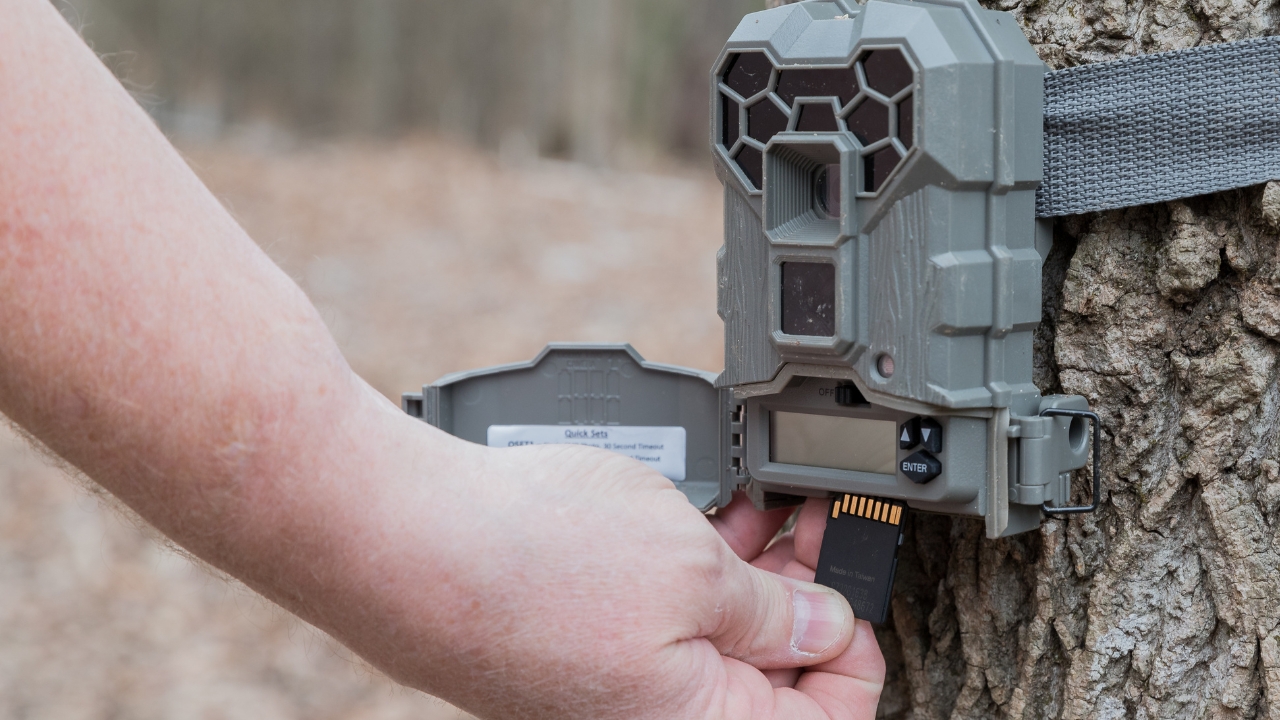
A hunter in Reddit’s r/Hunting told one of those stories that gets ugly the second it stops sounding like simple bad luck and starts sounding like a whole chain of people messing with the same spot. In the thread, he said he had hung a trail camera about 15 feet up over a very remote water hole in the Ozarks using climbing sticks. When he went back to check it, his camera was gone. That alone was bad enough. But according to his post, what he found in its place was even stranger: someone had put another camera at the same water hole, and then mounted a second camera about 25 feet up a tree watching that first camera.
That is what gives the story its punch. A stolen trail cam is one thing. Hunters hate it, but most people reading the thread already know it happens. What made this one feel different was the weird little ecosystem of paranoia the hunter stumbled into. In his own telling, it looked like at least three separate people had been involved at different points: the person who stole his original cam, the person who later hung a new camera on the same water hole, and then another person who apparently did not trust that second camera to stay untouched and put a third one high in a tree to watch it. Then it got even messier, because he said both of those later cameras had their memory cards wiped.
That is the detail that makes the whole thing stick in your head. It was not only theft. It was a remote hunting spot turning into some strange little cold war of cameras, stolen gear, and sabotage. The original commenter summed it up in a way that probably explains why the story hit so many people: he figured there had to be at least three other people tied to that water hole, including one willing to steal, one worried enough about getting stolen from to set surveillance on surveillance, and one who might not have wanted to steal anything but still wiped cards and wrecked the setup anyway. It reads less like one guy got unlucky and more like one remote spot had quietly become a magnet for the worst kind of hunting behavior.
What also makes it work is how isolated the place sounded. He did not describe some obvious roadside patch where sloppy foot traffic is expected. He called it a very remote water hole in the Ozarks, and he had already gone to the trouble of hanging his own camera high using climbing sticks. That tells you a lot by itself. This was not gear left at chest level in a high-traffic area where somebody could claim temptation got the better of them. It was equipment set with enough effort that anyone taking it probably had to commit to the theft. Then somebody else came in and committed to a second layer of camera watching. Then somebody else, or maybe one of the same people, went through and wiped cards. At that point the story stops feeling like simple opportunism and starts feeling like a patch of public woods where everybody assumes the next guy is either a thief or a fool.
The rest of the thread made it clear that other hunters found the story depressingly believable. One commenter said he carries a climbing stick so he can hang his own cameras about eight feet up and lock them with a cable, then joked that if somebody is willing to bring bolt cutters and the means to reach the camera that far back in the woods, they have “earned it.” Another called worrying about thieves almost as bad as being victimized by them. A different commenter pointed out that in Georgia, cameras can be left up, but stands and blinds have much tighter rules, suggesting that how much tampering people experience can depend partly on the kind of public-land rules and habits in their state.
That is probably why this one has more click than a basic “my cam got stolen” story. The theft is only the first hook. The real hook is finding out your stolen camera was replaced by somebody else’s camera, and that camera was being watched by yet another camera, and both of those got sabotaged too. It turns one man’s bad check into a bigger question about what kind of people were all circling the same water hole when nobody was looking. Readers do not need much help imagining how fast a place like that stops feeling like hunting ground and starts feeling like a trap for whoever cares enough to scout it.
And that is really why the story lands. A remote water hole ought to feel like one of those spots where patience, scouting, and effort pay off quietly. Instead, this one sounded like a backwoods mess of theft, counter-surveillance, and quiet retaliation. By the time the hunter figured out what had happened there, it was not only his missing camera that bothered him. It was realizing that the same hidden place he trusted enough to hunt had apparently become a place where multiple strangers were already treating each other like enemies.