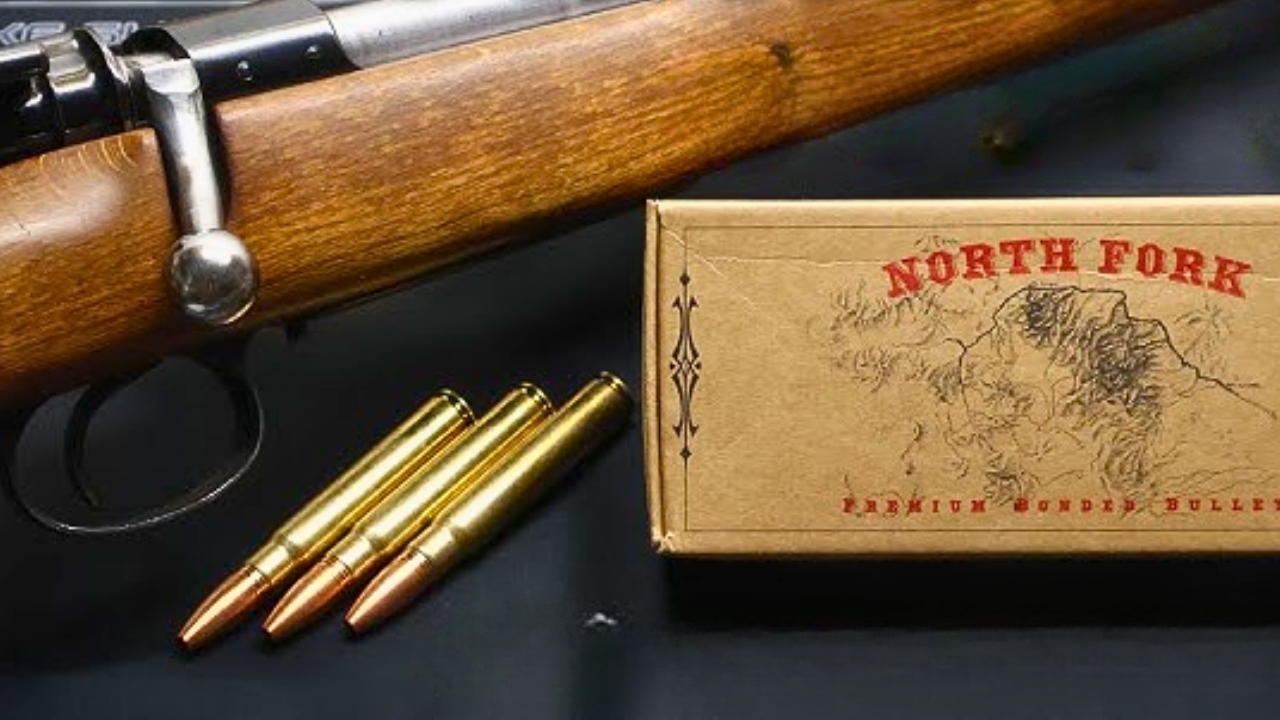
Photo credit: Mason Leather Outdoors/YouTube
“Brush busting” is one of those hunting phrases that refuses to die. The truth is simple: no caliber magically shoots through twigs without deflecting. If a bullet clips brush on the way to the animal, all bets are off. That’s physics, not opinion, and it doesn’t care what cartridge you’re running.
What is true is that some calibers—and more importantly, some bullet styles—tend to get blamed less often in thick cover because they carry more momentum, use blunt or flat-nose profiles, and are commonly loaded with tough bullets that don’t come apart when they hit something they shouldn’t. You still pick lanes. You still don’t shoot through branches. But if you hunt brushy country where shots are close and angles are weird, these calibers often perform better than people admit.
.30-30 Winchester

The .30-30 gets mocked by people who only hunt open fields, but in thick timber it keeps doing the work. Most .30-30 loads use flat- or round-nose bullets designed for lever guns, and those bullets tend to be tougher, heavier, and less fragile than many sleek “open country” projectiles. That doesn’t mean they ignore brush, but they can handle minor clutter and bad angles with less drama than people expect.
The bigger reason it earns the reputation is how it’s used. You’re usually shooting inside 150 yards, from quick positions, with a bullet that penetrates well and doesn’t depend on high speed to work. Pick a clear lane, shoot through ribs, and the .30-30 gives you reliable, boring performance where it counts.
.35 Remington

If you hunt in real thickets, the .35 Remington is one of those calibers that makes sense the moment you carry it. It pushes a heavier bullet at moderate speed, which tends to mean deep penetration and a forgiving wound channel on deer-sized game. It won’t “cut brush,” but it often holds together and keeps going when the shot isn’t a perfect broadside through open air.
The other advantage is bullet style. Traditional .35 Rem loads usually use round-nose or flat-nose bullets that are built for woods ranges, not for long-range drag charts. That construction can be more stable and less explosive when it meets resistance. You still pick your lane. But when the woods are tight and the shot comes fast, .35 Rem is one of the best examples of “better than people admit.”
.45-70 Government

.45-70 gets talked about like a sledgehammer, and at close range it basically is. The cartridge doesn’t need high velocity to work, and the bullets are commonly heavy and tough. That combination is why it’s often trusted in thick cover where shots can be close, angles can be steep, and animals can be quartering through brushy lanes.
The reality is you still don’t shoot through branches. But if you’re hunting in cover where a bullet may need to drive through heavy muscle and bone after a slightly imperfect path, .45-70 gives you a lot of straight-line penetration. It’s also common to see flat-nose bullets and solid construction in this caliber, which helps consistency on impact. It’s a woods cartridge first, and it acts like one.
.444 Marlin
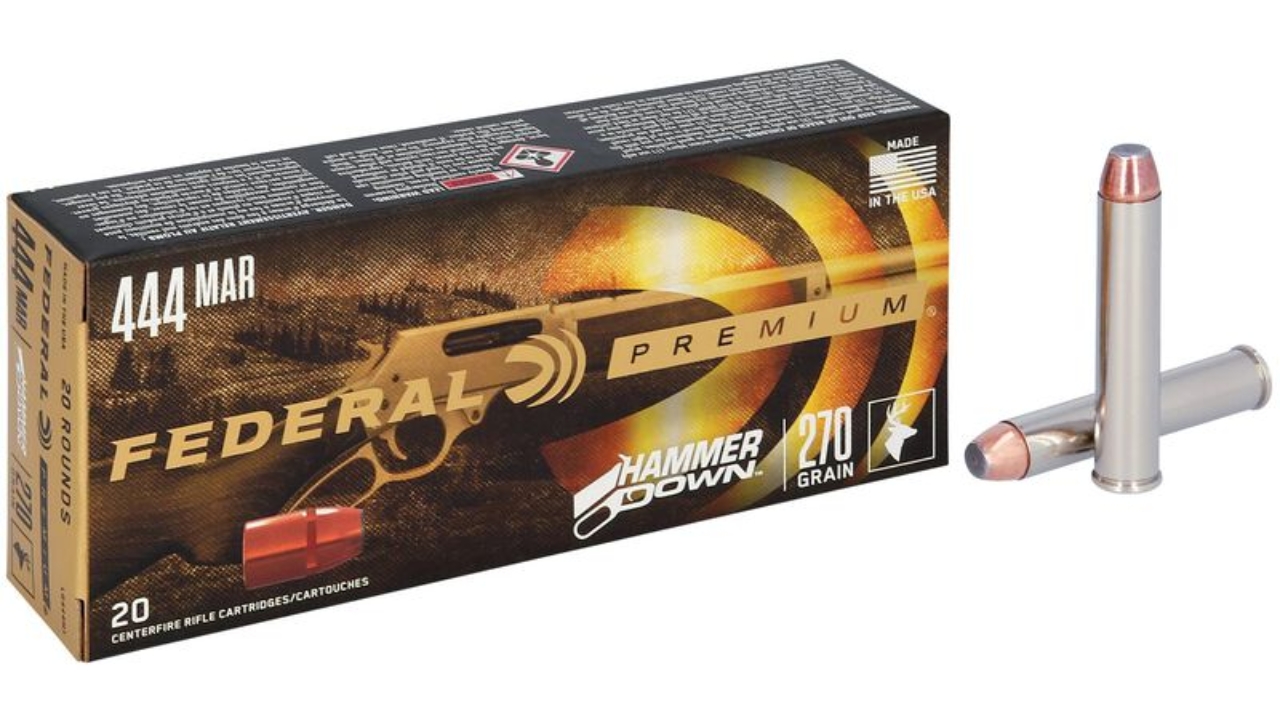
The .444 Marlin sits in the same “woods hammer” category as .45-70, but with its own personality. It throws a big, heavy bullet fast enough to hit hard, but not so fast that it depends on fragile expansion tricks. In thick cover, that translates into reliable penetration and a lot of authority when you’re shooting through ribs and into the far side.
Like any caliber, it can deflect if you clip brush. But the bullet designs you see in .444 Marlin are typically built for close-to-midrange hunting and heavy tissue. That means less chance of a bullet coming apart early on less-than-ideal contact, and more chance of it staying intact and doing its job once it reaches the animal. If you hunt big-bodied deer, hogs, or bear in brushy country, .444 is quietly excellent.
.44 Magnum (from a carbine)

People think of .44 Magnum as a revolver round, but out of a carbine it becomes a very practical brush-country deer cartridge. You get increased velocity, good accuracy at woods ranges, and heavy bullets that don’t rely on fragile construction to work. It’s one of those setups that surprises people the first time they see how well it performs inside 100 yards.
The “brush” part is mostly about bullet behavior on impact, not magical twig-cutting. Many .44 carbine loads use bullets built to penetrate and expand in meat, not explode in air. That tends to produce consistent results on deer and hogs when shots are quick and angles aren’t perfect. You still pick a lane, but .44 Magnum from a carbine is one of the better real-world answers for thick cover.
.357 Magnum (from a carbine)

A .357 carbine is a sleeper in the woods because it’s easy to shoot well and surprisingly effective at close range with the right loads. Out of a longer barrel, the cartridge gains velocity, and heavier bullets can penetrate more than many people expect. That matters in brush country where shots are quick and you want controllable follow-ups without blasting your ears off.
It’s not a brush-clearing laser, but the typical bullet weights and styles used for hunting—especially heavier, tougher loads—tend to behave more predictably on deer-sized game than a light, fast varmint-style bullet would. Keep your shots inside its comfort zone, pick a clean lane, and it can be a very practical “thick cover” deer option. The big advantage is that you’ll practice more, because it’s genuinely pleasant to shoot.
.38-55 Winchester

The .38-55 is an old-school woods cartridge that still makes a lot of sense when ranges are short and cover is thick. It carries a relatively heavy, moderate-speed bullet that’s built to penetrate and cut a solid wound channel without relying on high velocity. That’s exactly the kind of behavior you want when the shot angle isn’t ideal and you need the bullet to keep working.
Again, you don’t shoot through brush on purpose. But the .38-55’s typical bullet shapes and construction tend to be more forgiving than sleek, thin-jacketed bullets meant for open country. It’s also a cartridge that rewards good shot placement because recoil is manageable and rifles chambered for it are often handy. In brushy deer woods, it’s one of the most underrated “works like it should” calibers.
.45 Colt (from a rifle)

.45 Colt in a rifle is another cartridge that gets underestimated because people think of mild revolver loads. In a lever gun, you can run strong, hunting-appropriate loads (in the right rifle) that push heavy bullets with real authority at close range. The result is a compact, fast-handling rifle that hits hard without needing magnum rifle recoil.
The bullet styles matter here. Flat-nose and heavy bullets are common, and those tend to penetrate well and keep their shape through tissue. That doesn’t make it immune to deflection, but it does make it reliable once the bullet gets to the animal. If you hunt thick cover and want something you can shoot fast and confidently, a .45 Colt rifle is one of those “don’t knock it until you’ve used it” setups.
.450 Bushmaster

The .450 Bushmaster exists because a lot of hunters needed a hard-hitting, practical woods cartridge that fits modern rifles and common hunting realities. It throws a big bullet that penetrates well at short distances, and most loads are built for deer and hogs, not for fragile expansion at extreme speed.
In brush country, the big advantage is predictable terminal performance. You get a wide wound channel and good penetration on deer-sized game without needing to chase velocity. The downside is trajectory, which forces you to be honest about distance—another reason it fits thick cover well. It won’t shoot through branches, but when your lanes are tight and shots are close, .450 Bushmaster tends to deliver the kind of “straight and decisive” results people hope for when they talk about brush guns.
.458 SOCOM
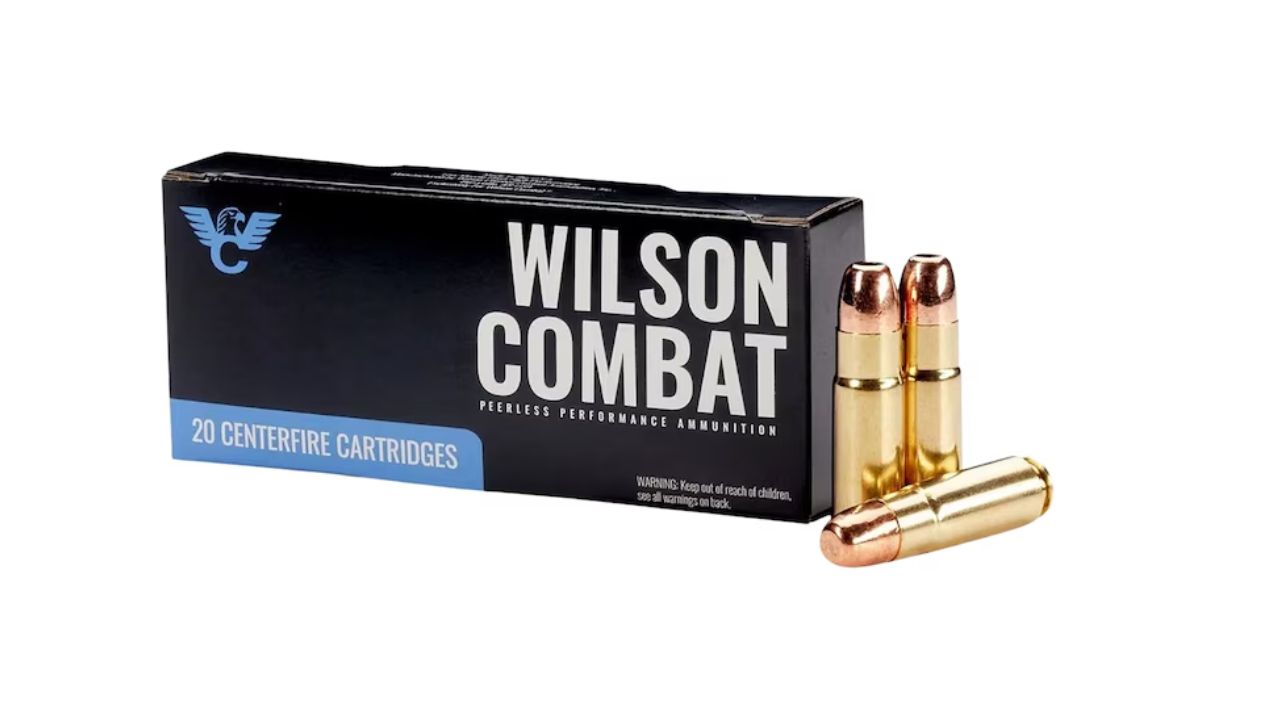
.458 SOCOM is a niche cartridge, but in thick cover it makes sense in the same way big-bore lever rounds make sense: heavy bullets, moderate speed, and strong penetration at short range. It’s not built for flat trajectory. It’s built for close-range authority, especially on hogs and similar tough animals.
Because it’s commonly loaded with heavier, sturdier bullets, it tends to behave predictably in meat and bone. That’s the real “brush advantage”—not twig cutting, but consistent performance after impact when the shot is quartering or the animal is thick. If you’re hunting in cover where shots are close and you want a round that doesn’t depend on speed tricks, .458 SOCOM is one of those calibers that’s better than people expect as long as you stay inside its realistic range envelope.
.35 Whelen

The .35 Whelen is a classic “hits hard without being a magnum” round that excels when penetration matters. It pushes heavier bullets at sensible speeds, which often means deep, straight-line performance on deer, elk, and bear-sized game. In brushy country, that’s valuable because you’re more likely to get quartering shots and less likely to get perfect open-air broadside presentations.
The Whelen won’t ignore brush. But it’s commonly paired with stout, controlled-expansion bullets that hold together and keep driving. That’s why it gets trusted in thick cover: not because it threads twigs, but because it doesn’t come apart when the shot isn’t ideal. If you want a “woods capable” cartridge that still stretches farther than lever-gun ranges, .35 Whelen is a very honest answer.
.358 Winchester

.358 Winchester is one of the best examples of a cartridge that looks boring on paper and works extremely well in the woods. It carries heavier bullets with good diameter and solid construction, and it does it without magnum recoil or excessive blast. Inside normal deer ranges, it hits with authority and penetrates reliably.
A lot of .358 bullets are built for game, not for paper, and that matters. They tend to be tough enough to stay together and drive through ribs and shoulder without doing anything weird. You still avoid brush in the lane, but when the woods are cluttered and the shot happens fast, .358 Winchester behaves in a way hunters appreciate. It’s a cartridge that rewards practical hunting, not internet arguments.
12 gauge slug

If you hunt thick cover, a 12-gauge slug gun is one of the most common “better than people admit” tools in the brush conversation. A modern slug carries a lot of mass, and inside its effective range it hits hard and penetrates well. That’s why slug guns have stayed popular in heavy cover and in places with shotgun-only rules.
It’s still not a license to shoot through brush, but slugs are often less fragile than high-velocity rifle bullets and can be very consistent once they reach the target. The main advantage is practical: you’re hunting close, you’re picking lanes, and you’re putting a big projectile where it needs to go. If you want a setup that’s built for short-range impact and doesn’t depend on high speed, slugs remain a very real brush-country solution.
.375 H&H Magnum

This is the “people forget it’s a brush gun too” caliber. The .375 H&H is famous for dangerous game, but what makes it relevant here is how it behaves on impact: heavy bullets, strong construction, and straight-line penetration. In thick cover, that kind of bullet behavior can be more predictable than lighter, faster rounds when angles aren’t perfect.
You’re not carrying a .375 H&H for whitetails in most places, but in big woods bear country or moose country, it’s not crazy. And it absolutely doesn’t need brush to be involved to justify itself. The point is that heavier, tougher bullets tend to do better at staying intact and driving deep—exactly what you want when a shot has to break bone and keep going. It’s a reminder that “brush performance” is mostly bullet construction and momentum.
9.3x62mm Mauser

9.3×62 is another cartridge that gets overlooked in North America but has a long history as a practical, hard-hitting hunting round in thick cover. It pushes heavy bullets with strong construction at moderate speeds, which often translates into deep penetration and consistent performance on big-bodied animals.
Again, you don’t shoot through brush on purpose. But when you’re hunting in dark timber or heavy cover where shots can be close and angles can be steep, a cartridge like 9.3×62 tends to behave in a predictable, straight-line way once it hits the animal. It’s also not as punishing as many big magnums, which means you can shoot it well without flinching. If you want “big bullet, practical speed, real penetration,” this one is quietly excellent.
.308 Winchester with heavy bonded bullets

The .308 is not a “brush caliber” by reputation, but with the right bullet choice it can be more capable in thick cover than people admit. Heavy-for-caliber bonded or controlled-expansion bullets tend to hold together and drive straight through ribs, shoulder, and muscle without depending on extreme velocity. That’s the kind of real-world performance that matters in cluttered woods.
The key is being honest about the lane and smart about the load. A lightweight, thin-jacketed bullet at high speed is more likely to get weird if it meets unexpected resistance. A tougher bullet is less likely to come apart early and more likely to keep driving once it reaches the animal. That doesn’t “bust brush,” but it does reduce drama when conditions aren’t perfect. The .308’s real advantage is that you can get these bullet types easily and practice often, so your shot placement stays reliable.
Like The Avid Outdoorsman’s content? Subscribe to our newsletter so you never miss an article.
Here’s more from us: