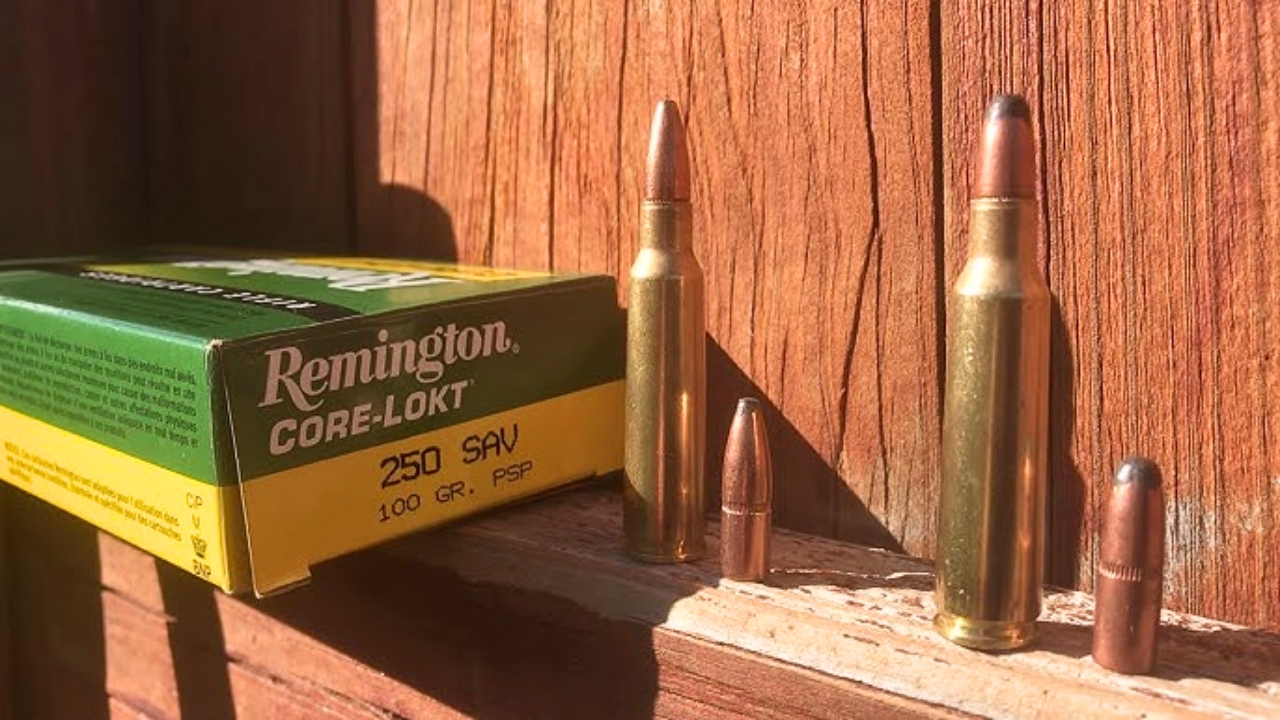
Photo credit: Grizzly Petersen/YouTube
New cartridges get launched every year, and the marketing always sounds the same: flatter, faster, more efficient, less recoil, better everything. Meanwhile, the “old” rifle rounds keep showing up in trucks, saddle scabbards, and camp racks because they still do the job without drama. They aren’t exciting on a chart anymore. They’re exciting in the only way that matters—when you’re filling tags year after year.
What keeps these cartridges relevant is simple. You can find ammo almost anywhere. Bullet options are deep. Rifles are everywhere. And they have decades of real hunting behind them, which means you don’t have to guess how they behave on game. If you shoot them well and pick sensible bullets, they stack tags the same way they always have.
.30-06 Springfield

The .30-06 gets called “old” like it’s an insult, but it’s still one of the most useful hunting cartridges ever made. It handles a wide range of bullet weights, which means you can tune it for deer, hogs, elk, and even bigger animals if you pick the right load. That flexibility is why it keeps showing up in camps.
It also stacks tags because it’s easy to live with. Ammo is common, loads are plentiful, and most rifles chambered in .30-06 are built as practical hunting tools. You don’t need a perfect dope card or a match barrel to kill deer cleanly with it. If you can place a shot inside normal hunting distances, the .30-06 does what it has always done—hits hard, penetrates well, and leaves you with a punched tag instead of a story about why the new hot cartridge didn’t matter.
.270 Winchester

The .270 Winchester looks like your granddad’s deer cartridge, and that’s exactly why it keeps working. It shoots flat enough for real hunting distances, it hits with authority, and it’s been doing the same job reliably for generations. When you want a cartridge that doesn’t surprise you, .270 is still a strong answer.
It stacks tags because it’s practical. Ammo availability is steady in most places, bullet choices are better than ever, and recoil is manageable in typical hunting rifles. You can carry it all day, shoot it well, and avoid the flinch problems that show up with bigger magnums. If you do your part—steady rest, clean trigger press, good bullet—the .270 keeps putting deer on the ground without needing a trendy name or a new case design to prove itself.
.308 Winchester

The .308 Winchester gets labeled “boring” because it’s everywhere. That’s also why it keeps stacking tags. It’s accurate, predictable, and it hits hard enough for deer and elk inside the ranges most people actually shoot. It doesn’t require special ammo or special rifles to work well.
A big reason it stays effective is bullet selection. Modern hunting bullets let the .308 punch above its reputation, and the cartridge usually delivers consistent penetration without the explosive meat loss you can get with faster rounds. Recoil is manageable, which means you practice more and shoot better when the moment shows up. The .308 is also easy to find in small-town stores during hunting season, which matters when you’re traveling. It’s not flashy, but it keeps doing the work while trend cartridges fight for shelf space.
.30-30 Winchester

If you hunt thick woods, the .30-30 has never stopped making sense. It’s an “old” cartridge that keeps stacking tags because it fits a real hunting style: short to medium ranges, quick shots, and rifles that carry like they belong in your hands. In a lever gun, it comes up fast and points naturally.
The .30-30 also kills cleanly when you use it inside its lane. You don’t need 600-yard ballistics to shoot a deer at 75 yards in timber. You need a bullet that expands reliably and penetrates enough to reach the vitals. The .30-30 does that with boring consistency. Ammo is still widely available, and the rifles are everywhere. If you hunt the way most hunters actually hunt, .30-30 remains one of the most practical tag stackers alive.
.243 Winchester

The .243 gets dismissed as “small,” but it stacks tags because it’s easy to shoot well and it works when you pick the right bullet. Recoil is mild, which means you’re less likely to flinch, and that translates into better shot placement—still the biggest factor in clean kills.
On deer-sized game, the .243 performs when you use modern bullets designed for controlled expansion. It’s also a great option for youth hunters and anyone who wants to practice a lot without getting punished. The cartridge shoots flat enough for typical field ranges, and it’s common enough that you can find ammo without hunting for it. The .243 isn’t about raw power. It’s about making good shots routine, and that’s why it keeps filling tags even while people argue online about whether it’s “enough.”
7mm-08 Remington

The 7mm-08 is one of those cartridges that feels quietly perfect for real hunting. It shoots flat enough for most deer and elk hunts, hits harder than its recoil suggests, and tends to be accurate in ordinary rifles. It doesn’t need hype to work.
It keeps stacking tags because it’s shootable. Recoil is manageable, which helps you practice and stay confident, and confidence shows up when you’re breathing hard and trying to settle crosshairs. Bullet selection is strong, and the 7mm diameter gives you good sectional density without pushing into harsh magnum recoil. The 7mm-08 also lives in short-action rifles that carry well and balance nicely. It looks “old” compared to the newest launches, but it keeps doing the exact job hunters ask it to do.
.35 Remington

The .35 Remington feels like a relic until you hunt deer in thick cover and see what it does at woods ranges. It hits with a heavy, authoritative feel, and it tends to leave strong blood trails when shot placement is solid. It’s an old round, but it’s a practical one for the right terrain.
It keeps stacking tags because it solves a specific problem well: close-range deer hunting with a larger diameter bullet and dependable penetration. Many hunters who use it aren’t trying to stretch distance. They’re trying to anchor deer in brushy country where tracking can be tough. Ammo isn’t as common as .30-30, but it’s still available, and the rifles chambered for it often handle beautifully. When you hunt inside its lane, .35 Rem continues to earn respect the hard way.
.45-70 Government

The .45-70 is old enough to look like a history lesson, but it keeps stacking tags because big, heavy bullets still do real work. Inside its realistic range, it hits hard, penetrates well, and drops animals with authority when you put the bullet through the right structures. It’s not a long-range tool. It’s a close-to-midrange hammer.
Modern loads have expanded what the cartridge can do in strong rifles, but you don’t need hot loads to make it effective. A well-constructed bullet at sensible velocity still performs on deer, hogs, and bear, and it does it without needing perfect angles. The rifles are handy, fast, and easy to carry in brush. The .45-70 isn’t trendy—it’s just stubbornly effective where it’s always been effective.
.257 Roberts

The .257 Roberts is one of those cartridges that gets overlooked because it isn’t loud online. In the field, it stacks tags because it’s accurate, pleasant to shoot, and effective on deer-sized game with the right bullets. It has a smooth, efficient feel that makes it easy to place shots well.
A big part of its success is that it avoids extremes. It doesn’t beat you up, it doesn’t tend to destroy meat like some high-speed rounds can, and it still gives you enough reach for typical open-country deer hunting. Ammo availability isn’t as universal as .243 or .270, but it’s still around, and many hunters who own a .257 Roberts keep it because it simply works. It’s an old cartridge that rewards good shooting habits, and that’s why it keeps filling tags.
6.5×55 Swedish Mauser

The 6.5×55 has been killing game for a long time, and it’s still doing it because the fundamentals haven’t changed. Moderate recoil, good penetration, and bullets that carry momentum well add up to reliable performance on deer and similar game. It’s an “old” round that behaves in a very modern, efficient way.
It stacks tags because it’s easy to shoot well. Many rifles chambered in it are accurate, and the cartridge tends to be forgiving. With the right hunting bullets, it penetrates deeply and performs consistently without needing extreme velocity. Ammo can be more regional than mainstream rounds, but it’s widely supported, and handloaders love it. If you want a cartridge that feels calm on the shoulder but serious on game, the Swede keeps proving that age doesn’t mean obsolete.
.300 Savage

The .300 Savage looks like a forgotten bridge between old lever guns and modern short actions. It stacks tags because it still offers practical performance on deer and similar game inside normal ranges. In rifles like the Savage 99, it’s a classic woods hunting setup that handles fast and carries easily.
It keeps working because it’s balanced. Recoil isn’t harsh, bullet weights are sensible, and performance is honest. You’re not trying to turn it into a long-range cartridge. You’re using it where it shines—typical whitetail distances with good shot placement. Ammo availability isn’t as broad as .308, but it’s still out there, and dedicated hunters often buy it when they see it. If you run across a good .300 Savage rifle, it’s easy to understand why people keep them and keep hunting with them.
.257 Weatherby Magnum

The .257 Weatherby Magnum is “old” in name, but it still stacks tags because it’s flat and fast in a way hunters can actually use—especially in open country. When you put the right bullet in the right place, it kills cleanly and quickly on deer, antelope, and similar game. It’s a cartridge that rewards good shooting from a steady rest.
It stays relevant because it does one thing extremely well: it makes hits easier at distance by giving you a forgiving trajectory. The caution is bullet choice, because high velocity can be hard on thin-jacket bullets up close. With modern controlled-expansion bullets, it becomes a more consistent performer across ranges. Ammo isn’t as common as .270, but it’s available, and people who love it tend to stay loyal. It’s an older speedster that still earns its keep.
.280 Remington

The .280 Remington keeps stacking tags because it sits in a smart middle ground. It offers strong performance on deer and elk with less recoil than many magnums, and it shoots flat enough for real hunting distances without feeling temperamental. It’s one of those cartridges that does everything well without screaming about it.
It also benefits from modern bullet options that make it more effective than ever. You can choose controlled-expansion bullets for elk or lighter, faster options for deer, and the cartridge handles both without drama. Ammo availability isn’t as universal as .30-06, but it’s steady enough that hunters keep it in rotation. The .280 has always been practical. The only reason it feels “old” is that it never had a loud marketing cycle. In the field, it keeps proving itself anyway.
.250-3000 Savage

The .250-3000 Savage is a classic deer cartridge that looks like a museum label to some people, but it keeps stacking tags because it’s accurate and easy to shoot well. Mild recoil helps you stay steady, and steady kills deer. That’s the old truth that never changes.
In the woods, it performs best with sensible ranges and modern hunting bullets that expand reliably. You’re not using it for elk or extreme distance. You’re using it for whitetails, mule deer, and clean kills where shot placement matters. Ammo is more limited, but it’s available, and handloaders keep it alive. The reason it still works is simple: it was designed around practical velocity and efficient bullets, and those ingredients still kill deer as well now as they did when the cartridge was new.
.444 Marlin

The .444 Marlin looks old-school because it is, and it stacks tags because big-bore lever guns still make sense in the right country. It hits hard, carries well in brush, and gives you a bigger hole and strong penetration at the distances where lever guns thrive. If you hunt thick cover, it’s a practical tool.
It stays effective because you’re not trying to turn it into something it isn’t. You’re using it inside realistic ranges where trajectory isn’t a liability and shot angles can be messy. With good bullets, it performs reliably on deer, hogs, and bear, and it tends to leave a strong blood trail when placement is solid. Ammo isn’t as common as .30-30, but it’s still around, and dedicated lever-gun hunters keep it stocked. It looks “old,” but it still gets it done.
Like The Avid Outdoorsman’s content? Subscribe to our newsletter so you never miss an article.
Here’s more from us: