Photo credit: Haavard Dyroe/Shutterstock.com
Most rifle guys are either “clean it constantly” people or “clean it when it starts acting up” people. Both camps can be right depending on the rifle, the cartridge, and how you shoot. But there’s one cleaning routine that quietly hurts accuracy over time more than people want to admit: aggressive, frequent cleaning with a rod and brush from the muzzle (or careless rod work in general), especially when it’s paired with abrasive methods and a mindset of “I’m going to make this bore spotless every time.” That routine wears the places that matter—crown, throat, and rifling edges—then people act shocked when the rifle slowly loses its consistency and starts printing odd flyers.
The irony is the goal is good. You’re trying to protect the rifle. You’re trying to remove copper and carbon so the barrel stays accurate. But barrels don’t get ruined only by shooting. They get ruined by bad maintenance too. The barrel’s crown and throat don’t care whether the damage came from hot gas or from a steel rod scraping at the wrong angle. They just know they’re damaged. And once that damage starts, accuracy becomes harder to keep consistent because every bullet is leaving the bore a little less cleanly than it used to.
Why over-cleaning can degrade accuracy
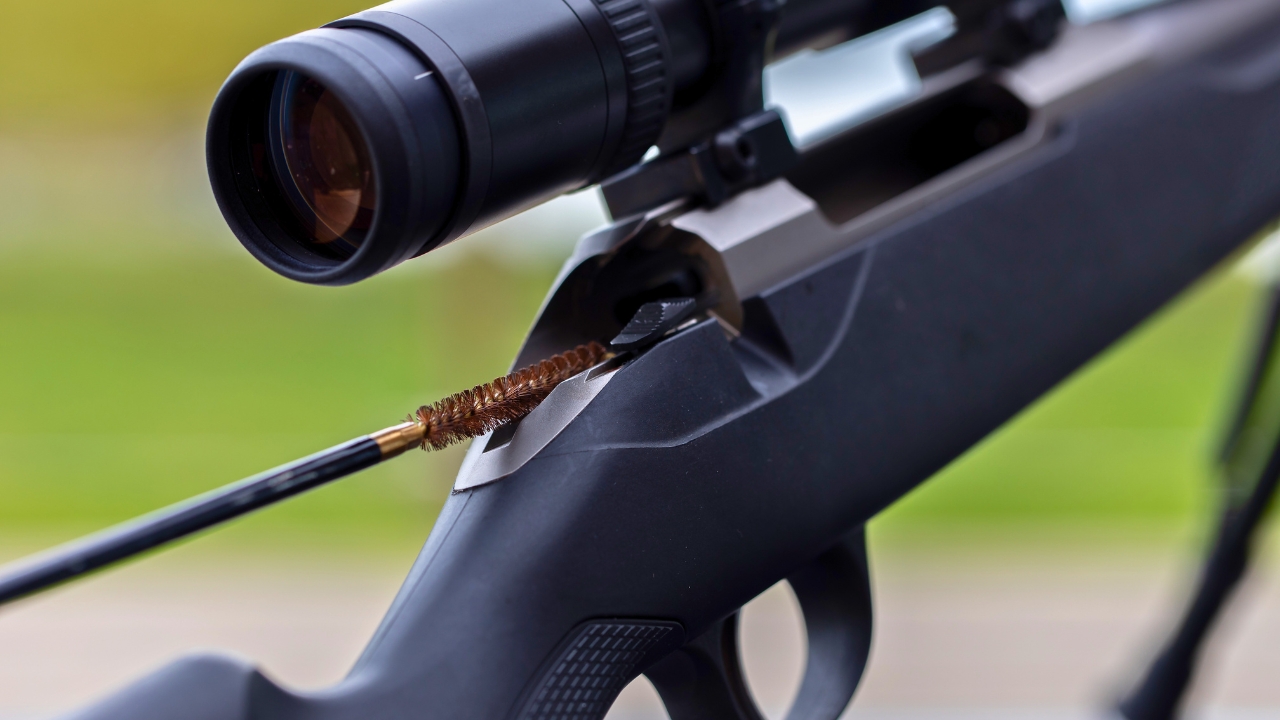
Every time you run a rod through a bore, you’re introducing the possibility of contact where you don’t want it. A good rod, a proper bore guide, and correct technique minimize that risk. A cheap rod, no bore guide, rushed technique, and cleaning from the muzzle side multiply it. The muzzle crown is the last thing the bullet touches. If the crown is uneven, nicked, or worn, gas escapes unevenly around the bullet as it exits, and that can open groups fast. You don’t need a huge ding to see an accuracy change. Small crown issues can show up as flyers you can’t explain.
The throat is the other spot that gets abused by aggressive cleaning. Guys will crank a brush back and forth like they’re scrubbing a cast iron skillet. They’ll use aggressive chemicals and then mechanically scrub harder because they want that “white patch” feeling. The throat is already the most stressed part of the barrel from firing. When you add harsh brushing and abrasive paste use, you’re accelerating wear in the exact spot that controls how the bullet enters the rifling. That’s a big reason some rifles seem to “lose their load” over time. The load didn’t change. The throat did.
The worst habit: short strokes and reversing the brush inside the bore
If there’s one technique mistake that ruins barrels faster, it’s short-stroking a brush and reversing direction while the brush is still in the bore. That puts extra stress on the bristles, drags grit around, and encourages the rod to flex and touch the bore. Good cleaning is smooth, full-length strokes with control. It’s not frantic scrubbing. People also make the mistake of pulling dirty patches back through the bore repeatedly. All that carbon and grit is now being dragged back and forth, and if your rod isn’t centered perfectly, it’s like polishing the bore with dirt.
Muzzle cleaning is especially risky because it’s harder to keep the rod perfectly centered and you’re working right at the crown. If you absolutely have to clean from the muzzle, you need the right tools to protect the crown and guide the rod. Most people don’t. They just shove a rod in and go. Over months and years, that adds up. The damage is slow, and that’s why it’s so easy to deny until accuracy gets noticeably worse.
“Spotless bore” obsession and abrasive paste routines
Another routine that hurts accuracy is making abrasive paste part of normal cleaning. Abrasives have a place, but they aren’t meant to be a weekly ritual. If you’re constantly polishing the bore because you want it to look shiny, you’re removing material. That can smooth the bore in a way that changes how it fouls, but it can also soften edges and change the barrel’s behavior. You can get a barrel that fouls “less” but also doesn’t shoot as consistently as it used to, because you’ve changed the surface in ways you can’t undo. Some guys end up in a cycle where they over-clean, accuracy gets weird, they clean harder, and the rifle slowly gets worse.
A lot of shooters also confuse copper fouling with “accuracy problems” without actually confirming it. Some barrels shoot their best with a little copper in them. Some barrels don’t. If you strip copper down to bare steel every time, you might be chasing a moving point of impact. Your first shots after cleaning might land in a different spot, then the rifle settles as it fouls. Now you’re constantly re-zeroing or second-guessing because your cleaning routine is making the rifle behave differently every session.
The truth about hunting rifles: you rarely need to deep-clean like a benchrest guy
Most hunting rifles don’t need constant deep cleaning. They need sensible maintenance. That usually means keeping the bore from getting wildly fouled, keeping moisture out, and not letting corrosion start. It doesn’t mean stripping the bore to bare steel after every range trip. If you shoot a couple boxes a year and keep the rifle stored properly, a light routine is often enough. What kills hunting rifle accuracy over time isn’t “not cleaning enough.” It’s cleaning in a way that slowly damages the barrel’s critical surfaces.
That said, if you’re shooting a lot—especially with certain cartridges that foul heavily—copper and carbon management matters. The answer still isn’t frantic rod work. The answer is using the right tools, the right chemicals, and the right cadence. Let solvents do work. Use a bore guide. Use quality rods and jags. Use proper technique. And stop the second you’ve achieved “clean enough” for function and consistency.
What a smarter cleaning routine looks like
A smarter routine starts with prevention. Keep the rifle dry and stored correctly. Don’t put it away wet. Don’t leave it in a foam case. Don’t let dust and grit live in the action. When you do clean the bore, clean from the chamber end when possible, using a bore guide. Use smooth, full-length strokes. Don’t reverse brushes inside the bore. Don’t drag dirty patches back and forth. Let solvent sit for the recommended time instead of scrubbing like you’re mad at it. And don’t turn abrasive paste into a habit. Save abrasives for when you actually need them.
Also, pay attention to what your rifle is telling you. If accuracy is stable and fouling isn’t causing issues, you don’t need to chase perfect patches. If your rifle shoots best slightly fouled, respect that. If you’re going to hunt after a deep clean, fire a few fouling shots and confirm where the rifle settles before you trust it on game. That one step prevents a lot of “my rifle was off” stories that are really just cleaning-induced point-of-impact shift.
The long-term mindset that keeps accuracy alive
Barrels are consumable, but you don’t have to waste them. Most accuracy loss from cleaning comes from impatience and bad technique. Guys scrub like they’re in a hurry, use cheap rods, skip guides, and treat “clean” as a badge. The better mindset is to treat cleaning like maintenance, not a ritual. Do what’s needed. Do it carefully. Don’t add wear where you don’t have to. Your rifle will stay more consistent longer, and you’ll spend more time shooting and less time chasing problems you created with a cleaning rod.
Like The Avid Outdoorsman’s content? Subscribe to our newsletter so you never miss an article.
Here’s more from us: