Image Credit: Ivan Kacarov/Shutterstock.com
When it comes to sidearms for law enforcement, Glock dominates the conversation. It’s not just marketing hype—there are real reasons cops across the country keep trusting these pistols year after year. Between reliability, simple operation, and easy maintenance, Glock handguns just work. Let’s take a look at ten specific Glock models that police departments actually carry on their belts today.
Glock 17

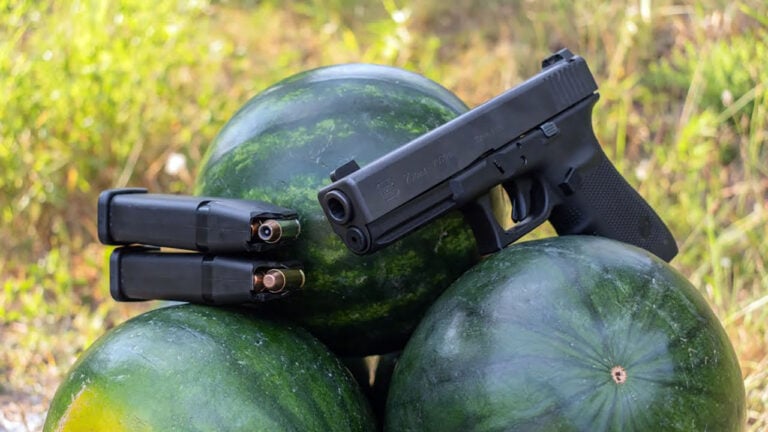
The Glock 17 is basically the original law enforcement workhorse. Many departments switched over to it when they were ready to retire their old revolvers. With its 17-round capacity and simple design, it made life a lot easier for officers who needed something that wouldn’t jam under pressure.
Even today, agencies still issue the Glock 17. It’s a full-size pistol that’s easy to shoot accurately, even for officers who might not spend hours at the range every week. If a department says they use “Glock 9mm,” odds are pretty good this is the one they’re talking about.
Glock 19

The Glock 19 is a smaller version of the Glock 17, but it hasn’t lost any fans because of it. A lot of departments issue it to detectives, plainclothes officers, or anyone who needs something just a little easier to carry day to day.
The 15-round capacity still gives plenty of firepower, and it fits a wide range of hand sizes. Some entire police forces have even moved to the Glock 19 for all officers, finding the compact size just more practical for everything they do.
Glock 22

Before 9mm really made its comeback, the Glock 22 was the king of law enforcement sidearms. Chambered in .40 S&W, it was adopted by a lot of agencies looking for a little more punch than 9mm without giving up capacity.
Departments loved the Glock 22 because it felt familiar if they were coming from a Glock 17, but it hit harder. Even though many agencies have phased it out recently, you’ll still find it in plenty of holsters today.
Glock 23

The Glock 23 is basically the .40 caliber version of the Glock 19. It offers that same slightly smaller frame that’s easier to carry without sacrificing much in the way of magazine capacity or performance.
It’s been a favorite for departments that needed a more compact option but still wanted the extra stopping power they believed the .40 S&W offered. Even as some agencies shift back to 9mm, the Glock 23 is still hanging around.
Glock 21
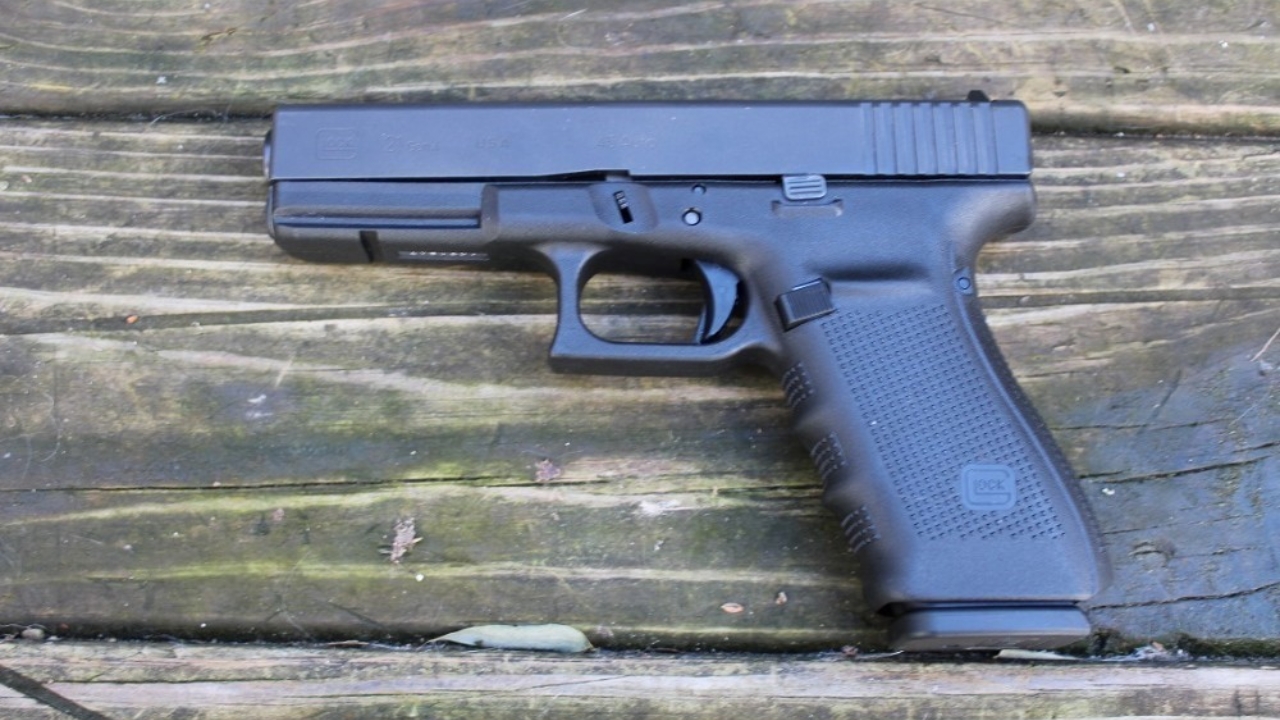
When agencies want serious stopping power, the Glock 21 shows up. Chambered in .45 ACP, it’s got a bigger frame and a softer recoil than you’d expect out of a .45. Some departments issue it to SWAT teams or specialized units that might want a little extra punch in their sidearm.
The Glock 21 carries 13+1 rounds of .45, which was a big deal when most .45 ACP guns topped out at 7 or 8 rounds. It’s not for everyone, but it’s trusted where it’s needed.
Glock 26

The Glock 26, often called the “Baby Glock,” is a favorite backup gun for law enforcement officers. It’s a subcompact 9mm that still holds 10 rounds and accepts larger Glock magazines if needed.
Many officers tuck the Glock 26 into an ankle holster or vest pocket as a backup. Some detectives and plainclothes units even carry it as their primary, especially when deep concealment is the priority.
Glock 30

When someone needs a compact .45 ACP option, the Glock 30 fits the bill. It’s smaller than the Glock 21 but still manages to carry 10 rounds of .45 ACP, which is impressive for its size.
Officers who favor .45 ACP but want something more manageable for everyday carry often choose the Glock 30. It’s surprisingly comfortable to shoot for such a small .45, which is a big reason it’s stuck around in law enforcement circles.
Glock 45

No, it’s not a .45 caliber. The Glock 45 is a 9mm that combines the full-size frame of the Glock 17 with the shorter slide of the Glock 19. A lot of departments love this setup because it’s easier to draw quickly but still fits the hand like a full-size pistol.
The Glock 45 has become a fast favorite for law enforcement in the last few years. It offers the capacity and shootability officers want without being bulky or hard to carry all day.
Glock 34

The Glock 34 was designed with competition shooting in mind, but a lot of specialized law enforcement units have adopted it. With its longer barrel and sight radius, it’s great for accuracy and faster follow-up shots.
You’ll usually find the Glock 34 in the hands of SWAT teams, tactical units, or officers who need a little extra precision. It’s not a typical patrol officer’s gun, but in the right hands, it’s a serious tool.
Glock 43X

The Glock 43X is a relatively new favorite for departments that allow officers to pick their own backup guns. It’s slim, light, and holds 10 rounds of 9mm, making it a nice balance between easy to carry and ready to fight with if needed.
Some officers even carry the Glock 43X as a primary off-duty gun. Its popularity has really taken off because it feels right at home both in and out of uniform.
*This article was developed with AI-powered tools and has been carefully reviewed by our editors.