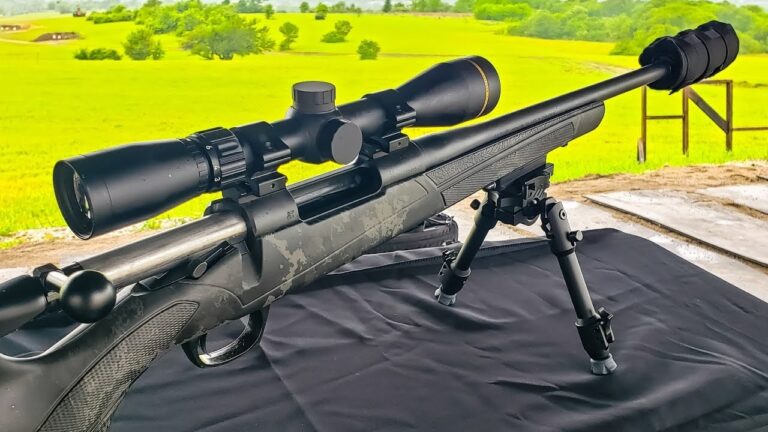
Photo credit: All Alpha Armory Shop/GunBroker
“Fallen from grace” is one of those phrases gun guys throw around like it’s a single event—like a brand was great on Monday and trash by Friday. That’s almost never how it happens. What usually happens is slower and more frustrating: ownership changes, cost-cutting, rushed product launches, and a customer base that notices little inconsistencies long before a company admits anything is wrong. The brand name stays the same, the logo stays the same, and the catalogs still look confident, but the rifles and pistols coming out the door start feeling like they were built by a different company. Because a lot of times, they were.
The hard truth is that “brand trust” in firearms is mostly trust in a specific era, a specific factory, and a specific product line—not a magical guarantee that everything wearing that rollmark is going to run forever. When people say a brand fell off, they’re usually reacting to patterns: more lemons, more finicky guns that used to be boring, more small parts failures, more tolerance stacking issues that show up after a few thousand rounds, and more customer service friction when the buyer tries to get it made right. If you want to understand why some once-respected names take hits, you have to look at the mechanisms that create reputation—and the business decisions that can quietly wreck it.
Ownership changes and cost pressure are where most “falls” actually start
A firearm company can change dramatically without changing its name, and that’s where the grace starts slipping. New ownership often brings new priorities—higher output, lower unit cost, faster product cycles—and those priorities collide with the reality that guns are machines with tight timing relationships. On semi-autos, small dimensional changes in parts that “should” be the same can alter extractor tension, feed angle, slide velocity, and lockup consistency. On bolt guns and pump guns, changes in material sourcing, heat-treat, or finishing can show up as premature wear, rough cycling, or inconsistent accuracy once the barrel heats and the stock contact changes. None of that requires a dramatic redesign; it can happen through a thousand little “efficiency” decisions that add up.
This is why shooters talk about “pre-” and “post-” versions of the same gun like they’re different models. The brand didn’t necessarily forget how to build guns—sometimes the brand simply stopped being allowed to build them the way they used to. The money side matters because when production is under pressure, the first thing to suffer is time: time for inspection, time for fitting, time for letting a process work instead of forcing it. And when you remove time from manufacturing, you don’t always get immediate catastrophic failures—you get variability. Variability is what kills reputation because it turns buying into a gamble, and hunters and carriers hate gambling with tools that matter.
Remington Arms is the clearest case study in reputation damage by inconsistency
If you want one name that illustrates how a legacy reputation can get chewed up, it’s Remington. The reason isn’t nostalgia; it’s that so many hunters grew up with rifles and shotguns from that brand that were simply dependable. When later eras produced more complaints about rough finishing, inconsistent fit, and quality that felt like it depended on the day of the week, the backlash wasn’t subtle. In hunting terms, inconsistency shows up as rifles that don’t hold a stable zero because something is shifting—scope base screws not properly torqued at the factory, stocks that flex and pressure the barrel differently, action screws that back out, or bedding that isn’t repeatable when humidity swings. In semi-auto terms, it shows up as extraction that gets cranky when carbon builds or when lubrication dries out.
The “fallen” part is that the brand used to be a default recommendation for a lot of regular people who just wanted a working rifle or shotgun. Once enough buyers feel like they have to research serial number ranges, factory locations, or “good years,” the brand name stops being a shortcut for trust. That doesn’t mean every Remington gun is bad, and it doesn’t mean the brand can’t come back in certain product lines, but the damage happens when the average buyer no longer feels safe buying sight unseen. In this business, trust is built by boring performance, and it’s lost by the sense that you might be buying a project.
Colt shows how a legendary name can stumble when product reality and expectations drift apart
Colt is a different kind of “fallen from grace” story because the expectations are so high. When you carry a name that iconic, you don’t get judged like everyone else. You get judged against your own history, and against what people think you represent—durability, fit, finish, and that old-school confidence that the gun will run when it’s dirty and you’re in a hurry. When Colt has had periods where availability, pricing, and product focus didn’t match what regular shooters wanted, it created resentment that had less to do with one catastrophic flaw and more to do with a sense that the brand wasn’t serving its base. That’s how “they don’t make ’em like they used to” becomes a business problem instead of a campfire phrase.
Mechanically, the disappointment often shows up when a buyer pays a premium and still has to chase basics: a gun that should feed hollow points reliably but is picky because magazine geometry isn’t right, extractor tension isn’t set correctly, or a small tolerance stack turns into intermittent stoppages. On 1911-style guns especially, people forget that reliability is a system—magazines, springs, extractor tension, feed ramp geometry, and lubrication all matter. A legendary rollmark doesn’t magically override that. When the buyer expects effortless perfection and instead gets “it runs if you do X, Y, and Z,” the brand takes a reputational hit even if the gun is salvageable with the right setup.
Marlin Firearms is a lesson in what happens when a beloved design loses continuity
Marlin’s reputation swings are a perfect example of how manufacturing continuity matters. Lever guns are simple in concept, but they’re not forgiving of sloppy execution. Timing, smoothness, and fit are everything, and small variations can turn a rifle that feels like butter into one that feels rough, binds under speed, or develops odd wear patterns. When production moves or processes change, the first thing loyal owners notice is feel: gritty cycling, uneven finishes, and fit that doesn’t match what older rifles delivered. Hunters notice it too, because a lever gun is often carried a lot, handled in gloves, run in cold weather, and expected to chamber smoothly when the shot comes fast at 40 yards in timber.
The grace doesn’t fall because lever actions suddenly became obsolete. It falls because the user experience changes in ways that are immediately obvious to the hands. A shooter can forgive cosmetic stuff; they have a harder time forgiving a rifle that doesn’t cycle cleanly or that needs work out of the box to feel right. And once a brand becomes associated with “you’ve got to inspect it carefully before buying,” it loses that old advantage of being a safe recommendation. The good news is that brands can recover when manufacturing stabilizes and quality becomes consistent again, but the underlying point remains: classic designs survive on consistency, not marketing.
Bushmaster Firearms shows how brand identity can get wrecked even when the platform is “easy”
ARs are everywhere, and that makes people assume they’re all the same. They’re not. An AR can be unbelievably reliable or endlessly annoying depending on gas balance, carrier speed, extractor setup, chamber spec, and—most overlooked of all—magazines. When a brand’s output becomes inconsistent, AR problems tend to show up as pattern failures that owners misdiagnose. Over-gassed guns can run violently, beating parts and throwing brass into the next county while masking extraction stress until something finally breaks. Under-gassed guns can run fine when clean and lubed, then short-stroke when fouling builds, when it’s cold, or when ammo is on the weak side. If you combine that with bargain components or inconsistent QC, you get rifles that “run great for me” and “choke constantly” existing in the same product line, which is the fastest way to poison a reputation.
The other “fall” factor with AR brands is that buyers often modify them immediately—triggers, buffers, springs, muzzle devices—and then blame the base gun when timing goes sideways. A brand that wants to keep grace in the AR market has to build rifles that run in the real world with normal ammo, normal lubrication, and normal maintenance, not just in a showroom. When customers start talking like they’re troubleshooting a lawn mower—“it only runs with this buffer and this spring and this mag”—the brand has already lost the simple trust that makes people buy again.
Kimber illustrates how a “premium” reputation can collapse when the platform demands discipline
Kimber is a lightning-rod name because the gap between expectation and reality can be wide. A lot of buyers step into a 1911 thinking the price tag buys them immunity from the platform’s requirements. It doesn’t. The 1911 can be extremely reliable, but it’s less forgiving of sloppy magazines, tired springs, wrong extractor tension, and “whatever ammo was on sale” than many modern striker pistols. When a 1911 runs poorly, you often see feedway stoppages, three-point jams, inconsistent lockback, or failures that trace back to presentation angle and timing. If a buyer isn’t prepared to treat mags and springs like critical components, they’ll experience normal 1911 realities as “this brand is junk,” and the brand’s reputation takes the hit.
The fall-from-grace dynamic here is fueled by how people buy. They buy the story of a premium carry 1911, then carry it in sweat, shoot it occasionally, don’t keep up with recoil spring intervals, and never standardize magazines. The gun might run for a while, then start showing intermittent issues, and intermittent issues destroy confidence faster than consistent ones because you can’t predict them. When enough owners feel like they bought a defensive tool and received a hobby project, the brand’s status drops in the eyes of experienced shooters, even if plenty of individual guns run fine with the right setup and maintenance discipline.
What “grace” looks like now, and how you avoid buying into the wrong era of a brand
The mature way to think about fallen brands is this: you’re not judging a logo, you’re judging a specific model, made in a specific period, with a specific intended use. If the gun is for carry, your standard should be boring reliability with your magazines and your defensive ammo, tested hot and a little dirty, not just “it ran 50 rounds today.” If it’s for hunting, your standard should include confirmed zero from field rests, repeatable torque on mounts, and a cold-bore reality check in the weather you actually hunt in. If a brand has had uneven stretches, you don’t have to hate it—you just have to stop treating the name as a guarantee and start treating the gun like a machine that needs proof.
Brands fall from grace when they lose consistency, when they launch products that aren’t ready, or when they stop respecting the boring details that keep guns reliable: springs, mags, extractor geometry, proper assembly torque, and quality inspection that catches the little stuff before it becomes the customer’s problem. And brands regain grace the same way they earned it in the first place—by shipping guns that run without excuses, season after season, in the hands of regular shooters who don’t want a project.
Like The Avid Outdoorsman’s content? Subscribe to our newsletter so you never miss an article.
Here’s more from us: