Photo credit: BoomStick Tactical/YouTube
The 1911 versus modern striker-gun argument never dies because both sides can point to real wins. A well-built 1911 can shoot flatter than you expect, give you a trigger that makes hard shots feel easier, and carry surprisingly well for its size if you set it up right. A modern striker pistol can run filthy, take abuse, hold more rounds, mount an optic without drama, and generally keep working even when you’re not babying it. The problem is that most people argue this like it’s a personality test. In real carry, what matters is whether you can deploy the gun safely under stress, keep it running with the level of maintenance you’ll realistically do, and hit what you’re aiming at from awkward positions in bad lighting and bad weather.
Carry isn’t a benchrest session and it isn’t a photo shoot. It’s sweat, lint, skin oils, weird angles in a car seat, one-handed shooting, and the possibility you’ll need a clean draw at five to seven yards when your heart rate spikes. That’s where the differences show up. The 1911 can absolutely work, but it asks more from you in setup and maintenance, and it punishes cheap magazines and tolerance issues harder. Modern striker guns are generally more forgiving, but they also invite “set and forget” habits that can hide sloppy gunhandling until it matters. If you want the honest answer, the choice isn’t about which design is cooler. It’s about what you’re willing to maintain, what you shoot well under speed, and which system you can run safely when conditions aren’t ideal.
Reliability isn’t a brand claim, it’s a system you control or you don’t
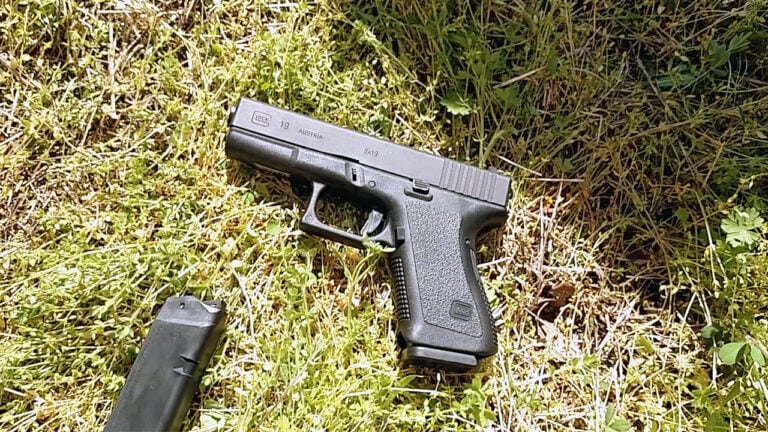
A modern striker pistol is usually more tolerant of neglect because it’s designed around looser, more forgiving operating conditions and fewer interface points that require hand-fitting. That doesn’t mean strikers never choke, but the most common reliability problems tend to be straightforward: weak magazines, a recoil spring assembly that’s past its best days, extractor claw packed with carbon, or the shooter creating malfunctions through grip issues on very small guns. If you keep decent magazines, replace recoil springs at sensible intervals, and don’t turn the gun into a science project with random aftermarket parts, most striker guns will run for thousands of rounds with boring consistency even when they’re not spotless.
A 1911 can be every bit as reliable, but the pathway to that reliability is narrower and more dependent on correct parts relationships. The 1911’s feeding cycle is a choreography between the magazine, the feed ramp and barrel throat geometry, extractor tension, and slide velocity controlled by springs and friction. If the extractor tension is off, you can get failures to return to battery or erratic extraction even with good ammo. If the magazine feed lips are worn or the spring is tired, you can get nose-dives and three-point jams that look “random” until you realize the magazine is presenting the round at the wrong angle under recoil. If the gun is tightly fit, it may run like a sewing machine when clean and properly lubed, but start dragging when it’s dry, dusty, or cold and the lubricant thickens. None of that is a condemnation of the platform, but it’s the reason the 1911 has a reputation for being either perfect or annoying depending on the specific gun, the magazines, and the owner’s habits.
Manual safety and carry condition: the real question is your consistency under stress
The 1911’s biggest practical difference is that most people carry it cocked and locked, which means you’re committing to a manual safety as part of the draw stroke. Done correctly, that’s not a problem. In fact, for many shooters the act of sweeping the safety becomes a built-in indexing step that helps maintain a strong grip and consistent presentation. The issue is that “done correctly” requires repetition until it happens without thought, including when your hands are cold, wet, or shaking. If you practice 1911 draws in perfect conditions and then carry daily, you’re betting your life that you’ll remember the safety every time when it matters. That bet can be good if you train it hard, but it’s still a bet.
Modern striker pistols generally remove that step, which simplifies the manual of arms at the cost of demanding tighter discipline around holster choice and trigger management. If you carry a striker gun with a short, consistent trigger press, you must treat the trigger guard like it’s a protected zone at all times. That means a rigid holster that fully covers the trigger, proper belt tension so the holster doesn’t collapse, and a reholster process that is slow and deliberate, not the “stuff it back in there” move people do when they’re tired. The striker system is simple, but it’s not forgiving of sloppy reholstering or gear that allows clothing to sneak into the trigger guard. In other words, the 1911 asks you to be consistent about a manual safety, while the striker asks you to be consistent about holster discipline and trigger-finger discipline, and either one can be safe if you’re honest about what you actually do every day.
Trigger quality matters, but it matters differently than people think
The 1911 trigger is the reason many shooters shoot a 1911 better under speed, especially at distance. A clean, straight-to-the-rear press with a defined break reduces the amount of disturbance you introduce to the sights. That shows up when you’re trying to make a 20–25 yard hit on a small target, or when you’re shooting around cover where you’re already off-balance and don’t have the luxury of a perfect stance. The downside is that a great trigger doesn’t fix bad habits; it can mask them. If you rely on a beautiful trigger to carry your fundamentals, you may find yourself struggling when you pick up anything else, because your technique wasn’t driving the gun as much as the trigger was.
Striker triggers are more variable, and many have a longer take-up, a softer wall, and a break that isn’t as crisp. That doesn’t mean you can’t shoot them extremely well; plenty of serious shooters do. It means you’ll see your errors more clearly. A sloppy press on a striker gun will drag rounds low or off to one side, especially when you’re moving fast and trying to “outrun the sights.” This is why the honest carry question isn’t “which trigger is better,” it’s “which trigger helps me get acceptable hits at realistic distances when I’m pushing speed.” If you shoot a 1911 significantly better at 15–25 yards and you can keep it reliable, that matters. If you shoot both about the same inside seven yards and your striker gun is more forgiving of daily carry grime and minimal maintenance, that matters too.
Capacity and reload logistics: what you carry on your belt changes the math
Capacity is not a moral argument, it’s a logistics argument. A typical single-stack 1911 gives you fewer rounds on board, and that forces you to think about whether you’re carrying a spare magazine, how you carry it, and how fast you can reload under stress. Many people say they’ll carry a spare mag and then don’t, especially in summer when dressing light. If you’re honest, a higher-capacity striker gun can give you more margin for the real-world imperfections that happen in a fight: misses, shots through intermediate barriers, the possibility of multiple threats, and the possibility that your first magazine has an issue. That doesn’t mean you need 17 rounds to win every scenario, but it means your risk tolerance is different when you have 7–9 rounds versus 15–19 rounds.
The 1911 can still be a smart carry gun if you build your carry routine around its constraints. That might mean you choose a reliable magazine brand and stick to it, you carry at least one spare magazine, and you actually practice reloads from concealment instead of assuming you’ll “figure it out.” The reason this is so important is that 1911 reliability issues are more likely to be magazine-driven than striker issues, and a spare mag can be both extra ammunition and a troubleshooting tool. With a striker gun, the higher capacity often reduces the urgency of immediate reloading under stress, but it doesn’t remove the need to have magazines that are in good shape and a carry method that keeps them clean and functional.
Maintenance and tolerance: how much “care” are you willing to provide every week
This is where most carry decisions should be made, because it’s the least glamorous and the most honest. A carry gun is exposed to sweat, lint, dust, and skin oils constantly, and those contaminants don’t distribute evenly. They collect around the muzzle, under the slide, near the extractor area, and in the magazine body. A modern striker gun will often tolerate a longer interval between cleanings without changing behavior, especially if it’s lubricated correctly and not running on the edge of spring life. You can be lazy and still get away with it more often than you should, which is why people love them.
A 1911 can tolerate hard use too, but it rewards disciplined maintenance more than lazy ownership. A tightly fit 1911 likes lubrication at the rails and friction surfaces because friction affects slide velocity, and slide velocity affects feeding and extraction timing. If you carry in dusty environments or sweat heavily in summer, you can end up with a paste of lint and grime in the slide/frame interface that increases drag, and drag makes marginal magazines and marginal extractor tension show up as malfunctions. The 1911 also asks you to pay attention to small parts that are wear items: recoil springs, firing pin springs, and magazines that you rotate and inspect. None of this is difficult, but it’s real. If you know you’re the kind of person who won’t keep up with it, you’re better served by a striker gun you’ll actually maintain than a 1911 you’ll “mean to” maintain.
Modern features: optics, lights, and weather-proofing aren’t trends, they’re practical tools
If you plan to carry with an optic, a modern striker pistol is usually the simpler and more durable path. Factory optics-ready slides, robust mounting systems, and common sight footprints make it easier to set up without creating reliability issues. Optics on pistols can be a legitimate advantage in low light, awkward positions, and for shooters whose eyesight struggles with a crisp front sight, but only if the mounting is correct and the gun runs with the additional slide mass and changed recoil dynamics. Striker guns have a broader ecosystem of proven solutions, and fewer of them require hand-fitting or boutique work.
That doesn’t mean you can’t run an optic on a 1911, but you’re working in a narrower lane. Slide mass, spring rates, and the specific build quality of the pistol matter more, and the wrong setup can create cycling problems that don’t show up until the gun is dirty or the ammo is on the weaker side. Lights are similar. A modern striker pistol with a light is a common, well-proven configuration, and most duty-grade holsters are designed around it. A 1911 with a rail can do the same job, but you’re again relying more on the specific model ecosystem and holster availability. If your carry plan includes a light and an optic, the striker gun usually wins on simplicity and supportability, which matters more than internet arguments when you’re trying to find gear that works.
What actually matters: pick the system you can run safely, shoot well, and maintain without excuses
If you want the decision boiled down into a real carry test, don’t start with ideology. Start with your hands, your habits, and your reality. Can you draw from concealment and consistently disengage a 1911 safety without thinking, including with cold hands and a rushed first shot? Can you keep a 1911 lubricated and supported with reliable magazines, and can you diagnose extractor and magazine issues without blaming ammo every time something hiccups? If the answer is yes, a quality 1911 can absolutely be a serious carry gun, and the trigger and shootability may give you a real advantage, especially if you value accurate hits at 15–25 yards and you’ve trained around the platform.
If, instead, you want a gun that will tolerate longer cleaning intervals, accept modern optics and lights with fewer compromises, carry more ammunition without adding extra belt clutter, and simplify the manual of arms under stress, a modern striker pistol is usually the smarter carry choice. The key is that “smarter” still requires discipline: a rigid holster that covers the trigger, a deliberate reholster process, and training that proves you can hit what you need to hit quickly. In the end, the platform doesn’t decide for you. Your consistency does. The 1911 rewards a shooter who commits to it. The striker gun rewards a shooter who builds good habits and doesn’t sabotage reliability with poor gear or careless modifications. Pick the one that matches the level of attention you’ll actually give it when life gets busy, because that’s the version of you who will be carrying it when it matters.
Like The Avid Outdoorsman’s content? Subscribe to our newsletter so you never miss an article.
Here’s more from us: