
Photo credit: Augusten Burroughs/Shutterstock.com
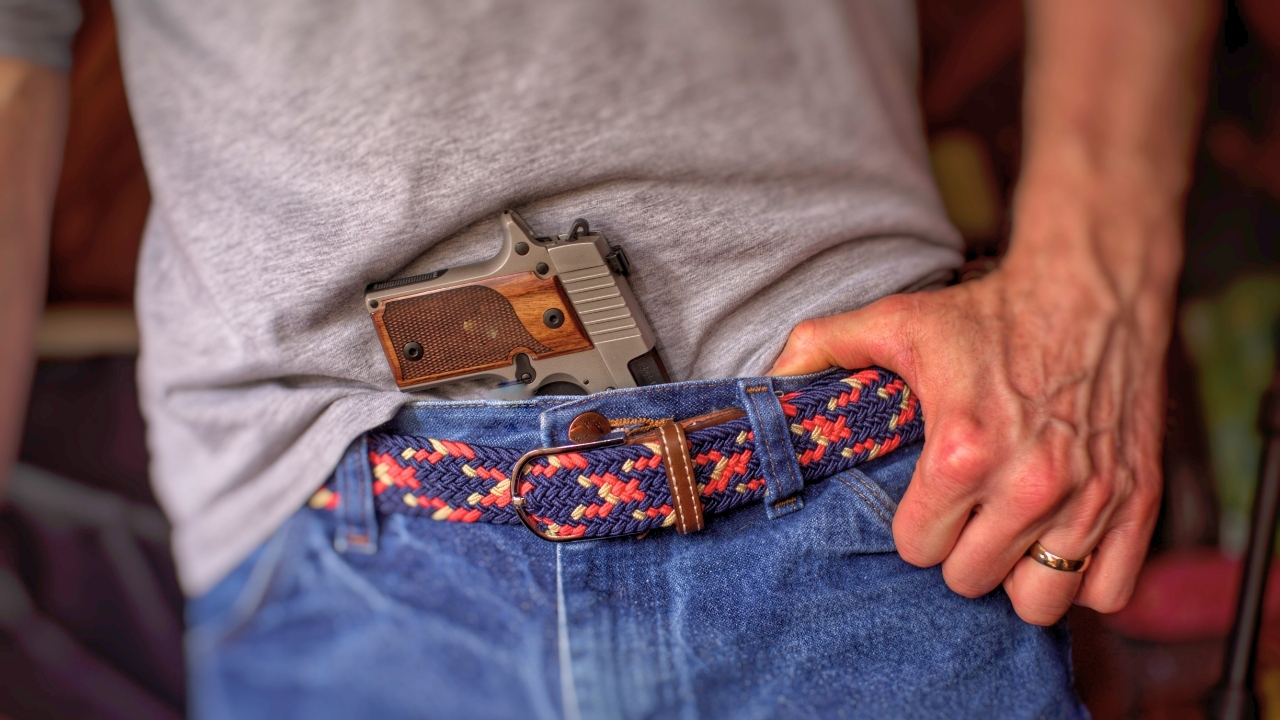
Appendix carry has one big advantage that keeps pulling people in: it’s fast, it hides well on a lot of body types, and it can be easier to access in a vehicle than strong-side carry. It also has one big reality that people try to talk around: when you carry a loaded gun in front of your body, the consequences of sloppy handling get serious in a hurry. Most appendix-related injuries aren’t freak accidents and they aren’t “appendix is unsafe” proof. They’re predictable outcomes from one common pattern—people combining a high-risk carry position with low-discipline habits during the one moment that matters most.
The most common reason appendix carry gets people hurt is careless reholstering—rushing the gun back into the holster, reholstering without looking, or reholstering with clothing or gear in the way—because appendix puts the muzzle in a place where you don’t get forgiveness for sloppy. A lot of carriers focus on draw speed and forget that reholstering is a completely different skill: it’s a controlled, deliberate administrative action that should never be rushed. The injury stories almost always involve someone trying to “get the gun back in” quickly after a drill, after a class, after a range string, or after a stressful moment, and the gun ends up doing exactly what negligent inputs make it do.
Reholstering is the danger zone because it’s optional, and people treat it like it’s urgent
Nobody is timing your reholster in real life. If you’ve drawn in a legitimate defensive situation, the problem isn’t “how fast can I put this away,” it’s “is it safe to put this away at all.” That’s why appendix injuries are so frustrating: they happen during a moment that didn’t need speed. On the range, people feel pressure to be smooth, to keep up with a drill, to not look “new,” and they start reholstering like it’s part of performance. Then they carry that habit into daily life. They shove the gun in while half-looking away, they try to do it one-handed, or they reholster while their shirt is still flopping around the holster mouth. Appendix punishes that behavior because the holster sits in a place where the muzzle covers anatomy you don’t want covered during sloppy admin handling.
A good rule is simple: draw fast if you must, reholster slow every time. If you can’t reholster slowly and deliberately, you shouldn’t reholster yet. That mindset change alone prevents the majority of appendix-related injuries, because it removes the one ingredient those incidents share—unnecessary urgency. The people who stay safe with appendix carry aren’t braver or tougher. They’re boring about reholstering, and they refuse to treat it like a speed event.
Clothing and “stuff” get into the trigger guard more often than people want to admit
Most negligent discharges in appendix carry aren’t caused by the gun “going off.” They’re caused by something getting into the trigger guard during reholstering. Shirt tails, hoodie drawstrings, jacket liners, and even soft belt material can sneak into the wrong place if the carrier doesn’t manage clothing deliberately. Then the carrier forces the gun down anyway, because they feel resistance and assume it’s just friction. That’s the moment where a piece of fabric becomes a trigger press. Appendix makes that mistake catastrophic because of where the muzzle is oriented during that shove.
This is also why “my holster covers the trigger” is not the full answer. The holster can be great and you can still hurt yourself if you reholster with slack fabric hanging over the holster mouth and you don’t visually confirm the path is clear. Carrying appendix safely means being honest that clothes move, bodies move, and the holster area is a dynamic environment. If you treat it like a static environment and reholster with speed or force, you’re gambling that nothing migrated into the wrong place. Over enough reps, that gamble eventually loses.
Poor holster selection makes bad habits easier and good habits harder
Appendix carry exposes holster quality fast. A holster that collapses, flexes, or doesn’t hold its shape makes safe reholstering harder because you can’t reholster cleanly without extra force and awkward angles. A holster with inconsistent retention makes carriers fidget all day, which increases the chance they’ll adjust the gun unnecessarily, re-seat it, or reholster more often than needed. Every unnecessary “handling moment” is a chance to make a mistake, especially when you’re tired, distracted, or trying to move fast.
A rigid holster with full trigger-guard coverage and stable retention doesn’t just improve safety. It improves behavior. It encourages slow, deliberate reholstering because the holster mouth stays open and predictable. If you’re running appendix, this is one place where cheaping out is backwards. If you want a store option that’s easy to evaluate in-hand, Bass Pro usually has rigid appendix-capable holsters and sturdy gun belts you can physically flex and compare, and that ability to check rigidity and retention in person matters more than brand hype online. The goal is not a trendy rig. The goal is a rig that doesn’t change shape when your life changes shape throughout the day.
“Comfort hacks” can create unsafe angles and inconsistent access
A lot of appendix carry problems start when people chase comfort by compromising structure. They lower ride height too far so the gun digs less, which makes it harder to get a full firing grip. They loosen the belt so it feels better sitting, which lets the holster roll and shift. They shove the gun into a position that “feels fine” in one stance but forces awkward wrist angles on the draw. When the draw is awkward, people start re-gripping mid-draw or fishing the gun out, and that increases muzzle wandering and sloppy handling. Then, after the string, they’re more likely to stuff the gun back in quickly because the whole process felt clumsy and stressful.
Comfort is not the enemy. Unstable comfort is. Appendix carry works best when the gun is stable and presented the same way every time. A stiff belt that keeps the holster anchored is a huge part of that. A belt that sags and rolls is how you end up with a holster that changes angle during the day, which is how you end up with inconsistent draws, which is how you end up with rushed reholstering because you’re annoyed and distracted. If you’ve seen someone say “appendix is uncomfortable and unsafe,” a lot of the time you’re hearing the voice of a bad system, not a bad carry position.
People confuse “safe carry” with “safe handling” and skip the part that actually matters
A gun carried in a proper holster is safe in the sense that it’s not going to fire by itself. Most modern pistols are mechanically safe when holstered correctly. The real risk comes from human handling—touching the gun unnecessarily, reholstering carelessly, and treating administrative handling like a casual movement. Appendix carry injuries are not usually happening while the gun is sitting holstered. They happen when the gun is being moved between states: out of holster, near the body, and then back into holster with something interfering.
This is why “I’m careful” isn’t a safety plan. A safety plan is a repeatable process that doesn’t rely on your mood or your attention span. It’s the same reason good shooters have a consistent drawstroke and consistent trigger discipline. They aren’t counting on willpower. They’re counting on habits. Appendix carry rewards habits that are strict about when the gun comes out, strict about keeping the finger off the trigger during admin work, and strict about reholstering only when the path is verified clear. If you can’t commit to that level of habit, the position itself isn’t the problem. Your handling style is.
Training environment mistakes are where most of the scary stories start
A lot of appendix injuries come from training, not real-world encounters, and that’s important to understand. People get comfortable at the range. They start chatting. They start moving faster than their skill supports. They reholster without thinking because they’re in “range mode.” Then a small lapse happens. That’s not an argument against training. It’s an argument for training with discipline. The range is where you build habits that show up later, and appendix carry demands that those habits be clean.
This is also where instructors who hammer “slow holster” and “look the gun in” save people from themselves. Reholstering is one of the few times it is completely acceptable to pause, breathe, and be deliberate. If your range culture treats reholstering like a speed move, that culture is teaching you the most common path to an appendix injury. The carriers who stay safe aren’t the ones who brag about being fast. They’re the ones who never rush the one action that doesn’t need rushing.
The gear choices that reduce risk without turning carry into a science project
If someone wants to run appendix safely and keep it sustainable, the biggest risk reducer is a rigid, purpose-built holster that fully protects the trigger guard and stays open for safe reholstering, paired with a belt stiff enough to keep the holster from rolling. That’s not sexy, but it’s the foundation. It also reduces the urge to constantly adjust because the system stays where you put it. If you want a simple, practical add-on that helps behavior, a dedicated handheld flashlight is another quiet risk reducer because it prevents the “search with the gun” temptation that makes people handle the pistol when they shouldn’t. Bass Pro usually has solid handheld options that are bright enough for real use, and that’s one of those purchases that helps daily life while reducing the number of dumb moments that can happen around a gun.
The point isn’t buying a pile of stuff. The point is building a setup that encourages disciplined handling. Anything that increases unnecessary handling increases risk. Anything that stabilizes the system and reduces handling moments decreases risk. Appendix carry can be safe and effective when the system is stable and the habits are strict. When the system is floppy and the habits are casual, it’s only a matter of time before you get a scare—or worse.
Appendix carry doesn’t hurt people—rushed reholstering does
If you strip the debate down to reality, appendix carry injuries come from the same root cause almost every time: a person forcing a gun into a holster without controlling the variables. They don’t clear clothing, they don’t slow down, they don’t verify the holster mouth is open and unobstructed, and they treat reholstering like the end of a performance instead of an administrative action that demands full attention. Appendix just happens to be the carry position where that mistake has the highest cost.
If you carry appendix and you want to keep it safe long-term, be strict about reholstering. Make it slow, deliberate, and visually confirmed. Choose gear that stays rigid and stable. Reduce unnecessary handling. Those few habits eliminate the majority of real-world injury stories tied to appendix carry, and they do it without turning concealed carry into a lifestyle of anxiety.
Like The Avid Outdoorsman’s content? Subscribe to our newsletter so you never miss an article.
Here’s more from us:


