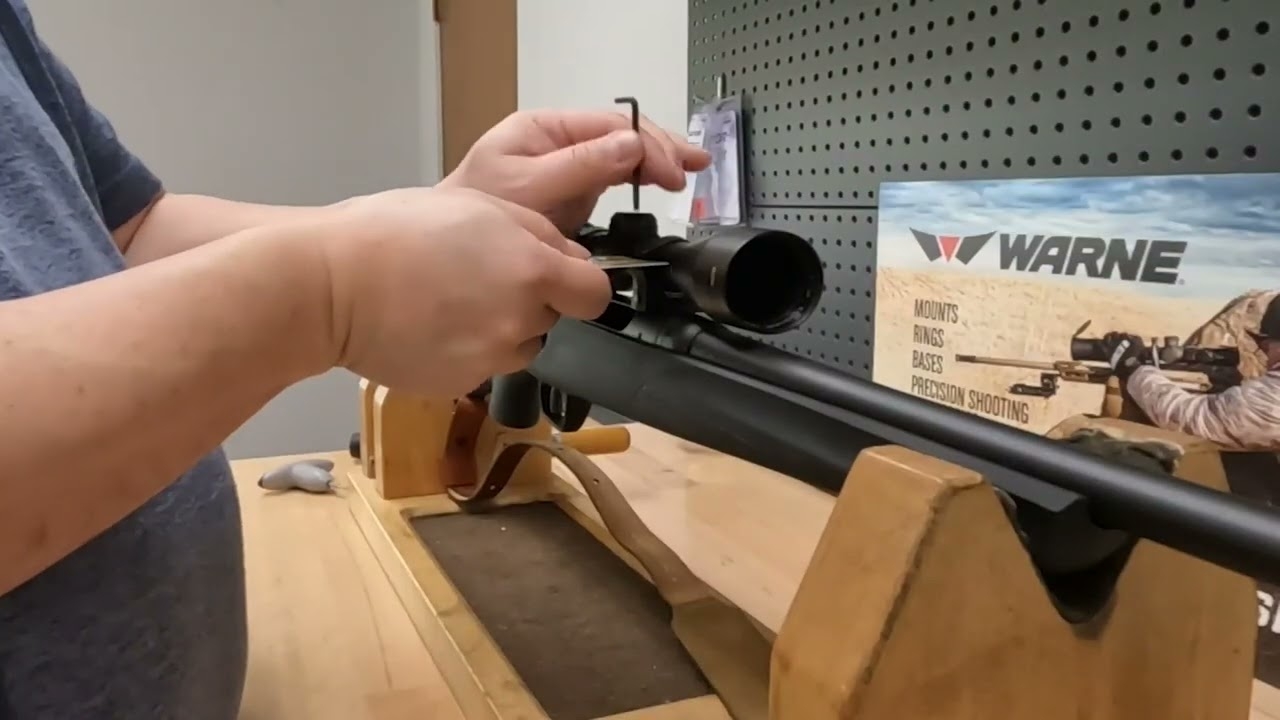
Photo credit: Warne/YouTube
The torque mistake that wrecks groups more than any other is over-tightening scope ring caps like you’re trying to clamp a roll bar to a race truck. Guys do it because they’re scared the scope will move, and because “tight” feels like “secure.” What they actually do is crush the scope tube, distort the internals, and create uneven pressure that makes the optic behave inconsistently under recoil. Sometimes it shows up as groups that suddenly open up. Sometimes it shows up as weird flyers that don’t match the shooter’s call. Sometimes the zero starts wandering and everyone blames the ammo. The rifle didn’t suddenly forget how to shoot. The scope got torqued like a lug nut, and now the system is fighting itself.
Here’s what makes it sneaky: you can still get a “zero” with an over-torqued optic. You can even get a decent group once in a while. But you’ve introduced stress into the tube and the erector system, so the optic doesn’t track or settle the same way every shot. That turns into inconsistent point of impact, especially once heat, recoil cycles, and normal field handling get involved. People will chase this problem for months because it feels like a mystery. It’s not a mystery. It’s usually somebody’s gorilla grip on a tiny screw.
Why over-torqued ring caps mess with accuracy
Scope tubes aren’t designed to be squeezed like a pipe in a vise. When you over-tighten the caps, you can oval the tube slightly and bind the internals. That binding can cause the erector assembly to react differently shot to shot, especially on cheaper optics, but it can happen on good ones too. It also creates uneven contact between the rings and the tube, which means recoil forces aren’t being managed consistently. Even if the scope doesn’t visibly shift, the stress you’ve introduced can show up as wandering groups and random flyers that make you feel like you’re losing your mind.
It also changes the way the rifle feels to diagnose. A guy will say, “It’s got a cold-bore flyer,” but it’s not a true cold-bore flyer—it’s a stressed system settling differently depending on how the rifle was handled, how the scope internals are sitting, and whether the tube is slightly bound. You can’t shoot your way out of a mechanical clamp problem. You have to fix the clamp problem.
The second mistake is under-torquing the base like it doesn’t matter
While over-torqued ring caps are the classic group killer, under-torqued base screws are the silent saboteur. If the base or mount isn’t torqued correctly, the whole optic system can micro-shift under recoil. You won’t always see it. You’ll just see groups that won’t stay consistent, and a zero that seems “soft.” People crank the ring caps tighter to compensate, which makes the problem worse, because now you’ve got a scope tube being crushed while the base is still not truly locked down. That combo is how you end up with a rifle that shoots great one day and terrible the next, with no pattern you can trust.
If you want your setup to stay boring, torque the base to spec, use proper thread prep, and then torque the ring caps correctly—tight enough to hold, not tight enough to deform. The number matters less than being consistent and following the ring manufacturer’s spec. Guesswork is what causes the cycle of constant re-zeroing.
How to fix it the practical way without overthinking it
Use a torque driver and follow the ring and base specs. That’s it. Not “tight plus a little more.” Not “feel it out.” A torque driver removes ego from the equation. If you don’t have one, it’s a tool that pays for itself fast because it keeps you from chasing false accuracy problems with ammo and range time. You can grab a simple inch-pound torque driver at Bass Pro Shops and be done with it. Once you torque things correctly, witness mark your screws so you can see if anything is moving over time. If a witness mark shifts, you found the real issue in seconds instead of burning 60 rounds trying to “confirm” a zero that won’t stay still.
Then re-zero after fixing it and shoot a couple groups from a stable position. Most of the time, the rifle magically “likes” your ammo again, and the mystery disappears. That’s because it was never the ammo. It was the clamp job.
The quick sanity check that saves you from wasting a range day
If your rifle suddenly starts throwing random flyers, don’t start by changing ammo brands or blaming your fundamentals. Start by checking the mounting system. Look for uneven ring gaps. Look for ring caps that are cranked down so hard the gaps are closed on one side and wide on the other. Look for stripped screw heads and tool marks that scream “I tightened this until I felt strong.” If you see that, back it off and redo it properly. You’ll save yourself a lot of time and you’ll stop chasing problems that aren’t actually in the barrel.
Like The Avid Outdoorsman’s content? Subscribe to our newsletter so you never miss an article.
Here’s more from us: