
Photo credit: The Avid Outdoorsman
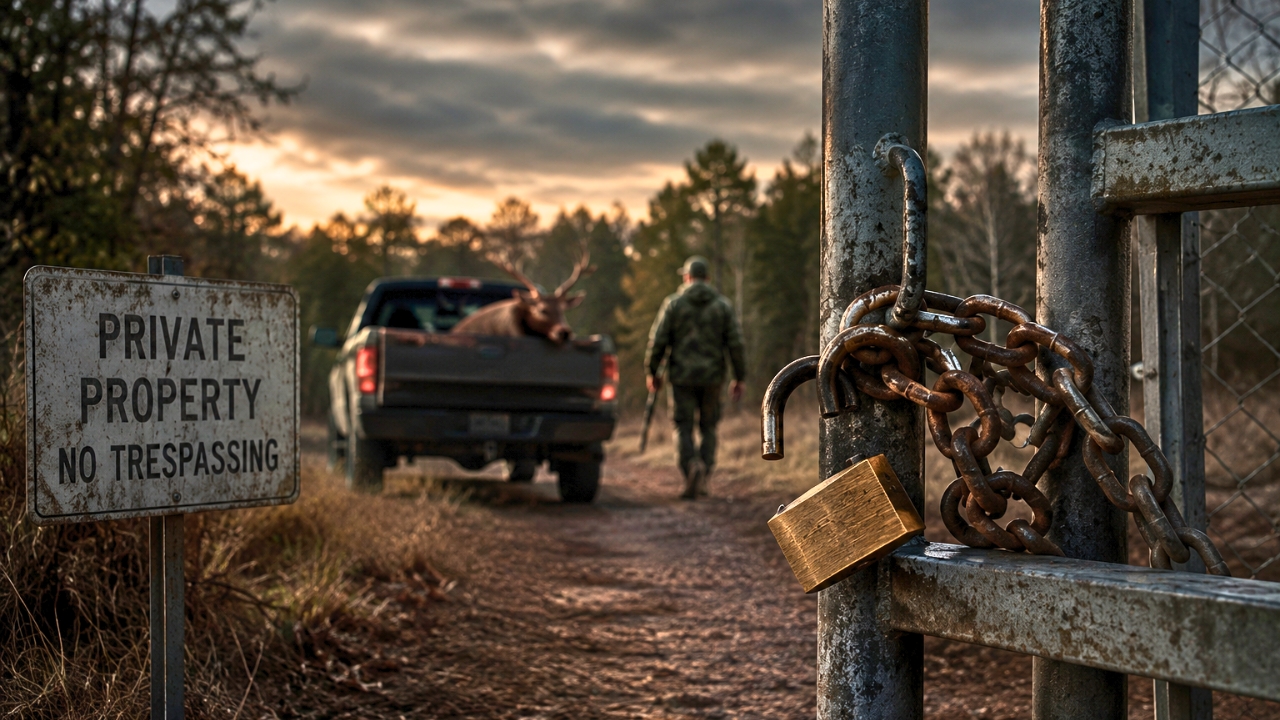
A locked gate is supposed to settle the question before it ever starts. It tells people the road is private, access is controlled, and whoever is on the other side better have a reason to be there. So when you show up and find that gate open, the lock hanging wrong, the chain moved, or tire tracks where there should not be any, that is not something to brush off. Maybe somebody made an honest mistake. Maybe the landowner forgot to shut it. Maybe cattle pushed it. But maybe someone came through who knew exactly what they were doing. A locked gate being opened without permission is one of those little signs that can point to a much bigger problem.
Start With What You Can Prove
The first mistake is jumping straight to guesses. It is easy to see an open gate and immediately assume trespassers, poachers, thieves, or neighbors sneaking through. Maybe that is exactly what happened. But before you start calling people out, slow down and look at what is actually there. Is the lock cut, missing, or still intact? Is the chain unwrapped neatly or forced open? Are there fresh tire tracks, boot tracks, ATV marks, or drag marks? Did the gate swing open from wind, livestock pressure, or poor latching?
Take pictures before you touch anything. Get the gate, lock, chain, tracks, signs, and road surface. If the ground is soft, photograph tire patterns and where they lead. Write down the date and time. If you hunt with permission or lease the place, send the landowner a calm message with the photos. An open gate may be innocent, but if it is not, clean documentation matters more than a mad phone call.
Do Not Just Close It and Move On
A lot of hunters see an open gate, get irritated, shut it, and go hunt. That may feel like the easiest option, but it can hide a problem that needs attention. If someone opened a locked gate once, they may do it again. If they got into the property without consequence, they may assume nobody is watching. That is how a small access issue turns into missing cameras, stands, feeders, fuel cans, tools, or worse.
Closing the gate is fine once you have documented everything, but do not treat it like the end of the story. Check nearby cameras. Walk the access road if it is safe. Look for where the vehicle went, where it turned around, and whether anyone stopped near a stand, feeder, barn, shed, or field. You are not trying to play detective in a dangerous way. You are trying to find out whether this was one sloppy moment or part of a pattern.
Check Livestock and Property First
If the property has cattle, horses, goats, or any other livestock, an open gate can become a serious problem fast. Animals can get onto roads, into crop fields, or onto neighboring land. That turns a hunting access issue into a safety and liability issue in a hurry. Before worrying about your morning sit, make sure the gate did not put animals at risk.
The same goes for equipment, barns, sheds, fuel tanks, trailers, and tools. If someone opened a gate to get in, they may not have been there to hunt. They may have been dumping trash, stealing fuel, snooping around, cutting across the property, or looking for something easy to haul off. Check the obvious places and let the landowner know immediately if anything looks disturbed. A deer hunt can wait. Securing the property comes first.
Think About Who Has Keys
Not every opened gate means someone broke in. Sometimes too many people have access, and nobody really knows who is coming and going. The landowner, family members, ranch hands, lease members, utility workers, contractors, neighbors, and old friends may all have keys or combinations. That can make it hard to know whether the gate was opened by someone allowed to be there or someone taking advantage.
That is why access needs to be controlled. If ten people know the combination and half of them have shared it over the years, the lock is not doing much. Landowners and lease managers should know exactly who has keys, when codes were last changed, and who is allowed through which gate. If the gate keeps getting opened, it may be time for a new lock, a new code, and a much shorter list of people with access.
Look for the Follow-Up Signs
An opened gate is often the first clue, not the whole problem. Once you see it, start looking for what came next. Did tire tracks go toward a feeder? Did someone drive to a back pasture? Are there fresh boot tracks near a stand? Did a trail camera stop sending photos? Is there trash dumped in a ditch? Did someone leave ruts in a wet road? Did the gate get opened during prime hunting hours or in the middle of the night?
Those details tell you what kind of issue you may be dealing with. A vehicle that drove straight through and left may be someone cutting across. Tracks that stop near your hunting setup are a different story. A gate opened at midnight means something different than a gate opened while the power company was working down the road. The more facts you gather, the less guessing you have to do.
Put a Camera on the Gate
If a gate has been opened once without a clear answer, it needs a camera. Not just a camera down by the stand or feeder. Put one where it can see the access point, the vehicle, and ideally the plate if possible. A cell camera is even better because it sends the photo before someone can steal the card. Mount it high enough and hidden enough that it is not the first thing someone notices.
This is not about spying on honest people. It is about protecting the property. A gate camera can settle arguments fast. It can show whether the person was a neighbor, lease member, contractor, trespasser, or somebody nobody recognizes. It can also show patterns. Same truck, same time, same day of the week. That kind of information is useful when it is time to involve the landowner, sheriff’s office, or game warden.
Change Locks Before the Problem Grows
If you cannot explain why the gate was open, changing the lock is cheap insurance. Same goes for changing a combination. Hunters will spend plenty of money on stands, cameras, optics, ammo, feeders, and fuel, then keep using a gate code half the county has known since 2018. That does not make sense.
Use a lock that fits the situation, and make sure everyone who needs access understands the new setup. If it is a shared gate, talk with the landowner before changing anything. If it is your property, keep the access list tight. Do not hand out combinations casually. Do not let guests use the code without permission. A lock only works when the people with access respect what it controls.
Report It When It Crosses the Line
If the lock was cut, the gate was damaged, equipment is missing, livestock got out, cameras disappeared, bait was dumped, or someone was clearly trespassing to hunt, it is time to bring in the right authority. That may be the sheriff’s office, game warden, conservation officer, or local law enforcement depending on what happened. Give them photos, dates, times, and any camera images you have.
Do not wait until the fifth incident to make the first report. A record matters. If this turns into a repeated problem, earlier reports help show a pattern. Even if nothing big happens the first time, you have started the paper trail. Trespassers and thieves count on people being annoyed but not organized. Do not give them that advantage.
An Open Gate Is a Warning
Finding a locked gate open does not always mean something terrible happened. But it does mean you need to pay attention. Gates do not exist for decoration. They protect access, livestock, equipment, hunting pressure, and the landowner’s trust. If someone is opening one without permission, that is a problem worth taking seriously.
Document it, check the property, tell the landowner, look for tracks, watch the access point, and tighten up the lock situation if needed. Do not panic, but do not ignore it either. A lot of bigger property headaches start with one small sign that everybody wished they had taken more seriously.
Like The Avid Outdoorsman’s content? Subscribe to our newsletter so you never miss an article.
Here’s more from us:


