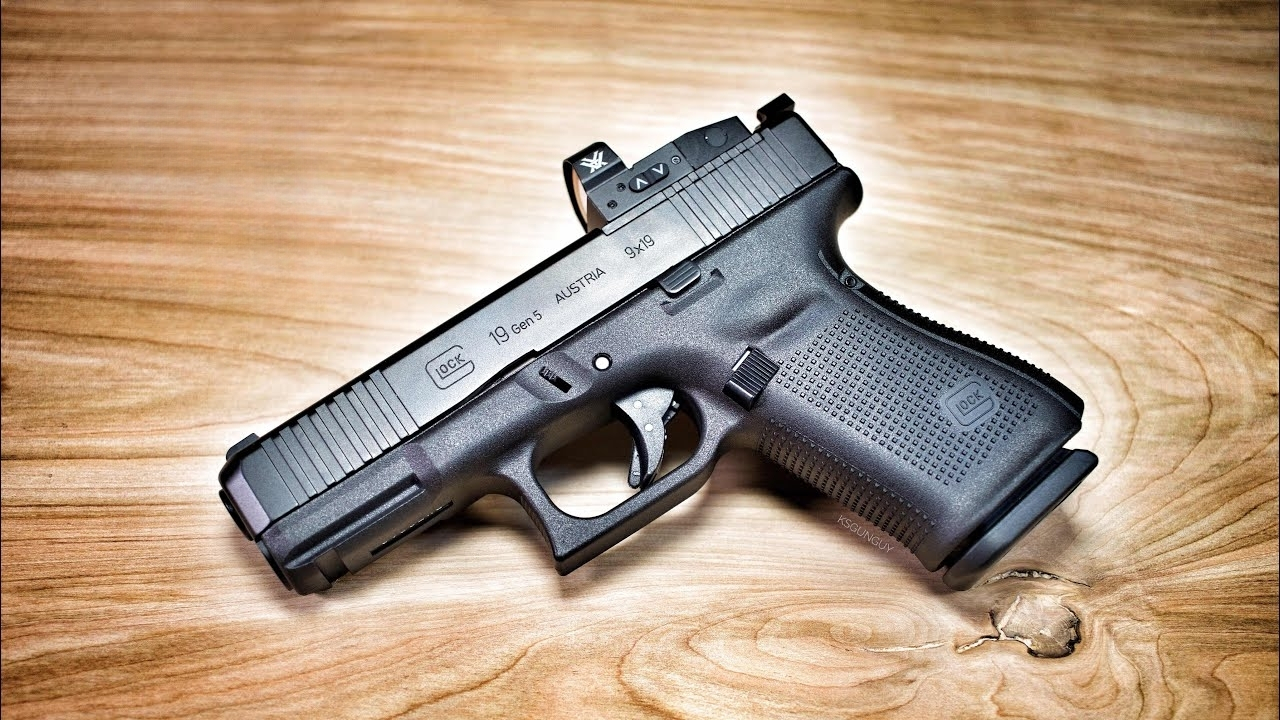
Photo credit: KSGunGuy/YouTube
The Glock 19 keeps winning arguments nobody wants to have anymore. It’s not flashy. It doesn’t feel exciting. It doesn’t give you anything new to brag about at the range or online. And that’s exactly why people get annoyed when it keeps coming up as the answer. The boring reason the Glock 19 still wins is that it balances shootability, reliability, and carry comfort better than almost anything else for the average shooter. Not the most dedicated shooter. Not the gear obsessive. The average person who actually carries and shoots a handgun in the real world.
A lot of modern handgun debates are driven by extremes. Smallest possible. Lightest possible. Highest capacity in the smallest frame. Most features. Most modularity. The Glock 19 lives in the middle, and the middle isn’t exciting. But the middle is where most people actually perform better, even if they don’t like admitting it. The Glock 19 doesn’t win because it’s perfect. It wins because it asks less of the shooter than most alternatives over time.
It’s boring because it doesn’t amplify mistakes
One of the biggest reasons the Glock 19 keeps working for people is that it doesn’t punish small errors as harshly as smaller guns do. Grip inconsistencies, imperfect trigger presses, and rushed presentations show up less dramatically than they do on subcompacts or micro 9s. That matters far more than people want to admit. Under stress, nobody shoots perfectly. Guns that demand perfection magnify errors. Guns that tolerate human inconsistency tend to produce better results in the real world.
The Glock 19’s size gives you enough grip to control recoil without feeling oversized, and enough weight to dampen snap without becoming a burden to carry. That balance smooths out shooting for people who don’t train constantly. It’s forgiving in a way that doesn’t feel impressive on paper but shows up immediately when you’re cold, tired, distracted, or rushing. Boring guns that forgive mistakes tend to stick around.
It carries easier than people expect, and shoots better than they remember
A common knock on the Glock 19 is that it’s “too big to carry.” In reality, it’s often more comfortable than smaller guns once holster choice and belt quality are sorted out. Tiny pistols concentrate recoil and pressure into smaller contact points, which can make them feel sharper and more annoying over a long day. The Glock 19 spreads that out. It sits flatter than people expect and doesn’t constantly remind you it’s there if your setup is halfway decent.
At the same time, people underestimate how much better it shoots than micro pistols when you haven’t warmed up. Cold shooting exposes reality fast. A Glock 19 is easier to draw, present, and hit with on the first few shots of the day. That’s not theoretical. That’s where people miss with smaller guns and then blame themselves instead of the platform. The Glock 19 quietly makes first-shot competence easier, which is a big deal outside of Instagram drills.
Capacity without desperation
The Glock 19’s capacity sits in a sweet spot where it’s sufficient without feeling desperate. You’re not trying to squeeze every last round into the smallest grip possible, and you’re not lugging a full-size duty gun either. That matters psychologically as much as mechanically. People shoot more confidently when they don’t feel rushed by capacity anxiety or overwhelmed by bulk.
More importantly, the Glock 19’s magazines are mature and boring too, which is exactly what you want. They’ve been vetted for years, across climates, round counts, and abuse. That reliability doesn’t feel exciting anymore because it’s expected, but it’s still something newer platforms are constantly trying to catch up to. When something works without drama, people stop noticing it—until they try something else and the drama shows up again.
It doesn’t force you into a training corner
Smaller guns often demand more training to reach the same level of performance. That’s fine if you train a lot. Many people don’t. The Glock 19 doesn’t require you to be on top of your game every range trip to feel competent. You can skip a week, skip a month, and still come back and shoot it reasonably well. That’s not an endorsement of laziness. It’s an acknowledgment of reality.
This is why the Glock 19 survives so many cycles of “better” options. People switch away, struggle more than they expected, and quietly come back. Not because the Glock 19 is inspiring, but because it’s stable. It meets people where they are instead of demanding they meet it at a higher level every single time.
The aftermarket argument works against it—and for it
Ironically, the Glock 19’s massive aftermarket both hurts and helps its reputation. On one hand, people get tired of seeing it recommended because it feels unimaginative. On the other hand, that aftermarket exists because so many people actually use the gun. Holsters fit. Parts exist. Magazines are everywhere. Support infrastructure matters when you carry something daily and rely on it.
But the Glock 19 doesn’t need to be modified to work well. That’s another boring advantage. You can leave it stock and be done. A lot of people eventually realize they don’t want a project. They want a pistol that just runs, carries predictably, and shoots the same way every time. The Glock 19 gives you that option without forcing upgrades just to feel functional.
Why people hate admitting this
People hate admitting the Glock 19 still wins because it undercuts the excitement of chasing the next thing. It suggests that progress isn’t always about new features or smaller sizes. Sometimes progress is realizing that the middle ground is where most people perform best. That’s not a fun conclusion. It doesn’t sell content well. It doesn’t make people feel special.
But performance doesn’t care about novelty. When people strip away ego and brand loyalty, the Glock 19 keeps showing up as the pistol they shoot better, carry more consistently, and trust longer-term. That’s not a romantic answer. It’s a practical one
Like The Avid Outdoorsman’s content? Subscribe to our newsletter so you never miss an article.
Here’s more from us: