
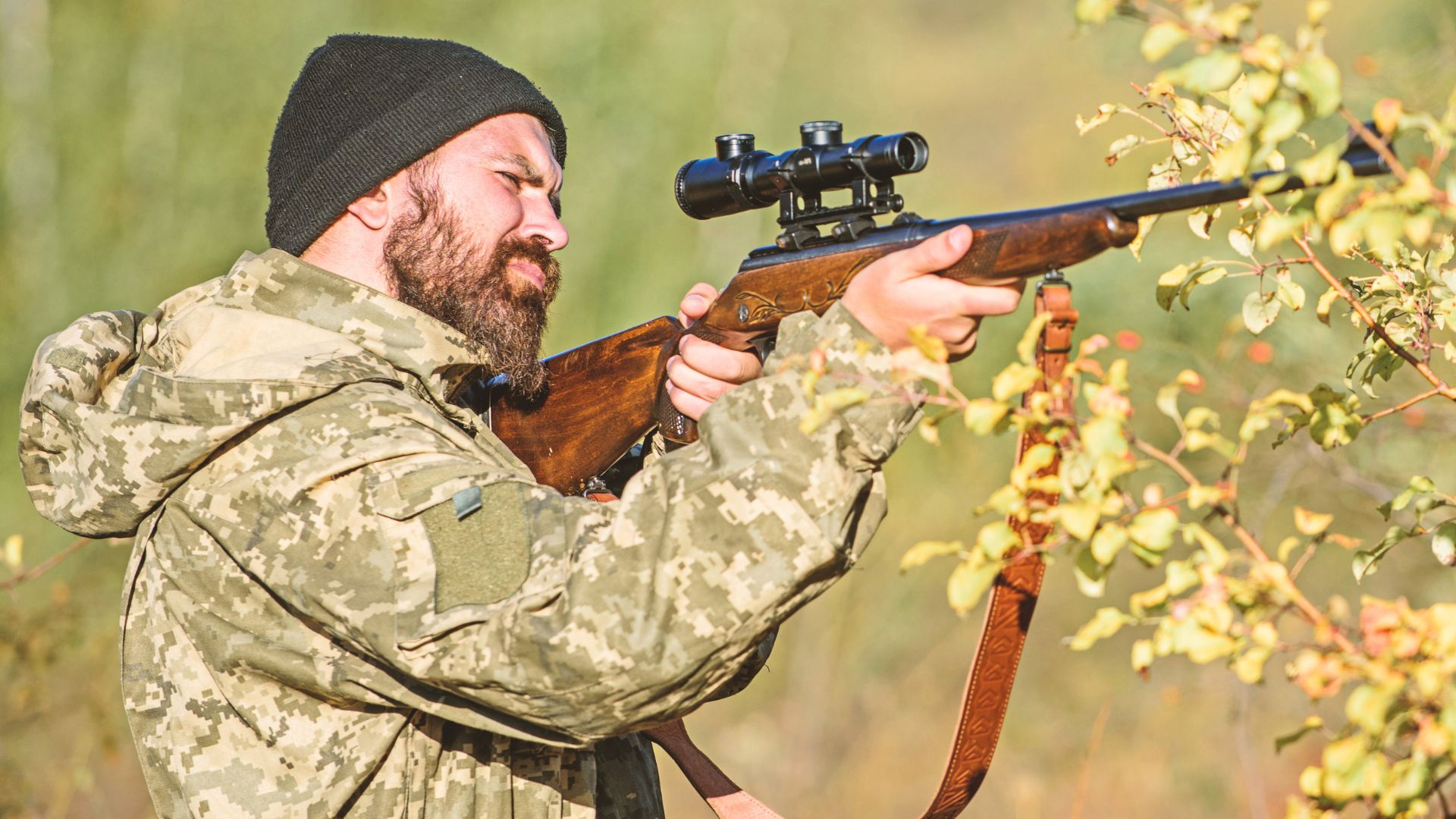
Photo credit: Just dance/Shutterstock.com
Every hunter has a rifle story that starts with confidence and ends with confusion. The gun grouped fine at the bench, the ammo was “the good stuff,” and you didn’t change anything—yet the first cold morning in the woods, or the first time you carried it slung for miles, the rifle starts doing little things that steal trust. Most of the time it isn’t some dramatic mechanical failure. It’s a quirk that only shows up when the rifle is cold, dirty, wet, bumped, or shot from a field position instead of sandbags. That’s why these are so frustrating: they’re real, they’re repeatable under certain conditions, and they usually don’t reveal themselves on a calm Saturday at 100 yards.
Hunters learn the hard way because hunting is where small variables stack. Your heart rate is up, your gloves are on, your rifle is cold-soaked, and you’re shooting off a pack or sticks. A “quirk” becomes a miss, and a miss becomes a long night replaying the shot in your head. Below are the rifle problems that create the most head-scratching in the field, plus what’s actually causing them and how you can keep them from biting you.
The cold-bore shift that makes your first shot land somewhere else
A rifle that prints tight groups after three fouling shots can still throw the first shot high or low when the barrel is truly cold. Hunters run into this when they sight-in on a warm range day, then take one shot at a buck a week later and swear the scope must have moved. Sometimes it’s the barrel itself—stress in the steel, how the barrel is bedded, or how the harmonics settle once there’s a little heat. Sometimes it’s the bore condition. A squeaky-clean bore can shoot to a different point of impact than a lightly fouled one, and the difference can be big enough to matter at 200 yards even if it looks “minor” on paper at 100.
Mechanically, the first shot is when everything is at its most different state: the barrel is cold, the lube is thick, the stock is cold-soaked, and the action is at rest in the bedding. The fix is boring but effective: confirm your true cold-bore zero with the ammo you hunt with, on a day that feels like hunting, and do it with one shot. Clean the rifle the same way each time and don’t switch between “spotless” and “lightly fouled” without verifying where that first shot lands.
A scope that holds zero at the bench but wanders after real carry
A rifle can ride in a soft case, live on a bench, and stay dead-on for years, then start wandering the moment you sling it, drag it through brush, or bounce it on an ATV. Hunters often blame the scope, but the real culprit is usually mounting. Loose base screws, ring screws that weren’t torqued evenly, oil left under the bases, or a mount that’s slightly out of spec can all hold “okay” until the rifle gets real-world stress. Add temperature swings and recoil cycles, and your zero starts drifting just enough to wreck confidence.
What’s happening is micro-movement. Even tiny shifts in ring tension or base seating can change point of impact, especially on lightweight rifles that transmit recoil sharply. Another failure point is scope internals that don’t track consistently, which can show up as random shifts after a bump. The practical solution is to treat your mounting like critical gear: proper torque, clean threads, and a quick check after any hard impact. If you’re running a budget optic, don’t assume it’s rugged because it survived a few range trips. Verify it by shooting a group, tapping the scope, and shooting again, then repeating after a long carry day.
Magazine and feeding weirdness that only shows up from awkward positions
Plenty of rifles feed perfectly when you’re upright and calm, then start acting strange when you’re prone in the dirt, loading fast, or cycling the bolt with your cheek welded and your eyes locked on an animal. You’ll see rounds nose-dive, bolt-over-base malfunctions, or a cartridge pop loose and bind the action. Detachable magazines are the most common place this happens, especially if the mag is worn, the feed lips are slightly bent, or the rifle is sensitive to mag seating depth. Internal box mags can do it too if the follower binds or the spring is weak, but detachable systems add more variables.
The mechanism is presentation angle and bolt speed. If you short-stroke the bolt under stress, or if the mag isn’t fully seated, the cartridge can sit low and the bolt face rides over it. If the rifle’s feed ramp geometry is picky, certain bullet profiles will hang up more than others. The fix is to practice cycling the rifle hard from field positions with the ammo you actually hunt, and to treat mags like wear items. If a mag gets dropped on rocks all season, don’t be shocked when it becomes the weak link at the worst time.
Sticky extraction after a wet, cold day or after switching ammo
Hunters usually notice this as a bolt that lifts hard, a case that feels glued in the chamber, or extraction that’s smooth for a few shots and then suddenly isn’t. The easy assumption is “pressure,” and sometimes that’s true—especially if you jump to a hotter load or different brand with higher velocities. But there are other real-world causes: moisture and grit in the chamber, a chamber that’s a little rough, a rifle that’s run nearly dry, or brass that’s slightly out of spec. If you’re hunting in freezing rain, the chamber can get a film of moisture that turns into drag. If you’re in dusty country, fine grit can make a clean chamber feel like sandpaper.
Mechanically, extraction is a high-leverage moment. The brass expands under pressure, grips the chamber walls, and then has to release cleanly as the pressure drops. Roughness, dirt, or higher-than-normal pressure keeps it stuck longer. The fix is to keep the chamber dry and reasonably clean, and to be cautious about mixing ammo lots without checking velocity and behavior. If you ever feel a bolt lift that’s dramatically harder than normal, stop and diagnose. Don’t keep pounding rounds through it and hope it “settles in.”
“It shot great yesterday” accuracy collapse from a loose action screw or shifting bedding
This one makes people feel crazy because it can happen overnight. The rifle was stacking bullets, then suddenly you’re shooting a pattern. Often it’s a single loose action screw, especially on rifles that get carried hard and set down on rocks, or on lightweight rifles that vibrate more under recoil. Bedding can also shift slightly over time, especially if the stock isn’t stable with temperature and humidity changes. Synthetic stocks vary wildly in stiffness. Some are great. Some flex enough that your point of impact changes depending on how you load the bipod or sling.
The mechanism is simple: if the action isn’t seated consistently in the stock, the barrel’s relationship to the bedding changes, and harmonics change with it. A small torque change can move groups inches at 100, and that gets worse as distance increases. Hunters learn this the hard way because they don’t routinely check screw torque mid-season. A quick preventative habit is checking action screws before opening day and again if you’ve had a big temperature swing or a hard knock. You don’t need to obsess—just don’t ignore the most basic mechanical interface in the rifle.
Barrel contact and stock flex that only shows up when you use a sling or shoot off a pack
A rifle can look free-floated on the bench, then start touching the stock when you load into a sling hard or jam the fore-end into a pack. That contact changes harmonics and can move point of impact dramatically. Hunters see this as “it shoots fine off bags, but misses from field positions,” which is brutal because the rifle feels accurate until it matters. It’s common on thin, flexible stocks and on rifles with heavier barrels that sit close to the channel.
Mechanically, you’re changing pressure on the barrel. Even slight contact at one point can push the barrel, and because the barrel whips the same way every shot, that pressure changes where it settles at bullet exit. The fix is to test like you hunt. Shoot groups off a pack, off sticks, and with sling tension. If your point of impact shifts, you don’t have a “you problem,” you have a setup problem. Sometimes the fix is as simple as opening the barrel channel a touch or upgrading to a stiffer stock.
Trigger “surprises” in cold weather and gloves
Triggers that feel clean in a T-shirt can feel completely different when you’re wearing gloves and your finger is numb. The most frustrating version is a trigger that’s set too light, so it breaks earlier than expected when you’re trying to settle the crosshairs. The other version is a trigger that gets sluggish in cold weather because oil thickens, debris gets into the mechanism, or the trigger design has tight tolerances that don’t like grit. Hunters discover this when the rifle won’t fire, won’t reset, or feels inconsistent after a snowy hike.
Mechanically, cold makes everything less forgiving. Lubes thicken, moisture can freeze, and fine grit becomes glue. Gloves reduce tactile feedback and change finger placement, which can increase lateral pressure and cause you to “steer” the gun. The fix is to keep triggers clean and lightly lubricated with products that behave in cold, and to practice firing with the same gloves you hunt in. If you insist on ultra-light pull weights, accept that you’re shrinking your safety margin when adrenaline and numb hands show up.
The “mystery flyer” caused by heat, copper, or a dirty muzzle
Some rifles shoot tiny groups for the first few shots, then start throwing a flyer every five rounds, and hunters often blame themselves. Sometimes it is shooter fatigue. But there are mechanical causes that show up in real hunting practice: copper fouling that builds fast in certain barrels, a muzzle crown that’s dinged, or a suppressor/muzzle brake that’s slightly loose or carbon-locked unevenly. Even a bit of debris at the muzzle—snow, mud, or water—can alter how gas escapes, which can tip the bullet as it leaves the crown.
The mechanism is consistency at the exit. The crown is the last “touchpoint” the bullet experiences, and anything that makes gas release unevenly can open groups. Heat can also change barrel harmonics, especially in thin barrels where temperature rises quickly. The fix is to check the crown, keep the muzzle device properly torqued, and pay attention to how the rifle behaves across a realistic string of fire. If you hunt with a suppressor, don’t assume it’s a set-and-forget item. Carbon and heat cycles change things, and the rifle may want a different cleaning interval than it did unsuppressed.
Like The Avid Outdoorsman’s content? Be sure to follow us.
Here’s more from us:


