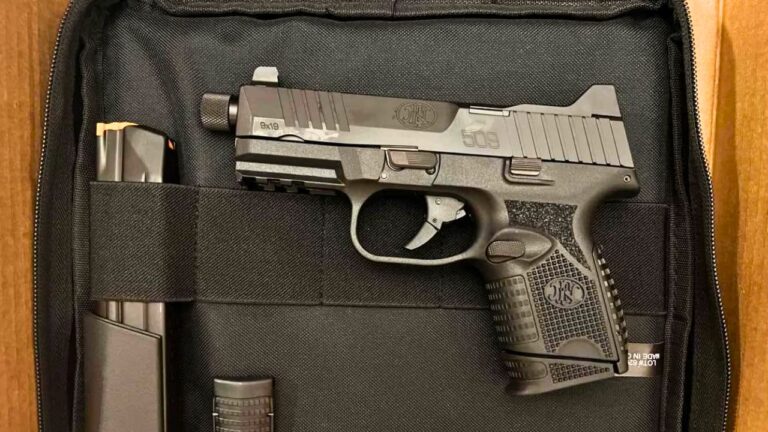
Photo credit: Nomad_Soul/Shutterstock.com
Gun policy is increasingly being written not just in legislatures and at the Bureau of Alcohol, Tobacco, Firearms and Explosives, but in the checkout line. As you walk into a gun shop or click through an online cart, you are now at the center of a fight over how strictly dealers must verify your identity and how much of that transaction data should be visible to banks and the government. The newest push to standardize ID checks and purchase codes is colliding with a fast‑building privacy backlash that treats those same tools as a backdoor registry.
To understand what is coming next for you as a buyer, seller, or simply a citizen who cares about both safety and civil liberties, you have to look at how background checks, merchant codes, and digital ID rules are converging. The result is a patchwork in which some states and members of Congress want tighter verification at every gun counter, while others are racing to outlaw the very databases that would make that possible.
The quiet shift toward standardized gun shop ID checks
If you buy a firearm from a traditional dealer today, you already expect to show a government ID and fill out a federal form before the background check runs. What is changing is the push to make that level of verification the norm for a much wider universe of sellers, from part‑time hobbyists at shows to people listing guns online. The Biden administration has used rulemaking to expand who counts as a dealer, which in turn pulls more transactions into the same ID and background check framework you see at a brick‑and‑mortar shop.
Under a new rule described by federal officials, anyone who is “engaged in the business” of selling firearms, including many sellers at gun shows or online marketplaces, is expected to run checks on buyers rather than treating those sales as private transfers. Coverage of the policy explains that The Biden administration framed the change as closing the so‑called gun show loophole, while critics see it as a major expansion of federal reach. A separate analysis notes that the rule broadens the definition of firearms dealers and is scheduled to take effect after publication in the Federal Register, effectively standardizing ID checks across many sales that used to fall outside the system.
How new federal rules are redefining who counts as a gun dealer
For you as a buyer, the most consequential change is not a new form at the counter, but the government’s decision about who must put that form in front of you. The Department of Justice has finalized a rule that sweeps in more people who sell guns for profit, even if they do not operate a storefront, and requires them to run background checks and verify IDs. That means more of the transactions that once happened in parking lots, living rooms, or temporary show booths will now look like a standard retail sale in the eyes of federal law.
Supporters argue that this shift is overdue, pointing to statements that Closing dangerous loopholes will help keep weapons away from people who are already prohibited from owning them. Reporting on the rule notes that The Department of Justice is using its authority to ensure that commercial sales, whether at shows, online, or in person, are treated consistently. Coverage of the rollout adds that The White House has presented the plan as a way to boost background checks for guns bought at shows or online, while opponents warn that the line between a hobbyist and a regulated dealer is becoming harder to see.
Merchant category codes: the financial plumbing behind gun surveillance
While regulators focus on who must check your ID, banks and card networks are quietly deciding how to label your purchase. Merchant category codes, or MCCs, are four‑digit tags that tell payment processors what type of business you are dealing with, and they have become a flashpoint in the gun debate. A new code, MCC 5723, is designed specifically for guns and ammunition, which means your card issuer can instantly see that a transaction took place at a firearms retailer, even if it cannot see the exact items you bought.
Guidance from a major bank explains that When it comes to the sales of firearms, merchants only need to use MCC 5723 if their primary business is the sale of guns, firearms accessories, and ammunition. That carve‑out is supposed to keep big‑box stores that sell everything from groceries to rifles from being swept into the same category. At the same time, state and federal officials are debating whether these codes should be mandatory, optional, or banned outright, because they can be used to flag suspicious spending patterns that might precede a mass shooting or, depending on your view, to build a de facto list of gun buyers.
New York’s model and the push for gun‑specific purchase tracking
New York has emerged as a test case for how far a state can go in using financial data to monitor gun commerce. Lawmakers there have embraced the idea that card companies should help identify potential threats by treating gun dealers as a distinct category. For you as a customer, that means a purchase at a small firearms shop in the state is more likely to be tagged in a way that stands out from other retail spending.
One of the most closely watched steps came when Gov. Kathy Hochul signed a package of gun safety bills that included a requirement for credit card companies to establish specific merchant codes for weapon dealers. The third bill in that package directs card networks to use those codes so that law enforcement can better track purchases at weapon dealers and potentially identify mass shooters before they commit the crime. Earlier, advocates led by New York‑based Amalgamated Bank had argued that a separate code for gun stores was a safe and commonsense way to spot unusual buying sprees, even as other states began considering laws to block that approach.
The backlash: privacy advocates, hunters, and red‑state legislatures
As soon as financial tracking tools started to move from theory to practice, a coalition of gun owners, privacy advocates, and Republican lawmakers began pushing back. If you are a hunter or recreational shooter, you have likely heard the argument that gun‑specific merchant codes and standardized ID checks are less about safety and more about building a paper trail that could be misused later. That concern has turned into organized campaigns to roll back or preempt these measures.
One prominent example is a campaign framed around Protecting Hunters and their privacy by ending the use of gun‑specific merchant category codes. Advocates in that camp argue that tagging purchases at gun stores treats law‑abiding hunters and sport shooters as suspects and could chill participation in long‑standing traditions. In South Carolina, reporting describes how Advocates for a different view have pushed a bill that would ban credit card coding of gun and ammunition sales entirely, a direct response to the New York model and to the role of New York‑based Amalgamated Bank in promoting MCC 5723.
Congressional crossfire: dueling bills on tracking and privacy
On Capitol Hill, you are watching a tug‑of‑war between lawmakers who want to harness financial data to prevent shootings and those who see that same data as a constitutional threat. Several Republicans in the House and Senate have introduced bills that would stop banks and card networks from singling out gun purchases, while Democrats have focused on tightening ID verification and background checks, especially online. The result is a legislative landscape where your rights and obligations can change dramatically depending on which bill advances.
In the House, Reps who include Hudson, Moore, and Barr Introduce Legislation to Stop Unconstitutional Tracking of Lawful Gun Purchases, arguing that financial surveillance of gun buyers violates both privacy and the Second Amendment. A separate proposal branded as the Protecting Privacy in Purchases Act has been promoted by sponsors who say that, on behalf of the NRA‘s millions of freedom‑loving members, they applaud Rep, Stefanik for championing legislation to stop unconstitutional tracking of gun sales and to protect hunting and recreational shooting traditions. In the Senate, WASHINGTON coverage notes that United States Senator Bill Hagerty, a member of the Senate Banking Committee, has led colleagues in reintroducing legislation to block what they call unconstitutional tracking of gun store purchases, with companion efforts in the U.S. House of Representatives.
Online gun sales and the new frontier of ID verification
If you buy guns or parts online, the next wave of regulation is aimed squarely at you. Lawmakers are increasingly focused on how easily a person can order a firearm or key components on the internet, sometimes with minimal verification beyond a shipping address. The political momentum is shifting toward requiring the same level of ID checks and safeguards online that you would encounter at a physical counter, especially for platforms that ship guns to local dealers for pickup.
One proposal backed by Democrats would tighten those rules by mandating stronger identity verification and safeguards for online firearm and ammunition sales. In a press release, Congressman Dan Goldman of New York, joined by Congresswoman Bonnie Watson Coleman of New Jersey, described legislation that would require online sellers to confirm that the person placing the order is legally allowed to buy a gun and to ensure that packages containing firearms cannot be stolen or redirected as easily as any other package. The announcement invites you to Read the Bill Here and underscores that Washington lawmakers are no longer treating online gun commerce as a side issue.
Grassroots pressure and the “universal background checks” drumbeat
While elected officials argue over merchant codes and ID rules, grassroots organizers are trying to pull the debate back to a simpler idea: every gun sale should involve a background check, no matter where it happens or how you pay. For activists and survivors, standardized ID checks at gun shops are just one piece of a broader push for a national baseline that would cover private sales, shows, and online listings. That pressure is shaping how both parties talk about enforcement and privacy.
One advocacy campaign framed around ENOUGH is built on the slogan Universal Background Checks and argues that states that require background checks on all gun sales see fewer gun deaths, so the country needs a federal standard. Organizers highlight that volunteers and survivors have shown up in hearing rooms, met with lawmakers, and mobilized thousands of supporters to defeat bills that would have weakened background checks, expanded permitless carry, or blocked future Extreme Risk laws. They point to states like Arizona and South Carolina, where sessions ended without passing a single one of the gun lobby’s top priorities, as proof that sustained pressure can stop efforts to roll back ID and check requirements.
State‑level experiments: storage mandates, local checks, and enforcement shifts
Beyond Washington, statehouses are experimenting with their own mix of ID rules, storage mandates, and enforcement strategies that will shape your experience at the counter. Some states are tightening requirements on how you store firearms at home and when police can block someone from owning a gun, while others are focusing on shielding residents from what they see as federal overreach. These choices affect not only whether you must show ID, but also what happens if you fail a check or store a weapon improperly.
Coverage from Illinois notes that Several new public safety laws will take effect Jan 1, including One new law that requires gun owners to store their firearms in a locked container or equipped with a tamper‑resistant lock, and another that changes how police background checks determine who is prohibited from possessing a firearm. A separate report from New River County News describes how local gun storage and police background check changes will take effect in 2026, reinforcing the idea that your obligations as a gun owner can vary sharply from one jurisdiction to the next. At the federal enforcement level, reporting on the ATF notes that President Joe Biden had previously backed a zero‑tolerance policy that instructed the ATF to revoke the license of any gun dealer found to have willfully violated certain laws, a stance that has since been softened as part of a court challenge, changing how aggressively the agency can police dealers who fail to follow ID and record‑keeping rules.
Where this leaves you: safety, surveillance, and the next political fight
As these rules and counter‑rules pile up, you are left navigating a system that is both more standardized and more contested than ever. At a typical gun shop, you can expect ID checks and background forms to feel more routine, and if you buy online or at a show, you are increasingly likely to encounter the same requirements. Behind the scenes, merchant category codes and financial monitoring tools are giving banks and, potentially, law enforcement a clearer picture of where and how much money is flowing into gun purchases.
At the same time, a growing bloc of lawmakers and advocates is determined to keep those tools from turning into a permanent record of who owns what. Some are asking pointedly, as one report on a congressional debate put it, whether Congress Moves to Block Gun Purchase Surveillance with a New Bill because Are credit card companies quietly building a database of lawful gun owners. Others, including officials speaking in an ATF director interview about the Apr Biden administration rule, insist that expanding background checks is about closing gaps, not spying on citizens. As you weigh those competing claims, the core tension remains the same: how to build a system that keeps guns out of dangerous hands without turning every trip to the gun counter into an entry in a permanent surveillance file.
Like The Avid Outdoorsman’s content? Be sure to follow us.
Here’s more from us: