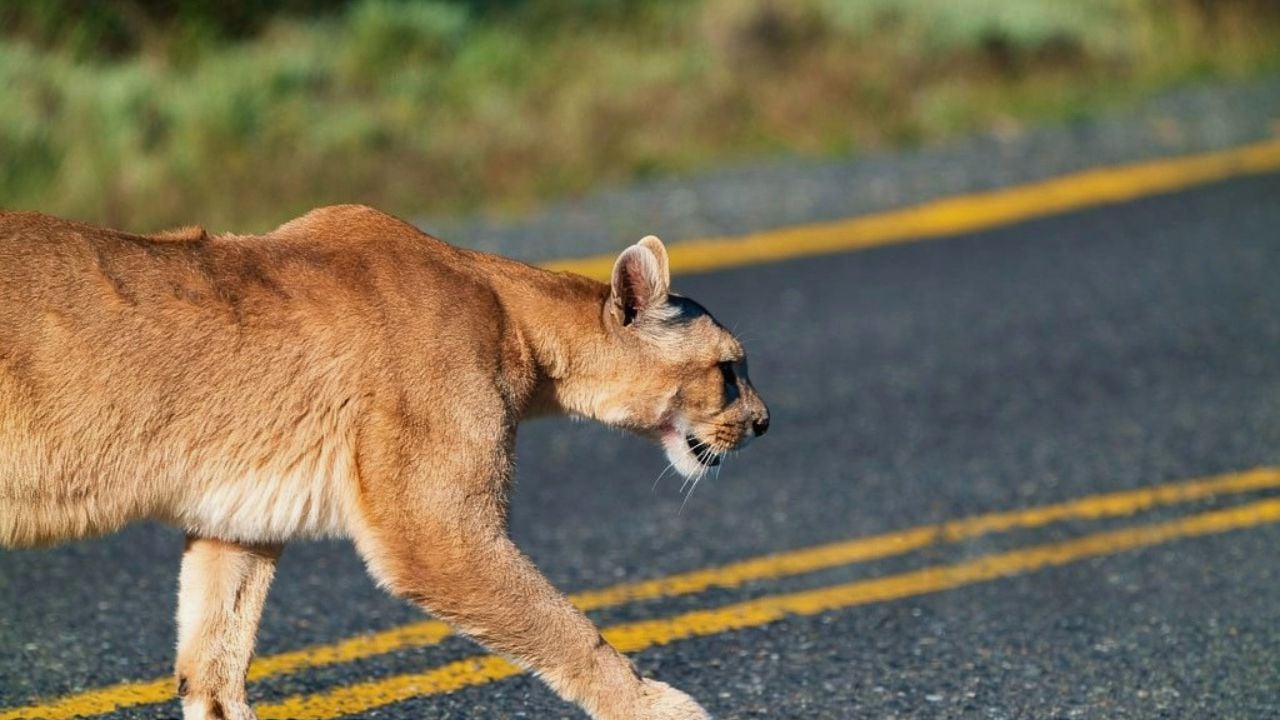
Photo credit: Wirestock/istock.com
Most people do not realize a mountain lion has been using the same trail until the clues start stacking up. That is because lions are built to stay hidden. U.S. Fish and Wildlife Service says mountain lions usually try to avoid confrontation, and federal guidance also warns hikers to be extra cautious at dawn, dusk, and night, when lions are most active. So the strongest warning signs usually are not dramatic sightings. They are repeated sign, repeated timing, and a trail that suddenly starts looking like the kind of route a predator would use on purpose.
You keep finding cat sign instead of just one random clue
The first real sign is repetition. One odd print in soft dirt can be nothing. But if you keep seeing cat-like tracks, scat, or other sign along the same stretch, that starts to matter. National Park Service guidance for wildlife watching specifically tells visitors to look for signs such as tracks and scat, and California wildlife officials note that scat is one of the biological signs used in mountain lion work and monitoring. A trail with repeated cat sign is telling you more than a one-off pass-through. It suggests the route is being used.
Scrapes are a bigger clue than most hikers realize
One of the clearest mountain-lion-specific clues is a scrape. Yellowstone says a male cougar’s scrape advertises his presence and warns other males that an area is occupied. That matters because a scrape is not random movement. It is a sign the lion is using the area deliberately enough to leave a message behind. If you notice repeated scraped patches of dirt along trail edges or near junctions, that is a much stronger clue than just thinking, “Something big walked through here once.”
The trail fits the kind of place predators like to move
Sometimes the sign is the trail itself. National Park Service guidance says many animals spend time near edges, like where forest meets open ground, and Colorado Parks and Wildlife warns campers to stay away from obvious wildlife trails, stream banks, and lake shores because wildlife likes to use those areas. So if your route hugs a creek, cuts through a quiet timber edge, or follows a natural travel corridor, that alone is worth noticing. A lion does not need a hiking trail, but it will absolutely use the same easy route through cover if it works.
Dawn, dusk, and low-light encounters are a pattern for a reason
If the only strange moments happen early or late in the day, that fits mountain lion behavior better than a midday sighting does. U.S. Fish and Wildlife Service specifically advises people to avoid hiking, biking, or jogging alone when mountain lions are most active, naming dawn, dusk, and night. That means a trail that feels perfectly ordinary at noon can become a very different place around first light or right before dark. If the timing of the sign keeps lining up with those low-light windows, that is not something to shrug off.
You notice prey activity and predator sign in the same corridor
A mountain lion trail usually makes sense in the bigger picture. Lions are not just wandering for fun. They are moving where travel is easy and prey is available. National Park Service guidance encourages people to learn what habitats animals use and to watch for sign rather than waiting on a direct sighting. If a trail runs through deer-heavy cover, brushy edges, or a drainage that funnels wildlife movement, and you are also picking up cat sign there, that starts looking less like coincidence and more like a route a lion may be reusing.
The smartest response is to treat the pattern seriously
If you think a mountain lion has been using the same trail as you, the goal is not to go prove it up close. Fish and Wildlife says not to hike alone, to keep children close, not to run from a lion, and to make yourself look larger if you encounter one. Yellowstone also says to stay at least 100 yards away from cougars and never approach them. So if a trail is showing repeated lion sign, the practical move is simple: change your timing, stay alert, go with other people, and stop treating that stretch like an ordinary walk where nothing bigger than a deer ever passes through.
The biggest mistake is waiting for a full visual encounter before deciding the sign meant anything. Usually the trail gives you smaller warnings first. Tracks. Scat. A scrape. The same kind of route through cover. The same low-light timing. None of those clues alone always proves much, but together they can tell a pretty clear story that something powerful is moving that same ground more often than you thought.
Like The Avid Outdoorsman’s content? Subscribe to our newsletter so you never miss an article.
Here’s more from us: