Photo credit: Yuriy Golub/ Shutterstock.com.
Most knives do not die in the cutting board, they die on the sharpening bench. The fastest way to destroy a good blade is not neglect, it is an enthusiastic home tune‑up that overheats the edge, grinds away too much steel, or mangles the geometry that made the knife cut so well in the first place. The difference between a knife that lasts decades and one that feels “used up” after a few years often comes down to avoiding one critical sharpening mistake and the cluster of bad habits that surround it.
At the center of that problem is uncontrolled heat and pressure, especially on powered sharpeners and aggressive abrasives, which can quietly soften the steel and strip away metal long before the user notices anything is wrong. I want to unpack how that happens, why it makes even premium steel dull out quickly, and what careful, low‑heat sharpening looks like in practice so a sharp edge actually stays that way.
The real knife killer: heat and pressure at the edge
The single worst mistake I see is treating sharpening like a race, leaning hard into the stone or machine and letting friction cook the edge. Steel hardness is set during heat treatment, and if the very thin cutting zone is pushed above its tempering range, it loses that hardness and with it the ability to hold a fine edge. Industrial blade makers warn that If the edge heats more than 100 ℃ or 212 ℉, the material hardness and cutting ability can drop rapidly, and that threshold is surprisingly easy to cross on a grinder or belt if the user is not watching for color changes or heat in the steel.
Once that micro‑zone is softened, no amount of polishing will bring back the lost performance, and the knife starts to feel like it “won’t stay sharp” no matter how carefully it is honed. Discussions among sharpeners about Does Sharpening with a Grinder Ruin Your Edge describe exactly this problem, where a few hot passes on a wheel alter the heat treat and reduce edge retention. I see the same pattern when people bear down on stones, too, because heavy pressure not only risks overheating but also tears off larger carbides and fatigues the apex, leaving a burr‑ridden, fragile edge that fails quickly.
How aggressive machines strip years off a blade
Even when heat is kept in check, the second part of the big mistake is using overly aggressive machines that remove far more metal than necessary. Traditional electric sharpeners and some consumer belt systems rely on high‑speed grinding wheels that bite deeply into the edge, and marketing often celebrates how quickly they can “restore” a dull knife. In practice, that speed comes from chewing away a large amount of steel in a single pass, something even their own advocates acknowledge when they note that Traditional electric sharpeners often use high‑speed grinding that removes a significant amount of metal in a single pass.
Once that becomes the default maintenance method, the blade’s profile starts to collapse: the heel thins out, the tip shortens, and the once‑elegant curve turns into a series of flat spots and hooks. Knife technicians who see a lot of home‑sharpened blades describe how Over‑sharpening with the wrong tools leads to a blade that wears out faster, not because the steel was poor, but because too much of it was ground away. I find that once people switch to slower, more controlled abrasives and focus on minimal metal removal, their knives suddenly seem to “age” much more slowly.
Why a screaming‑sharp edge can fail in a weekend
There is a seductive thrill in chasing a hair‑whittling, mirror‑polished edge, but pushing a knife to that extreme without supporting geometry is another way to ruin performance quickly. Ultra‑thin, highly polished bevels can feel magical on the first cut, then collapse after a few chopping sessions because the apex is too delicate for real kitchen work. Sharpening educators who look at this under magnification show how a very refined but over‑thinned edge can roll or micro‑chip almost immediately, which is why videos on Why An Ultra Sharp Knife Will Dull Super Fast focus on balancing sharpness with durability instead of chasing the most dramatic test cuts.
In my experience, the underlying mistake is confusing sharpness tests with real‑world cutting. A knife that aces a paper slice or arm‑hair shave can still be poorly supported at the edge, especially if the user has repeatedly lowered the angle in search of more bite. Guides on Sharpening Mistakes warn that applying too much pressure or using the wrong angle can cause edge damage and reduce the knife’s lifespan, and that is exactly what I see when a blade has been thinned to the point where it folds over on a plastic board. A slightly more conservative angle with a modest polish often outlasts the “laser” edge by months.
The quiet role of daily use in fast dulling
Even perfect sharpening cannot save a knife from bad cutting habits, and those habits often get blamed on the stone instead of the board. Using a blade on hard, rigid surfaces like glass, stone, or ceramic is a reliable way to chip or roll the edge, because the impact forces are concentrated on a microscopic line of steel. Specialists who study edge wear point out that Using a knife on a hard rigid surface damages the edge and will quickly dull it, no matter how carefully it was sharpened.
I also see people drag the edge sideways across the board to clear food, twist the blade in dense ingredients, or cut directly into metal trays, all of which stress the apex far more than straight slicing. When that damage shows up as micro‑chips or flat spots, the instinct is often to go back to the sharpener and grind away more steel, which compounds the original mistake. A better approach is to fix the cutting environment first, then sharpen lightly, so the edge is not being asked to survive abuse that no amount of polishing can overcome.
Stones, rods, and the myth of “any tool will do”
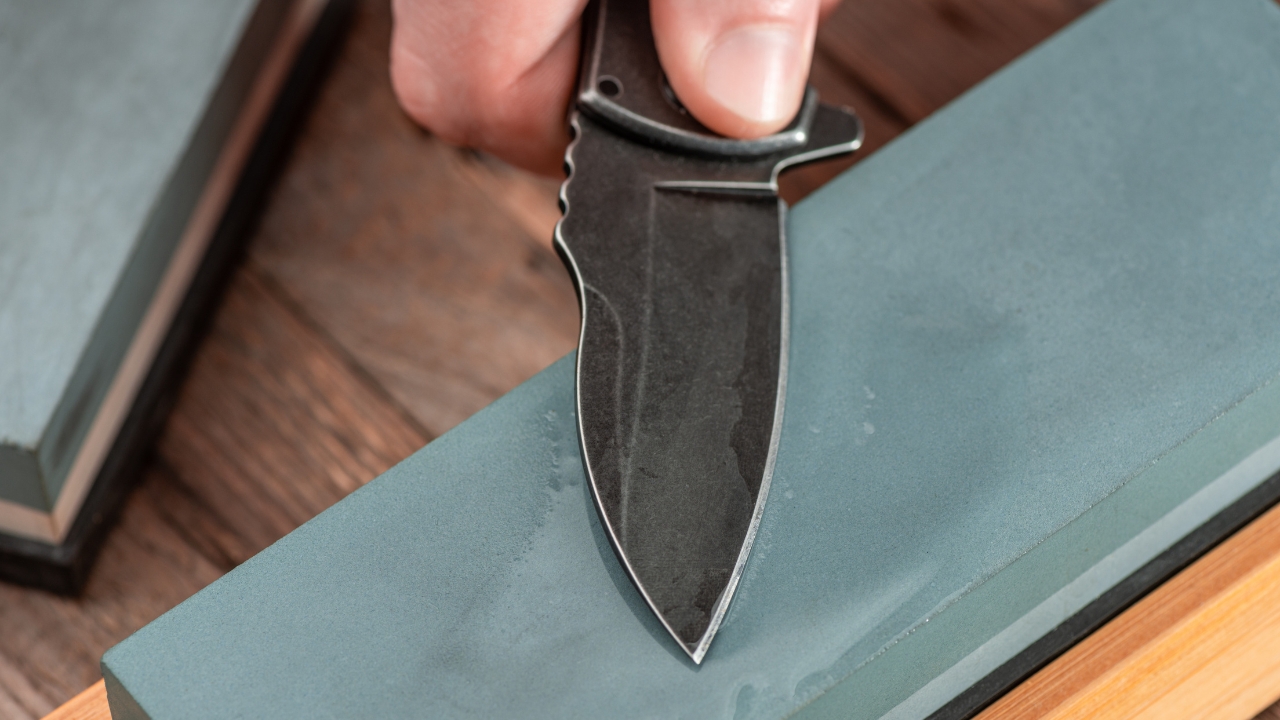
Another part of the core mistake is assuming that any abrasive or gadget labeled “sharpener” is safe for every knife. In reality, the choice of tool matters as much as the technique. Quality water stones in the 1,000 to 3,000 grit range give controlled metal removal and a predictable scratch pattern, which is why many professionals rely on combinations like a Shapton Glass 1,000 / 6,000 Combo Stone for maintaining high‑end brands such as Wüsthof and Shun. By contrast, very coarse pull‑through devices can tear at the edge and leave deep grooves that act as crack starters, especially on harder steels.
Honing rods are another place where good intentions go wrong. Used correctly, a rod realigns a slightly fatigued edge without removing much metal, extending the time between full sharpenings. Used carelessly, it can round over the apex or create a wire edge that fails quickly. Detailed guides on Using the rod correctly stress that a steep angle over 20 degrees can damage the blade, while a shallow, consistent angle preserves the geometry. I find that once people slow down, reduce pressure, and match the factory bevel, their honing sessions stop being a hidden source of damage.
Angle discipline: the geometry that makes or breaks an edge
Behind almost every prematurely ruined knife is inconsistent or inappropriate angle control. Sharpening at a much steeper angle than the original bevel creates a thick, wedge‑like edge that feels dull even when it is technically sharp, while going far too low thins the steel until it cannot support normal use. Maintenance guides on knife sharpening and maintenance emphasize keeping a consistent angle along the entire length of the blade, because even small variations can produce a wavy, uneven edge that grabs in some spots and slides in others.
Honing rods magnify this problem, since many users sweep the knife in a dramatic arc that changes angle from heel to tip. Tutorials on how to use a honing rod correctly list “Common Mistakes to Avoid,” including using the wrong angle and too much force, both of which can undo careful sharpening in a few strokes. I have found that simple visual cues, like imagining a matchbook thickness under the spine or using angle guides during practice, help people lock in a repeatable geometry so they are refining the existing bevel rather than carving a new one every session.
Heat, friction, and why grinders are so risky
When people ask whether powered systems can “ruin” a knife, the answer usually comes back to heat and control. Belt sharpeners and bench grinders can be used safely in skilled hands, but they also make it very easy to cross that 100 ℃ or 212 ℉ danger zone at the edge without realizing it. In one widely cited discussion of whether a belt sharpener can really ruin a knife’s hardness, users describe how a factory edge can arrive already slightly burnt and how additional aggressive passes on a belt can worsen that condition, which is why threads on Can Using a Belt Sharpener Really Ruin a Knife’s hardness focus so heavily on speed, pressure, and cooling.
The same physics show up in industrial cutting tools. Analyses of saw blade failures note that Overheating Overheating is another significant cause of damage, leading to warping, reduced cutting performance, and a shorter lifespan. Knife edges are even more vulnerable because they are thinner and have less mass to absorb heat. I treat any powered sharpening as a last resort for repair work, not routine maintenance, and when it is necessary, I keep passes extremely light, monitor temperature with frequent fingertip checks, and cool the blade in water to avoid crossing that irreversible threshold.
Common home mistakes that quietly wreck blades
Beyond the headline error of overheating and over‑grinding, there is a cluster of smaller habits that add up to the same outcome. Many home sharpeners use tools that are poorly matched to their knives, skip essential steps like soaking water stones, or rush through grits without fully removing the previous scratch pattern. Overviews of Common Mistakes in Home Sharpening list using the wrong tools and incorrect technique as leading causes of damage, and I see that reflected in blades that arrive with hollowed‑out bellies, recurved edges, and tips that have been unintentionally rounded off.
Even on proper stones, rushing the process can be costly. Guides that walk through Common Knife Sharpening Mistakes and How to Fix Them Fast highlight errors like skipping the soak on water stones, which prevents the abrasive from cutting evenly and can lead to glazing or gouging. I also see people chase a stubborn burr by pressing harder instead of adjusting grit or angle, which only fatigues the edge further. The pattern is consistent: impatience and improvisation remove more steel than necessary and leave the blade weaker each time.
How professionals keep edges sharp without burning them out
When I watch experienced sharpeners work, what stands out is not secret equipment but restraint. They use moderate pressure, keep the angle consistent, and stop as soon as the edge is clean and apexed instead of chasing vanity levels of polish. Practical guides on knife sharpening and maintenance stress simple “do’s and don’ts,” like avoiding glass cutting boards, storing knives so edges are not banging into other tools, and using a whetstone rather than a pull‑through for serious work, all of which reduce the need for heavy grinding later.
They also separate maintenance from repair. Light honing and occasional touch‑ups on a medium stone keep the edge aligned, while full reprofiling is reserved for chips or major damage. Articles on Why Proper Knife Sharpening Matters explain that sharpening the wrong way can cause cracks, chips, or uneven sharpness, and that is exactly what careful pros avoid by working slowly and checking their progress often. Many also tailor their approach to the steel, for example avoiding Dry Sharpening on Damascus blades because dry friction can build up and damage the metal, and instead using lubricated stones that keep temperatures low.
Testing, tuning, and knowing when to stop
The final safeguard against ruining a blade is learning to test sharpness accurately and to stop as soon as the edge is fit for purpose. Simple, low‑risk checks like slicing paper, shaving a few arm hairs, or using the three‑finger test give a clear sense of progress without requiring more grinding. Detailed breakdowns of How to test knife sharpness describe how to lightly place the knife edge on the pads of three fingers and feel for bite without pressure, a method that rewards a clean, well‑formed apex rather than a ragged, over‑toothed grind.
Once the edge passes those checks, further sharpening only shortens the knife’s life. That is why I treat the big mistake as a mindset as much as a technique problem: if sharpening is seen as a rescue mission for a badly abused tool, it will always be heavy‑handed and risky. If it is treated as gentle, periodic maintenance on a blade that is protected in daily use, then light strokes on a stone, careful honing, and respect for heat limits keep the steel hard, the geometry intact, and the knife cutting cleanly for years instead of months.