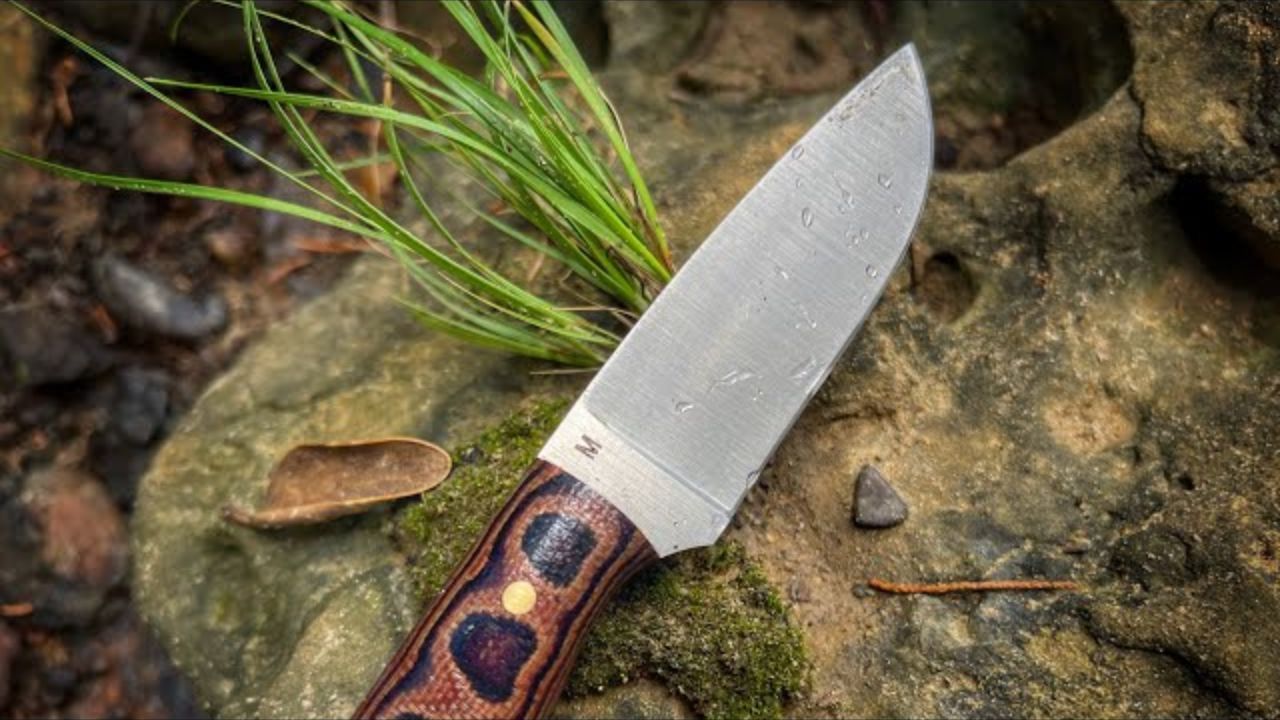
Photo credit: LT Wright Handcrafted Knives/YouTube
If you’ve been shopping knives lately, it probably feels like MagnaCut is everywhere. Every company is dropping a “MagnaCut edition” and guys toss the word around like it’s magic. It isn’t magic, and it’s not automatically the perfect steel for everything, but there’s a reason hunters in particular keep drifting toward it. MagnaCut was designed from the ground up as a knife steel by Dr. Larrin Thomas and made by Crucible using powder metallurgy, with the specific goal of combining high toughness, strong wear resistance, and true stainless corrosion resistance in one package. For people who drag blades through bone, meat, and weather all season, that mix solves a lot of old problems at once.
A stainless steel that behaves more like the hard-use carbons you grew up with
For years you basically had two buckets to pick from: carbon steels that took a beating and sharpened easily but rusted if you looked at them wrong, or high-chrome stainless that stayed pretty but chipped or snapped if you pushed it too hard. Early powder stainless formulas chased corrosion resistance with big piles of chromium carbides, which helped with rust and wear but killed toughness. MagnaCut attacks that issue differently by dialing back chromium, using niobium and vanadium, and relying on a fine powder microstructure so the chromium stays mostly in solution instead of locked up in big carbides. In plain English, you get a stainless blade that shrugs off wet conditions yet holds together more like a good carbon steel when you pry, twist, or drive it through joints and gristle. That “carbon feel, stainless behavior” combo is exactly what hunters have been begging for.
Toughness, edge life, and rust resistance in the same lane
Most steels live on a triangle: if you push wear resistance way up, toughness usually falls; if you chase corrosion resistance, other traits give. Testing from independent reviewers and steel nerds has shown MagnaCut landing in a sweet spot where it can hit hardness numbers around 61–63 HRC with excellent edge retention while still matching or beating classic carbon steels in toughness and outclassing common stainless choices in rust resistance. In the field that plays out as fewer edge chips when you bump bone, more animals processed before you really have to stop and sharpen, and a lot less orange creeping onto the bevel if you forget to wipe the blade immediately after you finish a quarter. It’s not unbeatable in any one category—S90V still wins on pure edge life and certain tool steels still win on brute toughness—but nothing else hits all three traits at this level in a stainless package that can still be sharpened with normal stones.
Why hunters see more benefit from MagnaCut than casual pocket users
A guy who only opens mail and cuts paracord might not notice the difference between MagnaCut and a mid-tier stainless. A hunter who spends days in wet country absolutely will. Big-game knives live in bloody, salty, dirty conditions, often in wet leather or Kydex on your belt or pack where they never really get a chance to dry. That’s the environment where traditional carbon steels rust fast, and a lot of older stainless options either rolled, chipped, or lost bite halfway through a second animal. MagnaCut’s corrosion resistance means you can process a whole elk, wipe the blade on your pants, ride out the hike and the drive, and still not find red creeping along the edge when you finally get home to hot water and soap. Add in the fact that most makers are pairing it with practical grinds instead of thick pry-bar bevels, and you end up with blades that actually slice cleanly through hide and muscle without turning into disposable razors or maintenance projects.
Heat treatment gives makers room to tune knives for real use
One big reason MagnaCut has spread so fast is that it gives knife makers a wide tuning window. Proper heat treatment can push it into the low 60s HRC for aggressive edge holding, or bring it down a touch to boost toughness for bigger choppers and hard users, all while keeping corrosion resistance high. That flexibility lets companies build very different knives—a thin western skinner, a stout camp knife, a small EDC—out of the same steel without forcing them all into the same compromise. Some hunting brands have published their numbers and landed around 61–62 HRC, which is a smart middle ground: plenty of edge life for breaking down several animals, but still forgiving enough that you’re not terrified of a chip every time you bump bone or hit a bit of grit in the hide. For hunters, that means the letters on the blade actually translate into behavior you can feel instead of just marketing noise.
What MagnaCut doesn’t do—and why it still ends up in your scabbard
MagnaCut isn’t a cheat code. You can still dull it on dirty hide, you still need to sharpen it with decent stones, and it can still rust if you abuse it badly enough. There are jobs where other steels make more sense: extreme edge retention in clean cutting can lean toward exotic high-vanadium formulas, and pure impact work might still favor tough tool steels that don’t care about stains. But for the average hunter who wants one blade that can ride a belt from September through late seasons, handle quarters, wood shavings, camp food, and random chores in wet conditions, MagnaCut hits a balance nobody else has really matched so far. That’s why you see it popping up on more western hunting knives, small fixed blades, and even big game-processing rigs from serious makers. The obsession isn’t about chasing a new buzzword; it’s about finally getting stainless performance that doesn’t feel like a compromise once you start cutting.
Like The Avid Outdoorsman’s content? Subscribe to our newsletter so you never miss an article.
Here’s more from us: