Photo credit: Marisa Subannarat/Shutterstock.com
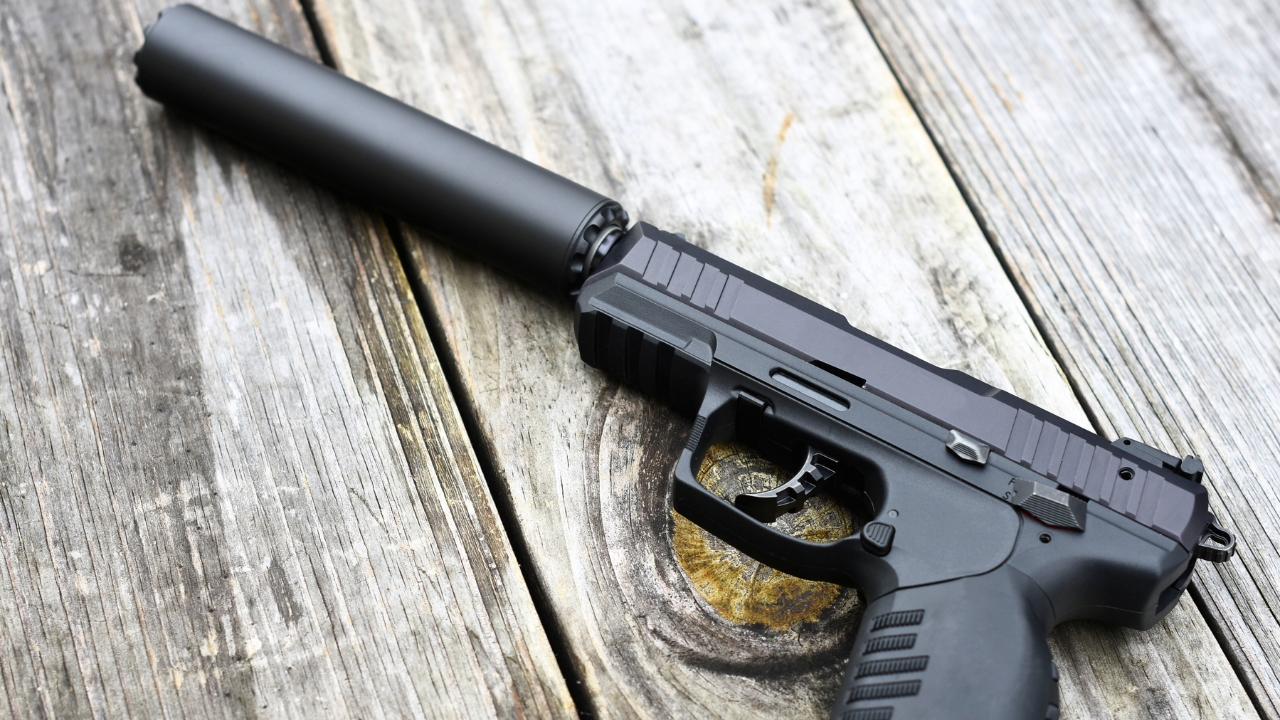
Suppressor buyers are staring at a once in a generation rule change, and the market is already reacting. With the long standing federal tax about to disappear and current approval times collapsing to record lows, the usual slow burn of National Firearms Act paperwork has turned into a sprint. The result heading into January is a chaotic mix of bargain hunting, fear of shortages, and genuine confusion about what to do next.
I see three overlapping forces driving the frenzy. First, the promise of a cheaper path into suppressor ownership is pulling new shooters off the sidelines. Second, existing enthusiasts are trying to game the calendar, weighing today’s fast approvals against tomorrow’s lower costs. Third, manufacturers and dealers are scrambling to guess how big the wave will be, and whether their supply chains can keep up once the calendar flips.
The tax stamp reset that lit the fuse
The core disruption is simple: the long standing federal tax on suppressors is scheduled to vanish at the start of the new year. Under current law, buyers still owe a $200 tax stamp on each silencer, but that fee is set to drop to zero when the new rules take effect. One detailed breakdown notes that Beginning January 1, 2026, the tax stamp fee will be completely eliminated, which dramatically lowers the entry cost for anyone who has been on the fence. For a buyer looking at two or three cans, that is hundreds of dollars in savings that can be redirected into optics, ammunition, or a better host rifle.
Industry voices are already spelling out what that means in practice. One analysis of the change frames it bluntly: when costs drop and barriers fall, people tend to act, and the expectation is a wave of new suppressor buyers once the $200 federal tax goes away Jan. 1. That is not just a theoretical policy tweak, it is a direct price cut on a regulated product that has always carried extra friction. The looming reset is why so many shooters are trying to time their purchases to the calendar, and why suppressor buying is getting so volatile as January approaches.
Record fast approvals collide with a looming deadline
At the same time that the tax is about to disappear, the bureaucratic side of suppressor ownership has suddenly become less painful. One major retailer reports that it is now seeing customers receive suppressor approvals between 1 and 21 days on average, which it describes as the fastest times it has ever tracked. For a process that many shooters still associate with months of waiting, that kind of turnaround changes the mental math. It means a buyer who starts paperwork today has a realistic shot at shooting suppressed within the same month, instead of hoping for a stamp by the next hunting season.
That speed is part of what makes the current moment so tense. On one side, there is the promise of a $0 tax stamp if a buyer waits until after the rule change. On the other, there is the reality that approvals are moving quickly right now, before the expected surge hits. I see buyers trying to thread that needle, asking whether it is smarter to lock in today’s fast processing with the old tax or gamble on tomorrow’s cheaper stamps and risk getting stuck in a backlog once everyone else jumps in.
“Buy now or wait?” becomes the defining question
That tension has turned a dry policy shift into a very personal decision for individual shooters. In one widely shared Aug video titled “Buy Silencer Now or Wait for the $0 Tax Stamp?”, the host walks through the dilemma in plain language, weighing the pain of paying the tax against the risk of longer waits after the change, and the clip has become a shorthand reference point for the debate. The fact that a casual Aug range video can shape buying behavior tells you how hungry people are for guidance in a moment when the rules and incentives are shifting at the same time.
On Reddit and other forums, the same question keeps resurfacing in slightly different forms. One thread in r/COGuns titled “Buy Suppressor now or can I wait until 2026?” features a user named Warriorcomplex bluntly advising that if you want to save the $200 then buy now and accept the current rules. Another r/ar15 discussion titled “Should I wait till next year to get a suppressor or get it now?” has a Comments Section where users like Moto272, eggcheeseburger, and a self described Top 1% Commenter trade advice, jokes, and a simple “Haha” at the idea of trying to perfectly time a government queue. The throughline is that nobody has a guaranteed answer, but everyone is trying to read the same tea leaves.
Community forecasts: “It’s gonna be chaos”
When I look at how ordinary buyers are talking about January, the word that keeps surfacing is chaos. In r/liberalgunowners, a thread titled “How long do you think suppressor wait times will be” has a Comments Section where one user predicts it is going to be chaos for the first 3 months, then settle back to something like the current normal. That kind of grassroots forecasting may not be scientific, but it reflects a widely shared expectation that the system will be flooded as soon as the tax disappears, regardless of how well the agencies prepare.
Other corners of the community are just as blunt. In r/suppressors, a Sep thread titled “Are You Waiting Until Jan 1st?” features one user bragging about a 2 day wait time and another, oo10inz, chiming in with “this 100%” in agreement. The subtext is clear: people who are enjoying today’s fast approvals are skeptical that those timelines will survive a surge of new applications. A separate r/NFA discussion labeled ““Suppressor Rush”” has a Dec post where one user lays out What they anticipate as a non industry observer, predicting a Short spike in eForm volume in January driven by curiosity and the new rules. Taken together, these threads read like a crowd sourced warning label on the coming transition.
FFLs and the limits of gaming the calendar
Some buyers are trying to get clever, asking whether they can start the process now but delay key steps until after the tax change. A r/NFA thread titled “Can I buy a suppressor now and tell my FFL to wait until Jan 1st to …” captures that impulse in real time. In the Comments Section, users like DMofffff and DIYmike88 keep repeating a simple point: You need to be asking the FFL of your choice that question, because the dealer is the one who has to live with the paperwork and the risk. That back and forth highlights a hard truth about this moment: there is only so much calendar gaming the system will tolerate, and the people with licenses on the line are not eager to improvise.
Regulatory guidance backs that up. One compliance focused explainer aimed at dealers notes that Under current law, the $200 suppressor tax still applies until January 1, 2026, and that even after the fee is removed, NFA transfers will still be required. The same guidance tells dealers to Expect a rush of NFA items being transferred and manufactured as the date approaches. In other words, the paperwork burden is not going away, only the payment, and that limits how much flexibility there is for creative timing schemes.
Manufacturers brace for shortages and spikes
On the supply side, the industry is already warning that the combination of record demand and a regulatory cliff could strain production. A detailed 2026 guide to regulated firearms gear lists several Factors contributing to expected shortages, starting with the fact that Demand is already at record highs. That same analysis notes that Many buyers are explicitly waiting for January to file, and that Manufacture capacity is finite even in the best of times. When you stack those realities on top of each other, the risk of bare shelves and long backorder lists becomes hard to ignore.
That pattern is not unique to firearms. Broader supply chain research points out that, even without exogenous shocks, many businesses are now facing markets that look very different from anything they have seen before, with volatility that is far more extreme than in the past. One analysis of global logistics describes how, in any case, even without such exogenous shocks, companies are struggling to secure inputs in a landscape where demand can spike overnight. Suppressor makers are not immune to those pressures, and the coming tax change effectively guarantees a demand shock that will test how resilient their production lines really are.
Stockpiling, gluts, and the tariff playbook
There is also a risk that the industry will overcorrect. When companies see a regulatory shift on the horizon, they often try to get ahead of it by building inventory, a behavior that has been documented in other heavily regulated sectors. One study of trade policy notes that Anticipating future tariffs or regulatory shifts, companies often stockpile goods, which can lead to temporary gluts followed by shortages as the system rebalances. If suppressor manufacturers and distributors follow that playbook, the market could see a flood of inventory in the short term, followed by a painful hangover if demand does not match the most aggressive forecasts.
For buyers, that dynamic cuts both ways. In the near term, aggressive production and stocking could mean more models on shelves and more room to negotiate on price, especially for less popular calibers or finishes. Over a longer horizon, if the expected wave of new owners materializes and burns through that inventory, the same stockpiling behavior could leave latecomers facing higher prices and fewer choices. The suppressor market is small compared with automotive or consumer electronics, but the underlying economics are similar, and the same feedback loops that have whipsawed other supply chains are now starting to show up here as January approaches.
How I would navigate the chaos as a buyer
Faced with this mix of incentives and risks, I would start by being brutally honest about my own priorities. If my main goal were to shoot suppressed as soon as possible, I would look hard at today’s reported 1 and 21 days approval window and weigh that against the certainty of paying the current tax. If, on the other hand, I were more price sensitive and already owned other firearms that could carry the load for a few extra months, the promise that Beginning January the tax stamp fee will be eliminated would be hard to ignore. In that scenario, I would accept the risk of longer waits in exchange for keeping that cash in my pocket.
I would also pay close attention to how local dealers are preparing. Threads like the r/NFA ““Suppressor Rush”” and the r/NFA discussion about whether you can ask an FFL to delay filing show that the people on the front lines are already thinking about capacity and risk. I would ask my dealer directly how they expect to handle a surge, whether they anticipate pausing new submissions if the queue gets too long, and how they interpret the guidance that buyers should Expect a rush of NFA items. In a moment when suppressor buying is getting chaotic heading into January, the most valuable asset a buyer can have is not a perfect prediction of wait times, but a clear, candid conversation with the people who will actually process the paperwork.
Like The Avid Outdoorsman’s content? Subscribe to our newsletter so you never miss an article.
Here’s more from us: