
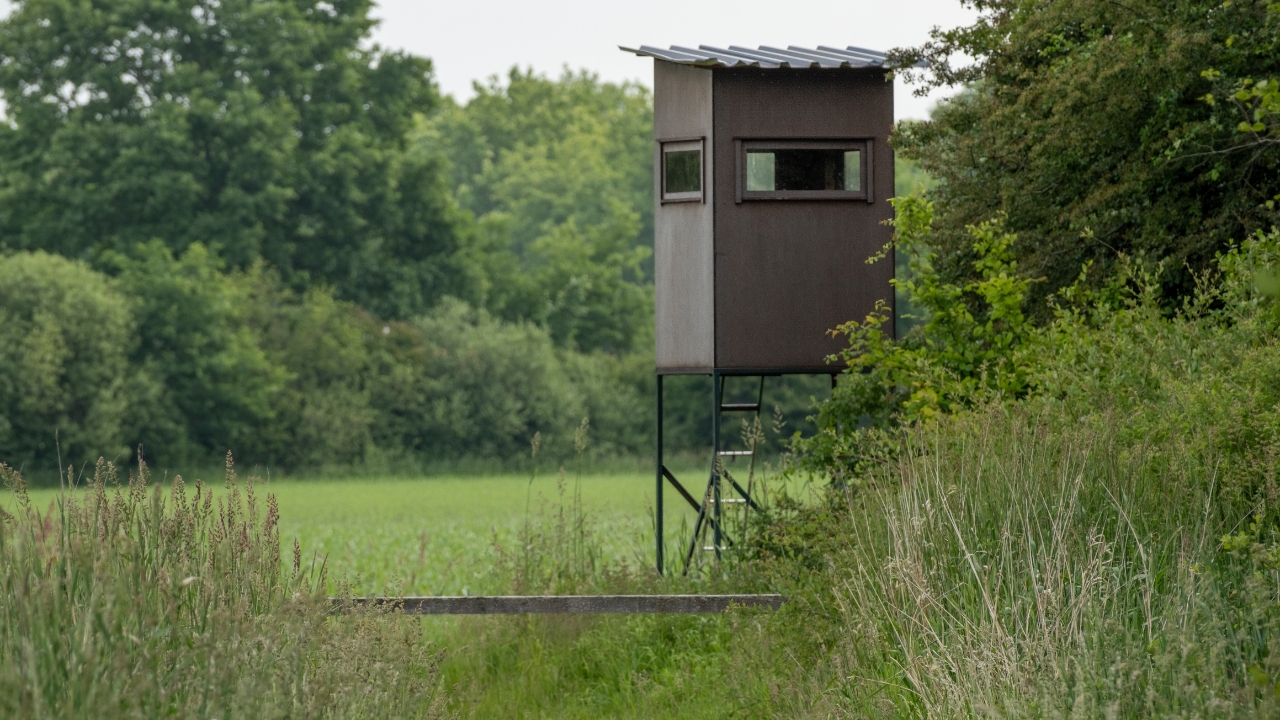
Photo credit: r.rosenschild/Shutterstock.com
I had talked myself into that stand location for days before I ever climbed into it. On the map, it looked right. Walking it in person made it look even better. There was solid sign, a clean shooting lane, and enough cover around the tree to make me feel tucked in without being boxed in. I had a trail coming off a bedding area, a pinch point that looked like it ought to funnel movement, and just enough confidence to convince myself I had figured the whole thing out. That is usually when hunting has a way of reminding a man he has not figured out nearly as much as he thinks. I went in that afternoon believing I had the stand in the perfect spot, and for a little while it felt that way. Then the wind shifted just enough to ruin everything, and I got a firsthand reminder that a good-looking setup is not the same thing as a huntable one when the air starts doing something you did not plan for.
A spot can look perfect and still be wrong
That is one of the harder lessons to learn when you spend enough time scouting and hanging stands. It is easy to fall in love with what a spot looks like on the ground. Fresh tracks, good trails, droppings, rubs, and an obvious route between cover and food can make a tree seem like the answer. The problem is that deer do not care how good a setup looks to the hunter sitting in it. They care about pressure, movement, sound, and especially wind. I had built that stand location around where I wanted the deer to be instead of being honest about how scent would travel when the conditions got even a little unstable. A steady, predictable wind is one thing. A breeze that swirls, drops, or bends with the terrain is another. I ignored that risk because everything else about the spot made sense, and that is how a man ends up blaming the wind for exposing a mistake he made before the hunt ever started.
The woods changed before I admitted it
What got me was not some dramatic weather event. It was a subtle change, the kind that will burn you because it does not feel serious at first. I started with a decent wind in my favor, and I sat there feeling smart while the woods settled down. Then, as the afternoon went on, the air started doing that thing it sometimes does near draws and thicker cover where it stops feeling steady and starts moving in little uncertain pockets. I noticed it on my face first, then in the leaves, then finally in my gut when I realized it was not pushing the same direction it had been. I should have trusted that feeling and taken it seriously right then. Instead, I stayed put because I wanted the spot to keep being as good as I had convinced myself it was. That is a bad habit in hunting. Sometimes the woods tell you before the deer do that the plan is going bad, and if you ignore that warning, the deer usually finish the lesson for you.
The deer told me exactly what I’d done wrong
The buck never had to blow, stomp, or make a scene for me to know I had been made. That is part of what made it sting. He came in the way I hoped he would, using the trail I had watched and imagined for days. For a few seconds, everything looked like it was about to come together. Then he hit that edge of my scent and changed. His body language tightened up, his pace shifted, and the whole encounter went from promising to finished without much drama at all. He did not need to panic because he already had the information he needed. He angled off, stayed just far enough out of trouble, and disappeared like a deer that had dealt with hunters before. Watching that happen from a stand you believed was perfect will humble a man fast. It is one thing to get beaten by a deer doing something unpredictable. It is another to get beaten by a deer reacting exactly the way a deer ought to react when your scent starts drifting into the wrong place.
I was too committed to the setup and not committed enough to the truth
Looking back, that hunt had less to do with bad luck than I wanted to admit at the time. I had become attached to the stand itself. I liked the tree, liked the sign, liked the access, and liked how it all fit together in my head. That made me less honest about its weaknesses. A lot of us do that once we have put time into hanging a set and trimming lanes. We want the work to pay off, so we keep giving a location credit for being better than it really is. But deer hunting gets expensive in a hurry when you keep sacrificing real opportunities to protect your pride in a setup. Since then, I have gotten a lot more willing to call a stand what it is. Some trees are good only on one wind. Some are good only in the morning or only during specific movement windows. Some look incredible and are still not worth hunting much at all. That is not failure. That is just hunting honestly instead of romantically.
Wind tools help, but they do not fix bad judgment
I do use wind check powder now more consistently than I used to, because it gives you a quick read on what the air is doing instead of what you hope it is doing. The Dead Down Wind bottle Bass Pro carries is the kind of simple item that can save a hunt if a man actually pays attention to it. Good outerwear that stays quiet when you shift around matters too, because once conditions get touchy, extra movement is the last thing you need. But gear only helps if you are willing to act on what it tells you. A puff bottle is not much use to a hunter who sees the drift going the wrong direction and talks himself into staying put anyway. That was me that afternoon. I had enough information to know the stand was slipping out of my favor, but I wanted the sit to work badly enough that I treated the evidence like a minor inconvenience instead of the main story.
I judge stand locations differently now
That hunt changed the way I evaluate a “perfect” stand. Now when I look at a setup, I care less about whether it gives me a pretty view and more about whether it stays huntable when the day starts acting like a real day instead of a textbook one. I want to know where my scent goes if the wind softens, if thermals start moving, or if the terrain pulls air in a direction the forecast does not show. I pay more attention to how deer are likely to react if they catch just a little bit of me instead of assuming they will come marching down a trail because the sign says they should. Some of my better hunts since then have come from less impressive trees in less obvious places simply because they handled changing wind better. That is not as fun to brag about when you are hanging stands in the offseason, but it matters a whole lot more when a good buck is working in and the hunt is finally real.
The perfect spot is the one that still works when conditions get imperfect
That is probably the biggest thing I took from the whole mess. A stand is not perfect because it looks deadly in ideal conditions. It is perfect only if it keeps enough of its advantage when things stop being ideal, because that is what real hunting usually is. Winds shift. Thermals change. Deer circle. Pressure alters movement. The woods are rarely interested in holding still just because you picked a nice tree and got there early. These days I would rather hunt a location that feels a little less exciting on paper but gives me a better margin for error when the wind starts wandering around. There is a lot less ego in that way of thinking, but there is a lot more meat and more mature decision-making in it too. That stand taught me something I needed to learn: the setup is not as perfect as I think it is if a small wind change can turn me from hunter to warning sign in a matter of minutes.
Like The Avid Outdoorsman’s content? Subscribe to our newsletter so you never miss an article.
Here’s more from us:


