Photo credit: YAKOBCHUK VIACHESLAV/Shutterstock.com
Spend enough time around gun counters, product launches, and online gear talk, and you start noticing how often “upgraded” really just means “different enough to sell again.” A lot of features get pitched like automatic improvements, as if every shooter in America has been waiting for one more add-on, one more lever, one more control surface, or one more modern touch to finally make a gun complete. But out in the real world, where rifles ride in truck seats, pistols get carried in sweat and lint, and shotguns get used in bad weather instead of showroom lighting, some of those upgrades do not make a gun more capable. They make it busier. They make it easier to snag, easier to bump, easier to overthink, and harder to trust when things need to stay simple. One of the biggest offenders is the oversized or overbuilt control package: giant charging handles, extended magazine releases, enlarged slide stops, flared controls, and other parts that sound smart on paper but can make a gun less useful for the people actually carrying and using it.
Bigger controls are not always better in real use
There is a reason practical field guns and hard-use defensive guns stayed pretty plain for a long time. It was not because nobody had thought of making controls bigger. It was because every external change brings tradeoffs, and those tradeoffs start showing up fast once a gun leaves the bench. An oversized charging handle may look like a solid improvement on a rifle, especially if a shooter is thinking about easier manipulation with gloves or faster access under stress. But once that same rifle starts getting slung, dragged through brush, shoved into a case, or carried around a property all day, that bigger handle can catch on gear, poke into your side, and generally turn a clean setup into one that feels like it always has something hanging off it that should not be there.
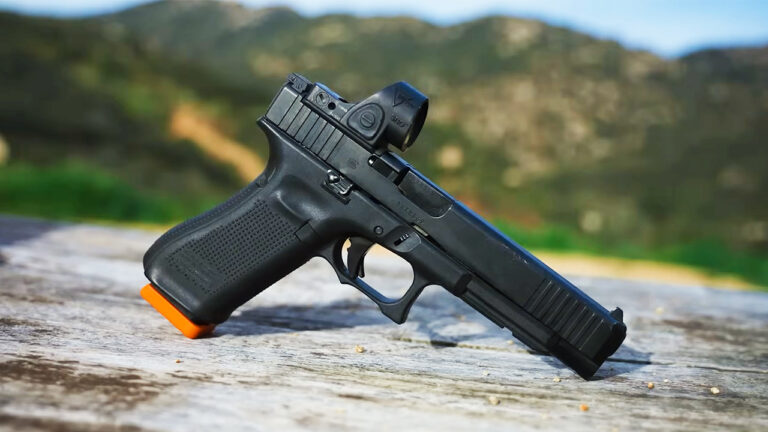
The same thing happens with extended magazine releases and enlarged slide stops on handguns. A feature that makes sense for a competition shooter trying to shave fractions of a second can create new problems for a guy carrying a pistol every day or using one around trucks, blinds, fences, and work clothes. Bigger controls can get bumped when the gun is pressed against a seat, a holster, a jacket, or your own body. That can mean magazines not seated the way you thought they were, controls activated when you did not mean to touch them, or a pistol that behaves a little differently under pressure than it did when you were casually running drills on a square range. That is the kind of “upgrade” people defend right up until it annoys them enough times in a row.
The market loves visible upgrades because they are easy to sell
A clean trigger, reliable extraction, consistent feeding, and a barrel that actually shoots are important, but those are not always the easiest things to advertise to somebody scanning product listings or standing in a store comparing one model to another. Visible features win attention fast. If a gun has oversized controls, aggressive cuts, extra buttons, or some kind of enhanced operating system, it looks like you are getting more for your money. A manufacturer can point to it instantly. A buyer can see it instantly. That makes it easy to package as progress, even when the actual benefit depends heavily on how the gun will be used and by whom.
That is where a lot of people get tripped up. They buy according to the fantasy use case instead of the real one. They imagine themselves needing huge controls in some high-speed, high-stress moment, but they do not picture what those same controls feel like during months of ordinary carry, hunting, ranch work, or range use. They do not think about the gun rubbing a truck console, dragging under a backpack strap, riding against a chest rig, or coming out of a scabbard in brush. A feature can be helpful in one narrow context and still make the gun worse everywhere else. That does not make it garbage. It just means the word “upgraded” gets abused when it should probably be replaced with “specialized.”
Competition features often get copied into the wrong roles
A lot of the worst crossover mistakes happen when competition-driven features get copied straight into guns meant for defensive carry, general field use, or hard outdoor use. Competition gear has its place, and some of it works extremely well within that place. But there is a big difference between a handgun tuned for speed on a timer and one that needs to stay secure, simple, and predictable in daily life. The same goes for rifles built to impress on social media versus rifles that need to ride around a farm, get dusty in a side-by-side, or work after being ignored in a safe for months and then suddenly called on. Once a market decides a feature looks “serious,” it spreads way beyond the people who actually benefit from it.
That is how shooters end up with guns that feel a little over-accessorized for what they really do. A bigger control here, a sharper edge there, a more aggressive profile somewhere else, and suddenly the gun is technically more feature-rich but practically less pleasant to carry and use. People put up with that because the culture around buying guns sometimes rewards visible upgrades more than quiet reliability. You can brag about enhanced controls. You cannot post a glamorous picture of a gun simply not causing problems for five years. But that boring kind of performance is exactly what matters most to the hunter, rancher, homeowner, or regular shooter who is not trying to build a personality around gear.
Useful depends on context, not on the sales pitch
There are shooters who genuinely benefit from larger controls. Somebody with heavy gloves in freezing weather, somebody managing hand-strength issues, or somebody building a gun for a very specific role may have a completely legitimate reason for wanting them. That is not the problem. The problem is treating a role-specific change like a universal improvement. It is the same bad logic that sells people giant optics on rifles meant to be carried all day or convinces them that every shotgun needs tactical furniture even if it mostly rides in a duck blind. Once people get trained to think newer and larger automatically means better, they stop asking the only question that matters: better for what?
That question cuts through a lot of nonsense. Better for concealment? Maybe not. Better for rough carry? Maybe not. Better for a rifle that gets hauled through timber, mesquite, sage, or thick creek bottoms? Maybe not. Better for a pistol that spends all day in a holster under normal clothes? Maybe not. Better for somebody who practices a lot and understands exactly why they want that change? Sure, sometimes. But that is a much narrower answer than the marketing usually suggests. Guns are tools, and tool choices get stupid fast when people start shopping by buzzwords instead of by actual use.
The best upgrades usually make the gun disappear, not stand out
The funny thing is that truly useful improvements often do the opposite of flashy “enhancements.” A good upgrade tends to make the gun easier to live with, easier to trust, and easier to run without thinking about it. Better sights, a more durable finish, a smoother trigger that stays reliable, a stock that actually fits, a sling setup that carries well, or an optic that holds zero and does not wash out at the worst time, those things matter because they reduce friction instead of adding it. They do not demand attention every time you pick the gun up. They just help the gun do its job.
That is why the oversized-control craze misses the mark so often for ordinary shooters. It gives people something they can see and talk about, but not always something they need. In plenty of cases, it turns a straightforward gun into one that is more awkward, more snag-prone, and more dependent on the user adapting to the feature instead of the feature serving the user. A lot of gun owners would be better off leaving the controls alone, spending the money on ammo, and finding out what actually bothers them after honest use. Most of the time, experience trims away a lot of fake needs. The people who shoot and carry long enough usually come back around to the same conclusion: a gun that stays out of its own way is worth more than one that looks upgraded in a catalog.
Like The Avid Outdoorsman’s content? Subscribe to our newsletter so you never miss an article.
Here’s more from us: