
Some guns don’t stick around because of hype or nostalgia. They stick around because they worked when they were new, they keep working now, and people still trust them for real jobs—hunting, defense, duty use, and hard range time. When a model stays relevant across decades, it usually means the design was right the first time. It also means the aftermarket support is there, parts exist, and enough shooters have carried them long enough to learn what actually matters.
This isn’t about museum pieces. These are guns with history that still make sense today—because you can buy them, run them, maintain them, and count on them. If you want something proven, these are the kinds of names you keep seeing for a reason.
Colt Single Action Army

The Colt Single Action Army is tied to American history in a way few firearms can touch, but it’s not only a relic. In modern production and quality reproductions, it’s still a working revolver that teaches you to shoot with intention. One deliberate shot at a time makes you honest about grip, sights, and trigger control.
It also holds up because the design is straightforward and durable when cared for. Cowboy-action shooters keep it running hard, and hunters still carry stout single-actions in similar patterns because they handle heavy loads well. You’re not buying one to chase capacity. You’re buying it because it’s a piece of history that still functions like a real tool.
Winchester Model 1894

The Winchester 1894 didn’t just show up in history—it helped write it. In .30-30, it became the deer rifle for regular people, and that legacy still matters because it still works. Even today, a good 94 carries easy, points fast, and does exactly what you need in timber and brush.
Modern ammo has made the old .30-30 more capable than many folks realize, and peep sights or a scout-style optic setup can turn a classic lever gun into something you’ll actually hunt with. It’s not a long-range rifle, and it doesn’t need to be. For the distances most whitetails get shot, it’s still a practical, effective choice.
Marlin 336

The Marlin 336 is one of those rifles that feels like it was made to be used hard. It’s accurate enough for real hunting, it’s easy to maintain, and the solid-top receiver makes it simple to run a conventional optic setup without fighting the rifle. That’s part of why the 336 stayed relevant while other lever guns became more of a novelty.
In .30-30 or .35 Remington, it’s still a serious woods rifle. It carries well, cycles smoothly when it’s broken in, and it tends to shrug off the kind of bumps and weather that happen on real hunts. If you want “classic” without giving up practical, this is one of the best examples.
Remington 870

The Remington 870 earned its reputation the old-fashioned way: it showed up everywhere and kept working. It’s been a bird gun, a deer gun, a patrol shotgun, and a home-defense tool, and it can still be any of those today depending on how you set it up. That modular flexibility is a big part of the staying power.
You can run it with a field barrel one season and a short defensive barrel the next. Parts, accessories, and know-how are everywhere. The action is easy to understand and easy to keep running if you do basic maintenance. When a shotgun has that kind of long track record, it’s not an accident.
Winchester Model 70

The Winchester Model 70 has been called “The Rifleman’s Rifle” for a long time, and it earned that reputation by being a bolt gun people could trust. In controlled-round-feed form, it’s especially respected for hunting because feeding is consistent in ugly conditions, not just on a clean range bench.
What keeps it going strong is the way it carries and shoots. The ergonomics are right, the safety is practical, and the rifle tends to balance like a hunting rifle should. Whether you’re chasing deer, elk, or something bigger, a good Model 70 feels like it belongs in the field. It’s an old name, but it’s still a modern choice.
Remington 700

The Remington 700 is one of the most influential bolt-action rifles in modern America, and that influence didn’t come from one niche. Hunters bought them by the truckload, and the design became a foundation for precision builds because it’s accurate, easy to work on, and supported by a massive aftermarket.
Even with all the newer rifles out there, a well-set-up 700 still makes sense. You can tune triggers, swap stocks, mount optics easily, and tailor it to your hunting style. The platform’s popularity means parts and smithing knowledge are everywhere. If you want a rifle with a deep track record and endless support, the 700 has staying power for real reasons.
Ruger 10/22

The Ruger 10/22 is the rare gun that almost everyone has shot, and that’s not because it’s flashy. It’s because it works. It’s reliable, easy to maintain, and it makes .22 LR fun in a way that keeps you practicing. For small game, plinking, and training new shooters, it’s still one of the best tools you can own.
It’s also endlessly adaptable without needing to become complicated. You can keep it stock and be happy, or you can build it into a laser-accurate little rifle with better barrels, triggers, and optics. The fact that it’s still thriving after decades says everything. It didn’t survive on nostalgia—it survived because people keep using it.
Smith & Wesson Model 19

The Smith & Wesson Model 19 is one of the revolvers that defined what a practical .357 Magnum could be. It balanced carry comfort with real power, and it became a favorite among law enforcement when revolvers were still the standard. That history matters, but so does the way it shoots.
A good Model 19 points naturally, the trigger can be excellent, and it’s easy to shoot well with .38 Special while still giving you .357 capability when you need it. People still chase them because they’re genuinely useful revolvers, not just collectibles. If you want an old-school sidearm that still makes sense, this is a name that keeps coming up.
Colt 1911

The 1911 has been around so long that people forget how radical it was when it showed up. A serious fighting pistol with a great trigger, good sights (for its era), and a design that could be tuned and maintained made it more than a service gun—it became a platform. And it’s still going strong because it still shoots well in the hands of someone who puts in the time.
Modern 1911s range from basic working guns to refined carry pistols, and parts support is deep. You do need to respect maintenance and magazine quality, but that’s true of most things you trust. If you like a pistol that rewards skill and feels steady under recoil, the 1911 still earns its place.
Browning Hi-Power

The Browning Hi-Power is one of the original “modern” 9mm service pistols, and you can still feel why it mattered. It carries slim, points naturally, and feels like it was shaped by someone who actually cared about how a pistol fits the hand. For generations, it served military and police roles around the world.
Even today, it holds up as a practical shooter. The design isn’t perfect by modern standards, but it’s still a reliable, accurate pistol with real history behind it. Modern clones and updated versions keep the spirit alive while improving sights and controls. If you want a classic 9mm that still feels alive on the range, the Hi-Power belongs in the conversation.
Glock 17

The Glock 17 changed the handgun world whether people like it or not. It proved that a simple, striker-fired pistol could be reliable, durable, and easy to run under stress. That’s why it became a standard across law enforcement and military units worldwide, and that’s why it’s still going strong.
It’s not glamorous, but it’s predictable. The trigger is consistent, the gun is easy to maintain, and it runs through abuse that stops more complicated pistols. Parts and magazines are everywhere, and the ecosystem is massive. If you want a pistol that’s been tested by millions of shooters in every condition imaginable, the Glock 17 is about as proven as it gets.
Beretta 92/M9

The Beretta 92 earned its place through sheer service time and real-world use. As the U.S. military’s M9, it lived through decades of hard carry, training, and deployment. That kind of history doesn’t happen to a fragile pistol. The 92 also shoots soft for a 9mm, and the longer sight radius helps you shoot it well.
The size is the tradeoff. It’s not a tiny carry gun, and that’s fine because it was built as a duty pistol. With good magazines and basic maintenance, it’s a steady, reliable performer. People still pick them up because they want a pistol that shoots smoothly and has a history you can actually feel.
SIG Sauer P226

The SIG P226 earned respect by being a serious duty pistol that could live a hard life. It’s known for solid reliability, a practical size for service use, and accuracy that doesn’t require special treatment. The controls are straightforward once you learn them, and the gun tends to feel steady when you’re shooting fast.
It also stuck around because it works for people who run guns a lot—training, duty carry, and long range sessions. The double-action/single-action setup isn’t for everyone, but it rewards good fundamentals and gives you a level of control many shooters appreciate. If you want a proven 9mm service pistol that still feels like a professional tool, the P226 fits.
Ruger Blackhawk
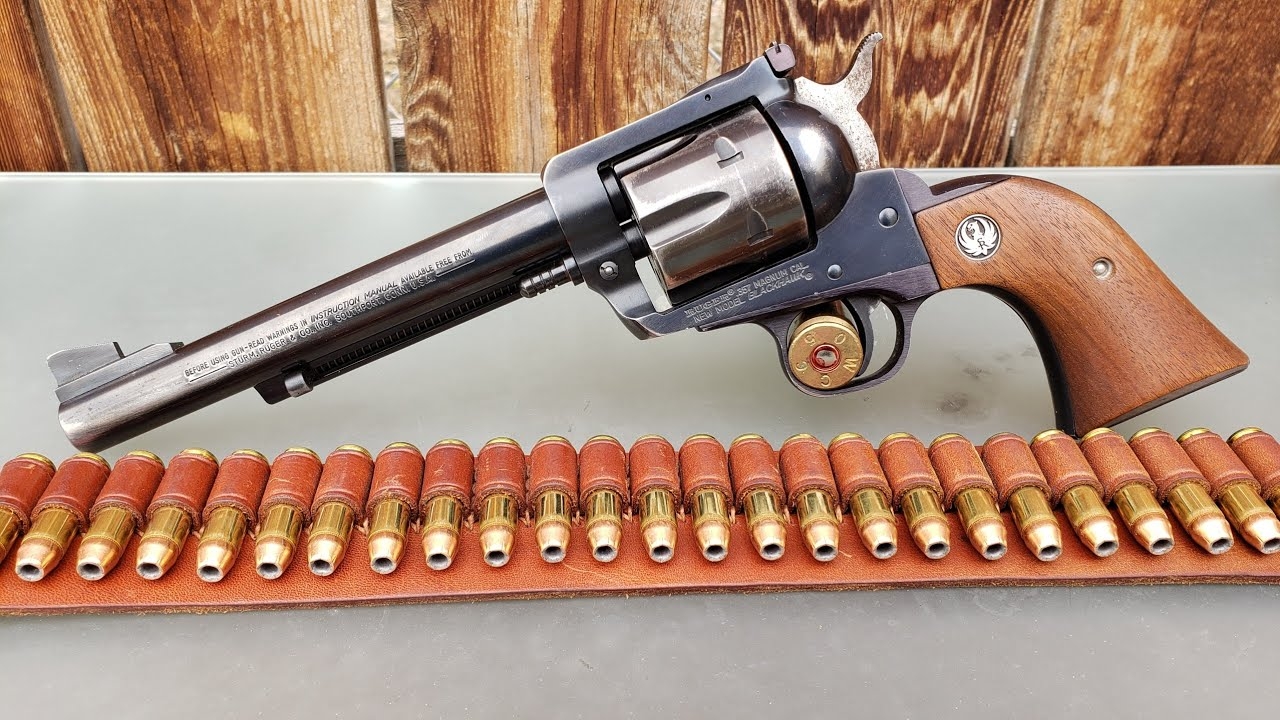
The Ruger Blackhawk is proof that a single-action revolver can be more than tradition. It’s strong, dependable, and built to handle hard use, including heavy loads in certain chamberings. That’s why it became a favorite for hunters and outdoorsmen who want a revolver they can actually lean on.
It’s also a gun you can live with. The sights are usable, the grip design helps manage recoil, and the overall build tends to hold up for decades. You don’t carry a Blackhawk for speed reloads. You carry it because it’s a durable sidearm that still makes sense in the backcountry and at the range, year after year.
AR-15 (modern pattern)

The AR-15 earned its place in history by becoming America’s most common rifle pattern, and it’s still going strong because it’s adaptable and reliable when built right. It can be a home-defense rifle, a varmint rifle, a training rifle, or a competition gun depending on how you set it up. Few platforms are that flexible without becoming complicated.
The key is quality parts and a realistic setup. A well-built AR with good magazines and proper lubrication runs hard and is easy to maintain. The modular design also means you can fit the rifle to your body and your purpose instead of forcing yourself to adapt to the gun. That’s why it’s still thriving, not fading.
AK-47/AKM pattern

The AK pattern earned its reputation in the harshest ways possible: mass use, rough conditions, minimal maintenance, and still functioning. That history is why the design is still popular today. It’s not a precision rifle by nature, but it’s a dependable working gun that handles dirt, neglect, and hard handling better than many rifles people baby.
Modern AKs can vary widely in quality, so you still have to buy smart. But the core idea remains: a simple, rugged rifle that keeps running. The ergonomics aren’t as refined as newer designs, and optics mounting takes more thought. Even so, if you want a rifle with a proven track record that’s still relevant in real-world use, the AK stays in the fight.
Like The Avid Outdoorsman’s content? Be sure to follow us.
Here’s more from us:


