Photo credit: Erlyani999/Shutterstock.com
We may earn revenue from products featured on this page through affiliate links.
A “one-shot” pistol isn’t magic—it’s a handgun that lets you call your shot and watch it land where the front sight (or dot) was when the trigger broke. That comes down to boring stuff that matters: a consistent barrel lockup, a clean trigger, sights you can actually see, and a grip shape that lets you press straight back without steering the gun. When all that lines up, your first round—cold gun, cold hands, no warm-up—can feel unfair.
The pistols below have reputations for real-world accuracy because they’re built with tight, repeatable mechanics and shootable triggers, not because they “shoot themselves.” Put in the reps, and these are the kinds of handguns that make a single deliberate shot at distance feel routine instead of lucky.
SIG Sauer P210

If you’ve ever fired a P210 and watched the hole appear exactly where your sights were parked, you get why it’s a legend. The slide-to-frame fit and the way the barrel locks up are built for repeatability, and the trigger tends to break like you meant it, not like you fought it. That’s the recipe for a confident first round at 25 yards and beyond, even when the gun is cold.
You still have to do your part—grip pressure, sight focus, and a straight press—but the P210 doesn’t add drama. When you’re working slow-fire groups or taking a “one and done” shot on steel, it rewards good fundamentals with precision that surprises people who think service pistols are the ceiling. Feed it decent ammo and it will tell you the truth about your trigger control.
CZ Shadow 2

The Shadow 2 has become the default answer when someone wants a pistol that makes accuracy feel easy. The weight soaks up wobble, the grip angle points naturally for a lot of hands, and the trigger—especially in single action—lets you break a shot without yanking the muzzle off line. The sights stay readable even when you’re breathing hard.
Where it really shines is the first shot from a ready position. Settle the sights, prep the trigger, and the gun tracks flat enough that you can call the hit before the plate rings. It’s not a carry pistol, but as an accuracy benchmark it’s hard to beat, and it teaches you what “good” feels like when everything is working together. If you flinch, the target tells on you fast.
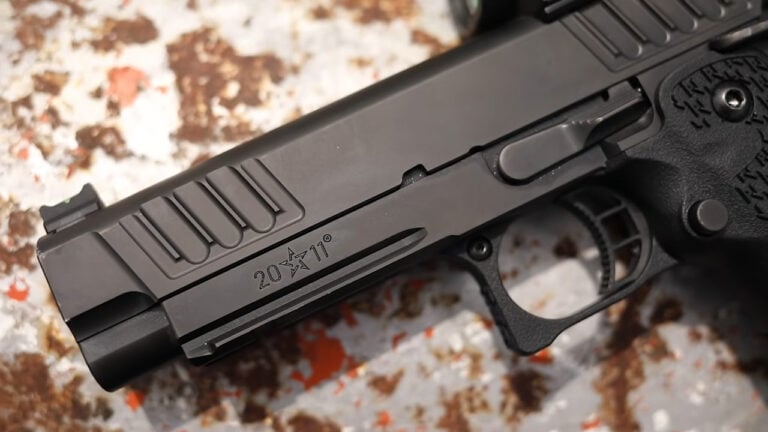
Staccato P

A well-built 2011 makes a big target look closer than it is, and the Staccato P is a modern example you can run hard without babying. The barrel fit and lockup are consistent, and the trigger gives you a clean break with a short reset that doesn’t invite you to slap at it. The grip also lets you drive the gun without crushing it.
That matters when you’re asking a pistol for a first-round hit from the holster or from low ready. With a solid grip, the gun returns to the same place in your hands, and the sights settle quickly. You’re not “getting lucky”—you’re seeing a stable sight picture and breaking a shot you can trust, even cold. Add a quality dot and it gets even more honest.
HK USP Expert

The USP Expert is one of those pistols that feels overbuilt in a good way. The long sight radius, match-style trigger parts, and the extra weight out front help you hold steadier and press cleaner. HK’s lockup is consistent, and the gun tends to shoot to the sights with quality ammo. It also has enough mass to smooth out your mistakes.
For a first-shot accuracy test—one round at 25 or 50 yards—the Expert is the kind of pistol that makes you look like you brought a cheat code. It isn’t light, and it isn’t trendy, but the recoil impulse is predictable and the sights stay readable. When you do your part, it stacks hits with very little fuss, and it keeps doing it when your hands are tired.
Walther Q5 Match Steel Frame

The Q5 Match Steel Frame feels like a competition pistol that still runs like a duty gun. The steel frame keeps the muzzle from bouncing, and Walther triggers have a way of letting you press without “searching” for the break. That predictability is what makes a single deliberate shot land where you intended. The grip shape also makes it easy to repeat your hand placement.
This is also a pistol that plays well with optics. A good dot, a firm grip, and a clean press will show you exactly what your wobble looks like—and the gun doesn’t punish you for it. On small steel or bullseyes, the Q5 makes first-round hits feel repeatable instead of occasional. It’s the sort of gun that turns a 50-yard plate into a realistic goal.
Beretta 92X Performance

A tuned Beretta that’s built for speed can also be built for precision, and the 92X Performance proves it. The heavy frame and the low, smooth recoil impulse help you keep the sights stable, and the trigger can be set up to break clean without stacking. The slide cycles softly enough that you don’t lose your visual focus.
The surprise is how easy it is to place a first shot at distance. The sight radius is generous, the gun sits deep in your hand, and the muzzle doesn’t dip when you press correctly. If you’ve only shot lighter polymer pistols, a heavy 92 that’s set up right can feel like you’re cheating on slow-fire targets. It also tends to reward a high thumbs-forward grip with very steady tracking.
SIG Sauer P226 X-Five Legion

The P226 is already a proven platform, but the X-Five Legion takes it into “ring steel at 50” territory without needing custom work. The added weight settles your hold, the trigger is built for a cleaner press, and the sights give you a crisp reference when you’re trying to call a shot. The beavertail and grip help you lock it in the same way every time.
This is the kind of pistol that rewards a careful first round. Take up the slack, press straight back, and the gun tends to track exactly the way you expect. It’s not the smallest option, but if you want a semi-auto that makes precision feel natural, the X-Five is a strong pick for that cold, one-shot test. If your first shot goes wide, it’s rarely the pistol’s fault.
Dan Wesson Specialist (1911)

A good 1911 is still hard to beat for first-shot precision, and Dan Wesson builds them with the kind of fit that stays consistent without feeling fragile. The straight-back trigger is the big advantage here. When the break is clean and predictable, you stop driving the muzzle and start pressing through the shot. The weight and balance also help you hold steadier.
The Specialist gives you usable sights and a grip shape that encourages a high, locked-in hold. That’s a big deal when you’re trying to place one round on a small aiming point. It won’t fix bad fundamentals, but it won’t hide good ones either, and that’s why a quality 1911 can feel shockingly accurate the moment you pick it up. If you run it with good mags, it stays boringly consistent.
Ruger Mark IV Target

If the goal is pure accuracy with minimal variables, a good .22 pistol is still the fastest way to prove what you can do with one careful shot. The Mark IV Target has a fixed barrel design, a long sight radius, and a trigger that can be excellent once it’s dialed in. That combination makes it very hard to blame the gun. The light recoil also keeps your eyes on the sights.
From a rest or offhand, it’s a pistol that will print tight groups with the right ammo, and that carries over to first-shot confidence. You see the sights, press clean, and the hit shows up where you called it. It’s also a low-cost way to build the habits that make your centerfire pistols feel steadier. Spend time with a .22 like this and your trigger control improves fast.
Smith & Wesson Model 41

The Model 41 is a classic for a reason: it’s built around accuracy first, and everything you touch supports that goal. The trigger is typically crisp, the sights are easy to read, and the balance makes it feel like the gun wants to sit still while you press. For one-shot precision, that matters more than raw speed. It also tends to run best when you pick ammo it likes and stick with it.
This is the pistol you bring when you want to take excuses off the table. With quality .22 LR and a clean sight picture, it will put rounds where you aim at 25 yards, and it will do it again and again. If you want a handgun that makes the “one perfect shot” feel realistic, this is near the top. When you miss, it teaches you exactly how you missed.
Browning Buck Mark Camper/Target

The Buck Mark doesn’t get talked about like the high-dollar target guns, but it has a well-earned reputation for shooting far better than most people expect. The fixed barrel and decent trigger geometry help you break a clean shot, and the sights give you a precise reference without being fussy. The grip angle also makes it easy to repeat your natural point of aim.
For first-shot accuracy, it’s one of the best values going. Load it, take your time, and you can punch the same small spot repeatedly with the right ammo. It’s also a pistol that teaches follow-through, because you can actually see when you rushed the press. Spend time with a Buck Mark and your “one shot” standards for every other pistol get higher. It’s a quiet confidence builder for serious practice.
Walther PDP Match

The PDP Match keeps what people like about the standard PDP—ergonomics and a shootable trigger—but adds the weight and balance that make precision easier. The grip lets you clamp the gun without over-squeezing, and the slide design still gives you plenty of purchase without beating up your hands. The extra mass up front helps the sights settle quickly.
Where it earns a spot is that first deliberate shot after the buzzer, the draw, or the cold start. The sights settle fast, the trigger wall is easy to find, and the gun doesn’t punish a clean press with surprise movement. You’ll still see your wobble, but the pistol doesn’t exaggerate it, and that’s what makes first-round hits feel more dependable. Pair it with a dot and you can diagnose your press in real time.
CZ TS 2 (Tactical Sport 2)

The TS 2 is a big, purpose-built pistol that makes accuracy feel like the default setting. The weight helps you hold steadier, and the single-action trigger is usually light and predictable enough that you can break a shot without disturbing the sights. That’s exactly what you want when you’re trying to land one clean hit on demand. The wide frame also spreads recoil in a way that feels controlled.
It’s also a pistol that tracks well in recoil, which matters even when you’re only firing one round. A gun that returns to the same spot in your hands tends to stay consistent across sessions, ammo lots, and conditions. If you want a pistol that feels like it was designed for small targets at real pistol distances, the TS 2 belongs in the conversation. It can make a 35-yard head plate feel very doable.
Springfield Armory 1911 DS Prodigy

The Prodigy gives you the 2011-style feel—straight trigger, high capacity, and a steady sight picture—at a price that puts it in reach for more shooters. When it’s set up right and running well, that trigger geometry makes it easier to press without steering, which is the whole game on a “one shot” standard. The grip and beavertail help you build a repeatable high hold.
The accuracy potential is there because the platform is built around consistent lockup and a barrel that can shoot. Pair it with ammo it likes, verify your sights or dot, and it will reward you with hits that look like you spent more than you did. It’s still a pistol you should test hard, but when it clicks, it can be impressively precise. Keep your mags sorted and it tends to stay consistent.
FN 509 LS Edge

The 509 LS Edge is one of the more shootable practical pistols FN has put out, and it’s built with accuracy work in mind. The longer slide and barrel give you more sight radius and a little extra velocity, and the trigger is tuned to be easier to press clean than the base models. The grip texture helps you keep the gun from shifting during the press.
That shows up when you’re trying to make a first-round hit at distance. The gun sits flat, the sights stay readable, and your support hand has room to do real work. It’s not a dedicated bullseye pistol, but it’s a good example of a modern striker gun that can surprise you when you slow down and demand one clean, called shot. Run it with consistent ammo and it will hold tight groups at 25 yards with no excuses.
Like The Avid Outdoorsman’s content? Subscribe to our newsletter so you never miss an article.
Here’s more from us: