Photo credit: The Avid Outdoorsman
The carrier was not out in public when he started questioning the setup.
He was at home.
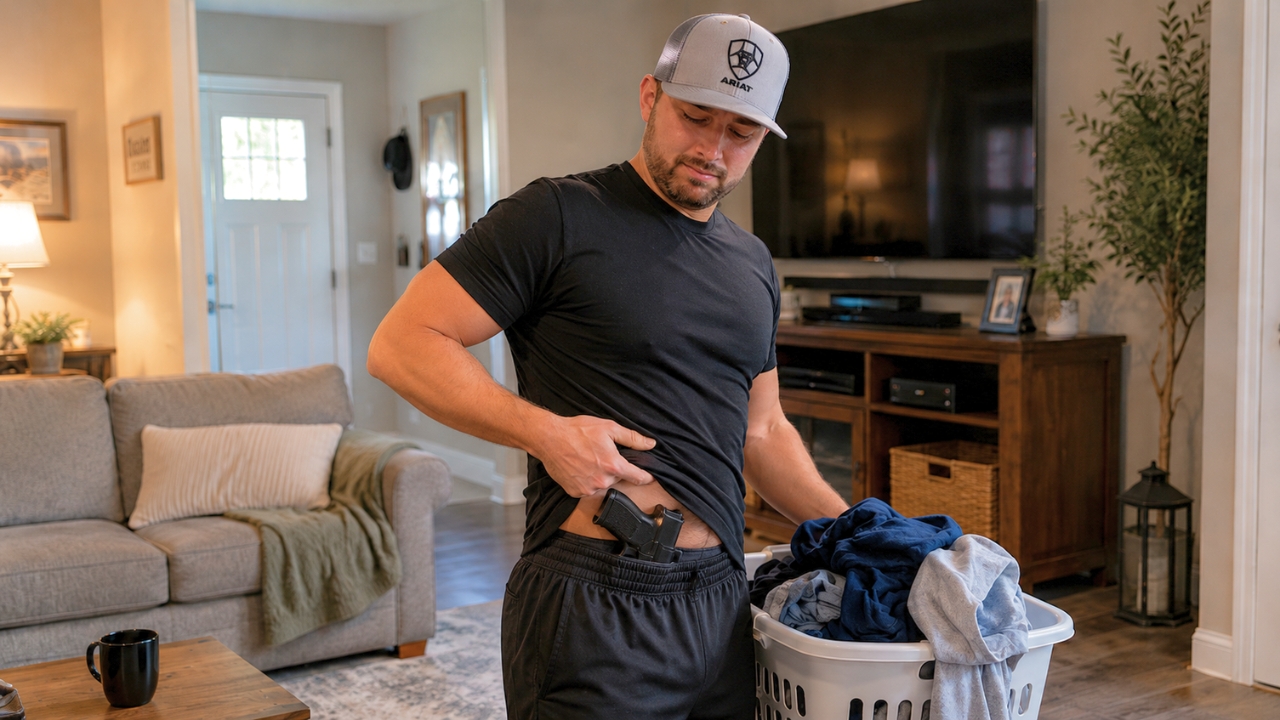
That is usually where people test new carry positions. You put on the holster, walk around the house, sit down, bend over, reach for something, maybe do a few normal chores, and see whether the setup feels livable before taking it out into the world.
Then the one o’clock carry position started feeling wrong.
In a Reddit post, the concealed carrier described trying a one o’clock carry position and realizing the muzzle direction made him uncomfortable during normal movement. The post had that familiar new-setup anxiety: the gun was technically holstered, but the way it pointed during daily life made every motion feel a little too real.
That is not a small concern.
Appendix and near-appendix carry positions are popular because they can conceal well, keep the gun accessible, and make it easier to protect the firearm in crowded spaces. But they also make people think hard about muzzle direction. Depending on body shape, holster design, ride height, cant, and how the carrier moves, the muzzle may point toward parts of the body nobody wants a loaded gun pointed at.
That mental discomfort can be hard to shake.
A good holster covers the trigger. That matters. A properly holstered gun should not fire by itself. That matters too. But none of that changes the emotional reality of feeling a muzzle aimed at your leg, groin, or body while you bend, sit, squat, or do chores around the house.
The carrier seemed to run into that exact problem.
At one o’clock, small changes in posture can change how the setup feels. Sitting down in a chair, tying shoes, picking something up off the floor, doing dishes, carrying laundry, or leaning over a counter can all make the gun press, shift, or angle in ways that feel more alarming than they looked in the mirror.
That is why house testing is useful.
A carry position that feels fine while standing still may feel completely different once normal life starts. The mirror does not tell you how the holster behaves when you sit in a truck. It does not tell you how the muzzle feels when you bend over to grab something from a low cabinet. It does not show whether the grip digs into your stomach, whether your belt shifts, or whether the gun points somewhere that makes you tense all day.
The best carry setup is not only hidden.
It has to be something the carrier can live with safely and calmly.
That does not mean one o’clock or appendix carry is automatically bad. Plenty of experienced carriers use it responsibly every day. But it does demand strict gear and strict habits. The holster needs to be rigid enough to protect the trigger. It needs proper retention. The belt needs to hold it stable. The gun needs to stay holstered unless there is a real reason to remove it. Reholstering needs to be slow, deliberate, and done with clothing cleared.
No shortcuts.
For people who dislike the muzzle direction, though, no amount of internet reassurance may fix the feeling. And that is okay. Carry position is personal. If a setup makes you anxious all day, you may start touching it, adjusting it, or obsessing over it. That can create more problems than it solves. A person who cannot relax with one o’clock carry may be better served by strong-side, hip, pocket carry with a proper holster, or another method that keeps the gun secure without creating constant tension.
The key is not ego.
It is control.
A lot of carriers feel pressure to use whatever method is popular online. Appendix carry gets talked up because it has real advantages, especially for access and concealment. But a carry method that works for one body, one gun, and one wardrobe may be miserable for someone else. A compact pistol in a high-quality holster on one person may feel stable and safe. The same position with a different body shape or cheaper holster may feel like a bad idea every time the person bends.
The carrier’s home test revealed that before he had to learn it in public.
That is a good thing.
The wrong move would be ignoring the discomfort and forcing the setup without understanding it. The better move is to slow down. Check the holster. Check trigger coverage. Check retention. Practice putting it on and taking it off with the gun unloaded. Practice sitting, bending, and moving. Decide whether the concern is lack of familiarity or a real gear-and-position mismatch.
There is a difference between “this feels new” and “this feels unsafe.”
New can fade with practice.
Unsafe needs fixing.
The post also points to a broader carry lesson: a holstered gun is not an excuse to stop thinking. The holster is a safety tool, but the carrier still has to respect muzzle direction, trigger protection, and handling discipline. If normal chores make you aware of where the gun is pointing, that awareness may be uncomfortable, but it is not useless. It tells you whether the setup fits your life.
For this carrier, one o’clock carry may have looked workable in theory.
Then real movement made him question it.
That is exactly what testing is supposed to reveal.
Commenters mostly split the issue into gear, comfort, and training.
Several people said a quality holster matters more with appendix or one o’clock carry than almost anywhere else. It needs to fully cover the trigger, hold the gun securely, and stay stable through sitting, bending, and movement.
Others said the discomfort with muzzle direction is common. Some carriers get used to it once they trust their gear and build safe habits. Others never feel good about it, and those people may be better off choosing a different carry position.
A lot of the practical advice came back to unloaded practice. Try the setup around the house with the gun cleared. Sit, bend, move, and see what actually happens. That helps separate unfamiliarity from a real problem with the holster or carry position.
Some commenters also warned not to keep adjusting or handling the gun constantly. If the position makes you fiddle with the holster all day, the setup is not working.
The main takeaway was simple: a carry method has to be safe, secure, and something you can live with. Popular online does not matter if it makes every chore feel like a bad idea.