Photo credit: The Avid Outdoorsman
The turkey hunter had done the normal thing.
He set up his decoys, got into position, and settled in for a hunt. That is how a lot of turkey mornings start. You pick a spot, tuck in, try to sound like a bird, and wait for a gobbler to make the wrong decision.
What he did not expect was another hunter shooting at his setup.
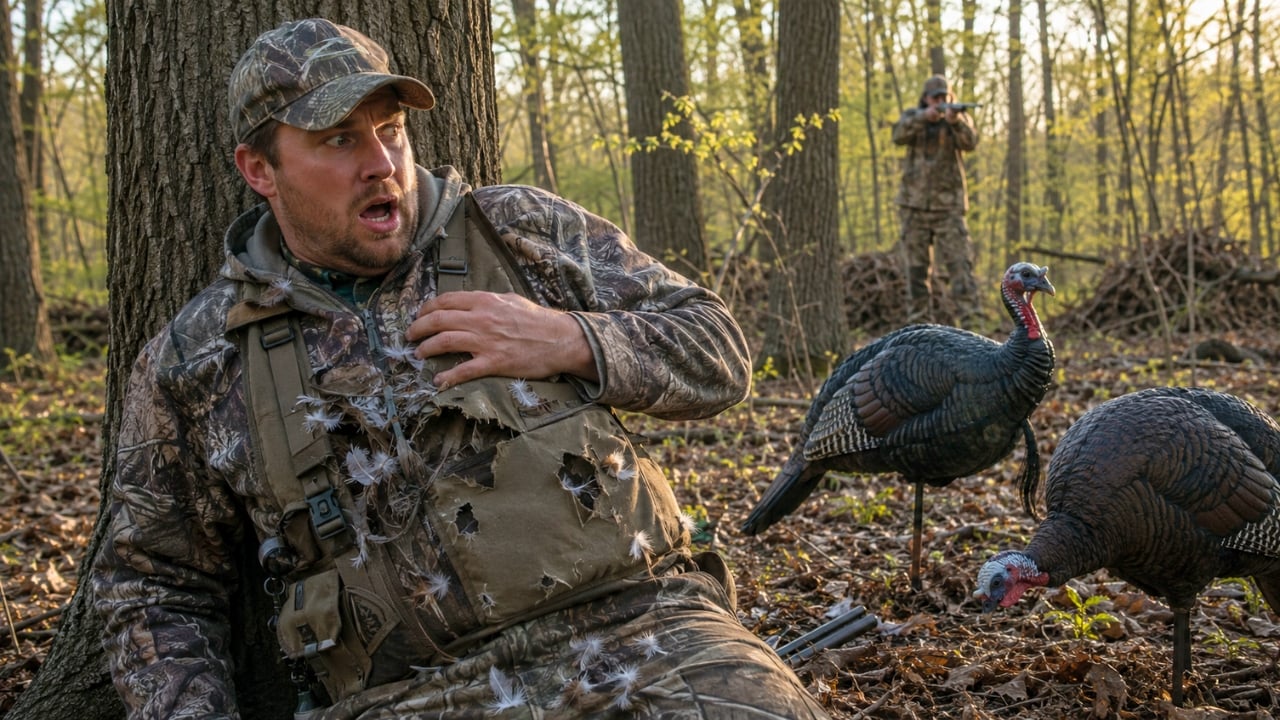
In a Reddit post, the hunter said he was turkey hunting when another person fired at his decoys. The shot hit close enough that pellets or ricocheted shot peppered him and tore up his vest.
That is the kind of thing that makes every turkey hunter’s stomach drop.
Turkey hunting already has a built-in safety problem that deer hunting usually does not. The whole sport is based on fooling the bird. Hunters wear full camo. They call like turkeys. They sit still in brush. They use realistic decoys. Sometimes those decoys are set in fields, along trails, or in openings where another hunter might see them before he sees the person sitting nearby.
That is exactly why the rule is so simple: never shoot at a sound, a shape, a fan, or a decoy. You shoot only when you have positively identified a legal bird and know what is beyond it.
Somebody ignored that.
The poster said the other hunter fired at his decoys, and the shot came back at him badly enough to damage his vest. Think about how close that is. This was not a distant, harmless mistake that only made noise across the ridge. The shot got into the space where another person was sitting.
That means the shooter either did not see the hunter, did not look hard enough, or got so locked onto the decoys that he stopped thinking about anything else.
None of those answers are good.
A turkey decoy is not a target. It is a warning to slow down and figure out what is actually happening. If there are decoys, there is a very good chance there is also a hunter nearby. That should be obvious, but excitement does dumb things to people. A hunter sees what looks like a bird, wants it to be a bird, and suddenly starts skipping steps.
That is how people get hurt.
The poster’s title said he almost died, and after reading the setup, it is hard to call that dramatic. A shotgun pattern or ricocheted pellets can still do serious damage, especially if they hit the face, eyes, neck, or anywhere unprotected. The fact that his vest took damage instead of his body taking the worst of it was luck.
And luck is a lousy safety plan.
You can imagine the shock of the moment. One second, he is hunting. The next, a shot goes off, pellets hit, and he realizes another person has just fired into his setup. There is probably a frozen second where the brain is trying to catch up. Was that at me? Did I get hit? Where did it come from? Is he going to shoot again?
That last question matters. If someone has already fired at decoys, you cannot assume he understands there is a person there. The safest thing may be to yell immediately, make yourself known, and stop the shooter from sending another round.
But that is also the maddening part. The victim is suddenly responsible for stopping the danger that someone else created.
This is why some turkey hunters are careful about where they place decoys, especially on public or shared ground. A decoy set in the wrong place can be visible to another hunter before the person using it is visible. Some hunters avoid decoys altogether on pressured public land because they do not trust everyone else to identify the target first.
That is not how it should be, but stories like this explain why they think that way.
The other hunter may not have meant to hurt anyone. He may have been inexperienced, excited, careless, or convinced he was shooting at a real turkey. But intent does not matter much when another hunter is picking pellets out of gear and looking at a ruined vest.
The damage to the vest is almost the perfect symbol of the whole thing. A piece of hunting gear took the hit that could have gone into him. It is a reminder he can hold in his hands: this is what somebody else’s bad decision almost did to me.
And once that happens, a turkey decoy probably never looks quite the same again.
Commenters were angry, and most of them focused on basic target identification.
A lot of hunters said shooting at decoys is inexcusable because decoys are one of the clearest signs that another hunter is nearby. If you see a decoy, you should be thinking “human” before you think “turkey.” Several commenters said the shooter had no business pulling the trigger if he could not clearly identify the bird and what was beyond it.
Others talked about public-land turkey hunting and how risky it can feel when people get too excited. Full camo, realistic decoys, and turkey calls can fool birds, but they can also fool careless people. That means every hunter has to slow down and assume someone else may be close.
Some commenters said they avoid using certain decoys on public land, especially full-strut tom decoys or anything that might catch another hunter’s attention from a distance. Not because the decoy user is doing anything wrong, but because they do not trust every stranger in the woods to make a good decision.
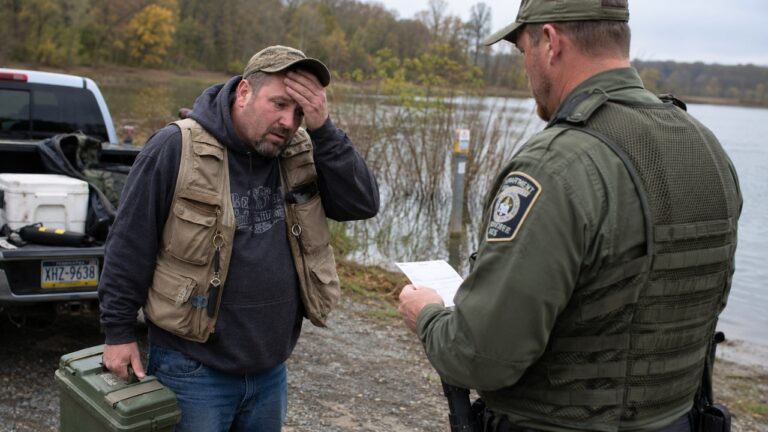
There was also plenty of talk about reporting the incident. A few people said a shot that hits another hunter’s gear should involve a game warden or law enforcement. Even if nobody was seriously hurt, the shooter created a dangerous situation that could have ended much worse.
The strongest reaction was simple: no turkey is worth a risky shot. If there is any doubt, do not shoot. If there are decoys, look for the hunter. And if you cannot clearly see a legal bird with a safe backdrop, keep your finger off the trigger.