Photo credit: The Avid Outdoorsman
The landowner did not seem bothered by the idea of a neighbor hunting his own land.
That part matters. He was not saying nobody else could hunt near him. He was not mad that deer crossed back and forth. He was not trying to control every tree stand within eyesight.
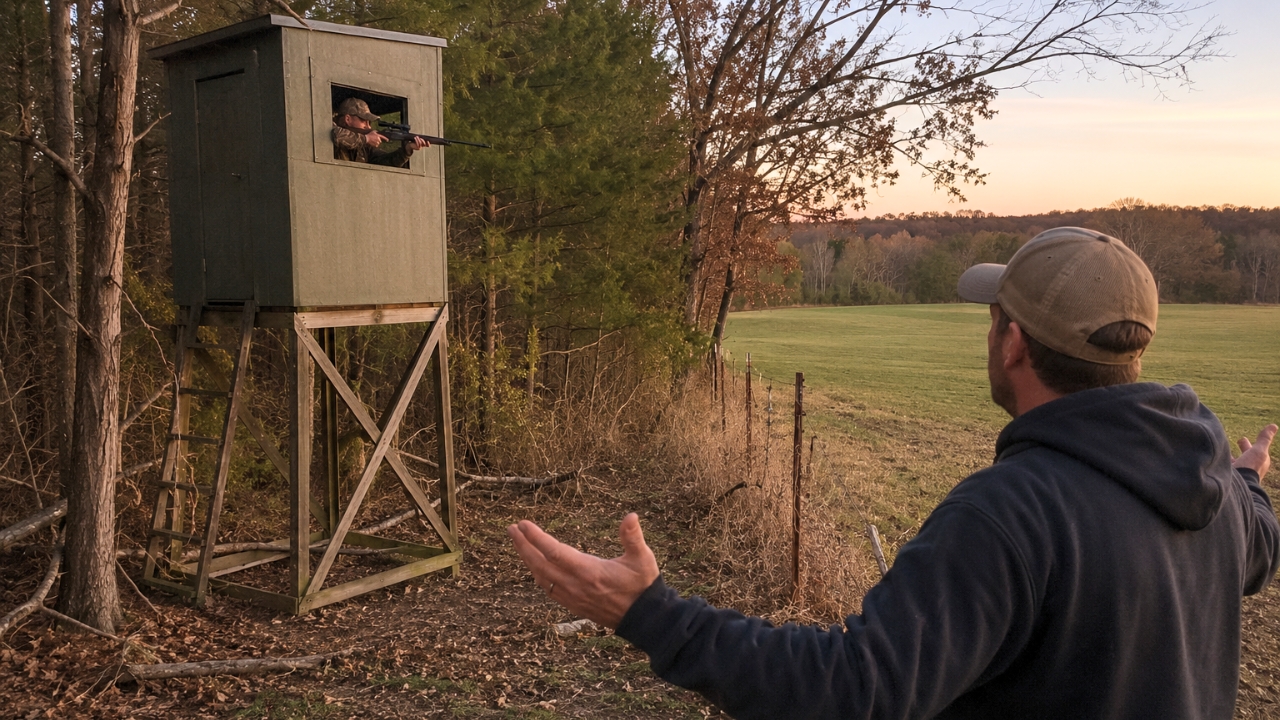
The issue was where the neighbor set up — and where the blind was pointed.
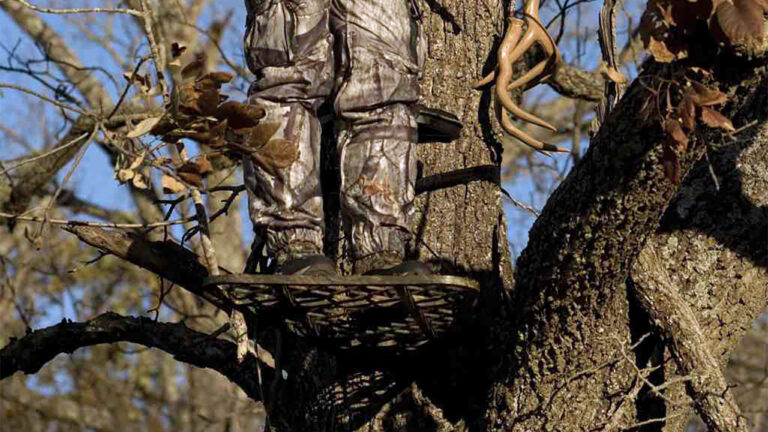
In a Reddit post, the poster said his neighbor found a tree right on the property line and put a stand there. That alone felt a little offensive to him, mostly because it left no room for trust. In his mind, a stand should be set back at least a shot’s distance from the border as a good-faith way of showing you are not planning to shoot onto someone else’s land.
But then the neighbor set the stand to look and shoot over the poster’s property.
That was the real problem.
A stand on the line is already awkward. A stand on the line facing into your own ground can at least make sense in certain situations, especially on small parcels or field edges. But a stand right on the border, facing over someone else’s property, sends a pretty loud message. It says the person sitting there may be planning to watch, aim, or shoot into land he does not own.
And that is where a normal neighbor issue starts feeling like a safety issue.
The poster was not wrong to be bothered by that. A bullet, slug, or even an arrow does not stop at a property line just because the hunter does. If the neighbor’s primary view is into another person’s land, then every shot opportunity becomes suspicious. Is he waiting for deer on his side? Or is he planning to shoot across the line and hope nobody notices?
Nobody wants to spend hunting season wondering that about the guy next door.
The comments made it clear this kind of thing is not rare. One person said they had dealt with guys who got as close to the line as possible. Another said it might not be illegal, but it is terrible etiquette. That pretty much captures the frustration. A hunter can sometimes do something technically allowed and still make every neighbor around him think he is a problem.
The poster’s concern became even more understandable when other hunters started sharing similar setups. One commenter said his neighbors put a blind about 10 feet from the line near the back of a pond. The way the land was laid out, they could not really shoot onto their own property because a dam was in the way. Their blind pointed straight into his woods.
That is the kind of setup that makes a person’s eyebrows go up.
He said he simply called the neighbors and told them they could go wherever they wanted on their own land, but he would have a major issue if they shot onto his property. They kept hunting there for a while, and he later noticed photos of big bucks posted online. Then he put a cellular camera on the fence line angled so their blind would be visible in the frame.
After that, he said they did not come back and had not shot another deer since.
That little detail tells you a lot. Sometimes people act bolder when they think nobody can prove anything. Once a camera is pointed in the right direction, they suddenly remember the property line.
Still, not every commenter wanted the original poster to go straight to war. Some said he should talk to the neighbor first. Not in a chest-puffed, angry way. Just plainly: “I noticed your stand faces my property. I need to make sure you understand you cannot shoot onto my land.” That is the adult answer, and sometimes it works.
But other hunters were more skeptical. They said someone who puts a stand on the line facing the neighbor’s land probably knows what he is doing. If that is the case, a polite conversation may not change much. It may only warn him to be more careful about getting caught.
That is the hard part with property-line hunting drama. You do not want to accuse someone of poaching before he has done it. But you also do not want to ignore a setup that looks designed for exactly that. The landowner is stuck watching, documenting, and hoping he does not have to prove the thing he already suspects.
A few commenters suggested passive but clear responses. Put posted signs along the line. Hang a camera aimed at the stand. Put a blind or stand on your side in a way that makes it obvious the property is watched. One person even joked about wind chimes near the line, which is petty enough to make you laugh but probably not the best first move if you still have to live beside the guy.
The serious point underneath all the jokes was simple: the boundary needs to be unmistakable.
For the original poster, the whole thing came down to respect. Hunting close to a property line is one thing. Pointing a stand over your neighbor’s land is another. Maybe the neighbor would swear he had no plans to shoot across. Maybe he really believed he could watch that side without crossing a legal line. But from the landowner’s view, the setup looked bad from the start.
And once a neighbor’s blind is aimed into your woods, deer season stops feeling peaceful. You are not just watching deer anymore. You are watching the fence line.
What Commenters Said
Commenters mostly agreed the setup looked bad, even if the law might not automatically forbid it.
Several people said a stand facing into the hunter’s own property would be a non-issue, but facing over the neighbor’s land is where things get shady. One commenter said sending bullets across property lines is illegal in most places and is generally treated like trespass. Others noted that shooting and retrieving game on someone else’s land without permission can also be illegal depending on the state.
A few people brought up distance rules. One commenter said that where he lives, hunters have to stay 150 yards from a property line without permission from the neighbor. Another mentioned Illinois rules requiring distance from property lines for bow or shotgun hunting without permission. Other commenters pushed back that those rules vary a lot and may not exist in the poster’s area, which is why the local law matters.
The most repeated advice was to talk to the neighbor. Several people were almost exasperated by how quickly landowners jump to cameras, signs, or retaliation before having one normal conversation. A few shared stories where talking actually improved access. One hunter said he contacted a neighbor about stands or cameras near the line and ended up gaining access to more land because both sides handled it like adults.
Other commenters were not so optimistic. They suggested posting the property line, putting cameras up, and making sure the neighbor knows he is being watched. One person said to put an old blind right where the neighbor might want to shoot, as a non-confrontational way to say, “I see this, and I do not like it.” Another suggested a camera pointed directly at the stand so any shot across the line would be easier to document.
There were also plenty of petty ideas. Some said to put up a stand facing the neighbor’s stand and get there before daylight, so when the sun came up the two hunters would just be staring at each other. Others joked about wind chimes, warning signs, or decoy setups. Funny, sure, but a few commenters warned that passive-aggressive moves can shut down communication and turn a manageable problem into a feud.
The best advice sat in the middle. Be polite, direct, and firm. Confirm the property line. Post it clearly. Tell the neighbor what the concern is. Then document everything if he ignores it.
For the landowner, the issue was not that another hunter existed next door. It was that the hunter set up right on the line and aimed into land he did not own. That is the kind of thing that may be legal in some places, but it is still a fast way to lose every bit of trust with the person on the other side of the fence.