Photo credit: The Avid Outdoorsman
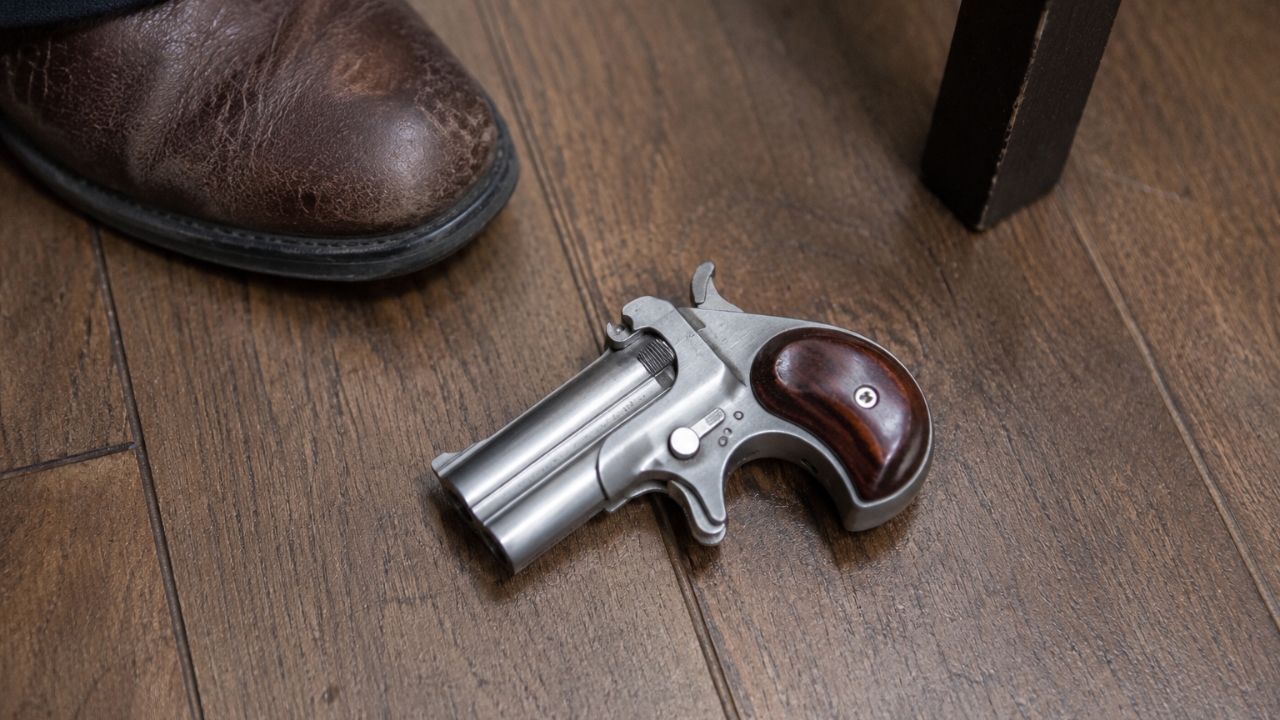
A Reddit user in r/CCW dropped a story into a broader discussion about where and when people carry, and it was the kind of detail that instantly made other carriers picture the exact sound of a bad setup failing in public. He said he once sneezed and his derringer fell out. That was the whole core of it: one sneeze, one pistol, one moment where a carry method that had apparently seemed acceptable right up until then suddenly proved it wasn’t. The original Reddit thread is here: https://www.reddit.com/r/CCW/comments/18erop4/whenwhere_do_you_carry/. (reddit.com)
What makes that tiny story hit so hard is that nothing about it sounds dramatic until you stop and think about what it means. A sneeze is about as ordinary as body movement gets. It is not sprinting, climbing a fence, wrestling with equipment, or getting thrown around in a vehicle. It is the sort of everyday physical jolt every person experiences without warning. If a gun falls out because of that, then the problem was never really the sneeze. The problem was that the setup had so little margin built into it that a normal involuntary body movement was enough to defeat it.
That is why the comment landed the way it did inside the larger thread. The discussion itself was about when and where people carry, which naturally brought out all kinds of answers about comfort, routine, convenience, and personal compromise. Some people talked about always carrying. Some admitted they make exceptions. Some described pocket carry, off-body carry, or leaving the gun behind depending on clothing and circumstances. Then right in the middle of that came the derringer story, and it worked like a hard little reminder that “good enough” carry habits usually sound fine only until something simple exposes them.
A derringer adds another layer to the whole thing because it is exactly the kind of gun people are often tempted to treat casually. Small, light, easy to slip into something, easy to tell yourself it barely counts as a burden. That convenience is part of the appeal, but it is also part of the risk. Tiny pistols invite lazy carry decisions because people start thinking of them as exceptions to the standards they would never relax for a larger handgun. The sneeze story reads like the moment that logic ran into reality. A very small gun still has to stay where it belongs. If it cannot survive a sneeze, then the setup was never really under control.
The comments around those kinds of stories usually get harsh fast, and for good reason. People who carry seriously tend to have very little patience for failures that come from comfort-first thinking. A derringer dropping out during a sneeze sounds less like bad luck and more like somebody trusting a pocket, waistband, or loose carry arrangement that had not been tested in any real way. A lot of the brutality in the reaction comes from that basic truth. There is no heroic version of the story. No complicated legal twist. No enemy to blame. It is just a person discovering, in one embarrassingly ordinary moment, that the gun was not secure.
There is also the public side of it, even if the original comment did not dwell on setting and audience. A gun falling out is never only a mechanical problem. It becomes a social one immediately. Someone might see it. Someone might hear it hit the ground. Someone might react before the owner can. That is especially true with a small gun, because small guns often get carried in ways that depend too heavily on discretion and not enough on actual retention. The moment the derringer leaves the body, the concealment side of concealed carry is over. What remains is a visible, preventable failure.
The phrase “good enough” is really the ghost hanging over a story like this. A lot of bad carry habits live under that phrase. The pocket is good enough. The jacket is good enough. The clip is good enough. The little gun is good enough. I’m only going out for a minute. I’m not moving around much. None of that feels reckless when people say it to themselves. Then the wrong movement happens, the gun falls out, and the whole stack of rationalizations collapses into one humiliating fact. It was not good enough.
A lot of experienced carriers talk about testing a setup by living in it, moving in it, sitting in it, bending in it, reaching in it, and making sure the gun stays where it should through all of that. The sneeze story is basically the opposite of that kind of discipline. Whether the carrier had simply gotten lazy, trusted the wrong pocket, or relied on the size of the derringer instead of a real system, the result was the same. Real movement tested the setup, and the setup failed. It just happened to be a sneeze that revealed it instead of something more dramatic.
What probably made the thread particularly brutal is that everyone reading it could understand the standard without needing it explained. A carry system should survive ordinary life. If it cannot survive a sneeze, then it is not really a carry system. It is just a firearm temporarily tucked somewhere and hoped for. That distinction sounds harsh, but it is the one these communities keep coming back to because the downside of getting it wrong is not abstract. A dropped gun can become a public incident, a negligent discharge, a bystander scare, or the exact kind of story people use as proof that civilians are careless with firearms. Even when nothing worse happens, the setup has already failed the one job it had.
The original comment was brief, but that almost made it hit harder. It did not need a long moral. The sneeze told the whole story. The derringer fell out. Everyone reading it knew exactly what that meant. Somewhere before that moment, convenience had won a quiet argument against discipline, and the body had finally cast the deciding vote.
That is where this one lands. A person carried a derringer in a way that seemed acceptable until a sneeze proved otherwise. There is almost no smaller or more ordinary way for a carry setup to fail. And that is exactly why the story cuts the way it does. If the gun cannot stay put through a sneeze, then the problem was there long before the sneeze ever happened.