Photo credit: Ivi.photo93/Shutterstock.com
A man can spend a small fortune on outdoor gear and still be the least useful person in camp. I’ve seen it enough times now that it barely surprises me. Nice gear has its place. Good optics matter. Good boots matter. Good packs, rifles, calls, coolers, tools, and layers all matter when they’re used by somebody who understands what they’re for. But expensive gear does not automatically create competence, and it sure doesn’t create usefulness. Sometimes it just gives a clueless man more expensive ways to stay in the way. That’s the part people don’t like talking about. There are guys out there with premium everything who still can’t pack a truck well, can’t solve a simple field problem, can’t stay organized, can’t help set up camp, and can’t keep themselves from becoming somebody everybody else quietly has to work around. At that point, the gear is not proof of skill. It’s just proof that the credit card worked. And in the outdoors, that usually stops being impressive the second real work starts.
Owning gear is not the same as understanding it
One of the clearest ways a man can have a pile of money in gear and still be no help is by knowing what he bought without knowing how any of it actually works. He can tell you model names, coatings, calibers, magnification ranges, insulation fills, and which brand won the last internet argument, but the minute something needs to be adjusted, diagnosed, or used under pressure, he turns into a spectator. That happens more than people want to admit. I’ve met men with expensive optics who couldn’t explain their own zeroing process clearly, men with premium layering systems who still dressed wrong for the weather, and men with top-end packs who packed them so badly they might as well have used a trash bag. Real usefulness comes from understanding systems, not just collecting products. A man who knows how to use ordinary gear well is almost always more valuable than the guy with high-dollar equipment he treats like decorative proof of identity. Out here, knowledge usually outperforms branding once the weather turns or the plan starts slipping.
The least helpful guy is often the most overequipped one
There’s also a type of man who buys gear to cover for the skills he never built. He thinks one more piece of premium equipment is going to save him from bad habits, weak planning, or lack of experience. So now he has an expensive tent but still can’t choose a decent camp spot. He owns elite rain gear but packs his clothes in a way that guarantees half of them get wet. He’s got a rifle-and-optic combo that costs more than some used trucks, but he still rushes shots and can’t settle himself when it counts. I’m not against good gear. I like gear. But I’ve learned to be suspicious when a man’s setup gets fancier every year while his field competence stays flat. Sometimes that means he’s investing in equipment. Sometimes it means he’s shopping instead of learning. A lot of expensive gear only works as intended when the person using it already has some discipline, patience, and judgment. Without that, it just becomes costly clutter around an unchanged problem.
Camp usefulness shows up in the boring moments
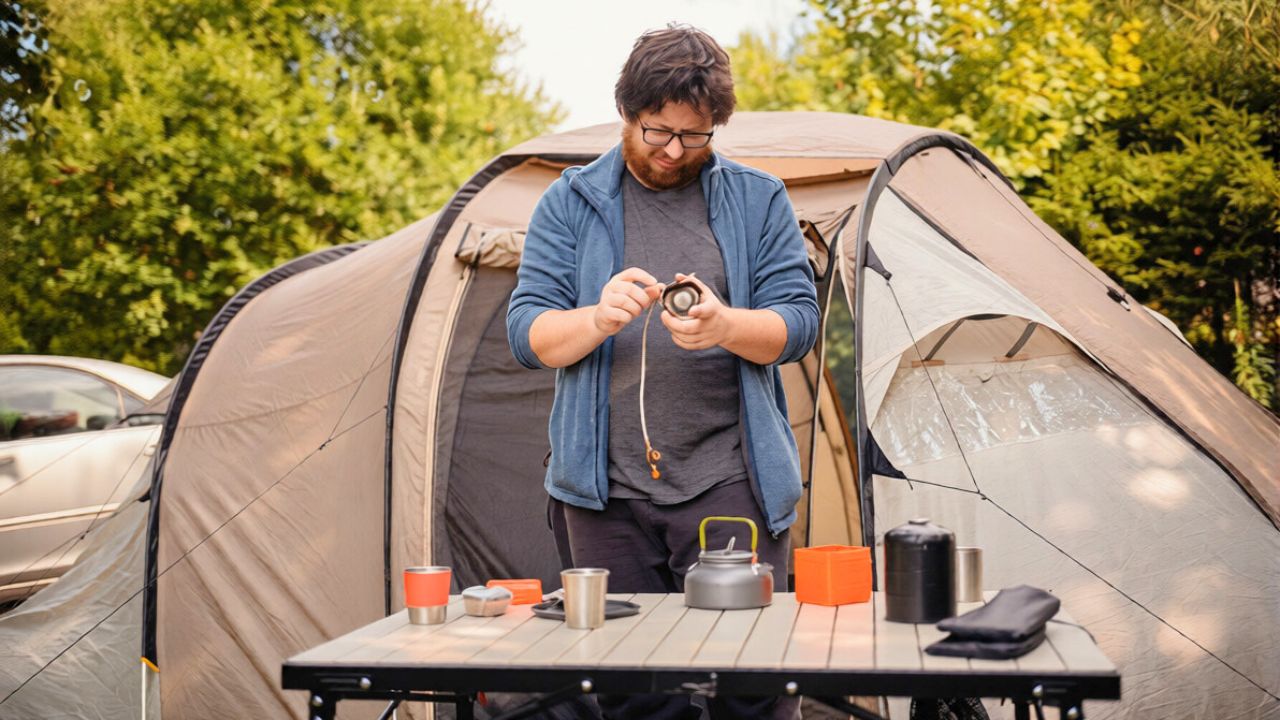
A man’s value in camp rarely comes down to his nicest item. It comes down to how he handles the ordinary, unglamorous parts of being there. Can he keep his stuff straight? Can he move efficiently without creating extra work? Can he help solve little problems before they grow? Can he carry his share, adapt, and stay steady when plans shift? Those things do not photograph well, but they matter. I’ve watched guys with modest gear carry whole camps on their backs because they were organized, observant, and dependable. I’ve also watched men with loaded truck beds full of premium gear spend half the trip looking for things they packed themselves, asking obvious questions, or drifting off exactly when there was work to do. That kind of mismatch stands out fast. A YETI cooler, a top-end sleeping setup, and a jacket that costs real money don’t mean much if the owner still manages to be underprepared, disorganized, and emotionally surprised by every inconvenience the outdoors naturally brings to the table.
If you can’t fix, carry, pack, or adapt, the gear isn’t helping enough
I’ve come to think there are four simple tests for whether a man’s gear is actually turning into usefulness. Can he fix something small without drama? Can he carry what he brought without turning it into everyone else’s problem? Can he pack with enough sense that he knows where the essentials are? And can he adapt when conditions change instead of acting betrayed? If the answer is no across the board, then the gear is not translating into help. It might still be nice gear. It might even perform well. But it is not changing the fact that the user is a burden when things stop being easy. A dependable multi-tool, solid rainwear, and a pack that rides well can absolutely make a man more capable. Bass Pro carries plenty of practical gear in that lane. But capability still has to meet the equipment halfway. I’d rather be around a man with one decent knife, dry socks, and some judgment than a man with ten grand in gear who still needs other people to clean up the consequences of his planning.
Money can buy comfort, but it can’t buy judgment
That’s probably the cleanest way to put it. Expensive gear can buy a lot of comfort and some margin for error. Better insulation can keep you warm. Better optics can help you see more. Better boots can keep your feet happier. Better packs can carry better. But none of that buys judgment, and judgment is what keeps a man useful when camp life stops going according to the glossy version. Judgment is what tells you to repack before the storm, top off the battery, protect the dry bag, back off a bad idea, or help with the ugly job before somebody asks. The men who have that quality don’t always look the richest, but they usually look the calmest when something quits working. Meanwhile, the overequipped guy often seems offended that his money didn’t protect him from having to improvise, carry extra weight, or solve a problem with his hands. That attitude is how a man becomes decorative in a place where he thought his gear would make him impressive. Outdoors, useful beats impressive every single time.
Some men collect proof, others build ability
The older I get, the more I see expensive gear as either a tool or a costume depending on the man carrying it. Some men use gear to extend ability they already have. That’s a smart investment. Other men use gear to build a story about themselves before they’ve really earned it. That’s where the trouble starts. They begin to think usefulness lives in the purchase itself. Then, when the moment comes to carry something heavy, fix something stubborn, pack something right, or stay composed while the weather and timing go sideways, the story starts cracking. A lot of us have bought things we didn’t fully know how to use yet. That’s normal. The difference is whether the purchase leads to learning or just to more posing. These days I don’t pay much attention to how much a man has spent until I’ve seen how he behaves when the trip gets inconvenient. That usually tells me whether the gear is serving a capable person or just decorating an expensive version of the same old helplessness.
The most helpful man in camp is rarely the flashiest one
That truth keeps holding up no matter what kind of trip I’m on. The man who ends up being genuinely helpful is rarely the loudest, the most loaded down, or the most eager to list off what everything cost. He’s usually the one with a dialed-in system, a calm approach, and enough humility to keep learning. He knows where his gear is, what it does, and how to work around it when it fails. He doesn’t need his equipment to prove anything because his usefulness already does that. That’s why I’ve gotten less impressed by huge gear piles over time. A mountain of equipment can be nice. It can also hide a whole lot of weakness. Ten thousand dollars in gear does not mean a man is prepared, disciplined, or worth following when things get messy. Sometimes it just means he had the budget to build a very expensive shell around ordinary incompetence. And once camp gets busy, wet, cold, or inconvenient, that shell usually starts cracking in plain view.
Like The Avid Outdoorsman’s content? Subscribe to our newsletter so you never miss an article.
Here’s more from us: