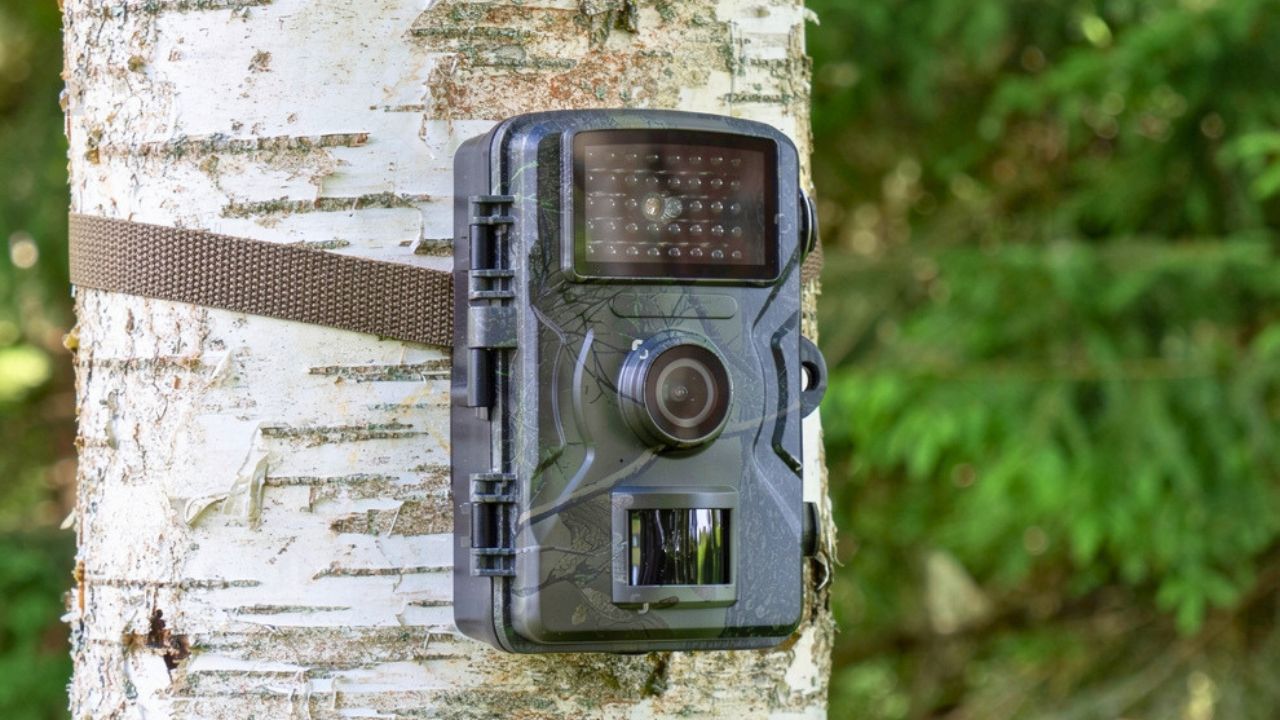
Photo credit: GS23/Shutterstock.com
Finding a trail camera on your place that you did not put there tends to raise a lot of questions all at once. Sometimes it is a simple mix-up with a neighbor or a guest who should have asked first and did not. Other times it is the first sign that somebody has been scouting, crossing, or even hunting your property without permission. That is why the first move should not be to rip it off the tree and toss it in the truck. In a lot of states, entering private property without permission is already the bigger issue, and what you do next can affect whether the situation stays clean and provable or turns into a messy argument over whose property got taken by whom. State wildlife agencies and hunter-education materials are pretty consistent on the land-access point: private property is off-limits without permission, and hunters are expected to respect those boundaries.
The hard part is that a trail camera feels personal in a way boot tracks do not. It is not just a sign somebody passed through. It means somebody picked a tree, strapped on equipment, and expected to come back. In some cases, that may also mean the person has already been checking the area for game movement, access routes, feeders, stands, or travel corridors on land that is not theirs to use. Texas Parks and Wildlife has even documented a case where a suspect admitted to hunting on another person’s property without permission and taking the landowner’s game camera because he feared it had captured evidence of the trespass. That tells you two things: trail cameras often become evidence in trespass cases, and people who know they are where they should not be do not always act smart once they realize they have been seen.
Start by documenting the camera before you touch it
Before you do anything else, take clear pictures of the camera exactly where you found it. Get wide shots that show its location on the property and close shots that show the strap, housing, brand, markings, locks, cables, and angle. If there is a visible serial number, label, or identifying mark, photograph that too. Then note the date, time, and exact location. If there are fresh boot prints, tire marks, cut fence, or an obvious access path nearby, document those as well. That may feel like overkill, but it is the kind of detail that matters if a game warden or deputy later asks what you found and where. A documented scene is a lot easier to explain than a camera you already pulled down and moved somewhere else. Texas game wardens specifically advise landowners dealing with trespass problems to gather identifying details and document what they are seeing instead of trying to personally solve the whole thing in the moment.
It also helps to think about what the camera’s location is telling you. A camera on a boundary tree aimed inward can suggest somebody is watching movement across your place. A camera on an internal trail, food plot edge, creek crossing, or gate road suggests much more deliberate use. If it is tucked where only somebody who had spent time on the property would know to hang it, that can point to repeat access rather than one careless mistake. None of that means you should start making accusations you cannot prove, but it does help you decide how seriously to treat it. A random camera on a public tract is one thing. A camera on clearly private land without your permission is another, because wildlife agencies are clear that hunting access and related activity on private land require permission.
Do not assume the smartest move is to immediately keep it, smash it, or post it online
A lot of landowners’ first instinct is to take the camera home and call it a lesson for whoever put it there. I get the urge, but that is usually not the cleanest way to handle it. The better play is to treat it like possible evidence first. If you think the camera is tied to trespassing or illegal hunting, call your local game warden, conservation officer, or sheriff’s office and ask how they want you to proceed. In some situations, they may want to see it in place first, or they may tell you to remove it carefully and hold it. Either way, getting an officer’s guidance gives you a much better footing than handling it on emotion and trying to sort it out afterward. Texas Parks and Wildlife’s enforcement material and field reports make clear that game wardens do investigate private-property hunting complaints and camera-related trespass situations.
Blasting the images on social media before you know the facts can also backfire. Maybe the person is a trespasser. Maybe it is a neighbor kid who thought he was on the other side of the line. Maybe it belongs to someone with legitimate access to adjoining land who made a bad placement call. Once you put somebody’s gear and possible face all over the internet, the whole thing gets harder to calm down and easier to turn into a circus. The more useful route is usually quiet documentation, a report if warranted, and a plan to secure your place better afterward. The point is not to create a public spectacle. It is to regain control of what is happening on your property.
Figure out whether this points to trespass, scouting, or a bigger access problem
A strange trail camera is often not the whole problem. It may be the first visible sign of a larger one. If somebody was willing to hang gear on your place, ask yourself what else they may be doing. Check likely entry points, fence gaps, creek crossings, lane approaches, and interior trails. Look for stand straps on trees, feed sacks, shell hulls, bait piles, cut wire, or repeated ATV tracks. Texas public-hunting guidance also warns that using private roads or crossing private property without permission is a violation, which matters because a lot of access abuse starts with “just slipping through” a corner or road instead of asking first.
This is also where a conversation with neighbors can help, as long as you keep it factual. Ask whether anyone gave permission to a guest, lease hunter, or family member who might have misread the line. Sometimes you solve the mystery that way. Other times you learn that multiple people have noticed the same truck, side-by-side, or person cutting through. That kind of pattern matters. A single camera may be annoying. A repeat access pattern is a management problem. And if the person is using your place to reach adjoining land or public land, New York’s DEC is explicit that hunters are not allowed to use private property for access without permission.
After that, make your boundaries impossible to misunderstand
Once you deal with the camera itself, the best next step is to make your place harder to misuse. Mark lines and corners clearly according to your state’s rules. In Texas, landowners can use signs, fencing, or purple paint to give notice against trespass, and state guidance emphasizes the importance of letting people know where private property begins. If the camera was on a gate road, crossing, or corner that invites casual drift, that is the spot to tighten first. Put your own cameras there. Repair sagging fence. Add signage where it will actually be seen. The goal is not to decorate the whole property. It is to remove the “I didn’t know” excuse before season gets rolling.
There is also a practical side to this that experienced landowners learn fast: people tend to reuse access points that worked once. If a trespasser got in quietly by following a dry creek, slipping through a cut fence, or driving up an old field lane, chances are he or someone else will try it again. One strange camera can be a warning shot that your place is easier to enter than you thought. So yes, deal with that one camera. But also ask what it revealed about your weak spots. That is usually where the real value is. The camera is only the clue. The bigger question is why someone felt comfortable enough to put it there in the first place.
The smartest response is the one you can defend later
What you do if you discover a trail camera that is not yours comes down to three things: document it, stay calm, and decide whether law enforcement needs to be part of the next step. If it is clearly on your private land and no one had permission, then the real issue is not the gadget. It is unauthorized access. Wildlife agencies, hunter-ed materials, and enforcement guidance all point the same direction on that: private land is not open ground just because somebody wants to scout it.
The temptation is to answer disrespect with more of it. Most of the time, that is not the move that helps you most. The better response is the one that leaves a record, protects your safety, and makes it easier to stop the problem from happening again. That may not feel as satisfying in the moment, but it puts you in a much stronger position if the camera turns out to be part of a bigger trespass issue rather than a one-off mistake.
Like The Avid Outdoorsman’s content? Subscribe to our newsletter so you never miss an article.
Here’s more from us: