Photo credit: Robert Nyholm/Shutterstock.com
Finding somebody hunting on your land without permission is the kind of thing that can raise your blood pressure in a hurry. It feels personal, and in a lot of cases it is. Maybe you found fresh boot tracks, an ATV trail where there should not be one, a truck parked where it has no business being, or even a stand or trail camera that does not belong there. However it starts, the first move is not to charge in hot. Across states, private-land hunting generally requires landowner permission, and wildlife agencies also stress that trespass situations can turn dangerous fast if landowners try to handle them like a personal showdown instead of a law-enforcement issue.
Start by slowing down and confirming what you’re dealing with
Before you confront anybody, make sure you are not working off guesswork. There is a big difference between a hunch and something you can actually describe to a game warden or sheriff’s deputy. If you hear shots near your boundary, that does not automatically mean somebody is on your side of the line. If you see a truck backed into a corner of the property, that tells you more, but it still helps to know exactly where your line runs and whether the person crossed it. A lot of these messes get worse because a landowner goes in angry, only to find out later the hunter was on neighboring ground or was following a line the wrong way. Walk your boundary when it is safe, check your gates, note fresh tire marks, and pay attention to where any stands, blinds, cameras, feeders, or shell hulls are actually sitting. The more exact you are, the better everything goes after that.
If you confirm somebody is on your property without your say-so, start documenting right away. Take pictures of tracks, parked vehicles, license plates if you can get them safely, damaged fences, cut locks, opened gates, stands, blinds, feeders, bait piles, or anything else that shows what happened. Write down the date, time, location, and what you saw. If there are repeat problems, that running record matters. Texas Parks and Wildlife specifically advises landowners to make notes about identifying characteristics, vehicle information, and direction of travel rather than trying to personally carry out an arrest, and it also recommends clearly marking boundaries before calling law enforcement when a trespass problem continues.
Do not turn it into a field confrontation unless you have to protect yourself
This is the part a lot of folks do not want to hear, but it is usually the right call. If an armed stranger is on your land, that is not the time to walk up mad and try to teach him a lesson. You do not know whether he is careless, embarrassed, intoxicated, aggressive, or simply stupid enough to make a bad decision under pressure. Wildlife agencies regularly remind hunters to respect property boundaries and obtain permission before entering private land, and they also warn that trespass can apply even when land is not posted in some states. That means your safest path is often to keep distance, keep eyes on the situation if you can do so safely, and call the proper officer instead of making yourself part of the scene.
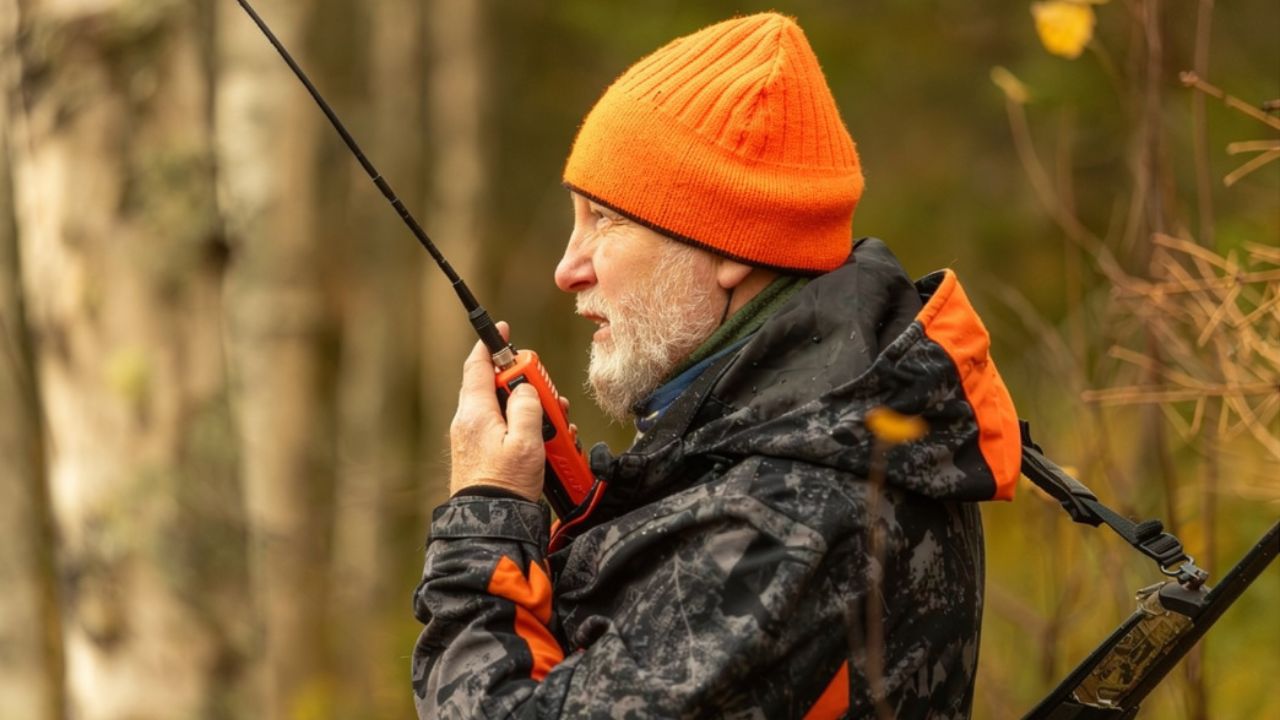
There are exceptions, of course. If somebody is actively threatening you, your family, livestock, or your home area, that is a different level of emergency and should be treated like one. But if this is a hunter slipping in through the back forty, sitting in a blind on your fence line, or using your creek crossing to reach another section, the smarter move is usually to let the badge handle it. Call your local game warden, conservation officer, sheriff’s office, or whoever covers trespass and wildlife violations where you live. Give them clear directions, explain whether the person appears armed, describe the vehicles, and tell them exactly where you are positioned. The more calm and specific you sound, the easier it is for them to respond well.
Know the difference between trespass, access, and game recovery
One thing that trips people up is the difference between somebody intentionally hunting your land and somebody trying to recover game or cut across your place to reach something else. That distinction may matter to an officer, but it usually does not change the basic rule that permission still matters. Texas Parks and Wildlife says a hunter needs the landowner’s consent to hunt on property and also says going onto someone else’s property to retrieve a deer without permission is trespassing, even if the animal was shot legally somewhere else. New York’s DEC likewise states that a hunting license does not give anyone the right to enter private land without permission.
That is why it helps to stay precise when you report it. If somebody shot a deer on neighboring land and the deer crossed onto yours, that does not automatically mean you have to like it, but the question for enforcement may become whether the hunter entered without permission and what happened next. If somebody parked on your lane and crossed your property to reach public land behind it, that can still be a problem because agencies also warn hunters not to use private land as access to public ground without consent. Those details matter. Saying “there’s a hunter somewhere back there” is vague. Saying “there is a camo side-by-side parked at the west gate and one man in an orange cap walked 300 yards inside the fence toward the creek bottom” is useful.
After the immediate problem, make your property harder to misuse
Once the situation is over, the real work starts. If your place is easy to drift onto, people will keep drifting onto it. Mark corners and lines in a way that matches your state’s rules. In some places that means signs; in others, fencing, paint marks, or other forms of notice can matter. Texas, for example, points landowners to signage, fencing, and purple-paint rules as ways to establish notice, and state agencies elsewhere also stress that clear boundary marking reduces disputes before they start.
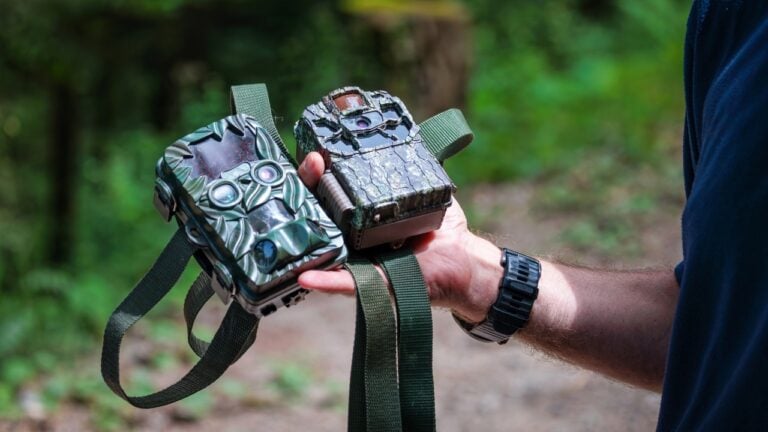
It also helps to tighten up the access points hunters look for first. Secure gates. Fix washed-out or sagging fence sections. Put cameras on likely entrances, creek crossings, field roads, and corners that connect to public land or neighboring tracts with lots of traffic. If neighbors lease to hunters, have a plain conversation before season about where the lines are and who has permission to be where. Most repeat trespass problems are not solved by one angry afternoon. They get solved by making the place clearly marked, watched, and annoying to abuse. If someone left property behind, like a stand or camera, do not assume the smartest move is to haul it off right away. Document it first and ask local law enforcement or your game warden how they want you to handle it.
The best outcome is not revenge — it is control
A lot of landowners want to know what they are “allowed” to do the second they catch somebody. That is understandable, but the better question is what actually fixes the problem without creating a new one. In most cases, that means documenting what happened, avoiding a heated confrontation, calling the right officer, and then making the property harder to enter and easier to enforce. It is not as satisfying as marching somebody out by the collar, but it is a whole lot more defensible if the situation keeps going or ends up in court.
The plain truth is that some hunters are respectful, careful, and quick to make things right. Others will act like a fence line is a suggestion until somebody makes it expensive or embarrassing. Your job as a landowner is not to out-dramatize them. Your job is to stay safe, stay sharp, and build a record that leaves as little room for argument as possible. Permission matters, boundaries matter, and once somebody decides your place is fair game without asking, you are usually better off treating it as a law-and-documentation issue than a personal debate in the woods.
Like The Avid Outdoorsman’s content? Subscribe to our newsletter so you never miss an article.
Here’s more from us: