Photo credit: DC Studio/Shutterstock.com
We may earn revenue from products featured on this page through affiliate links.
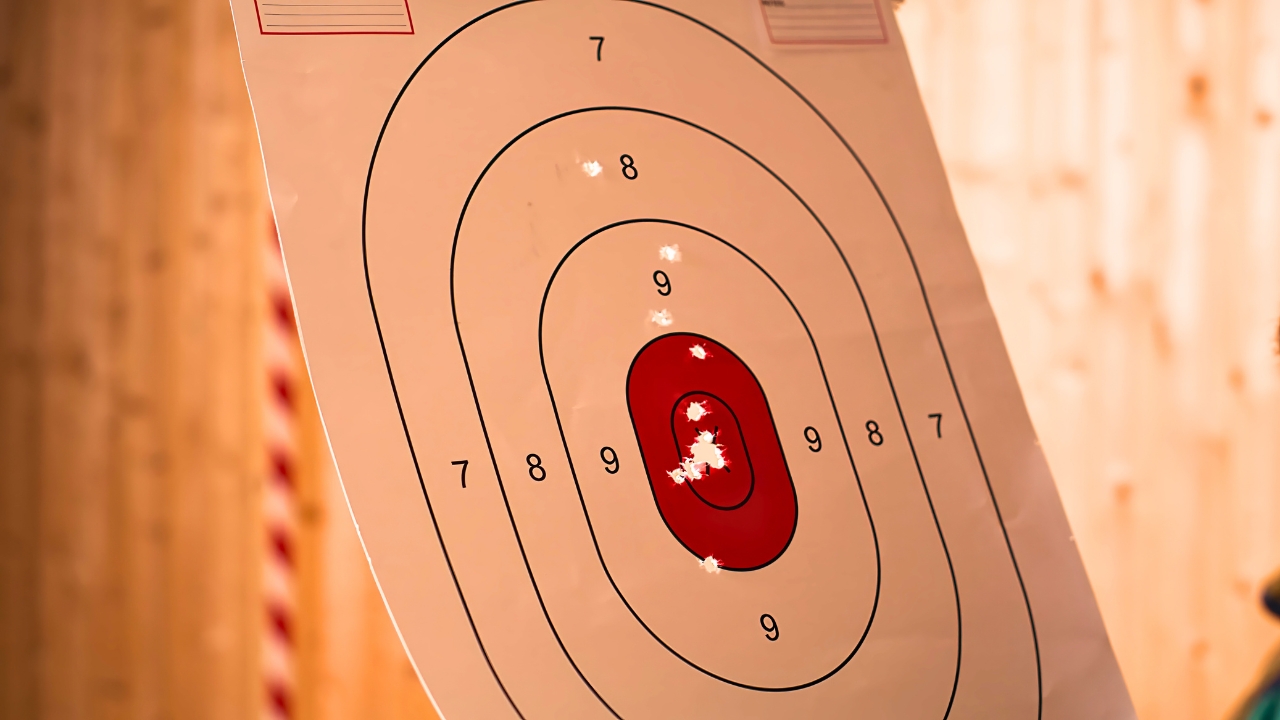
You can shoot groups all summer that make you feel like you’ve got everything figured out, then step into the woods and learn fast that paper doesn’t fight back. I’ve watched it happen to good shooters, not just guys who don’t practice. The rifle is zeroed, the ammo is consistent, the target work looks clean, and everybody’s feeling confident. Then the first real shot on an animal turns into a bad hit, a miss that makes no sense, or a long tracking job that shouldn’t have happened. That’s the gap nobody wants to admit: “good groups” can be real, and your results on game can still be rough, because the bench isn’t testing the parts of shooting that matter when the stakes are real.
A target doesn’t move, doesn’t breathe, and doesn’t punish a poor decision. It doesn’t demand you pick an angle in ten seconds, manage adrenaline, read wind that’s doing weird things in a draw, and break a clean shot from an awkward position while you’re trying not to crunch leaves. If your practice mostly ends at “I can stack three at 100,” you’ve only proven the rifle can shoot and that you can shoot under easy conditions. That’s valuable, but it’s not the same thing as proving you can deliver a clean kill when the shot is uncomfortable, the rest is questionable, and your brain is screaming at you to hurry.
The bench builds confidence, but it can build the wrong kind
Bench time is the fastest way to confirm a load and make sure nothing is loose, and I’m not telling anyone to skip it. The problem is what people mentally do with those results. They see a tight group and they let it stand in for field skill, like that one measurement covers everything. It doesn’t. A tight group tells you the rifle, optic, and ammo are capable of precision when the setup is stable and your body is calm. It doesn’t tell you your fundamentals are consistent under stress, or that your position building is solid, or that you can break a shot on an animal at an odd angle without doing something dumb at the last second. I’ve seen guys chase a slightly smaller group for weeks while never practicing a single shot from a kneel, never shooting off sticks, never learning what their reticle does when they’re breathing hard, and never proving they can hit a vital-sized target on demand.
The other trap is that bench shooting can hide sloppy habits because modern rifles are forgiving. Some setups will still shoot well even when you’re not perfectly consistent. The gun is doing so much of the work that you think your process is better than it is. Then the field strips away the forgiveness. Your cheek weld changes because you’re bundled up. Your shoulder pressure changes because you’re twisted around a tree. Your support hand grabs the forend harder because you’re rushing. Your trigger press gets quicker because you’re excited. A tight group on paper didn’t prepare you for any of that, and when the shot breaks wrong, you feel like the rifle betrayed you even though it was the human side of the system that changed.
Field positions expose weaknesses your group size never showed
Most “bad results on game” aren’t because the rifle suddenly became inaccurate. They’re because the shooter doesn’t build a repeatable position when it counts. On a bench, the rifle is supported the same way every time, and your body is usually aligned behind the gun without much effort. In the field, alignment takes work, and if you don’t do it on purpose, you end up muscling the rifle onto target. When you muscle a rifle, you introduce tension. Tension turns into movement right at the moment the trigger breaks, especially when adrenaline is in the mix. That’s how you end up pulling shots, pushing shots, or breaking a round the instant the reticle flashes across the spot instead of settling and pressing through.
Another thing field positions do is change the recoil path. A rifle that tracks straight back off a front rest and rear bag may hop differently off a pack, off shooting sticks, or off a hard blind window. That changes where your muzzle is pointing at the exact moment the bullet exits, and it’s why some people get “mystery flyers” when the truth is they changed their support and didn’t account for it. If you want one practical example of a tool that helps a lot of hunters stabilize in ugly positions, a set of shooting sticks can be a real upgrade, and something like a Primos Trigger Stick is common because it’s quick to adjust when the terrain isn’t friendly. That isn’t magic, though. You still have to practice with it, because sticks can introduce their own wobble if you don’t learn how to load them and keep the rifle from skating around.
Shot timing and decision-making are what paper practice ignores
Paper doesn’t force decisions, and that’s a bigger deal than people think. On the bench, you can wait for the sight picture to look perfect. You can take your time, reset, breathe, and shoot when you feel ready. On game, you may have a short window, and the animal may be moving, quartering, or standing in a spot where a clean vital hit isn’t guaranteed. A lot of bad hits start before the trigger press even happens, because the shooter decides to take a shot that’s technically possible but not smart for the moment. The bench never trained them to pass on that shot, so they take it, because they know their rifle “shoots good groups.” That logic is how you end up sending a round through the back half of the lungs, clipping liver, or hitting too far back when the animal takes a step right as the trigger breaks.
Timing also matters because animals react. Deer drop. Hogs move. Elk shift and turn. A shot that felt lined up can turn into a higher hit than expected if the animal reacts to the sound, especially at closer ranges where that reaction can happen inside the time window between firing and impact. That’s not a reason to panic; it’s a reason to understand what’s happening and aim accordingly for the distance and animal. But you only learn that by shooting in realistic scenarios, not by printing pretty groups. A tight group doesn’t prove you can manage the moment, and a lot of misses are really just rushed shots taken because the hunter didn’t want to “lose the opportunity.”
Wind, brush, and angles turn “sub-MOA” into “where’d that go?”
Wind is a big one because a lot of hunters don’t practice in it. They sight in on calm days, shoot groups on calm days, and then get a breezy afternoon in a cut cornfield and wonder why things went sideways. The problem isn’t just wind drift; it’s that wind also messes with your stability, your sight picture, and sometimes your confidence. If you’re not comfortable holding off, you’ll subconsciously try to “center it up” anyway, and you’ll send the shot where you wanted it to be, not where it needed to be. Even at moderate distances, that can mean the difference between center lungs and a marginal hit. The bench doesn’t force you to solve wind with a cold first shot, and that’s what hunting often is: a cold first shot with real consequences.
Brush and angles are the other two. Paper targets don’t live behind grass, twigs, and saplings that look harmless but can deflect a bullet enough to change the outcome. Paper targets also don’t stand quartering away, quartering to, uphill, downhill, or half-hidden where you’re trying to thread a shot. A rifle that groups tight at 100 doesn’t magically cut brush, and it doesn’t make a bad angle a good angle. This is where practical hunting accuracy is more important than group size, because practical accuracy is “can you place one bullet into a vital zone from the position you’ve got, with the wind you’ve got, through the lane you’ve actually got.” That’s a different skill than “can you print a group when nothing is working against you.”
Bullet performance can turn a decent hit into a bad outcome
This is the part that gets people defensive, but it matters. You can do your job and still get a result you don’t like if your bullet choice doesn’t match what you’re doing. Some bullets shoot great and open violently, which can be impressive on thin-skinned deer with broadside shots, but they can struggle when the hit is high-velocity into shoulder or when the angle is steep. Other bullets are built to hold together, and they can punch through like a railroad spike, but if impact velocity is low and expansion is limited, the wound channel may be less dramatic than you expected. That doesn’t mean the bullet is “bad,” it means you need to understand what it does and match it to your likely shots and ranges. Group size won’t warn you about any of this, because paper doesn’t test penetration, weight retention, or expansion window.
If you want a simple, practical move here, it’s to pick a proven hunting bullet that matches your animal size and expected distances, then confirm your point of impact and stop obsessing over shaving the group another quarter inch. This is also where people get tempted by constant tinkering, swapping loads right before season because a new box shot a prettier group. Consistency matters more than novelty. Knowing exactly where your chosen load hits from a cold barrel and how it behaves on real animals is worth more than chasing the “best group” right up until opening week.
How to practice so your groups actually translate to clean kills
The fix isn’t complicated, but it does require honesty. Keep confirming your zero and your baseline accuracy, but start treating field practice as the main event. That means building positions you actually use and firing single, accountable shots instead of endless groups. A cold-bore shot at a vital-sized target tells you more than three groups fired after you’ve settled in. Practice off a pack, off sticks, from kneeling and sitting, and from whatever rest you’re most likely to use in your normal terrain. If you use a bipod, learn how much “load” it likes without making the rifle jump. If you shoot from a blind window, practice resting the forend on something that doesn’t shift point of impact, because hard contact points can change how some rifles behave.
And don’t ignore the gear that supports your process, because stability tools can be worth it when used correctly. A rear support bag, for example, can make a big difference when you’re trying to steady a rifle from a pack or an improvised rest, and the Caldwell Tack Driver-style bags you’ll find at Bass Pro are popular for a reason. The point isn’t buying stuff; the point is practicing the exact system you’ll hunt with, so your first shot in the field isn’t a surprise. When your practice starts looking like your hunting, the gap between “good groups” and “good results” gets a lot smaller, and the confidence you bring into season is the kind that holds up when it actually matters.
Like The Avid Outdoorsman’s content? Subscribe to our newsletter so you never miss an article.
Here’s more from us: