Photo credit: Frank Semeraro/YouTube
A debate that should’ve died years ago keeps coming back because it’s not really about “better.” It’s about the realities of carry, training, and what people actually shoot well under pressure. The Glock 17 is a proven duty-size pistol with a long service record, and nobody serious pretends it’s a bad gun. But when you look at what gets recommended by instructors, what shows up on belts at classes, and what experienced carriers keep settling on after they’ve tried a bunch of options, the Glock 19 keeps landing in that sweet spot. The reasons aren’t glamorous, and they aren’t about the newest feature set. They’re about balance, logistics, and what works when you’re tired, moving, and trying to run the gun clean.
The real-world size difference matters more than the spec sheet says
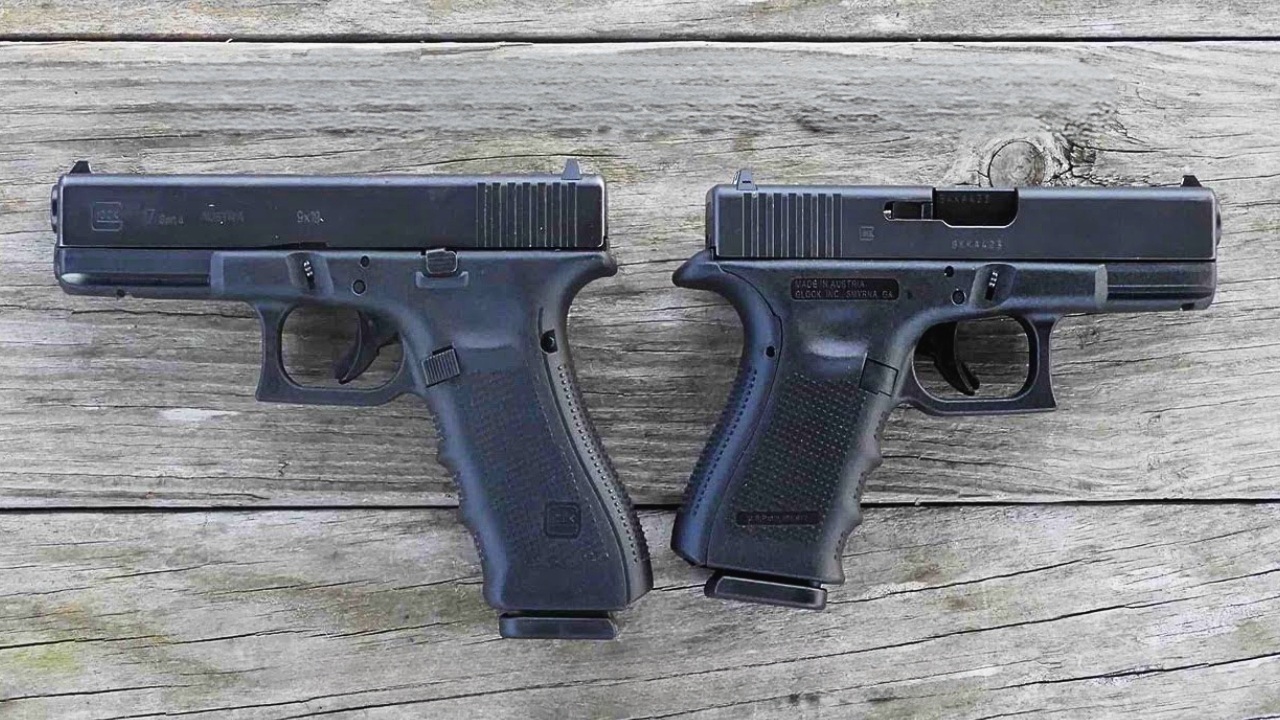
On paper, the Glock 17 and 19 aren’t worlds apart, and that’s exactly why the choice is so telling. The Glock 19 is just small enough to make daily carry easier for a lot of body types and wardrobes without turning into a “tiny gun” that’s hard to control. That small difference in grip length and slide length is the difference between a gun you carry consistently and a gun you start leaving behind when it’s hot, you’re in a vehicle all day, or you’re dealing with normal life. A lot of experienced carriers will tell you the hardest part isn’t buying a capable pistol, it’s carrying it comfortably enough that it’s actually there when it counts, and the 19 tends to cross that line for more people than the 17 does.
The Glock 19 tends to hide better because grip length is the giveaway
Most concealment problems aren’t caused by barrel length. They’re caused by the grip printing, poking, or riding weird under clothing when you bend, sit, or move fast. The Glock 17’s grip gives you a little more real estate, and that’s great for duty use and some competition work, but it’s also the part that wants to show itself in a normal day. The Glock 19 shortens that grip just enough to reduce printing and reduce the “this thing is fighting my clothing” problem, especially in common carry positions where the grip is what pushes out. This isn’t about being scared of full-size pistols. It’s about understanding what actually causes people to adjust their shirt every five minutes and eventually decide it’s not worth it.
Many shooters run the 19 just as fast because the grip is still “full enough”
A lot of people assume smaller automatically means slower or harder to shoot well, and that’s true once you go far enough down the size chart. But the Glock 19 isn’t a micro-compact. It’s still large enough to get a solid firing grip, manage recoil, and run hard in drills without feeling like you’re hanging on for dear life. For many shooters, the 19 is a “full grip with a slightly shorter tail,” which is a very different experience than a tiny pistol that forces compromises. When people are honest about what they can shoot quickly while staying accountable, the 19 often lands in the same performance neighborhood as the 17, especially inside realistic distances where fundamentals matter more than an extra fraction of an inch in sight radius.
The 19 is easier to live with in cars, chairs, and normal daily movement
Daily carry isn’t a static standing test in front of a mirror. It’s getting in and out of vehicles, sitting at a desk, bending over to pick something up, carrying kids, running errands, and doing a hundred things that expose little comfort issues. Longer slides can create more “dig” depending on holster position, torso length, and body shape, and even when the difference is small, comfort is cumulative. A pistol that’s slightly easier to sit with is a pistol that stays on you longer, and that turns into consistency over months and years. People who carry every day tend to choose the gun that doesn’t become a nuisance, because nuisance is what leads to shortcuts and “I’ll just leave it this time.”
Magazine compatibility pushes a lot of people toward the 19 as a default
One of the practical reasons the Glock 19 gets picked as the “one gun” is the magazine ecosystem. The 19 can run its standard magazines and also use Glock 17 magazines, which makes logistics simple if you already own full-size Glock mags or you train with both. That matters for people who want one pistol to do more than one job: carry, range time, home use, and classes. The 17 can’t go the other direction with 19 mags, and while that may not matter to someone who only owns one gun and one set of mags, it matters a lot to shooters who train, travel, and keep spares staged. The 19 ends up being the flexible middle that plays nicely with everything around it.
The Glock 19 is “boring reliable” in a way that makes instructors comfortable recommending it
Instructors don’t default to a platform only because it’s popular. They default to it because it tends to work across a wide range of shooters, it’s easy to support, and it doesn’t create constant gear-related problems that eat class time. The Glock 19 has decades of real-world use behind it, massive holster and parts support, and an operating system that most shooters can learn quickly and run consistently. When an instructor recommends something, they’re also thinking about what keeps a student from struggling with gear instead of learning skills. That isn’t a knock on the Glock 17. It’s an explanation for why the 19 becomes a safe “default answer” when someone asks for one pick that’s unlikely to cause headaches.
The 17 still shines, but its advantages show up more in specific contexts
The Glock 17’s strengths are real: a longer grip for some hands, a slightly longer sight radius, and a little more weight out front that some shooters feel helps the gun track in rapid strings. In duty use, open carry, or setups where concealment isn’t the primary constraint, those benefits can be meaningful. The issue is that many people buying a “do-it-all” pistol aren’t living in those contexts day to day. They’re trying to balance training, carry, and normal life, and the 19’s tradeoffs land in a place where most shooters lose less than they expect. The 17’s advantages don’t disappear, but for a lot of people they don’t show up often enough to justify the extra concealment and comfort penalties.
The Glock 19 wins the “one gun” debate because it avoids extremes
A lot of handgun buying mistakes come from chasing extremes: too large and inconvenient, or too small and hard to shoot well. The Glock 19 sits in that middle where you can carry it, shoot it, and train with it without feeling like you made a compromise in one direction that you regret later. That’s why it keeps winning the argument among experienced shooters who have tried enough guns to know what problems show up after the honeymoon phase. The 19 isn’t the newest, it isn’t the flashiest, and it doesn’t solve every problem, but it avoids the big ones that make people quit carrying or quit training. For most “serious shooter” use cases, that ends up mattering more than the small performance differences people argue about online.
What to take from it if you’re choosing your own setup
The takeaway isn’t “buy what everyone else buys.” It’s “choose the gun you can actually live with and actually run well.” If you can conceal a Glock 17 comfortably, shoot it better, and you’ll carry it consistently, there’s nothing wrong with that pick. If the 17 is pushing you into wardrobe gymnastics, constant readjustment, or leaving it at home more often than you admit, that’s a data point, not a moral failure. The Glock 19 keeps getting chosen because it makes consistent carry and consistent performance easier for a wide slice of people, and consistency is what serious shooters tend to prioritize once the novelty wears off.
Like The Avid Outdoorsman’s content? Subscribe to our newsletter so you never miss an article.
Here’s more from us: