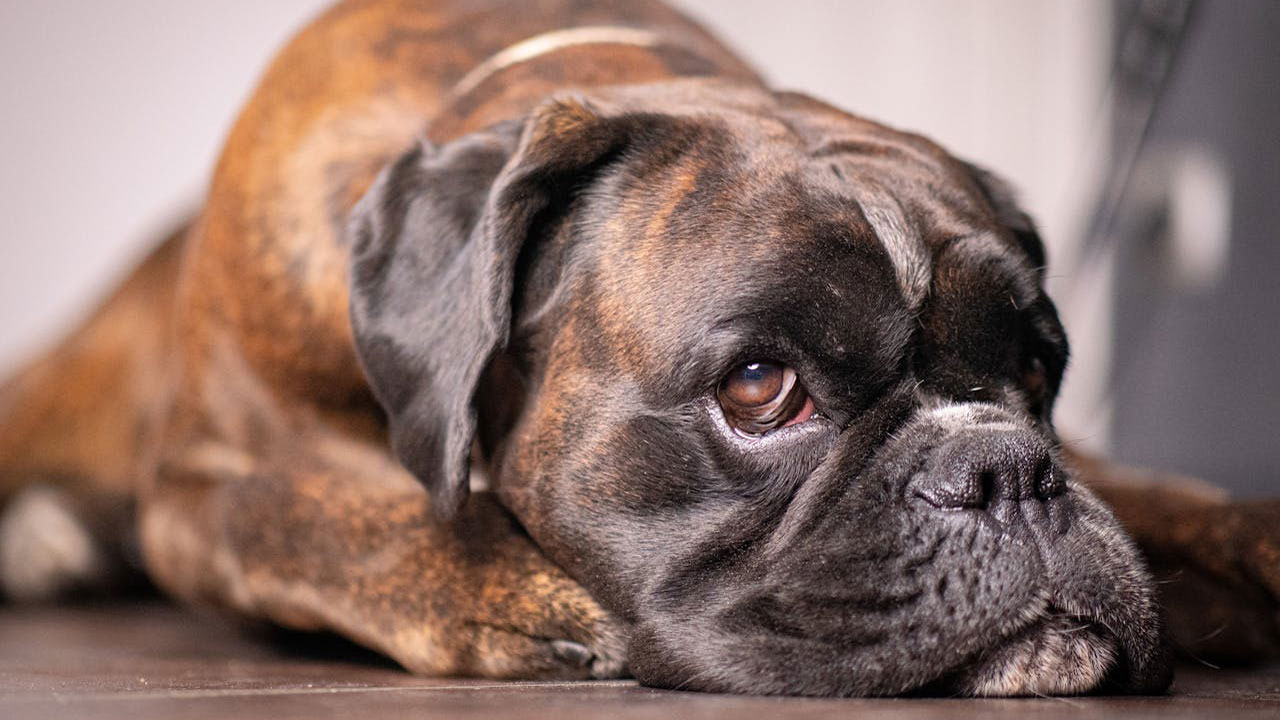
Photo credit: Laurence FUSCO/Pexels.com
A dog staring at you without making a sound can feel funny, sweet, or a little unsettling depending on the moment. Sometimes it looks intense enough that people start joking their dog is judging them or trying to read their mind. Most of the time, the truth is simpler than that. Dogs stare because they are paying attention, waiting, asking, or trying to figure out what happens next. Silence does not make the behavior meaningless. In a lot of cases, it makes it more deliberate.
Dogs use eye contact differently depending on context. A relaxed stare from across the room is not the same as a stiff, locked-in stare over a food bowl. A soft look while you are eating is different from a dog standing by the door and staring at you until you get up. The meaning usually comes from the full picture: body posture, timing, routine, and what the dog has learned gets a response from you. When you look at those pieces together, silent staring starts making a lot more sense.
Your dog may simply want your attention
One of the most common reasons dogs stare is because it works. If your dog has learned that looking at you gets petting, talking, food, play, or movement, it will keep doing it. Dogs are very good at repeating behavior that gets results. A silent stare can be one of the cleanest ways to ask for engagement without barking or pawing. In your dog’s mind, it may be the polite version of “I’m here, and I’d like something now.”
This is especially likely if the dog stares, then perks up when you move or speak. Maybe it wants to play, maybe it wants affection, or maybe it is simply bored and checking whether you are available. A lot of dogs would rather try quiet communication first before they escalate into nudging, whining, or pacing. The stare is the opening move.
It may be waiting for something you usually do
Dogs live by patterns. If your dog stares at you around the same time each day, the behavior is often tied to routine. It may be waiting for dinner, a walk, bedtime, outside time, or the moment you usually head toward the kitchen. In that case, the stare is not random at all. Your dog has linked your behavior, the time of day, and the next event closely enough that it starts watching you before the event even begins.
This is why dogs can seem so eerily tuned in. They are not predicting the future. They are reading routine. If you usually stand up, grab your shoes, or move toward a certain room before something your dog cares about happens, it learns that sequence fast. The silent stare is often anticipation more than anything else.
Your dog may need something basic
Sometimes the stare is practical. Your dog may need to go outside, wants water, is hungry, or wants access to a room or part of the house. Not every dog will bark, scratch at the door, or make a big fuss. Some dogs try to solve the problem by staring at the person most likely to fix it. If the look seems especially focused, and the dog keeps shifting its attention between you and a door, bowl, leash, or hallway, it is probably trying to point you toward the answer.
That is one reason context matters so much. A stare while you are eating might mean “share.” A stare near the back door might mean “let me out.” A stare near the empty water bowl is usually not a mystery. Dogs often start with the quietest communication they know, then increase the pressure if the first signal does not work.
It could be checking your mood or behavior
Dogs pay close attention to people. They notice posture, tone, movement, routine, and emotional shifts more than many people realize. Sometimes a dog stares because it is reading you. If you are upset, sick, distracted, or acting differently than usual, your dog may watch you more carefully to figure out what is going on. It does not need to understand the details to notice that your energy changed.
This kind of stare often feels softer and more observant than demanding. The dog is not obviously asking for food or a walk. It is monitoring. A bonded dog may do this a lot, especially during stressful times or when you are quieter than usual. In its own way, it is checking the situation.
Some dogs stare because they want food
This one is not complicated. If you have food, your dog may be staring because it hopes some of it becomes its food. Dogs are experts at watching human eating habits, and many of them have learned that patient silence works better than barking. If the stare appears every time you sit down with a plate, open the pantry, or handle treats, the message is pretty direct.
That does not make the behavior deep, but it does make it effective. A quiet dog with big eyes is often easier for people to reward than a noisy one. If you have ever given your dog a bite, a treat, or attention during that kind of stare, you may have helped build the habit without meaning to.
It may be asking for reassurance
Some dogs stare when they feel uncertain or unsettled. If your dog seems clingy, anxious, or watchful, the silent stare may be a way of checking whether everything is okay. This is more common during storms, household changes, visits from strangers, loud outdoor activity, or after routine disruptions. The dog is using you as a reference point. If you look calm, speak calmly, or move toward it, that may help it settle.
You can usually tell this kind of stare from a demanding one by the rest of the body. An anxious dog may look tense, still, or hesitant. The eyes may stay fixed longer, and the dog may seem less playful and more worried. In that case, the stare is less about wanting a reward and more about wanting stability.
It can be affection and bonding
Not every stare is a request. Sometimes your dog is simply looking at you because it likes you and feels connected to you. Relaxed eye contact between dogs and their people can be part of bonding, especially when the dog’s body is loose and calm. A dog lying nearby and softly staring at you may not want anything urgent at all. It may just be content and interested in your presence.
This kind of stare often feels different right away. There is no tension, no obvious expectation, no shift toward the door or food bowl. The dog just looks at you, relaxed and settled. That is often one of the quieter signs that your dog feels safe with you.
Not all staring is friendly
This is the part people should not ignore. A hard, fixed stare paired with stiffness, guarding behavior, freezing, or tension can mean something very different. If a dog is staring silently over food, a toy, a resting place, or during an uncomfortable interaction, that may be a warning, not a request. In those moments, the stare is not asking for attention. It is setting a boundary.
The meaning changes completely when the body changes. Soft eyes and a relaxed body usually mean curiosity, attention, or affection. A still body, tight mouth, and intense unblinking focus can mean discomfort or conflict. The stare itself is not enough. The posture tells you which kind you are seeing.
What your dog may want most often
Most silent staring comes back to a small list of possibilities. Your dog likely wants attention, food, movement, reassurance, or help with something basic. Sometimes it wants nothing more than connection. Dogs stare because they know you matter and because you control a lot of what happens in their world. Silence does not make the message empty. It usually means the dog is trying the calmest version first.
The best way to read it is to ask what is happening around the stare. What time is it. Where is the dog standing. What were you just doing. What usually happens next. Once you look at those details, the answer is usually a lot more obvious than it first seemed.
Like The Avid Outdoorsman’s content? Subscribe to our newsletter so you never miss an article.
Here’s more from us: